Podcast episode
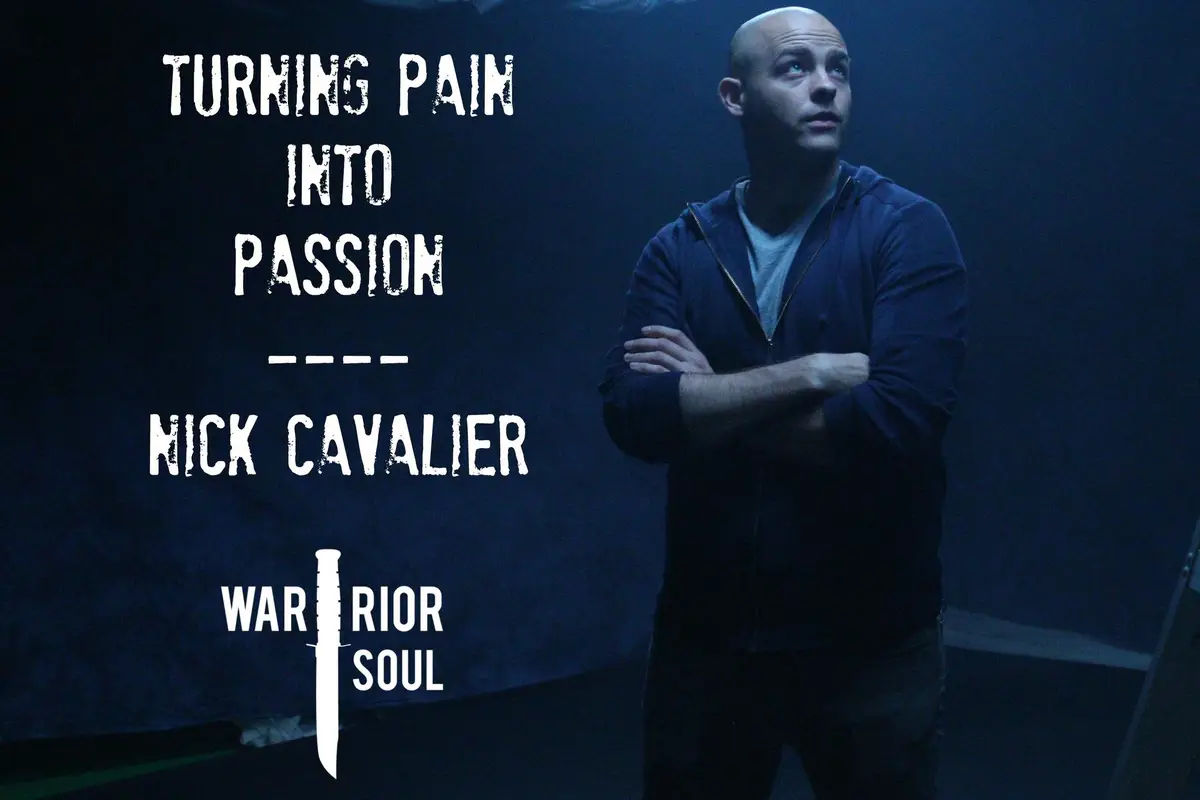
Episode 56: Turning Pain into Passion with Nick Cavalier
Hosted by Chris Albert
The Warrior Soul Podcast
Nick Cavalier is an award winning director of music videos, commercials and documentary content. A visual and character-focused director, Nick is known for his gritty guerilla filmmaking style and poetic hero centered themes. Nick has been honored with awards and selections at festivals such as SXSW, Palm Springs, Cleveland International and many many more. His work is featured in multiple national publications including New York Times, Devour, HYPEBEAST, Alternative Press, MTV, G4, Fast Company, Juxtapoz Magazine and more. Nick is more recently lauded for his award-winning film and character portrait on famed artist Derek Hess titled “Forced Perspective” available now through Gravitas Ventures & Redbull TV.
To find Nick on the interwebs: http://nickcavalier.com/
Transcript
Machine-generated from the episode audio and lightly edited — may contain errors.
Chris Albert (link to this point)
So one of the biggest issues that I've seen people have with doing a ketogenic diet is the fact that they often don't have access to good healthy fats, And that's so important if you're going to adapt into ketosis, if you're gonna get the full benefits of ketosis. Well, our friends at F Bomb Nutrition, and they're www.fatissmartfuel.com. They have a solution, and these are individual packets of good, awesome, delicious, healthy fats. They have some amazing products including avocado oil, coconut oil, MCT oil, and olive oil. But they also have some really delicious high fat nut butters.
Their coconut macadamia nut butter is absolutely outstanding. It's one of the most delicious things I've ever tasted in my life. I also like their macadamia nut butter with sea salt. It's so delicious. These guys are phenomenal people, and they also want to help veterans out.
And we're working on a project with them where they are going to be able to do a lot of awesome stuff for the veteran community. So if you're interested in getting an awesome solution to not having good healthy fats around all the time, maybe you're out in the field, maybe you're on the job, check out FBOMB Nutrition. And again, they are at www.fatissmartfuel.com. What's going on, guys? This is Chris once again with the Warrior Soul Podcast.
And in today's episode, we're going to be talking about creativity, passion and pain. And I'm going to start this off with a question for you. What do you do with your pain? Now I'm not talking about the pain that we think about when you break a leg, or when you roll your ankle, when you get sick, it's not physical pain. It's something far more sinister.
That's mental pain. That is when you feel like you've mentally painted yourself into a corner, and you can't get out. You feel trapped. You feel trapped in a life that you hate and you feel trapped in a situation that's killing you. I've been there before, a lot, and I know that there are many of you out there who've also been there.
And I think one of the answers to getting you out of that cycle of pain, getting all of us out of that cycle of pain, is in finding something that you are passionate about. Our guest today is a gentleman named Nick Cavalier. Nick is a filmmaker and he creates amazing short films, he's done some really awesome music videos, and he also worked on the documentary for the Warrior Angels Foundation that discussed Andrew's traumatic brain injury, his battle with traumatic brain injury, and the treatments that they're able to get out there through the Warrior Angels Foundation and the impact they're having. But Nick is somebody who has suffered through a lot of mental pain, and he's utilized his art and his dedication to his craft to pulling himself out of that pit and to living his best life. So with that, let's get into this episode of the Warrior Soul podcast with Nick Cavalier.
This is Chris Albert, and I'm here to remind you of one thing. Someday, you're going to die. That's not some morbid statement or scary idea. It's solid fact. Your time here on this earth is limited.
We need to be reminded of this as much as possible with one simple reason, to live your best life while you can. This is the Warrior Soul Podcast. One.
Hello, everybody. Welcome to the Warrior Soul Podcast. This is Chris here. I'm with my brother, Andrew, and our guest today is mister Nick Cavalier. Nick, how you doing?
Nick Cavalier (link to this point)
Doing great, guys. How are you?
Andrew Marr (link to this point)
Man, outstanding.
Chris Albert (link to this point)
Yeah. Doing awesome, man. Nick, you're out there in Los Angeles. And and where are you from originally?
Nick Cavalier (link to this point)
From Cleveland.
Chris Albert (link to this point)
From Cleveland, the great state of Ohio. Tell us a little bit about yourself and your background.
Nick Cavalier (link to this point)
Well, I grew up in Cleveland, blue collar, kind of blue collar life and that whole thing. And, I actually don't know how deep you guys want to go, but I was kind of a troubled kid. You know, I was in and out of juvenile correctional facilities and stuff. And then art teacher got me into drawing, and it kind of moved me into all the things I'm doing today. That's like the short version of it.
Andrew Marr (link to this point)
But Was that in Juvy that you had art teacher that you connected with, or was that out of Juvy Juvy?
Nick Cavalier (link to this point)
No. And Juvy is kind of, like, not the right word. It was like a behavioral school for really bad. I mean, there was lot of kids that were in juvie. They could body slam.
It was basically like like juvie, you know, it was like bodyguards and stuff. But I was just a troubled kid, you know, I'm bipolar and I was doing all sorts of stupid stuff and acting out and I didn't have anything really under control yet. But the art teacher, actually, she she was at my public school. And when I came back from getting expelled, I was so behind in the curriculum that, like, they were like, what are we gonna do with this kid? And she sort of, like, you know, took me in and and, like, basically cultivated the talent that she saw in me.
And, I owe her actually a lot to to for all the things that I'm doing, you know, as a director and and outside of that, you know? So.
Chris Albert (link to this point)
I know you're on a panel on September 14 for it's it's about mental health and creativity. What kind of misconceptions are there out there about mental health and and and following your path? I mean, we all tend to think about it as kind of like an obstacle, but but what do you know that I I I think that you think the public should know about mental health and and creativity?
Nick Cavalier (link to this point)
Well, it's such a first and foremost, it's like, I'm glad you recognize that there's cliches around it or not even that's probably the wrong word, but misconceptions is good. Essentially, people romanticize mental illness, I think a lot. They look at it like, Oh, you're born this way. And there is a certain amount of that. The artist that I did the film on always would say it was like diabetes.
Know what I mean? It's like you just got to manage it every day of your life. It's not going away. But I think the misconception I see from my perspective is it's a perspective issue. You could look at it like as a way to lean on it as a crutch or go, woah, it's me, or it's not my fault.
I'm depressed, or it's not my fault. I'm bipolar. But once you accept who and what you are, you could actually kind of use it as an advantage, especially if you're a creative person. Because when you're that in touch with your emotions and you feel that extremely, I think it engenders like deeper creative thinking and empathy towards other people, towards your work, towards just a general feeling of whatever you're trying to emote, You know? And I think if you when you have personal sovereignty and personal responsibility around it and you accept it, it stops being such a scary thing, you can kind of wrangle a monster and, like, use it to your advantage, you know?
Andrew Marr (link to this point)
Nick, what was that point where you were able to assume responsibility? Because that that takes a lot for an individual to do that for an adult to do that. So what was your process of identifying, you know, and working within certain parameters with, I. E. Bipolar?
Nick Cavalier (link to this point)
Well, a little bit of background, like I was diagnosed when I was 10. So and looking back on that, I think it's kind of criminal that you can start giving kids medication and shaping their consciousness when they're like that young. It's you know, I've always felt it was kind of not good, but in their defense, they were just trying to help, you know? But because of that, I was on medication from 10 till 19 years old It took a toll on my metabolism. I was also kind of like an outcast socially.
I didn't really fit in. The arts is what I turned to, you know, to And I didn't even know I was doing it at first, you know, music and drawing and things like that. And then when I I guess the real point of taking responsibility was when I went to college, I never thought I was going to go to college. I didn't think it was possible for me. And when I went to that art program, I got a scholarship.
And I went to Columbus, Ohio, which is about two hours from where I was from. And I was around a new group of people, a new set of friends and, and or peers. And I realized that if I was ever going to try to be on my own and not have to deal with medication and not have to deal with, all that, this was the time to do it. This is the time to, to meet people and try things. And, on top of that, I was getting real feedback.
So, you know, your whole life, you live in a small town or something, you everyone knows you and they know how you are and how you behave and those sorts of things. So what happens is you get complacent with your feedback, I think. And like what happened to me was when I got to school, I was I was able to, like, understand that if I just went off the medication, people would give me social feedback. And I use that to sort of curb my behavior because the socially unacceptable behavior that you would do when you're, you know, acting out or something, you got real feedback. It wasn't like somebody was like, oh, it's okay.
He's got a problem. It was like, oh, you're being ridiculous right now, dude. You know? So that was that was the moment for me where I just started taking responsibility for for, you know, who I was and and how I was acting with interacting with the world, you know?
Chris Albert (link to this point)
That's so important because with veterans, the whole PTSD thing, there was a time when I didn't like putting the d at the end of the PTSD because I think the very word disorder suggests that you do have an excuse and that, you know, you don't have to move forward and you don't have to grow because you have this thing on your back. And and, I think that a lot of people have used it as a crutch. I do think it's a very, very real thing, and for somebody who has it, it's it's it could be horrible. But at the same time, there's there's so much, I guess you could say, public, public leeway to allow you, to to kind of just stay in the same place and not allow yourself to get better and not put the work in to get better.
Nick Cavalier (link to this point)
Mhmm. And I think in our society, and I'm sure it's the same with with the veterans that are having their issues, like everyone here, we want, like, a quick fix. You know, it's like, we want to, like, give you a pill and make your brain complete again, or, you know, everyone wants that, but I don't think it's ever that simple. I mean, it's like with people who are addicts or something, you know, the film on that artist that I made was on a he was a alcoholic. And it's like, it's not just it is genetic, that's part of it.
It there is it is like an actual disease, but there's also like a level of like, sickness of the soul or, like, an incompleteness in your life that is leading you to do something like that or to turn to something, you know, as a solution. It's like self medicating, you know?
Chris Albert (link to this point)
Yeah.
Nick Cavalier (link to this point)
And unless unless you address that, you can't ever heal. You know?
Andrew Marr (link to this point)
And the film, everybody, the film that Nick's talking about is called Forced Perspective, and it is amazing piece of work. That's what initially after I got introduced to Nick drew us together, and then we've done some work together with the foundation. But I wanted to talk today about Forced Perspective. Did in that, with the artists that you were documenting, what what drove you to want to portray that in the way you did? Maybe you can expand a little bit about everything behind Forced Perspective and how that project meant so much to you.
Nick Cavalier (link to this point)
Yeah. So it's a film, it's a biographical film by this artist named Derek Hess. But it's I wanted it to be more than that because, you know, I think biopics can be kind of boring, especially if you don't know who that person is. You know, he's not like he's pretty famous, but he's not like famous enough where he's like a household name. You know?
It's not like doing a documentary on Van Gogh. You know? So I I couldn't like, I didn't wanna make a film about, just about him. It was more about him as, like, an everyman or, like, an allegory for what it means to be a creative person. But I didn't even set out to do that, actually.
I I'm just selfishly a fan. I think his art is amazing. And, like, I've been a fan since I was an angsty metal kid when I was, like, 14. You know? Like, he did a bunch of album covers for Converge and, like, a bunch of metal bands, like, In Flames.
And, like, that was the time that I was discovering that music. And he basically, whether he knows it or not, is a huge part of me becoming a creative person, you know, just from being attached to that. So it meant a lot to me, and and I took the responsibility, like, very seriously, but, also, I wanted to make something that could affect people. I didn't even know he was bipolar or alcoholic or anything until we started making the film. We became close friends, and I just he let me into his life, you know?
And I was able to to just start filming and filming and filming, and I had no idea what I was making at first. We made a short, and then I was like, let's try to make this a feature. And and I just it it just changed there. I realized what it was, and I had to I had to tell a story about what I think a lot of people deal with that are creative is, like, you know, you people see your art, they don't necessarily see you. And if I can connect those dots and have you understand who this person is, and then also have them be a mirror to who you are and what your journey is as a creative person, that's kind of what I was trying to accomplish.
So I use, like, the skeleton of the hero's journey. You know, everyone knows that, you know, Joseph Campbell story. But I didn't, like, force that. Like, he literally his story is that. I mean, his dad was a World War II fighter pilot, and he he, like, was a very brilliant, like, architecture design.
Like, he would draw these machines and things, and that's what he did for a living. And so when his son started drawing, he saw it, and he cultivated it. So, you know, Derek is trained by, like, really technical people from a different generation, and it shows in his work. And that alone is interesting. But then to, like, get thrown out into the unknown and then dealing with alcoholism and bipolar at a young age, you know, it kind of shaped his what then became his fine art, because in the beginning, it was more of an illustrator.
And so all of this, like mirrors a superhero, you know, born with an extraordinary ability, cultivated by a mentor, thrown out into the unknown, inspires a bunch of people in the process, and then comes out the other side with new fruit and knowledge of the world, you know? And that's kind of what I tried to make it, you know?
Chris Albert (link to this point)
Nick, talk oh, sorry, Andrew.
Andrew Marr (link to this point)
I'll go it's okay. I'll go ahead. Nick, talk about where you were filming and you didn't have a real concept of where it was going, and then all of a sudden, it sounds like lightning struck and you had this new vision. Can you kind of illuminate that process and that lightning strike?
Nick Cavalier (link to this point)
Oh, for sure. Yeah. We well, like I said, we I guess I just I kinda didn't go back far enough. I I cold emailed Derek. I was in Cleveland before I moved out here to L.A. I was moving from Chicago, so all my stuff was getting shipped. And I was like, You know what? I got three weeks here. Let's just try to make something fun while I'm here.
I don't know some subject. And I was going through all my stuff in my childhood bedroom, and I found one of his albums that he had done the artwork for. And I was like, Man, I need to I need to see if this guy still lives here. And so I just found his website and I sent him an email and we met and we made a short film that was basically like a ten, fifteen minute version of the film, but it wasn't very deep. It was just about his art, you know?
And I showed it to his manager and, you know, we screened it at the Cleveland International Film Festival in the shorts program. And I was like, man, we got to make this a feature. So Derek's manager, Marty, and I, we just tried to we tried to raise funds, and we did. And and we we ended up doing this, and it was a six month undertaking. And excuse me.
So I was just sort of thrown into it. I didn't really know that the magnitude of what we're making or anything. I was just like, alright. We're doing this. You know?
And with that, you know, now this is, like, three, four years ago. Now that's I mean, I avoid that part of the process because I feel like it's it's not really always conducive to good work. I mean, Andrew, you know, when we worked on your thing, I I got to know you pretty well. I understood what the story was, and then I sort of structured a story almost like a screenplay, even though it's documentary so that I know what I'm getting into. I mean, that's something I learned directly from this project.
So as I'm making this thing, I'm like, man, this has to be something more than just art, you know, or just about his art. And when we started talking about him being in the mental hospital and having electroshock therapy and all the stuff, I'm like, Oh, man, this is it. This is the bad guy in the movie, if you will, you know? And as soon as I saw that, I went home that night and I just sort of like like lightning struck, like you said, and I just sort of, like, started writing out the story as, like, a bar graph, like, a sliding scale. It's like, this happened, and this happened, and this happened.
And I just realized what what I had, but it was in in just being thrown into it that brought me there. And now I try to cultivate that before, you know, I go into a project, but this was the one that was directly responsible for that, you know?
Chris Albert (link to this point)
Nick, when you immerse yourself into something like this, where the story almost kind of also has a lot of parallels with with your life and and your story. What's the effect of that on you emotionally?
Nick Cavalier (link to this point)
Oh, man. Well, this one in particular was really kind of freaky, because, as I mentioned, I was a fan, and he was there whether he knew it or not. His art was touching me when I was in a very dark place. You know? So for me, it was this one was it was really close to home. And what that does to you creatively and emotionally is you're just super hyper tuned in.
I mean, I was so tuned in that, like, I I would I would find myself watching the monitor when, like, the DP was filming, and I would just be losing myself in the conversation that I was having with Derek. And that, I think, helps make the piece better. You know? Emotionally, though, for me, I'll share something that I haven't shared with anybody with you guys, actually. So the premiere of the film was in 2015 at the Cleveland International Film Festival, and, we had two one thousand seat screenings sold out.
That was an amazing experience already for me, but I was just running on this momentum. You know? You're in this moment, and this is your moment, and you feel like, oh, don't screw it up. Don't screw it up. So you you have no, like, understanding of the magnitude of what's happening.
You're just kind of doing it. And, during the second screening, the DP, director of photography, John Pope, pulled me aside, and he's like, dude, look at this right now. All these people right here are seeing something that you created. Like, they're here for you. So no matter what happens with this film, you'll always have this moment, you know?
And that's when everything sort of hit me. And that night was the award ceremony, and we were presented the local heroes award. During the Q and A, I was telling the story I told you guys about that art teacher and because somebody had asked a question about that in the audience. And one of the people at the film festival got on the mic and said, Actually, she's here right now. And they brought her out, And she gave me a hug and I was crying like a baby.
And Derek was there and the crew was there. And it's something I'll never forget the rest of my life. And but then even more so than that, I went home that night after the award ceremony, and I had a great time. And I was sitting there at home, and I I was, I just started crying. And I couldn't tell if it was from happiness or sadness or accomplishment or just it's all over.
This happened, whatever it was. But, I remember I was with a girlfriend at the time, and she said, why are you so sad? You should be really happy right now. And I realized that I was both. I felt bad because it was like I had been through all the things Derek had been through.
So the film is good because of those things, you know? And it sort of helped me heal in a way. And then it also, I hope, helped him. You know, I can't really speak for him. But, and then but I felt bad because I'm I was being successful because of the bad things that he had went through and the bad things I had went through.
And it's like, we both had to go through that for this to to be good, you know? But yeah, that's that's that's probably the best story I could tell you to to sort of demonstrate how I feel, you know?
Chris Albert (link to this point)
It's kind of the way things work, though. I mean, in order to really experience life and and to accomplish great things, you know, you you have to experience some kind of pain. Yeah. There's got to be some sort of challenge that you got to overcome. And, that's essentially the hero's journey, man.
You know? And and you think about it, you know, where Andrew is today, Andrew wouldn't be where he is today had he not gone through all that pain. And he wouldn't be helping, you know, hundreds of thousands of people around the world had he not been through that pain. And And you wouldn't have been able to tell this amazing story if you hadn't been through that pain. And that's something I try to convey to all the veterans out there who are listening to this.
Regardless of where you are right now, it doesn't matter where you're at right now. It doesn't matter how much money you're making right now. These are the times that are gonna make and break you. These are the times that are gonna make your story, and these are the times that are gonna make you into the person that that you're supposed to be.
Nick Cavalier (link to this point)
Yeah, man. The hottest fires make the strongest steel, to use a Cleveland steel term. But, no, man. I I really do feel that way. And I think especially with when you're creating something, I mean, I think it's the same for anybody.
I mean but when you're creating something like, how are you gonna be the guy who can transmit a feeling of real humanity or real understanding of something if you've never experienced the deeper side of humanity, you know, whether it's the highs of life or the lows of life. Like, I think they're both really important. It's like, you know, in LA, it never really rains and it's always sunny. You know, it's like you don't have a a sense of appreciation for that sun because every day is like that. Right?
But if you live grow up on the East Coast like I did or, you know, in the East in general, and you have these insane seasons, like, when it's 60 degrees outside, everybody goes outside in shorts and a T shirt. You know?
Chris Albert (link to this point)
Oh, yeah.
Nick Cavalier (link to this point)
Oh, yeah. Oh, finally, sun. And, you know, because it was negative 12 for six months. You know? And I think that there's something beautiful about that.
Like, that's how life is. You know? You need the bad to appreciate the good. You know?
Andrew Marr (link to this point)
Nick, how important is is coming up out of Cleveland? How does that show up in your work now? And and kind of what is that relationship there? Because I know there's a strong one.
Nick Cavalier (link to this point)
Yeah. Well, I think it's work ethic, man. You know, I mean, every single person in my life from my my dad, my mom, my grandparents, all the people working jobs when I was 14 under the table, like all of that goes into be doing something difficult, whether it's making a film or, you know, what I do now or anything I've done. I've always approached it with either do it right or don't do it at all, as my grandfather would say. Do it right or don't do it all, you're gonna do it again.
So I I approach you know, people like like to romanticize filmmaking, and they're like, oh, it's just you're just struck by the lightning, by the muse, and it's but really, it's showing up and doing the work. And to me, like, I get better because I show up. And, Cleveland gave me that because, you know, whether you're a lawyer or a doctor or you you're a stonemason, you know, every single person in that town has that grit to them like that, that that, you know, nobody's gonna do it for me, so I gotta do it for myself. And I think you see that with, like, the sports fans and, like, you know, they've never won it. They haven't won anything since there was before there was face masks on helmets, and they still wrote root for the Browns every day.
You know, I mean, there's something to that, and I'm very grateful to have grown up that way, you know, and surrounded by those kinds of people, you know?
Chris Albert (link to this point)
Yeah.
Andrew Marr (link to this point)
Yeah. I was gonna talk about you going into becoming a filmmaker, Nick. And, you know, there's two paths to knowledge or to learning, and and one is learning through somebody else. And then the other one is getting out there and doing it and figuring it out for yourself and learning through experience, which my understanding is, you know, you took the second route, you didn't take any formal education or film school, so to speak. So what what motivated you to just go out there and figure it out for yourself?
Nick Cavalier (link to this point)
Well, that's that's actually true, and it isn't in a way. I so I going back in time again a little bit here, like, when I got out of school and I got a scholarship to art school, that's what allowed me to go to college at all because financially and all that. And I went to a school called the Columbus College of Art and Design. So it's a very well respected fine art school and well respected fashion school, I believe. And a couple other things it's really well, really well known for.
And it's known for its boot camp of a first year. It's like drawing boot camp. I mean, you have to learn everything, and they do not pass you if you're just okay. You know, you have to really learn and and apply yourself. And after that first year, like, I went to school to paint and draw.
You know? I was like, I wanna paint and draw. I actually wanted to do, like, two d cell animation, like the Simpsons or, like, the old Disney stuff, but that didn't exist anymore. So after the first year, after drawing was sort of beat out of me, honestly, I I decided I need to find something else that's creative that would turn me on. And there was a program there called, time based media studies.
It's no longer there, or it's called something else now, but it was everything. It was animation. It was, you know, three d animation, two d animation, photography, design. It it had everything. It was film, but this is also at a time where digital really hadn't gotten to a point where it could mirror film.
So I was learning on four by five. And so I had some formal technical training, but it was I think it was way more, on fundamentals than it was on, like, what we would use today in the field. You know? Like, the cameras are different. The process is is the same, but, like, all the technology and things like that was really getting thrown to the wolves when I got out of school.
And I used to play drums in a metal band. So I like, I knew a lot of metal people and things like that. And when I was in school, again, being, like, a Cleveland, like, DIY person, like, was like, you know what, man? I wanna just start doing videos for bands that I know or people that I respect and, like, use this as an exercise to learn. And I started doing that, and then it became like I was a freelancer.
So I was kind of thrown into it unintentionally by doing it while I was in school. I'm grateful for that. I believe in learn by doing. I believe it's like driving. You can take the theory, the classes of learning the traffic signals and the rules and all that stuff.
But until you get behind that wheel and you actually put your hand on the steering wheel and touch the clutch and you don't understand what it's like to drive. And I think there's I I am an advocate in learning by doing. I understand not everybody gets there that way. They need more of a structure. But for me, like, I found the greatest reward in that.
Chris Albert (link to this point)
Nick, being from Cleveland and now being in Los Angeles, there's probably a few 100,000 people that move in and out of Hollywood every week. What's your experience been in moving out here? I'm an East Coast who came out to California myself and found the experience a little bit lonely. What's been your experience in coming to Hollywood? What have you noticed about yourself that has allowed you to take root there?
And what do you notice about other people who might not have been as successful and might have had to leave with their careers kind of defeated?
Nick Cavalier (link to this point)
Wow. That's a good question. Well, man, for it was hard for me too. You know, coming from the East, I think you're just used to a different speed. So the the first thing I noticed was, like, people were a little bit more like, yeah, man.
Right on. Like, we'll get there when we get there. Cool. And at first, that was really irritating to me, to be honest with you. I mean, hey, what time is our meeting?
How about, like, afternoon ish, man? Well, it's gonna take me an hour to get to you, so I'd like to know if it's noon or two, you know, stuff like that. And at first, I was, like, really infuriated by that. And then the more I got settled in here and I met a group of people that I respected and and trusted, you know, Andrew is one of those people. He's one of the first people I met here.
And, you know, just people that people that you can connect to in a deeper way. I real I saw this place for what it was, and and it's a it's a place that shouldn't be. I mean, it's a desert. There's no water. You can't grow anything.
But it's a place where there's all these interesting people from a bunch of different walks of life. And, again, a perspective thing. You know? If you look at it that way, it changes the way you look at this place. And having met exceptional people, that's what then I saw this place as is like a incubator for exceptional people.
You know, whether you work in in entertainment or not, I feel like it's a it's a fresh start for a lot of people here. You know? But for me, like, I guess what what was hard was the people at first. Like, it was just a different speed. But once I understood where they were coming from, and you don't surround yourself with the ones that are, you know, frankly, the the stereotypical LA thing that people in the East see, if you get away from those people that that are yes men or whatever, and you surround yourself with people that you sync with and you're you you engage with, like, I think it's it's an amazing place.
But, yeah, definitely very lonely in the beginning and very but I think if you look at it like the Warrior's Path, man, like, in a way, like like, if you look at it like, this is what I'm here to do. I'm here to do this. This is what I'm doing at all costs. I don't think you can fail. The people that I've seen come and go are ones that their heart really wasn't in it to begin with anyway, and they just it sounded better on paper than it was in practice.
And you have to fall in love with the lifestyle and fall in love with the process to really be successful in anything in life, I think. You know?
Andrew Marr (link to this point)
For sure. And I I was laughing. I had it on mute when you're talking about, hey, man. Afternoon is just not gonna work. It was nailed on the time because it's gonna take me an hour to get to you.
It's so fucking true. It's hilarious. Or it's not funny depending how you look on it. Look at it. My god.
Yeah. Nick, you've done a lot of work with different veteran groups and and organizations. What first spurred that interest to tell those stories?
Nick Cavalier (link to this point)
I don't know if I actually told you this, but, like, after 9/11, I was when I was going through all my trouble and stuff, I was gonna sign up for the marines. And they wouldn't take me because I had, you know, sort of a record. I mean, I was in I was in mental hospitals, and I had, you know, a history of mental illness. So, they didn't want me. And then I was gonna try to be a firefighter.
You know? And I did the physical, and I well, I mean, I've I just I've signed up, and I'm I'm interested in it. And then I realized, like, you can give back in other ways. You know what I mean? For me, like, I had a lot of friends that went into the military.
I had my friend Anthony Anthony signed up. I don't wanna say his last name. You know? He signed up, like, right after 9/11. I had a bunch of friends that went, and, I respected that.
I mean, it took it took courage and it it you stood for something. And, the brotherhood element, you know, I've always been a camaraderie kind of person, you know? I grew up with, a big, loud Italian family on one side and a Polish family on the other, and everyone sort of got together. You know, I think the brotherhood of the military really attracted me and standing for something together, you know? And since I couldn't go into it, when I started getting to a point where I had some street cred and I could I could affect people, I I sort of saw those I saw I see the Warrior spirit or the the Warrior Soul of what you guys have as, like, something commendable.
Like, whether you believe in the war or not, you're still doing the job, and you're you're putting it on the line. You know? It's like the same thing you see in professional athletes or fighters or anybody who's exceptional. They really just this is I'm doing this, and it that takes guts. And that that really is the most extreme version of the underdog story, you know?
Like, loved that about it as far as telling the stories. And before I met you, Andrew, my friend Noah Currier started this organization called Oscar Mike, and he started in his garage. And I had been friends with him and his brother for a couple of years before this. And he I admired that it was American entrepreneurship combined with the veteran mindset. And I wanted to tell that story.
And then when I met you, it's the same thing. You know, you're really helping people and it's and you and they'll respect you because you've been through it. You know? That's the thing that you and Noah had in common that really drove me. It's like, if you're gonna go see a psychologist to your PTSD point, Chris, like, if you're gonna go see a psychologist, and he's just some Harvard grad, it doesn't command the same respect as if the psychologist was missing a leg, and it was visibly in front of you, and he understands what you went through.
You know what I mean? And that's something that both of these organizations and all the veteran organizations I've worked with, have in common. Know, they're they're it's like for us by us in a way, you know? I love that.
Chris Albert (link to this point)
Yeah. That's the that's an amazing part of I think being a veteran now and and something you said there as far as there there's a lot of different ways to serve. And that doesn't just mean if you if you've never served in the military. There's a lot of guys out there who, are getting out and trying to find new meaning and new purpose for their lives. And the thing is, guys, are so many things that you can do.
All of you are still young. All of you are still young. And I mean, if you're under 80 years old, you're still young in my book. You still have an opportunity to serve. And I think that when you make your life about some sort of service, some sort of path toward helping other people, that's where it really works.
And what I see in you, Nick, is I think that one of the elements of your success out here is, like you said, it's that Warrior's Path. Your desire to help people and your desire to tell stories about people who've gone through challenges and inspire other people who might be going through the same challenges. I think that's your that's that's your secret, man.
Nick Cavalier (link to this point)
Thanks, dude. Yeah. I mean, I think it goes back to, like, what I was saying about living a life too. You know? I mean, I have I know so many people who've had crazier stories and things happen than even what I've had happened, but, you know, mine happened at an impressionable age.
You know? And I'm I'm grateful for that now. At the time, I could never see it, but, you know, like, being in solitary confinement when you're 15 years old is, a traumatizing experience, but it made my mind a steel trap. You know? I I was stubborn to begin with, but it it that that sort of forms you.
You know? That that shapes you. And, like, finding stories that have strong opinions or undertone, like the underdog story that I was telling you about, like, love that. I love I love people who have some difficult thing happen to them, and they come out the other side stronger because of it. And that's I'm I just gravitate towards that.
And I I don't believe in telling a story you don't believe in. So, you know, I I guess that's really where it comes from.
Andrew Marr (link to this point)
You know, Nick, and and artists are so unique in that, you know, they go to a different realm, so to speak, and bring back that information and explore it and redefine it and give their own experiences through whatever platform is relevant to them. Why do you think so many artists have taken their own life, you know, dealing with those different emotions that they got to go back and forth and they're trying to express themselves through their art? And I'm thinking of Chris Cornell or, you know, most recently, but people that you would think that had attained or were in the pursuit of attaining what was meaningful to them. And then you find out that they took their own life. You know, can you shed maybe some perspective on that through your own path?
Nick Cavalier (link to this point)
Yeah. I mean, I don't I it's like, right now, I'm on a two I was on a a week or a two week lull before I started another project, and I'm honestly going stir crazy. You know? Like, I'm like, man, I gotta go do something. You know?
And I can imagine that I don't you know, I'm this is complete speculation just to preface with that. But I can imagine if you're Chris Cornell and you've made all this huge body of work, He's probably much like me where when he finishes something, wants to do something else. And the thing that he did before, he probably hates, even though other people love it. You probably look at it and you see all the flaws. You see all the problems that nobody else saw, and you wanna come back and do something better.
And it's this striving for perfection that drives you. Right? But I think when you're a musician, people don't wanna hear the rolling songs play their news the Rolling Stones play their new stuff. You know? They wanna hear them play, you know, Jumpin' Jack Flash and Paint It Black and stuff.
So then it becomes like you're going out there and performing and you're you're playing these songs that maybe you were 17 or 19 or 22 or 25 when you wrote, but you've grown past that. And now it's not cathartic for you anymore. It's not something that you know, I believe all the great people don't just make stuff as a commodity. Like, you know, like, Jimi Hendrix didn't go to guitar school and learn how to play guitar and just play great guitar. Like, there was something inside of him he was expressing.
Right?
Chris Albert (link to this point)
Right.
Nick Cavalier (link to this point)
So I think a lot of times it's like that sense of purpose you guys were talking about. That's so deeply connected to our work. And when that's gone, the world seems gray. And for me, that's always been the case. Like, if I'm doing something that engages my mind and I'm being challenged, I feel like that's I guess the journey is the excitement.
And if you've already completed the journey and you've had your success, especially if you have at a young age, that's like that goes to that sickness of the soul that I was talking about. And who knows why people take their own life? I mean, I deeply believe it's personally that it's a lack of purpose and also that being combined with the spontaneity to do it. Because a lot of people I know, and myself included, who have tried to take their own life, I don't think they really wanted to go. They were looking to send a signal to have people help them.
And some people, they'll just do it. The person you have to worry about is the one who never talks about it. And I think having a sense of purpose or brotherhood or something to a goal to work towards a new journey. Chris Cornell could have became an actor and then channeled his thing into that. And maybe that would have saved him, but maybe not.
You can't really say about anyone in particular, but that's a personal spiritual decision you have to sort of go through, I think.
Andrew Marr (link to this point)
Yeah, I just I couldn't agree more. Think the way you know, the antidote for suffering is finding something to make it meaningful. And there's an unlimited abundance of opportunities for one to do that. And that would be my best advice to anybody out there, artist or not, who is in a spot where they're thinking about that. There is an abundance of opportunities for you to find and attribute significance and meaning, and start afresh and start anew.
How do you see it, Chris?
Chris Albert (link to this point)
Yeah, I think that, just in my experience, I've fallen in and out of depression over and over again in my life. And I think that in addition to walking the warrior's path, I think you've got to find something that also allows you to feel human, something to fill that void when you're going stir crazy. And and for me recently, that that that's been jiu-jitsu. You know, getting out there and doing a martial art and and doing something at full intensity. But I think for other people, you know, it might be, you know, distance running.
It could be, you know, just going out there and and playing around with the weights. It could be, joining some sort of weird social club or something like that, but just something to kind of knock you out of the tunnel vision and remember that you're still human and to bring you back to present and and to get you interacting with other people on a very human level. I think that's so important. And, like I said, jiu-jitsu is something that's helped me significantly, in in kind of filling that void, because I'm I'm a freaking workaholic. I if I it were up to me and and and I was left to my own, you know, designs, I'd be working from from, you know, 6AM to 3AM every single day.
But if you do that, then you end up not feeling human anymore. You stop enjoying what you're doing, and it kind of desensitizes you to the human element around you. I think that's so important to remember that you are human, and and human beings are important to you, to your story, and to to where you're going.
Nick Cavalier (link to this point)
Yeah. And I think to to, you know, coattail off of that, like, being physically active is, like, the purest translation of, like, a pursuit. You know? Because, like, you have a body. It's your vehicle.
Hey. Let's do something difficult and come out the other side. It's like that it's like like, I saw some video going online on the Internet recently about, like, this, commencement speech in the marines, I think, and sergeant was saying, start by making your bed. You know? And if you make your bed, you've already done something before you've done anything, then you're gonna wanna go run five miles.
And then when you run five miles, you're gonna wanna go and, you know, crush the goals you have in your job. And then once you do that, it's like momentum, you know? And I think just starting to do something you've never done before, whether in in a physical sense, I think that's great too, because you're releasing endorphins. You know, you're you're fighting depression that way. But like, let's say you're like a stock, like a an Excel sheet guy finance at some cubicle place, you know, like, you can still find something like that that turns you on.
And, like, that's the important part is, like, that challenge, whatever that is for you. You know?
Chris Albert (link to this point)
Yeah. And that's like I said, it's it's so indicative of the human being or it's to the individual themselves. Different things turn different people on, you know. What kinds of things have you found being in a new place and being, being in Hollywood? What what types of personal habits or, you know, different types of social activities that you've done?
What what's helped you to to really overcome that? And and and have you found anything at all to kind of fill that void?
Nick Cavalier (link to this point)
I I definitely, you know, I I still I I run, like, three days a week as far as physically physical, stuff is concerned. I would like to get into jiu-jitsu, actually. I wrestled a little bit in high school, and all my friends are all like, in high school are all wrestlers, and my cousins were all American wrestlers. And, you know, it's You'll have it? Yeah. I know I love it. I mean, I but I also, you know, I I I it's it's a time issue.
I wanna be able to give myself to it, you know? So for me right now, the pursuit has been my my field, you know? I mean, directing is so bizarre in the sense of it is a collaborative medium. But like, if if you're dealing with a good director, they have a very pure vision. But they need to surround themselves and cultivate an environment for people to be successful.
So, like, I always tell my friends when they're like, how do you do that? I go like, go watch TV and then look at the credits. It's amazing that anything is ever good, you know, for how many people have to come together and how many variables and conditions have to be perfect for something to, like, be good. It has to be shot well. The lighting has to be great.
There has to be substance. Because if you have technically perfect crap, you still have crap. You know? So, like, it the challenge of that and knowing also something that drew me to it in the beginning is you'll never be perfect at it. Every time I finish something, I hate it.
You know what I mean? Every single time. Whereas when I play drums, you could complete a song and you're like, alright, we did that. I didn't rim anything, the whole recording. Alright, I feel good about that.
I don't feel that way when I finish something. So that pursuit in and of itself is insane because, you know, you're the what is the definition of insanity is doing the same thing over and over and expecting different results? Like, I feel like I'm going crazy sometimes because of that, but in a good way. For me, rituals have been really important. I love to cook, and I'm pretty, pretty good at it, and I work with some chefs and things like that every once in a while.
And so I I learn constantly about that. And for me, that's a very relaxing thing. I put some music on. I have a nice glass of wine, I just sit there and I spend the time to go zen. And that sort of, de stresses me.
When I write stuff, I try to go completely analog. I get a pad of paper. There's something about pen to paper that I really like, both in the permanence of it. You can't apple z. You know, you're you're you're you've put it there and it's there.
And I think you retain it better. So I do that and I'll get like a nice cigar because I believe tobacco is really good to stimulate the mind. And I go out and I just leave my phone inside and I go in my back area of my apartment and I just sit there and I write. And this is all I'm doing right now is this. That's it.
There's nothing else for me to be doing right now. And that's really been helpful. The exercise stuff is great, too. Definitely, to get away from the work, that's great. But I find the process really important, you know?
Andrew Marr (link to this point)
Yeah. Absolutely. Nick, what what in your estimation is some of those those triggers that that you know, that you set up for your writing? Is there anything else as far as directing that allows you to walk right into that element and command con you know, take control and and be able to communicate that to everybody that's under you?
Nick Cavalier (link to this point)
Yeah. That's you mean more in the in the creation process or the actual execution?
Andrew Marr (link to this point)
Yeah. The execute I was thinking the execution, but really, like to hear hear about both. Because we're trying to understand the attributes of of, know, of director and, you know, how they command that craft.
Nick Cavalier (link to this point)
Well, from a pragmat I'll talk to like, it'll start a little philosophical, but it'll pragmatic here. But, like like, for instance, like a music video. Right? Like, I just did this music video for this band called Monoker, and they're a new band, but the singer and and the other guys are from a bunch of other very successful bands. And so I was given the track and I had to write a treatment.
Right? And that's kinda how I win most of my jobs. It's like you bid up against a bunch of directors and then you write something and hopefully you wow them and they go, here's the money. Go ahead and do it. So I was my process with music videos, which extrapolates to kind of everything, it's just a different skill for, like, documentary or narrative based on whatever it is, is this.
Basically, I listen to the song. I don't want a lyric sheet. I don't want anything. I just feel that song. And being somebody who has played music and loves music, I I get into that mindset pretty easily.
So I just starting I start to feel what the song makes me feel, and then I just write down words that associate with that feeling. So this song had a lot of Shakespeare references, and it's it's it's about love, but it really made me feel like lust. It made me feel like this this woman in this song is otherworldly. She's something that is unattainable, but he's just so obsessed with her. Like, that's what it's it seems like to me.
And she's fickle, and she's got these character flaws, but he loves that anyway. That's still part of the whole package. And so I started writing words around like that, you know, and and those words associate imagery, and that imagery then drives a story. So it's like associative memory type game. And so I'll, like I wrote, like, femininity.
I wrote, like, like, prowess. I wrote, like, all these things that would be, like, intuition. You know? Like, women have deeper emotional intelligence. Like, how do I make that visual?
So I thought of things that could be iconography, like a rose or rose petals or, you know, rose blooming and being in its young years and then wilting. And like, that's like the birth and death of the relationship. And like, I try to think that way visually first, and then I can work backwards into a storyline. So in that case, I wrote this whole thing and tried to incorporate the song is called Ophelia. You know, it's Hamlet, Shakespeare.
And I I tried to to homage and, like, you know, kind of give it that feeling, but, like, keep it current and not be on the nose. And, the songs also sound very it sounds very nineteen eighties ish, like, Toto Africa or something. You know what I mean? So, like, I wanted it to have an eighties feel to it aesthetically as well. So I tried to, like all those things led me a direction, and then I wrote something, and I presented it when I felt it was done.
Then I got the job, and now it's like, okay. Now it's time to execute this. Like, how am I gonna do this? So that's really when other people come in to play. Like, I have a vision in my head, and I can illustrate it and get reference photos and things like that.
But it's really never real until, like, I meet with a director of photography, and we set up an actual lighting grid and get it in in a nice direction. And Tyler Clark, the DP on that was like, he's he's a he's a we've worked together once or twice before, but he's he set out and made mood boards and, like, talked through it with me in preproduction, and we had a very clear idea of what we're gonna make before we even showed up. And that, I believe, is what makes me a little bit different than a lot of directors because I know a lot of directors don't wanna do that prep, and I believe that 80% of directing is done before you show up. And then, you know, we we sat there on set and we made this lighting situation, and and it looked beautiful. The first day was shooting the band, and the second day was shooting the storyline with with the girl.
And the the storyline was very sensitive because there's some nudity, tasteful nudity and stuff, but it had to be a closed set. So the first I did that intentionally, I put the the band first, because I had a rapport with him. I knew the singer pretty well. I'd worked on projects with him. And it was like, let's get a camaraderie going here with the crew and cultivate this awesome environment where everyone likes each other and we're going to have fun.
And it's sort of that in and of itself, the mood of a set affects the final product. So I really wanted it to be a fun thing to work on, you know, and I try to do that with all my stuff. I try to as best as I can. Obviously, tempers can flare and things, you know, people disagree. But as long as you're you can that's my job.
I'm I'm generally just there to facilitate people who are excellent at something, the the ability for them to be excellent. And we got something really cool out of it because of that, you know?
Andrew Marr (link to this point)
Yeah, Nick, that's one of the coolest, I don't know, most informative responses that I've ever got because that's a world like, you know, I have not a lot of experience or understanding and you just took us to that world and man to just to hear how you go through feeling emotion, and then translating that to imagery, and then putting it into gathering a team and and executing that. That's just unbelievable, man. Thank you for sharing that.
Nick Cavalier (link to this point)
Thank you. Yeah. I I I it's weird. I feel like I was rambling. So I'm glad that some of that made sense.
You know?
Andrew Marr (link to this point)
No. I thought it made sense. I thought it was incredible. I mean, incredibly eye opening for me.
Nick Cavalier (link to this point)
Awesome.
Chris Albert (link to this point)
Yeah. Definitely not rambling. I thought it was I thought it was awesome. It kinda had me captivated here for a second. That was that was pretty cool.
You know, in in when you're putting that team together and and, you know, I'm sure that you run into to a lot of different types of personalities and and, you know, different types of people in in your line of work. When you're trying to talk to somebody about working on one of your projects with you, what do you really look for in that person? And if, you know, during that process that you're mentioning, do do you have, like, a type of personality in your mind? Do you have, like, a certain certain well, I'm sure you have a certain amount of experience, but a but a, you know, a certain personality because you're pretty much gonna be married to to whoever this person is in your little group for the length of the project.
Nick Cavalier (link to this point)
Yeah. There it's weird because production, I don't know if a lot of people know this, but, I mean, generally, even if it's one like, let's say it's one scene, it could be as long as eighteen hours to shoot that one scene, you know? So like, there's a giant amount of time that you're spending with people. So the the personal side is really important. But I mean, I guess, like, let's say I'm trying to look for somebody I've never worked with before.
You know, a lot of times I use the same people and for different projects, The nature of the project informs the kind of people I'm dealing with. So if it's a narrative project where we can control everything in the studio and build a set, that's very different than if I have to go and like the project I just did on on Billy that, Andrew was actually there for the filming for. You know, I don't want to spook that person. It's a documentary subject, so I can't have, like, a 20 person crew. It needs to be like me and a camera operator, or sometimes it's just me.
And that create reading the room, if you will, and finding out what's best for the project is always first. And then from there, I work down to like the different roles. So like, if it's an actor or an actress, that's a very specific thing that you're looking for, based on a character or whatever your emotion you're trying to evoke. Like in the case of that music video, Tracy, who was our dancer, she looked the part, and she also had the ability. And that was a very difficult thing is like, I had this thing in my mind of a girl with very fair skin, and dark hair because those features are very piercing to me and in moonlight kind of lighting that'll look amazing.
She also had tattoos, which brought us current versus like straight eighties throwback, which I thought was really cool. She has like a quarter sleeve and stuff. So all of those things factored into how she looked. But then her tape, the way she moved wasn't just a rigid dance factoring in my direction. It was like her own thing that she made.
And I that's I I look for that a lot in whatever you do. I want you to bring your value there. You know, if you're a DP, I don't want to tell you how to light the scene. I want you to light the scene and show me your art and like, we'll work. I'll pull you back if you go too far one direction.
But I just I love to let people do what they do best. I mean, you wouldn't hire a plumber and tell them how to turn your pipe, you know? So like that whole that part of it to me is like, start with what the project needs, and then I work backwards on the role. And then the the the personal personality part of it, I can pretty much deal with everybody. You know, I'm pretty pretty good at that.
But if somebody's gonna be difficult, you know right away when you meet them, and you just move on. You know? But, you know, I try to if somebody's I think how much of a dick you can be is directly proportionate to how talented you are. So, like, you know, I've heard stories of like, some movie stars that are difficult to deal with, and some that are a joy. And the ones that are really good that are difficult, they stick around because of how good they are.
The ones that are difficult and not that great that you don't hear about them in it much anymore. You know? And that's because it's a social craft. You know?
Chris Albert (link to this point)
Mhmm. And and when you're doing a project like this or and and I'm sure any one of your projects is probably like this. When you're coming to the end and, you know, you you think you could do this extra thing on it, or you think that you can can add this or take away that. How hard is it to to stop working on the project? Because sounds to me like you're so so invested into this stuff.
You're almost like a perfectionist. But but do you have to restrain yourself at the end of a project in honor of a deadline? Or or, you know, what's your feeling at that point?
Nick Cavalier (link to this point)
Oh, man. Well, I'm actually I don't know what it is. Maybe it's intuition like we talked about or whatever, but I'm pretty good at knowing when something's done, not when it's not when it's perfect, but when it's done. Like, things present themselves to you as you're going through each parts of the process. And the thing for me too that I've come to peace with is no matter what it looks like in my head, it'll never be that when it's done.
I know that, you know, and I know that from doing a lot. There's only been one or two projects that I've the the I did a film on this vinyl record pressing company called Gotta Groove Records, and it was a commission. But that piece, like, exactly what almost exactly what I thought it would be and what it ended up being was what it was. That that never happens rarely. So you come to peace with it being done and not perfect.
That's, like, the the first part of it. The second part would be, like, if it's your like, I would have loved another year with Derek. You know? But, like, that film, I wanted to hit the 2015 film circuit, so I pushed it through, like, earlier and got it done. And I'm happy with what we did considering the time and the money and the budget and all that.
Me, you're always gonna be like, you know, my dad has a saying, if my aunt had balls, she'd be my uncle. Right? So, you know, if I if I've got a if I've got a $20,000 budget, I gotta work with $20, and then I just gotta be okay that it was only a $20,000 budget. You know? I mean, you're always gonna want something else or or wish for something else.
But, you know, I look at it. I grade myself and my ability based on the limitations that I was given. So if if I have less and I can do more with it, I feel feel good about it. You know, and that's that's you know, I'm just always trying to hit that mark, you know, and that's how I know it's done.
Andrew Marr (link to this point)
Yeah. We've said it time and time again. It's not about resources. It's about being resourceful with with what you have and and what you can use. Nick, what do you got coming up?
What what are you working on? What are you excited to be working on? And where can people find more information on your work?
Nick Cavalier (link to this point)
Well, man. So I'm shooting I'm shooting some comedy in the next couple days for my friend Billy, the one I made the film about.
Andrew Marr (link to this point)
And and so the audience doesn't know, can you give us some more background on on Billy Bonnell?
Nick Cavalier (link to this point)
Billy Bonnell is my other Texas friend. He's also one of the first people I met in LA, ironically. Billy's a hilarious comic. I made a documentary film, a fifteen minute piece on him about his start into comedy. And most people know that a lot of comics are pretty they usually have some skeletons in the closet, and that's what makes them funny.
And the film is really an exploration of his, and his are deep. Like, his dad and his grandfather both shot themselves six months back to back to each other when he was a little kid. And then he got in a bunch of trouble because of that, and then he ended up either going to jail for a felony or he could join the Navy, and he joined the Navy, and then through the Navy, he discovered comedy. And so it's just this But that's what makes him hilarious. It's like, you don't have one without the other, like you guys are talking about.
But Billy's also a national headline. He's a fantastic comic. So we're gonna do a half hour special. And we're gonna try to sell it. So we know where it's gonna be yet, but you guys can check out my site, nickcavalier.com, and stay tuned for that or anything else I'm working on.
I'm also pitching TV shows, which I can't really talk a whole lot about, but TV's really exciting, man, because we're in a go learn like a Renaissance age for that sort of thing right now. Yes. TV's better than film because they keep making these stupid superhero movies and not really great indies. So I'd rather go that route, And I'm exploring some stuff with my agent and writing writing a lot right now. A lot of ideas.
Nothing's kind of on the on the actual production schedule yet. But and then commissions, man. I'm I'm ex I'm doing a lot of documentary commissions, which is something that I believe is, like, the future of advertising so that it's not slimy. You know? Like, that vinyl record pressing video was literally making a short film about how vinyl is made and the people behind it and the quality of of that art and showing that to the people who are hardcore vinyl fans.
And that to me is really honest. There's like an honesty in that, you know, and people love to watch it. Fifteen minutes is a long time to spend on something, and it's been pretty good. So I'm just looking forward to doing more commissions like that, on top of my other passion projects and film projects, you know.
Andrew Marr (link to this point)
So Do you think that film is taking a backseat to these new series? And, you know, it can come from all these independent variables now. It didn't have to come through, you know, ABC, Fox, and NBC like it like it used to. But now it seems like it's so much more interesting because how the character can develop over time, and there's just no way you could do that in a two hour, you know, feature.
Nick Cavalier (link to this point)
Yeah, man. I well, that's part of it for sure. Like, The Sopranos was obviously one of the first and The Wire and things like that, and that sort of, like, has shaped a lot of what you're watching today. And then the long form story is just a different story. I don't think film will ever go away.
I think I think the real problem is that it's kinda gone the way of music business lately, where they're only taking safe bets. I mean, you're not like it used to be like, you do Lethal Weapon three, and you make a boatload of money, and then you invest in The Godfather. You know what mean? Well, we'll see if this does any does anything. But they're not really doing that.
There's a couple companies that are like A24. They did like The Witch and Ex Machina and things like that. They do some great stuff. But like, generally, I'm just not seeing anything outside of indie films that is like inspiring to me at all. It's not the kind of stuff that I want to be making.
And as somebody who makes stuff, you wanna make the stuff that doesn't exist in the world that you wanna see. So I just see TV as a way to do that. Very lucky to even be able to, at the table, to have conversations with people like that. And I I really take the responsibility seriously. So I will film come back?
Maybe. But I'm not gonna, like I I gotta go where I can tell a story, you know? And I think TV is, just I don't know. It just it's light years of both films right now, in my opinion.
Chris Albert (link to this point)
Nick, wanna go back to you know, you you're back, and you're you're a kid. You're you're in juvenile hall, and you're thinking about what you're going to do with your life, how you're going to get out of that situation. What piece of advice would would you give yourself back in that state?
Nick Cavalier (link to this point)
Man. Well, I I would I wouldn't give myself advice because that's a little loaded. I'll just say, like, if it was a kid, I've spoken at schools and colleges and and, and also about mental health, as you guys know. And I just say I want to I want to pass advice that was given on to me is two things. One, my friend Noah, who started that veteran organization, he he he was in a dark place like that after his accident as well. And he said something in the interview I did with him recently that blew my mind.
He's like, just just go to bed and wake up again, you know, like, go to bed and wake up because tomorrow is another day. I know it sounds cliche, but it's like if you can get through that and keep doing that, eventually your attitude about life will change. As far as my career goes, I got really great advice when I was younger. I had a lot of people who didn't encourage me. Let's just say that it's a very difficult thing to do, what we do.
And a lot of people, they have this famine mentality around it. So I've had I had a lot of people who were, like, discouraging to me. So I've made it a point not to do that to younger people who are trying to do this. I wanna, be as encouraging as I can. But this one guy who gave me this advice, he was somebody very much respected in the craft, and I asked him, Dude, how do I get to where you're at?
How do I start directing commercials and stuff like that? How do I do it? And you just tap me on the shoulder and it's like, Hey, man, somebody's gotta do it. Why can't it be you? So I think that's good advice.
If you think you can do something, just start doing it, whether it's in my field or whatever it is, I think, and in the doing, you'll become happier. You'll you'll for me, the big problem was acting out was coming from frustration of not having anything else to channel that manic energy into. Once I was able to put it into something I cared about, my life changed for the better, and I'm happier because of it. And it's sort of like self medicating. It's like Aristotle's catharsis, you know, it's a it's a beautiful thing.
And I think if everyone did that with their life, the world would be a much better place.
Chris Albert (link to this point)
That's amazing. As we said at the beginning, you are participating in that panel on September 14. Where else can people find you and interact with you and and and kind of speak to you about, you know, your work and these issues you've been working on?
Nick Cavalier (link to this point)
Well, that event is called Acting Out. It's in Cleveland, September 13 through the sixteenth. It's like four nights of comedy and films and panels and talks, all benefiting NAMI, National Alliance of Mental Illness. So it's a complete charity event. It's free, and then there's, like, suggested donations.
But, you know, Billy's actually playing that show, the comedian, and and a couple of many other talented people, some great bands. Andrew WK is headlining our concert. Oh, awesome. Yeah. Awesome.
I love that. Party time. But, yeah, he he's so it's it's great, and it's all for a good cause. If So you're in Cleveland area around then definitely come out. I'm available there to talk.
I'm actually really good about answering emails and and Facebook messages and stuff as much as I can, you know. So you know, if people have any questions or anything, can go to nickcavalier.com and, send me a message. Forced Perspective, which we talked about earlier, is that forcedperspectivefilm.com. It's on iTunes, Amazon, all that, all the regular outlets. And, yeah, I mean, if if anyone and, you know, I'll I'll be speaking to colleges every once in a while.
I don't do it all that much. But, you know, if anyone wants to reach out to me, I'm more than willing to talk. So
Chris Albert (link to this point)
Very cool. Well, Nick, I want to thank you for coming on today. I think this is an absolutely amazing conversation. And, you know, I want to thank you for your insights. Thank you for the work you're doing, because I think that that storytelling is so important and and your dedication for your work is so so apparent.
And I wanna thank you for for speaking to our audience and and our community and, to those people out there who might be going through their own issues right now or who are trying to overcome really, really big things. You know, take heart in Nick's story and understand that if you put the work in and you you go to bed and you wake up and you have the desire, there is a light at the end of the tunnel. And and I think that's the message to drive home for today.
Nick Cavalier (link to this point)
Absolutely. And thank you guys for having me, man. It was awesome. It was definitely an awesome conversation.
Chris Albert (link to this point)
So absolutely. Andrew, anything to add?
Andrew Marr (link to this point)
Just nothing but love, Nick. I mean, you came and you poured your heart out, and it's just powerful and inspirational. And we got to look behind the curtains of how you create. And, you know, that can be vulnerable just to kind of open yourself up to that. So thank you, brother.
We just could not appreciate you more.
Nick Cavalier (link to this point)
Thank you, guys, man. It was an honor.
Chris Albert (link to this point)
Awesome. And and to everybody out there in the Warrior Soul family, thank you for listening, and we will be back at you with another amazing guest next week.
Host of the Warrior Soul Podcast and founder of Warrior Soul. Worldwide trainer and nutrition coach, contributing author at Testosterone Nation and Muscle and Strength.