Podcast episode
Episode 57: How to Change Your Life by Breathing with Patrick McKeown

Hosted by Chris Albert
The Warrior Soul Podcast
Go to any yoga class, and you will hear the instructor saying “breathe deep. Breathe into your stomach.” I’m not picking on yoga. It has so many benefits, but, according to our guest on this episode, this breathing technique is entirely wrong.
Patrick McKeown is a breathing expert who utilizes the Buteyko Method. This is a breathing technique where you breath lightly in and out through your nose. So lightly that it doesn’t even look like you’re breathing.
Counterintuitive as it may be, this method is supported by evidence suggesting that it will:
- help to alleviate depression and anxiety.
- improve the quality of your sleep.
- increase heart health.
- increase focus and clarity.
- increase sexual performance.
In this episode, Patrick takes into both the theory behind this technique and the practice. At the end of the day, this is something that is free, and that you can implement immediately to help improve your own life.
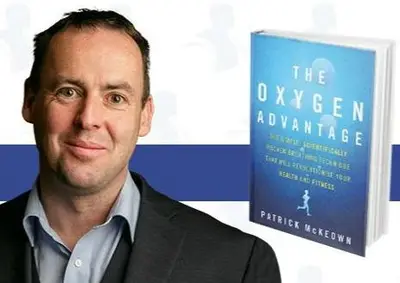
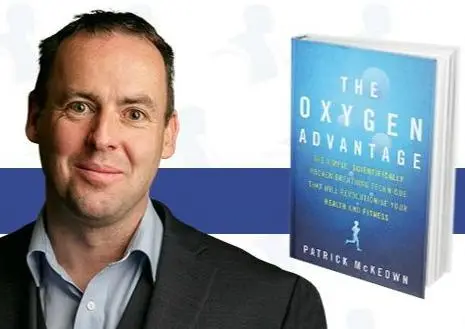
Other great resources to check out are Patrick’s book, The Oxygen Advantage, and his TEDx talk on breathing:
Transcript
Machine-generated from the episode audio and lightly edited — may contain errors.
Chris Albert (link to this point)
You know, one of the questions people bring up to me a lot about the ketogenic diet is where you can find good portable sources of healthy fats. And that's understandable. That's a big thing that keeps people from trying the ketogenic diet. They don't know where they're going to be able to get great sources of fats when they're at work, when they're on the road, maybe you're in the military and you're out in the field. Back when I was in the Marine Corps, I wouldn't have been able to try a ketogenic diet because who the heck is gonna get coconut oil out in the field?
Well, there's a great company out there called F Bomb Nutrition, and they've come out come out with a remarkable solution. And these are packets, portable packets filled with some of the best fats in the world. They've got avocado oil, olive oil, coconut oil, MCT oil, and they've got this awesome series of nut butters, macadamia nut butter, coconut butter, and they're absolutely delicious. And we're not just talking about, you know, nut butters and and oils that are that have been crammed into packets. These are top quality fats made out of the best natural ingredients.
So if you're looking for a solution to make your ketogenic diet easier, definitely go over and check out FBOMB Nutrition, and they are at www.fatissmartfuel.com. What's going on, guys? Welcome to the Warrior Soul Podcast. This is Chris Albert, and this is episode number 57. As we move forward with this podcast, I'm constantly learning.
And our real aim here is is to teach. What we're trying to teach you is that you often have more control over your own life than you originally thought. And the state of your life is actually in your hands. If something is wrong in your life, it's up to you to fix it. And we want you to understand that you're never ever trapped.
You're never in a place where you can't help yourself. And sometimes that's just you admitting that you need help, and then understanding what the problem is, and moving forward, and executing a solution. And sometimes it's something very, very, very simple that you never realized before because you had a bit of tunnel vision. Well, the biggest issue that's been plaguing veterans over the past decade or so been veteran suicide. And normally, we think of veteran suicide as being related to post traumatic stress or to depression.
And we're starting to find that more and more it's related to traumatic brain injury. But when we think about the solutions that have been presented to us by the medical establishment, medication and the classic cognitive behavioral therapies. And despite the fact that these treatments haven't really worked very well. The medical establishment keeps putting them forth, and they keep prescribing medications to veterans, and they keep prescribing the same cognitive behavioral therapies. Even though there's lots of evidence to suggest that these things aren't having the effect that we want them to on the rate of veteran suicide or depression or post traumatic stress.
But what we're trying to do here is to introduce you to some other things you can do. We're not trying to tell you not to listen to your doctor. We're not trying to tell you not to take prescribed medication. But what we are trying to get you to see are the things that you have under your own control. And one of the things you have under your own control is your breath, your rate of breathing, and it's something we don't think about.
I know that you're probably sitting there, well, I don't need anybody to teach me to breathe. I can do it on my own. It's what I thought when I first heard about it. But today's guest is actually gonna talk to us about how breath can affect almost everything about us. It can affect our health.
It can affect our performance. It can affect our sleep, and can even affect the way we look. Patrick McKeown is a breathing expert, and he's an expert on the Buteyko method. I'm sorry if I mispronounced that. But unlike a lot of breathing experts, he's not gonna sit here and tell you to breathe deeply.
He's gonna talk to you about a simple technique of nasal breathing. Breathing softly through your nose that can help to calm you down, help to put you into a better mental state, can help you get rid of insomnia, can help you to perform better athletically, perform better sexually, and that can make you overall happier. And at the end of the day, unlike medications and all these other things, this is something that's free and that's instantly available to you to use at any point you want to. Patrick was an awesome interview, and he's, he's very intelligent guy. And, if you wanna take a look at his book, The Oxygen Advantage, it's gonna be available in the show notes and in the new Warrior Soul Marketplace where we carry products and books that our guests here on the podcast introduce us and that we find very helpful and that helps our mission of helping veterans and everybody else to live their best lives.
So with that, let's get into episode number 57 of the Warrior Soul podcast with Patrick McKeown.
This is Chris Albert, and I'm here to remind you of one thing. Someday, you're going to die. Now that's not some morbid statement or scary idea. It's solid fact. Your time here on this earth is limited.
And we need to be reminded of this as much as possible for one simple reason, to live your best life while you can. This is the Warrior Soul podcast.
Today, we're gonna be talking about a subject that many people think that they have a good catch on, and that's breathing. But if you've ever been in a situation where you've been gasping for air, maybe you've been on a really long hump. You've got hundreds of pounds of kit on. And you're trying to slog through, but you can't just grasp the oxygen. So luckily, we've got an expert on this.
I've been through that situation myself, but Andrew's been through it in in some life and death situations. Andrew, can you enlighten us on your knowledge of breathing in these types of situations?
Andrew Marr (link to this point)
Yeah. Thanks Thanks for that, Chris. And we're gonna get into with Patrick McKeown here in a second. But I just wanted to frame the context of this conversation through the through the eyes of a soldier or a special forces operator. But even before that, Patrick will talk about it, chronic mouth breathing and the health concerns that that can cause.
But as a child, I was a sickly child, I had asthma, I had upper respiratory issues and I had allergies throughout into my early 20s. My entire life been plagued with poor sleep, difficulty falling to sleep, difficulty staying asleep. And when I woke up, I would I would wake up and my mouth was just caked with guck. And I just thought that was the way it was. That was life.
Nobody ever told me anything different. And and after that, you know, I would be it's like so many of us wake up fatigued after, you know, eight, six, eight, nine, however many hours of sleep, wake up fatigued with with brain fog. And then going into performance in my days in special forces, going into that, I was a poor runner until, you know, I got introduced to Brian McKenzie and working on my running efficiency. But no one ever talked to me or I never knew about breathing efficiency or the Bohr effect, which we'll get into, and the process of the exchange between the o2 and the c o2, and the filtration system that we have already internally via the nose. But you know, I struggle that and I just bang my head against the wall to and put out good performance times in the special forces and on the teams, but now I realize it wasn't even one tenth of my potential and the practices I was doing led often to over training.
So translate that, like Chris said, I remember on my last deployment, usually I weighed my kit and it was around a 100 pounds going out to operate. And we were at altitude, so above 5,000 feet over a mile. A lot of times 7,000 or 8,000. So we're talking about long movements, 10 to 12 k to an objective to do the job. And I don't we never once talked about our breathing efficiency and breathing through the nose.
And it just wasn't a concept. And now through finding through my friend Brian McKenzie going to his Art of Breath workshop, learning about nasal breathing, and then he introduced me to Patrick McKeown, who we have on today. I read both of his books. I've then gone to Patrick's website, The Oxygen Advantage, and then and took a real deep dive into it, I've applied all these protocols with significant results. And that's why I wanted to bring Patrick on today because this is information.
We don't need technology. You don't need to buy any fancy equipment. You just need to have the discipline and the want to to improve your life. And you can do it health wise. You can do it performance wise.
And we're gonna get into all of that. So with all that being said, Patrick, thank you for letting me frame that, and what a pleasure it is to have you on the show today.
Patrick McKeown (link to this point)
Sure. And thanks very much, Andrew. You were reading your bio there, I was beginning to think, you reading my bio or your bio? We have pretty much a similar background, funny enough, and we discovered about breathing in our early 20s as well. And I think, yes, there's a huge application.
It's simple information. It's all medically based, scientifically based. And I think it's important to get the information out there.
Chris Albert (link to this point)
Patrick, I've listened to your TEDx talk, I've gone through a whole bunch of stuff on your technique. And it's funny to me because my whole life, people have told me to breathe more to breathe deeply. And, you know, you go to yoga and you go to all different athletic practices. Where are they going wrong? Why are they wrong?
Patrick McKeown (link to this point)
We don't know. I think when yoga was initially developed two and a half thousand years ago, people would have had pretty good breathing. And nowadays breathing has changed because the stresses of modern living, you know, people are under various stresses and long term stresses have such an impact on breathing. And also, we're not doing as much physical exercise as we would have been doing in times gone by. Now, not saying that physical exercise corrects your breathing, it doesn't.
You can do all the physical exercise in the world, and it doesn't change your breathing. But if you change your breathing, you can do physical exercise better. It's just there is a belief out there that the more air you breathe, the more oxygen delivered to the cells. An actual fact, the opposite takes place. And why it has happened, I don't know.
And really, you know, sometimes I get sad because I remember going in to do exams and as a 20 year old, and I would have been nervous enough anyway because I had poor sleep, I was waking up tired, had all the symptoms that Andrew was talking about. My concentration was drastically affected because if you're not breathing right, you're in that fight or flight mode, and also there's not enough oxygen going to the brain. But about ten minutes prior to the exam, I went for a walk, and I intentionally started filling my lungs full of air because of course, I would have heard that too. And I went into the exams dizzy. So, you know, when when focus and concentration was was was necessary, I had neither.
In nineteen o four, there was a Danish physiologist. His name is Christian Bohr, b o b o h r. And he said that the the partial pressure of carbon dioxide in the blood is absolutely vital for the release of oxygen from the red blood cells. So if you think of it, that oxygen is being carried in the blood by hemoglobin. And in order for oxygen to be released from the hemoglobin, carbon dioxide is necessary.
But if you breathe too hard, you get rid of carbon dioxide from the lungs and as a result from the blood. So with lower levels of c o two in the blood, the bond between oxygen and hemoglobin is strengthened. So ironically, the harder you breathe, the less oxygen that's delivered to the cells. And it just doesn't stop there. Your blood vessels are also affected by your breathing.
So your blood vessels are there to transport blood throughout the body. And there is a 100,000 miles of them. So it's a huge extensive network. If you breathe hard, smooth muscle, which is embedded in the blood vessels constricts. That's And why we feel dizzy.
You know, if you ask generally the normal individual, you tell them, you know, take 10 or 15 big breaths, and they'll feel lightheaded. Lightheadedness isn't a sign that there's more oxygen getting to the brain. What's happening there is that the heavy breathing is causing a loss of carbon dioxide. The loss of carbon dioxide is causing the bond between oxygen and hemoglobin to be strengthened or sorry, from hemoglobin and oxygen to be strengthened, and the loss of carbon dioxide is causing blood vessels to constrict. So if you wanna get more oxygen to your cells, it's entirely the wrong thing to do, is take that big breath.
Andrew Marr (link to this point)
Now, Patrick, can you give your your background? I I know you we said we had similar backgrounds. And then what led you how did you discover this your work?
Patrick McKeown (link to this point)
Sure.
Andrew Marr (link to this point)
What was that process like?
Patrick McKeown (link to this point)
As a kid, I was I had asthma. I remember running for a bus, you know, it'd be wheezy, wouldn't be able to catch up. And continuous asthma, continuous wheezing all the way through. It was getting worse into my teenage years. I had some hospitalizations.
My sleep was really, really affected. You know, when I was a kid, my sleep wasn't wasn't too bad. I I had good concentration in what we call primary school. I think it's your junior school. But when I went into high school is when my concentration was really affected.
So I'd be the kid that was falling asleep on the desk. And of course, the teacher wouldn't be happy with that because they think that I was disruptive. They wouldn't realize that there's actually an issue going on. They think that here I'm just looking for attention, whatever. So that continued, and in my early twenties then, the amount of medication that I was taking for asthma was increasing, and I came across There was an article in an Irish newspaper.
This is going back about twenty years ago, And it was about the work of this Russian doctor. His name was Doctor. Konstantin Buteyko. And his his work was he was a research scientist during the Soviet space race. And part of his research was trying to determine the ideal composition of oxygen that would be in, for instance, a rocket for astronauts.
So he knew quite a lot about oxygen, and he actually then discovered his method as a result for the treatment for high blood pressure. He had high blood pressure himself. He was 26 years of age, and he noticed when he was working in the hospital that sick people breathe heavy. And he was trying to find out, he was asking the question, he says, Is it the sickness that causes the heavy breathing, or is it the heavy breathing that causes the sickness? So he started investigating, Well, what happens when you breathe heavy?
Well, if you breathe heavy, there's less oxygen delivered to the tissues. So he started to experiment by slowing down his breathing and to breathe less. So two things he said, breathe through your nose, breathe less. I was a chronic mouth breather up until that point. When you have asthma, your nose is more likely to be blocked because inflammation that's in the lower airways will travel up to the nose and inflammation in the upper airways will travel down to the lungs.
And if you have nasal congestion, you're twice as likely to have sleep problems. So now you see the connection between sleep, asthma, and nasal congestion, but it doesn't just stop there. If you persistently mouth breathe, you breathe faster. And if you breathe faster, you activate the stress response of the body because Stanford Medical School in March of this year, said, okay, there's a pacemaker in the heart. We're all aware of that.
But they said there's a pacemaker in the brain. And your breathing regulates your mental state. So stress causes us to breathe faster, but fast breathing causes stress. So by doing the opposite to that, and that's what Buteyko was all about, he was saying breathe slowly, breathe softly, breathe lightly, breathe so quiet, really slow down your breathing, and as you slow down your breathing to the point that, yeah, carbon dioxide builds up in the blood, but you start getting vasodilation, you feel the blood vessels opening up, your temperature increases, your sleep improves, breathlessness during physical exercise reduces. So there's a whole myriad of things.
So anyway, I started experimenting. I unblocked my nose by holding my breath, so you can open up your nose by holding the breath. I switched to nose breathing. I felt very suffocated for the first week or so, I was a chronic mouth breather for the previous twenty years, but I stuck with it. And about two days into it, I started waking up feeling refreshed.
Now, I wore a nasal dilator on my nose to open up my nose, I also wore paper tape over my mouth during sleep to make sure that I breathe through my nose during sleep. And one of those mornings I woke up, and it was absolutely the best night's sleep that I had ever experienced. And the only difference that I did was switching to nose breathing. Now, I've continued mouth taping. It's something that I do, and it was a crutch.
It's kind of developed into a crutch now. We all have our little routines when we go to sleep, and one of mine is just put on the tape, and once I put on the tape, I fall asleep pretty much instantly, and I wake up with good energy levels. So it totally changed my life. So my background was I have a master's degree in a totally different subject. I was two years, you know, working in in the other field, and I said after that, says, okay.
I I want to start teaching this because it made such a difference to my life, and intuitively, you know, I felt I wanted to to kinda get the information out out there, especially for people with asthma. So I went over to Russia. I trained under Doctor. Buteyko. I come back, and since 2002, I've been teaching internationally.
So then I started writing books because, again, I wanted A book is a very good way to try and get the information out there. I started traveling and, you know, little by little, world is starting to spread, and I think now breathing is becoming very much in vogue. People are realizing that not all breathing modalities are the same. A lot of people are talking about breathing, but they don't really know that much about breathing. They're just kind of repeating what other people say.
And ultimately, like I always say to people, because the the most common question coming into me is, well, I was told to take these big breaths during yoga, and I say, okay. I say, how long have you been doing yoga for? They say, I've been doing yoga for five years. Well, I say, do this for two weeks and see what the difference is because that's what it's about. Put it into practice and see if you get a result.
And if you get a result and the result is good, you know there's some truth in it.
Chris Albert (link to this point)
Well, it's interesting because I think with a lot of these different breathing techniques, there's almost immediate feedback that people get as far as what kind of benefits they think they're getting. So if you breathe deeply like they tell you to in yoga, you can feel good, but that's not necessarily better for you. It's like they're they're giving you a little dose of something to to make you happy.
Patrick McKeown (link to this point)
Yes.
Chris Albert (link to this point)
But what was really interesting to me about your talk and everything that you're saying right now is that breathing actually has so many effects on your body that I didn't realize. Shapes It your face, it shapes your physiology, it shapes so much about you. Can you talk about that a little bit?
Patrick McKeown (link to this point)
Yeah, sure. I just come back from California there on Sunday, and I gave a presentation to, it was 90 it was a combination of doctors, dentists, orthodontists. And the reason that they're interested in because they know that children who mouth breathe during the critical growth spurts of childhood, if the child has the mouth open, mouth breathing alters the shape of the face, and it alters it negatively. So basically, the maxilla, which is the top jaw, and then you have your lower jaw, which will be, say, your chin, the mandible. If you go around with your mouth open, the maxilla, so the top jaw and the lower jaw don't develop fully.
They don't grow forward enough in the face. Now what that means is that your airways are smaller due to persistent mouth breathing during childhood, and this doesn't go away. And it's not a very attractive face, you know, so it reduces attractiveness, but not it's not about that. But maybe it is in some ways because a male typically is presented as this strong male with a strong jaw. But if you're going around with your mouth open as a kid, your jaws are set back, so physiologically and physically you're going to look different.
But you also have an increased risk of sleep problems because now your upper airways are smaller and they're more likely to collapse during sleep. And obstructive sleep apnea affects people generally more so over 40 years of age, more so males, more so with obesity, but not just obesity. And obstructive sleep apnea has detrimental effect on the entire health of the individual. They wake up tired. They're tired during the day.
It accounts for twenty percent of traffic accidents. It's linked with dementia, with stroke, with poor cardiovascular health, with a myriad of other different complaints. How you breathe during childhood is gonna is gonna influence your sleep for the rest of your life. So I think it's very important, you know. We know that fifty percent of studied children breathe through their mouths.
Fifty percent, one and two. Nobody is teaching these kids breathe through their noses. Nobody is telling them get their tongue resting up in the roof of the mouth. Now when I'm saying nobody, I'm saying in the main. Of course, there are some people doing it that are aware of it, but in the main, most people aren't aware of it, you know.
And I think it's vitally important. We're we're expecting the next generation of kids to be able to take over from us, but we're not setting them up right if they're breathing. If their breathing isn't right, they're not gonna be as productive, they're not going to be as mentally stable as they should be, and many things are affected. So, yeah, so mouth breathing has a detrimental effect on the child as they grow up. It affects their sleep.
It can be linked with ADHD. Because if you mouth breathe, oxygen consumption in the brain increases, but actually oxygen delivery reduces. So now you see that some some scientists are saying that there is a link between mouth breathing and ADHD. And if you just put in mouth breather into Google, what comes up straight away is a stupid person. Now, okay, you can say that's a bit of an insult, but what it means, I think more so that is, mouth breather have poor concentration, they have poor sleep, they're not getting enough oxygen.
So physiologically, they're not going to have the attention span that somebody whip breathing through the noses.
Andrew Marr (link to this point)
Now, Patrick, I have five children, and we have another one on the way.
Patrick McKeown (link to this point)
So this Well is just done. You're like an Irish family, Sue.
Andrew Marr (link to this point)
That's right, man. I could go off an attention on that. We've tried we we are working so hard to reshift and be conscious now of breathing nasally at all times and just using the mouth to eat and to and speak when it's required. What do you recommend as far as setting up children for success? First, just well, let me tell you.
Like, what we've been doing is just highlighting breathing through the nose and now taking slower breaths. And then from there with some of the older ones, we actually work on some of the protocols and the BOLT test, which we'll get into. But what is your recommendation is introducing this to, say, a 10 year old who has never heard this concept before?
Patrick McKeown (link to this point)
I think, you know, even if we start just talking about the importance of nose breathing, know, 10 year olds talk, they pick it up. Now, the way I kind of get it through to them is we look at sports, especially if they're athletic. It's a great motivator, you know, because ultimately, if you're going around with your mouth open during rest, you're gonna be more breathless during physical exercise, and you breathe more with upper chest. If you look down at your chest and if you take a breath through the mouth, you'll see that the air moves into the top part of the chest. But most blood flow is actually most concentration of blood is in the lower part of the lungs, so there's a mismatch.
When you breathe through your nose, you carry the air deep into the lungs. So we are all about using the diaphragm, but we're about breathing light. So breathing through the nose carries the air deeper into the lungs. And also as you breathe through the nose, it carries nitric oxide, and nitric oxide brings the blood from the lower lobes up to the upper lobes. So your breathing efficiency improves.
That's called ventilation perfusion. So the kid's coming in to me, I'm talking about looking dumb with the mouth open or looking intelligent with the mouth closed. Because Hollywood, if it's doing a film about an idiot, it'll always portray the idiot going around with the mouth open and tongue hanging out. So, you know, we set these kids up. I'm planting messages with children all the time.
And, you know, like, it's not gonna be 100%. We we never get it a 100%, but I always want to be kinda planting these in this information. Other reasons, bad breath. That's associated with mouth breathing, and it could be due to the structural changes of the upper airways that mucus, things don't clear as quickly as they should do, so they pool. And if mucus is pooling, then it becomes stagnant, and that's related to bad breath.
Well, you tell me any teenager coming into me when I start talking about bad breath and they're thinking about kissing and all of this stuff, that's gonna motivate them to start breathing through their noses. So we hit it so many different tangents, but also, I think one of the big ones is with parents. I show parents that children whom I operate have poor academic performance, their health is adversely affected. If they have the kid has asthma, their asthma is going to be worse, their sleep issues are going to be, behavioral issues, concentration. Now I get the parent on board, and I don't just show it that, you know, they don't just in case they don't believe me, I show them where the research is, and I direct them to it because this has been well documented, but it's all buried in the medical literature.
It's it doesn't seem to be getting out into the hands of the general public. So we get the parents on board. The parents become aware of it, then they start giving information to the kids. And we have different exercise for children, breath hold exercise to open up their nose, and it does. It works brilliantly.
And you know, then the child can restore nose breathing. They're not going to feel suffocated because we're addressing that. And you know, it's just education and we do our best to try and get it across to the kids and yeah, hopefully we're planting some messages.
Andrew Marr (link to this point)
Yeah, I think that's definitely the case. You know, another thing since reading your first your first book dealing with anxiety and then The Oxygen Advantage, learning the detriment that sighs and yawns have on health and our physiology. And like I said, my wife now she's in her first trimester and she's nauseous majority And of the I noticed after that, oh my god, you're sighing three times every minute. And that never just would have registered into anything else except a byproduct of living. Can you speak a little bit on the process of that?
Patrick McKeown (link to this point)
Yeah, so when your wife, she's going through pregnancy, as the baby is forming, there's gonna be a little bit more pressure to diaphragm, and there's also a change of hormones, I'm sure you're well aware. So this will stimulate breathing. So during pregnancy, we never interfere with first trimester, just allow breathing to happen as it is. We don't encourage the mom to take big breaths, but we don't encourage the mom to reduce her breathing either. We just allow breathing to react to how she's feeling, but we do encourage the mom to breathe through the nose because just one of the points that you made earlier is that Doctor.
Maurice Cottle, he's a really famous ENT from The States, and he said that the human nose is responsible for 30 functions in the human body. 30 functions. You know, we're all talking about filtration and cleaning the air, but there's so many other functions going on. Now, if we have a normal, say an individual who's coming into me with panic attacks, I look at their breathing and they have an aversion to suffocation. You know, they're constantly feeling that they're not getting enough air, even though they're breathing hard, their breathing is noticeable, they often sigh, they often have their mouth open, and their breathing is upper chest.
And oftentimes the panic attack, it has originated out of a stress. So the individual hasn't had a major stress in their life and the stress had such an impact on their breathing that their breathing maintained bad habits after the stress went away because if the respiratory center in the brain becomes programmed, the operating systems don't go back to normal very quickly, and this has been documented since the American Civil War. There was a doctor there called Dacosta, D A C O S T A, and he noticed that soldiers who were returning from wars, they exhibited symptoms of breathlessness and fatigue, and he said that it took such a long time for these soldiers to recover. Now the reason that it takes such a long time for these soldiers to recover is that their breathing is affected, but nobody is helping to bring their breathing back towards normal because I think people don't understand it. So if a person comes in to me and their panic attack, yeah, they sigh, they generally can sigh a bit.
They're upper chest breathing, they're feeling that suffocation, and of course the suffocation is associated with the panic. Now what I do is I deliberately get them breathing through the nose, and I deliberately induce small sensations of suffocation, but my purpose isn't to deliberately increase or generate suffocation. It happens. I'm resetting their breathing center to a higher tolerance of carbon dioxide. Their breathing becomes lighter, but in the process, there's a psychological aspect to it in that I'm teaching the individual a small bit of suffocation is okay, so when they experience it in real life, if there's a fear or a panic, they don't suddenly go into this fight or flight response that their body is known, Yeah, it's a feeling of suffocation.
If I go for a jog, it's a feeling of suffocation. So there's a number of different factors to it, but one sigh every few minutes is enough to maintain poor breathing patterns, and as long as an individual continues sighing, they're gonna remain stuck there. Now excessive yawning, that's going to be related to poor sleep, even though nobody really knows why do we yawn. But you're gonna yawn more when you're exhausted versus when you're full of energy. And the other aspect of it, you know, so we try and get people Of course, we want to improve their sleep.
We get them breathing through the nose. We get them breathing lightly for twenty minutes before sleep. We have good sleep hygiene, no using mobile phones, and all of that stuff that sends blue lights, and as a result, the brain doesn't produce melatonin, and the body doesn't go asleep as quickly as it should do. So a few different aspects that we bring in that's related to breathing as well Help sleep. Your energy levels during the day are better, and your mental state is going to be better.
If your sleep is good, you're going to be naturally calmer. Whereas if you were to deprive a child of sleep, the child wakes up in the morning like a demon, and that's normal. We're the same. Adults or children, it doesn't matter. Deprived sleep and mental state is affected.
Chris Albert (link to this point)
It's funny listening to you just because for my whole life, I've been a very, very slow breather. And I've always breathed out my nose, I thought I was abnormal for that. But last year, I started doing jiu-jitsu.
Patrick McKeown (link to this point)
Yes.
Chris Albert (link to this point)
And it's amazing martial art. Absolutely love it. I'm still a white belt. And, yes, my technique is very, very it leaves a lot to be desired right now. But the It's a beginner.
Yeah. It's a beginner. But but one thing that I found is that when I'm rolling with people, I tend to have a little bit of an advantage because I barely breathe while I'm rolling. Like, I don't I don't gasp. I don't gasp for air or anything like that. And I watch a lot of my opponents, even the higher belt opponents, and they'll be gasping for air and and kind of struggling through it. Yes. It's it's it's amazing to me because it's it's it's such a different effect on the physiology, and don't tend to freak out in different positions.
Patrick McKeown (link to this point)
Yeah, yeah, which is great. Running out of gas, gassing for air, it can be partly genetic. You've got elite athletes, and they can really push themselves hard during physical exercise, and their breathing is pretty light. Conversely, you've got other athletes, and they're just really panting for air. So part of it can be genetics, but it's trainable.
And partly also is lifestyle and environment. You know, the environment is going to affect your breathing. Your breathing will always respond to stress. There's a huge advantage if you breathe light during physical exercise because your breathing light is going to get more oxygen delivered to the cells. But I don't know.
Is is a choke hold part of jiu-jitsu, or is it just MMA? But I was even thinking Yeah. About this choke in jiu-jitsu. If you're in a choke hold, somebody who's got a really good tolerance towards CO two, they can be very relaxed. They're not gonna feel that sensation of breathlessness so quickly, so the panic doesn't set in, so they can remain calm in that state, even though it's an extreme state.
So we have two aspects. We have breath hold exercises, which we completely disturb the blood acid base balance. So an athlete coming into me, and I've worked with some MMAs, well, I've worked with about 15 of them, and super athletes, but yet their breathing doesn't be changed. So they're top athletes, but they can develop poor breathing. I've had some Olympic athletes with poor breathing, so we change their breathing patterns.
I give them different breathing exercises to reset the breathing center in the brain so that their breathlessness during physical exercise reduces, and as a result then they're gonna be breathing lighter. But I also give them breath hold exercise to challenge the body, and it adds an extra load onto the breathing muscles. As the breath hold continues, the diaphragm is repeatedly contracting, and as the diaphragm repeatedly contracts, it's strengthening the diaphragm because diaphragmatic strength is very important. Up to fifty percent of athletes can suffer from diaphragmatic fatigue. Now, if you deprive or if the diaphragm isn't working or functioning as well as it should do, it steals blood from the legs.
So I'm sure you were watching the Conor McGregor Mayweather fight there fairly recently, and you see it in round 10. But it was an interesting observation by the commentator on round seven, and he said, towards the end of round seven, if you were to replay that, the commentator said, he's now sucking in air through his mouth, not his nose. So intuitively, the commentator noticed something was happening here. Now here was when Conor McGregor yes, of course, he tired himself out in the early rounds. There was good tactics by Mayweather.
But physiologically, could we have delayed that? Could we have delayed that breathlessness? And I believe we can. Two ways. If there was an increased lactic acid there, it's as a result of going into anaerobic metabolism.
If you breathe right, you get more oxygen to the cells. So that's one aspect to it. The hydrogen then, which are coming from the cells, are not associating with pyruvic acid, so there's less lactic acid. So if you can get more oxygen to the cells, there's gonna be less lactic acid. Second thing is Yeah. Oh, sorry. Keep going. So the second thing is that we do breath hold exercises, and we purposely push the body into what's called a hypoxic hypercapnic response. We lower blood oxygen saturation to 85, and that's severe hypoxia.
But we also increase carbon dioxide very, very highly, 55 millimeter of mercury pressure, say, from 40. We greatly disturb the blood acid base balance, and by doing that, then the body makes an adaptation. And one of the adaptations is to increase the buffering capacity, and that also will delay lactic acid and fatigue. And the third thing then is improving respiratory muscle strength. If you improve or strengthen the diaphragm, you're less likely for blood to be stolen from the legs.
And I don't know exactly which one happened when at round 10 with with Conor McGregor, you know, when his legs went jelly there, but clearly something was happening, and fatigue was setting in. It could have been due to increased hydrogen it could have been due to diaphragmatic fatigue. And both of those, you can delay. And I'm not saying that he would have delayed it for the for 12 rounds, but I'm saying that scientifically, it's been proven that you can delay, that by doing breath hold exercises.
Chris Albert (link to this point)
That that's amazing because, you know, I I definitely noticed that watching that fight. And then if if you ever watched this really old documentary called choke with master Rickson Gracie, really one of the best jiu-jitsu practitioners of all time, there's this video of him literally not breathing, but sucking every bit of his abdominal muscles up into his diaphragm. Yes. And he's doing it for, like, five straight minutes and just moving each individual muscle around without breathing. And Yes.
Patrick McKeown (link to this point)
It's Yeah, and it could be trained. That could be trained. Metabolically, you'd want to go into a state of relaxation because if you start getting panicked, you've got an increased metabolism, so you're gonna run out of air quicker. Whereas if you could remain relaxed in that situation, But it's something that's trainable. So you can train yourself to remain more relaxed and at the same time, to increase your tolerance to the breath hold that you can sustain the changes in the blood gases.
So you do that. You could do that walking around your kitchen, holding your breath, but don't breathe in and hold. It's always better to have a normal breath in through your nose, a normal breath out through your nose, pinch your nose, and walk. And maybe start the first one of of about 15 paces. And then at the end of it, breathe in because as you're holding your breath on the exhalation, you will get a stronger hypoxic hypercapnic response, but also the nitric oxide that's building up the nasal cavity.
When you release the nose, you're inhaling air into the nose. So the nitric oxide that's pooled inside the nose, you're carrying that into the lungs, so it's opening up the lungs. So it's a huge number of effects there. Number one is that your spleen, which is located it's an organ located under the diaphragm, and it contains about 8% of your red blood cell count. So when you hold your breath and your body senses there's a deprivation of oxygen, your spleen starts releasing more red blood cells into circulation, so it improves your aerobic capacity.
So yeah, I think it's something that's trainable with a bit of practice, and you don't need any equipment. All you need is just pinch your nose and off you go.
Andrew Marr (link to this point)
That's the beauty of it. I love it so much. And you spoke briefly on nitric oxide and Chris was telling me earlier like the sports performance and the supplement industry what millions of dollars millions on nitric oxide as a supplement. What does that do in the body, Patrick, and and why is it so important? And and then again, can you reiterate how we can stimulate it through nasal breathing?
Patrick McKeown (link to this point)
Sure. So nitric oxide, for decades, scientists thought it was harmful in the human body. Which involved in pollution. And up until about the mid 1980s, you know, they were questioning how could a gas that's so toxic outside the human body, would it serve any benefit inside the human body? Three researchers, they discovered that nitric oxide is a signaling molecule in the cardiovascular system. And since that time, more and more research went into it.
And of course, drug companies cared about nitric oxide and said, Oh, yes, wonderful. So they started looking at researching what sort of tablet would mimic the effects of nitric oxide. And they produced the best selling tablet ever. It's called, of course, Viagra. So there's two functions of nitric oxide.
Nitric oxide is in 1992, the journal Science said it was one of the most important molecules in the human body. It unites all the major disciplines of medicine. It affects neurotransmission is how the brain cells communicate with each other. It affects the cardiovascular system. It affects homeostasis in that the body is maintaining an ideal kind of balance.
You know, if something gets disturbed by stress that the body can get back to normality. It affects the respiratory system. So, you know, it's it's it reverses the buildup of plaque in the arteries, it reverses the buildup of high cholesterol. It's it's a tremendous gas and of course, are are using it for bodybuilding and strength, etcetera. Now, nitric oxide is a short life.
It lasts for about two to thirty seconds inside the body. So if you breathe through your nose, nitric oxide is released from the paranasal sinuses into the nasal cavity. And with each slow breath, and that's the key, if you breathe slowly and gently through your nose, you carry a high concentration of nitric oxide into the lungs. In the lungs, it sterilizes the air. It improves ventilation perfusion, and it also improves arterial oxygen uptake.
So nose breathing improves arterial oxygen uptake by between 10 to 20% over mouth breathing. That nitric oxide, because it's lasting for up to thirty seconds, is gonna pass into the blood. And in the blood then, it's helping to open up the blood vessels and basically assists in better blood flow and better oxygen delivery to the cells. So food, you know, there's a number of ways that we can get nitric oxide. One is by breath holding, because if you hold your breath, nitric oxide is continuously released into the nasal cavity.
But the key is when you let go of your nose to breathe, you have to breathe in because you want to carry that nitric oxide into your lungs. Another way is physical exercise. So scientists looked at, well, what happens if you walk? Well, they realize it doesn't really generate that much nitric oxide. And if you really do hard sprinting, well, that doesn't do much generate much nitric oxide either.
Moderate to fast physical exercise, which is sustainable, generates more nitric oxide. And then nitric oxide is also generated through our diet. So if we have a diet that's breakfast for example, you see cocoa pops and all of that stuff, and then you see porridge oatmeal. Well, actually, oatmeal is very high in producing nitric oxide and the French people, they're known for drinking a glass of red wine or two. That's high in producing nitric oxide.
So if you were to drink a glass of red wine, have a glass of red wine sorry, if you were to drink a glass of wine, have a glass of red wine over white wine. Dark chocolate and beetroot, of course, is the super nitric oxide producing. So yeah, there's a number of different ways of doing it. It's producing different sites in the body. It has a tremendous tremendous role in the human body, but nose breathing is a key function of harnessing nitric oxide and mouth breathing.
To give you this example, if you breathe through your nose, there's 50 to 200 parts per billion of nitric oxide in the incoming air as you bring it into the body. And if you breathe in through your mouth, it's 10. So there's no comparison, nose breathing over mouth breathing.
Andrew Marr (link to this point)
Wow. Yeah. That that's incredible. The so you get a new athlete, Patrick, or a new athlete comes to see you becomes a client. Can you take us through the process of what you would do to assess him?
And then some general concepts of what you would recommend to improve his performance?
Patrick McKeown (link to this point)
Sure. So the athlete comes in to me. First of all, I want to see how does he breathe normally. How how is his everyday breathing? Because if an athlete has poor everyday breathing, they're not gonna have good breathing during physical exercise.
It just doesn't fix itself when you start running. So however you breathe during the day, your breathing 20 fourseven is going to influence how you breathe during sports. I look at the athlete when he walks into me or she walks into me, is the mouth open? They sit down, I have a chat, I'm watching their breathing as an upper chest. I'm looking at the amplitude of the breath.
I'm looking at the natural pause, if any, between breaths. I'm looking at the respiratory rate. I'm looking at the regularity of the rate. Now I do this all kind of unconsciously. So you you do it without the athlete knowing because if the athlete knows that I'm just staring at him, his breathing is gonna get stressed, so his breathing changes.
So I wanna kinda do it for kind of subtly. And I measure after about five ten minutes of resting, sitting down, I measure his BOLT, and the BOLT score is the body oxygen level test. It's also it's part from the Buteyko method. And basically, that measure is you take you have to sit down for about five to ten minutes first and do nothing, and then take a normal breath in through your nose, a normal breath out through your nose, and then you pinch your nose with your fingers, and you time it in seconds until you feel the first distinct reaction of your body to breathe. So it's not holding your breath for as long as you can.
You don't change your breathing prior to the BOLT, and your breath at the end should be pretty normal. Now what that score measures is the onset and endurance of breathlessness. So that tells me that if this athlete goes for a jog, I get some feedback of how breathless they are going to be during that jog, and it gives me some feedback of how hard that individual breathes. Now, I know by their I know when somebody comes into me by watching their breathing, I'll have an idea within a few seconds what their BOLT is. So the BOLT for me is confirmation of what I've already seen in the athlete anyway.
So then I start talking the athlete through breathing lightly. And basically, that's you can put one hand on the chest, one hand just above the diaphragm. Of course, you keep them out closed. And I have the athlete focus on the airflow as it comes in and out of the nose. And I have them really slow down the speed of the air as it enters and leaves the nostrils.
So I have them completely slow down their breath, to the point that I want them to breathe so lightly that the fine hairs within the nostrils do not move. I want them to keep bringing their attention back onto their breath, and deliberately slow it down so that their breathing is less, that the volume of air that they're taking into their lungs is less than what it was before they started. Now this creates a sensation of breathlessness. And we do this for about say two to three minutes at the start just to get them used to the feeling of breathlessness. Breathlessness just is telling you that CO2 is increasing in the blood because the stimulus to breathe is carbon dioxide.
The body doesn't breathe to bring in oxygen. Yeah, oxygen comes in as a result, but actually the stimulus to breathe is to get rid of excess CO2. So we deliberately reduce breathing volumes to increase CO2 in the blood and with that then, the whole purpose of that is to reset the breathing center towards a higher tolerance of CO2. As a result, then the BOLT score increases and everyday breathing changes. So I've had some athletes come into me and their BOLT score is ten seconds.
Now you'd wonder how are they achieving what they achieve? Well, they're achieving a true pure drive and determination, but they could do it easier. You know, they don't have to achieve it so hard. And there's also there's an energy cost associated with breathing. And the harder you breathe, the more oxygen is is devoted to supporting your breathing muscles.
Because if you're really pushing your breathing muscles, well, you have to feed them oxygen. And if 10% of your oxygen intake is going just to support your breathing, well that's a lot of oxygen that could have been diverted to the legs. So if your breathing is lighter, there's so many different benefits to it. So that's the first thing. I want to change the athletes' everyday breathing.
I get them taping their mouths at night. I check their history, do they have asthma, do they have rhinitis? Are they prone to anxiety or panic attack? Because I have to take a slightly different approach if the individual has panic because they hate that feeling of suffocation. So I have to give it to them in teaspoons to gently condition their body towards it as opposed to make them stressed because I don't want I don't want the individual to feel stressed, you know, sometimes that can happen a little bit at the start.
The the second part of it then is is doing breath hold exercises. We use that to challenge bodily systems. So that's pushing, that's completely disrupting blood blood gases as I spoke about. We've got about, in in total, about 10 exercises. Some of them have different approaches, and we kinda just, you know, tailor the exercise then to the athlete.
We push them through the program. But, yeah, so there's two aspects to it. One is get have the have the athlete understand the whole role role of physiology. I want an athlete coming into me that they understand how oxygen is delivered to the cells and how their breathing is going to influence that. And another another beneficial factor of breathing light is that it focus you to hold it sorry.
It focus you to hold your attention on your breath, and that's training the brain. Because in today's modern society, we're totally distracted. Mobile phones, smartphone technology, emails coming into us, text messaging, Facebook alerts, and everything is taking our attention. And what that's doing is that's training the brain to be totally distracted. Now, if the brain is totally distracted, it means that the mind is wandering all over the place.
And if the mind is wandering all over the place, concentration is reduced because you can't concentrate on something if your mind is totally going in all different directions. So you need to be able to train the brain. And how do you train it? You have to get the brain to hold its attention on something without distraction. So by focusing on the breath, you're holding your attention on your breathing for that period of time without distraction, and in turn then, that's training the brain to increase concentration.
And that's huge because I anticipate huge mental health problems as a as a result of overuse of mobile phone technology and Facebook. And I have to say this, I think Facebook should have a health warning on us. You know, I think the time that our kids should be honest should be limited. I think the dangers associated with it, we're teaching our children to be instant gratification, and life isn't about instant gratification. You know, we have to work hard.
Sometimes we don't get the results that we want, but the Internet is teaching these kids, yeah, click a button and I get the thing tomorrow. Well, that's not how life works. When these guys go out into the real world, and things don't come to them so readily, well, they're gonna get disappointed and disillusioned and feel down. Because if you have built your whole life on instant gratification, and then things don't work out the way they should do, well, how do you cope with it? So when we were children in Ireland, we had nothing, you know.
The poverty in nineteen eighties was poverty. I used to go over to Canada and American, I might say, my god, all what you guys had over there was unbelievable. But we got used to doing, you know, we got used to coping with that, and it taught us some great life skills that if you want to achieve something in life, you have to put in a bit of effort. Now, I know I've kind of went off on a tangent, but I think it's related to it because mental health issues is going to change breathing, because stress changes your breathing. You know, as I said earlier on, it's not just that the stress changes breathing, but also the fast breathing that's associated with the stress feeds back into it.
It's a feedback loop. And people who are oftentimes slower to make progress with breathing are people that are so caught up in their heads. And I need these individuals to get out of their head. I need them to be able to take their attention out of the mind, you know, overthinking. Thinking is a disease.
Oscar Wilde said, he said, yeah. He says, thinking is a disease, and people die of it just like any other disease. And he was absolutely right. We are losing control over the mind. The mind is in control over us.
And one way of getting control of the mind is start focusing on the breath. So yeah, so there's a number of aspects to it. We look at, you know, the benefits from a mental health point of view, for sleep with the athlete, their everyday breathing, and then to challenge them by disrupting their blood acid base balance.
Andrew Marr (link to this point)
You know, Patrick, there is a transformation shift when we can tap into that ever present moment and be present with that. And I found that's when creativity and the richness and fullness of life can really be experienced. You talked about it in both of your books, how you can be the observer and the witness of thoughts. And that's a crazy concept if you've never been introduced to that. Can you explain that one, and then two, talk about some transformation shifts that you've witnessed through your clinical application of your protocols?
Patrick McKeown (link to this point)
Yes. Twenty years ago, I had a very active mind, and it would have been associated with the fact that, you know, I was constantly stressed, was constantly a mouth breather, so my physiology was off, my sleep was off. And at about the same time that I heard about Buteyko's work, I also went to a seminar on focusing your attention on your breath and coming into the present moment. I sat in the seminar for about two hours, but the person who was giving the seminar, he must have been in presence because when I left the seminar, I walked down Grafton Street in Dublin, and it was almost as if I'd taken acid or something. I would the colors were different, the sounds were different, and it was it was just, you know, that my full attention was now coming into the street as opposed to being stuck in my head.
Now, I would have walked that street hundreds of times, but I walked it physically, but I never observed. And I don't mean observing that you just give it a glimpse and then you go back into the mind. I never had my attention out of my head because I was taught how to think, and Western education teaches us how to think, but if you teach the mind or teach an individual how to think, we need to teach them how to stop thinking. There's no point in just developing thought activity without giving people the skills to be able to switch off the mind, and I'm not talking about forcing the mind to stop thinking. The mind, of course, will always wander a bit, but I'm talking about reducing the repetitive and incessant thought activity and to become aware of it.
So that was my first kind of insight into it, but it stuck with me. Now, the next day I woke up and the mind was just as active again, worrying, thinking, thinking, thinking, thinking, never could switch off, And I kinda it gave me something that I made a commitment to start following my breath, and the mind would run off, and it'd bring my attention back and follow my breath, the mind would run off my attention back. And I kept on doing that, and slowly over time, my ability to hold my attention improved. And I have to say it was transformative. It absolutely changed my life.
You know, I was lucky enough in my early twenties, I came across two things, the physiological importance of breathing properly, and of course it's tied in with that is having the observation to know what's going on in the mind. We never if you think of it this way, the mind is the filter through our through which our quality of life on earth is determined. You could have everything materially on this earth, everything you want, but if your mind is a mess, you have nothing. And we never stand back, and I'm not talking about understanding the mind from a psychological perspective. You could do a PhD on the mind, but it doesn't mean that you understand the mind.
You could do a PhD on eating an apple, but it's only if you taste the apple do you get an idea, an insight into it. And, you know, I worked with a lot of people who were coming in with anxiety and stress and beautiful young kids coming in and, you know, suffering from anxiety, and it's just incredible. And, you know, working with them to the point that I wanted to take their attention out of their mind and bring it into the present moment. And always when I ask these kids and ask these people, I said, Have you ever meditated? And yeah, about ten percent of them put up their hands.
And I said, Do you continue meditating? No, most of them dropped it. And I think it's because when the mind is so active, you're doing meditation as a goal to achieving a quiet mind, but it just doesn't work that way. The goal is actually just doing the meditation. And of course, the mind wanders, and you have to be patient with it.
You have your attention on the breath, the mind wanders, you bring it back. The mind wanders, you bring it back. You don't set the goals of achieving a quiet mind because then you're here, but you want to be there, you're jumping into the future. Whereas we're using the breath as a means to bring our attention into the present moment. And I'd always say to people, listen, if you follow your breath for two breaths, at least that's a few seconds that you're out of your mind.
And at first I think when people start following their breathing, they're actually thinking about it, because they're so analytical, you know, and they're thinking about their breath, they can't get out of the head, but you know, stick with it. It's unbelievable in terms of even success, because your concentration is better. If you look at the quality of work of somebody with an active mind, they start off a job, but they're in such a rush to get to the future. They also start off a job, but they don't have the retention of what they're doing because their attention is stuck in their head. They're thinking, thinking, thinking, thinking.
You can't have your attention on something. You can't be applying your skill to the best of its ability if you can't get out of your head. If all of your attention is in your head, how can you produce anything worthwhile? So that's why, you know, we need to be teaching everybody. I'm not saying we need to, but I think it's I think, you know, people will get so much out of something so simple.
And the benefits of this is lifelong. You know, the beauty about this is that it gives you a better resilience if you focus on the breath. The amygdala, which is the part of the brain that's responsible for the fight or flight response, scientists through MRI scans have found that it shrinks when you focus on the breath. You're also able to recover more quickly. I'm not saying that you know, life is absolutely 100% happiness.
Of course it's not, life is life. But you can get back up on the horse quicker. You get over it quicker. You know, the young kid, the young child, a three year old or four year old, they're totally immersed in the present moment. They get upset, but they get over it quickly.
Whereas the adult gets upset, and they drag that emotions across everything that they do. Like somebody did something to us ten years ago, they did it once and we've been doing it to ourselves hundreds of times, you know. And we do it to ourselves because we don't even stand back and pay attention to what's going on in the mind. It's important to stand back and ask yourself throughout the day, what are you thinking about? Are you thinking about the same old nonsense?
You're giving out about the boss, you're giving out about the wife, you're giving out about the husband, you're worried about finances. And you have to ask yourself as well, the more I think about this, is it actually helping to solve the problem? You realize the effect that your thinking has on your body. And that's the first step of awareness. And that's all awareness means.
You know, as far as I know, I don't have an interpretation or a definition of awareness. But the definition that I would use, my own would be simply pay attention to what's going on in the mind. And as you pay attention to what's going on in the mind, you're able to step out of the repetitive and recurrent and incessant thought activity a lot quicker than what you would otherwise be.
Chris Albert (link to this point)
Patrick, one thing that your words just brought up brought up for me is that there are a lot of people suffering out there right now. And there has also been a lot of almost cult cult like followings that have developed because people have been suffering and because people are looking for a way to get out of it. And a lot of them have been centered around breathing.
Patrick McKeown (link to this point)
Yes.
Chris Albert (link to this point)
Can you talk about some of the other breathing techniques that might be out there and the benefits or dangers of them that might be there as well?
Patrick McKeown (link to this point)
Yes. Know, with breathing, the best way I suppose to understand about breathing is to ask yourself how do you breathe when you get stressed? When you get stressed, does your breathing get faster or does it get slower? People know that, yeah, when I get stressed, my breathing gets faster. When you get stressed, do you sigh more or do you sigh less?
Well, you sigh more. Do you breathe more using the upper chest or diaphragm when you're stressed? You breathe using the upper chest. Do you breathe more or do you breathe less when you're stressed? You'll tend to breathe more, yes, albeit some people will hold their breath when they're stressed, but generally you'll breathe more.
So stress breathing is mouth breathing, upper chest, and it's irregular, you're taking larger breaths into the body. Now on that basis, how can you bring the body into relaxation? You have to do the opposite to the stress breathing. So you're breathing through the nose, you're breathing lightly, you're breathing slowly, you're bringing a feeling of relaxation throughout the body, You're taking your attention out of the mind and onto the breath. And they're just a bit very basic elements of breathing.
And I'd say that if you're doing a practice that is helping you to slow down your breath and activate the body's relaxation response and, you know, improve your overall health, I think it's good. An interesting breathing technique, is actually very good and it confuses a lot of people, is the Wim Hof technique because people get confused, they're really oxygen advantage and they commonly buy the two books together. So then they send me an email and they're saying, Okay, I have the Oxygen Advantage, I have the Wim Hof technique, I'm totally confused now. There's more there's more similarities with the Wim Hof technique with what we do than differences. The main difference that the Wim Hof technique is is take 30 big breaths.
Now the 30 big breaths, it doesn't improve your blood oxygen saturation because it can't. Already with normal breathing, your blood oxygen saturation is fully loaded. It will increase the amount of oxygen dissolved directly in the blood by a small amount, but the amount of oxygen dissolved directly in the blood is very small. It's three milliliters of oxygen per one liter of blood. It's hemoglobin that carries most oxygen.
So hemoglobin is carrying 70 times more oxygen than what is just carried directly in the blood. So the Wim Hof technique, by taking the hyperventilation, you don't add any more oxygen to hemoglobin. You do add a small amount to the blood. But what it does is it gets rid of carbon dioxide, and carbon dioxide is the stimulus to breathe. So if you take 30 big breaths and then you hold your breath, well now your alarm to breathe is depleted.
So you can hold your breath for a long time. So that as you hold your breath for a long time, your oxygen levels, your blood oxygen saturation drops. So Wim Hof creates a hypocapnic, which is low CO2, hypoxic response. And what we do is we do the breath holding, but we don't do the hyperventilation before that. Now, I just say it for some people, hyperventilation is not always good for everybody because it can cause coronary vasoconstriction.
What that means is that as you take 30 big breaths, the blood flow, the blood vessels which are supplying the heart can constrict. So the heart gets less oxygen. Say if you have somebody who's predisposed to medical heart condition, if they're taking 30 big breaths, it's a stress to the body, I'd probably say, don't do it. I would say, if you have a heart complaint, don't do the 30 big breaths, but also don't do the the breath hold. You could do just gentle light breathing.
So, you know, there's I looked at a paper by Cox which looked at the Wim Hof method, and in the experimental group which were doing the Wim Hof method, they injected endotoxins and the individuals were able to resist the flu symptoms. So it shows that if you do strong breath holds, if you push the body and challenge the body, the body adapts to it. And the body adapts to it by building up its own resources. And I think, you know, there's some beautiful things in the Wim Hof method. So we're not all that, we're not totally dissimilar, you know, there's a few things that are similar.
You know, I think it's going back to it. Think like the long term, I want to change somebody's everyday breathing patterns. Diaphragmatic breathing is essential. I want to do various breath holdings. And I'd say, you know, people sometimes ask me the question, well, when I go to yoga, how do I how should I breathe?
Well, I say, do all of your postures in yoga. They're brilliant. And the only change that I'd say is to your breathing is breathe slowly and breathe lightly. You don't need to take the big breath. It's okay to take a big breath if you go for a run because metabolically your body needs oxygen.
But it doesn't make sense to be taking big breaths when you're standing still because you don't need the oxygen there. And we have so much of a surplus of oxygen. It's estimated at rest that we exhale 75% of our oxygen intake. So can you imagine that as we're sitting there and we're breathing in oxygen and we're breathing out, we're breathing out 75% of the amount of oxygen that we breathe in. So we don't need to be breathing that hard.
There's no benefits to it. It washes out CO2, and as a result, less oxygen gets delivered. So yeah, I'd say enjoy it, do whatever breathing you feel works, but do you really need to be paying these massive sums of money, you know? Your breath is intrinsically with you. You carry it with you twenty four seven.
Just start observing the inflow and outflow in through the nose, out through the nose. You know, it's there with you. I would encourage you to slow it down. You could watch my TED talk if you want to. It gives you a you know, I go through a breathing exercise with the audience and see how do you feel.
Do you have increased watery saliva in the mouth as a result of it? Meditation, for example, which is absolutely brilliant, one of the results from meditation is increased watery saliva. And that's been known, that's a sign that there's activation of the parasympathetic nervous system, which is the relaxation response. So just as the mouth goes dry when we're stressed, if you really slow down your breathing and under breathe, your mouth gets watery, and that's a good sign. And if you can open up your airways, now you know that you're on the right track.
So, you know, you get a result as as a result of your efforts.
Andrew Marr (link to this point)
Awesome. And we'll have a link to that TED Talk as well as everything else we're talking about in the show notes. What about heart rate variability? Because I was introduced to that at one of the big hospitals for the for the military, and it's taken like a very prolonged inhale and and matching it with the exhales. For instance, it could be six seconds in, six seconds out, and it's trying to sync up with the heartbeats.
Can you talk a little bit about that, Patrick, and what you found with the Oxygen Advantage as far as with heart rate variability?
Patrick McKeown (link to this point)
Yes, I've never really compared the two. You know, I've looked at heart rate variability. I think it's very interesting, and I think it gives very, very good signals in terms of where the individual is at. Are they in the primary sympathetic mode or parasympathetic? Think it gives very good feedback.
I haven't looked at it sufficiently to give you an honest answer. I'd have to do a little bit more experiment myself, and I have it, and I loved it, and it was just one of those things that just things gets busy and you kind of put it on the long finger. So it's something I'll go back to. So at the moment, I can't really give you that kind of
Andrew Marr (link to this point)
That's great. Another reason to have a conversation in the future and bring it to the masses.
Patrick McKeown (link to this point)
Sure. Yeah. No, more than happy to talk to talk about it.
Andrew Marr (link to this point)
Yeah, absolutely. Well, I want to cover two concepts that a lot of people love. I know I do sex and flow states. You talked about flow states in the book. Let's talk about how we can breathe, breathe right, to breathe lighter, to improve our sex life.
How could that go about?
Patrick McKeown (link to this point)
Like it's it's been shown, men especially with sleep disordered breathing have a higher prevalence of erectile dysfunction, and mouth breathing is associated with sleep disordered breathing. So the first thing I'd say is if the man wants to get a hard-on, he'd want to start breathing through his nose. The whole erection of the penis is based on good blood flow. So if you're breathing hard and having disrupted sleep and going around with your mouth open, it may affect and it may contribute to erectile dysfunction. Nitric oxide, as I spoke about earlier, is one of those molecules that is essential.
And breathing through the nose and breathing lightly is important for that. And the other thing is, do you have the stamina, you know, for sex? If you're constantly breathless, you're totally overweight, constantly breathless, well, the only thing you can probably do in the bed is lie down and lie back and let somebody else do the work. And for a man, you might want to be somebody who wants to take more control to enjoy it. So I think from a physical point of view, you don't want to be running out of air for either the male or the female.
And also, improved blood flow for the female is important as well. You know, I think it's important for both and that you can have an active sex life that you don't get breathless so quickly because breathlessness is a deterrent because people want to enjoy, whether it's sex or whether it's physical exercise, but you're not going to enjoy it if you're breathlessness. And the other thing is, if you're sleeping with a partner and the partner is snoring like thunder, and the next thing is they're snoring and then they stop breathing completely, well you're in the bed beside that individual. Well you're not gonna probably sleep in the same bed because your sleep is gonna be totally disrupted. So you wanna get out of it.
Well, that's probably, when one moves out of the bedroom, maybe sex goes out the window. Breathing in terms of having better sleep, breathing in terms of having more blood flow and better oxygen delivery, and breathing in terms of better physical performance. I think it's a help.
Chris Albert (link to this point)
Can breathing also help with lubrication in females?
Patrick McKeown (link to this point)
I don't know. I've spoken with a female practitioner in The States, and we didn't really go into the details of it, to be honest with you. It's just one of those subjects. It's all right talking it man to man. You can make a joke of it, you know, but yeah.
So I don't know. If we think of it this way, if our breathing is off, we can be in a stress response, and the reproductive system is not essential to survival of that individual. So I'll give you an example. I imagine the country here, and we've got hens, and I've got a dog, and every now and again the dog makes a burst into the hen coop and upsets the hens, and the hens will stop laying. They stop laying eggs.
So physiologically, what's happening there is that the hens get stressed and the body then is going to conserve all of its energy for the most important functions which are survival of the individual at that time. And reproduction is not necessary for survival at that time, it shuts down the reproductive system. So if the female is stressed with poor breathing patterns, which physiologically is a stress, yeah, it could affect it. And the other thing I'd say is, we have some females that are running maybe 30 miles a day and their menstrual cycle changes, it shuts down. Again, you have to be careful with physical exercise.
It's great, but not to do it to the point that it's major stress to the body. So again, we want to have that optimal balance. It's important.
Chris Albert (link to this point)
Yeah. I'm taking a sex course right now with my girlfriend.
Patrick McKeown (link to this point)
Uh-huh.
Chris Albert (link to this point)
One of the last modules we did, and everything you're saying is just coming up in my mind right now. Because one of the last modules we did, I we had to do, like, this hyperventilating technique before we got into it.
Patrick McKeown (link to this point)
Yes.
Chris Albert (link to this point)
And during the whole thing, I mean, during the experience, it was fine. But I remember the next morning, I woke up, like, my central nervous system was was off. I was completely freaked out about everything. I was nervous. I woke up nervous.
That that's how crazy it was. And I I was tired and everything. And and everything you're talking about right now is just bringing that up in my mind. I was like, what the heck? I had a great night with my girl and all this stuff.
But I think there's a lot of people teaching. It's just crazy because there's so many people teaching the wrong stuff out there with good intention, I think, but teaching the wrong stuff.
Patrick McKeown (link to this point)
Yeah, no, and you know what? There is various breathing methods, including holotropic breathing, they involve taking these huge big breaths, and it can induce an emotional state, and I'm not sure exactly how it's doing it. In fairness, it seems to work in the short term, and I think that's fine, but I think there's always an issue is that if we have a belief that it's good to be taking those big breaths, it's fine in the short term, and there could be benefits, but don't carry it into your everyday life because that's when it's going to be a big, big problem. You know, there are possible benefits from the hard breathing, heavy breathing in the short term, but long term, absolutely not. And the body can adapt to it pretty quickly.
All it takes is a few hours to start developing poor breathing habits.
Andrew Marr (link to this point)
Patrick, I've used the I use the BOLT test in the morning, and I've noticed that good indicator without technology, being tuned into myself, if I'm overtrained or not. Have you got have you experienced the same thing with yourself and your athletes?
Patrick McKeown (link to this point)
So what we do with our athletes is we use it in terms of if they've pushed themselves too hard, the breath will change as a result of it. So we have an athlete measure their BOLT time before they go out and train, and then they go out and they do their training. And after about an hour, an hour after they've recovered is to measure their time again.
If they've overdone it during training, their BOLT time will be less. So it'll tend to give them feedback. If you've really done physical exercise well, your breathing is going to be lighter as a result of it. And one of the key things that I would say to, if you're non competitive, if you're not elite, breathe through your nose for most of the time, if not all. Allow your nose to dictate the pace at which you're going.
And when you're doing your physical exercise, bring a total feeling of relaxation to the body. Move with every cell of your body. The runner and the race become one. The cyclist and the cycle become one. That you're doing it with all of your attention dispersed throughout your body, and then your breathing will go into a nice rhythm, a normal balance, without you having to be kind of counting it or anything like that.
You become tuned with the environment around you. You're getting into the flow. You know, I think it's a great way to be. Yeah, your if you're doing physical exercise correctly, your BOLT will generally will increase. It mightn't all the time.
It's not always 100%, but even week to week, you should see a noticeable change to the But again, it depends on your lifestyle. If you have an athlete who is doing their physical exercise during the day, but then they talk as a teacher later on, and their talking is going to reduce their BOLT. Or if they're under a lot of stress, that's going to reduce their BOLT. Or if they're eating a lot of food or drinking a lot of alcohol, it reduces their BOLT. So many things change the BOLT, but yes, physical exercise done correctly reflect a higher BOLT.
Andrew Marr (link to this point)
You just hit on it, Patrick. How does eating affect the breath?
Patrick McKeown (link to this point)
All food increases breathing, but we have to eat. The food that has less of an impact on breathing is basically raw food. Fruits, vegetables have very little impact on breathing. Water has no impact. Processed foods, probably of most, you know, in terms of sugar, digestion, the work involved with digestion, high sugar content will increase breathing.
And interestingly, the first documented writing that I'm aware of, there was a book written back in 1938, it's called Nutrition and Physical Degeneration, and it was written by a Doctor. Weston Price. Now, was a dentist, and he was fascinated with the link between diet and dental development, dental arches. So he went around to various civilizations. He went around to the Maoris in New Zealand, the Aborigines in Australia, Swiss people, Gaelic people living off the Hebride Islands.
And he noticed that the Hebride Islands, they were living on a traditional diet. For thousands of years, they lived on seafood and basically whatever they can forage. And they had these perfect physiques, beautifully sculpted faces, perfect dental arches, they had all their teeth, for example, etcetera. Within one generation, when commerce started coming to the island, and with commerce it brought marmalade, jam, chocolate, etcetera, first generation children became mouth breathers. It happened in one generation and he made that observation back in 1938.
And I think that's huge is the link between our diet and our breathing. The two are inextricably linked because if we're, no matter how long that we've been on earth, if it's a few hundred thousand years, anthropologists, the first documented cases of mouth breathing was about four hundred years ago. And they found it when anthropologists unearthed skulls from upper middle class people in Europe. Now, sugar has been around in Europe since the late tenth century. So upper middle class people, they had more money so they had access to it.
And they knew by the shape of the skulls that these individuals, that diet had played a role in, for example, their breathing.
Chris Albert (link to this point)
Yeah. If you look at some of the royal family portraits that I've seen, they look a lot like the mouth breather diagram that you had in your TEDx talk.
Patrick McKeown (link to this point)
Yes. And you know, some of your listeners, they'll be very interested in this, is just to Google Kate and William to look at images and look at their jaws. So with William, you see that he's a very narrow jaw. You see that his his mouth doesn't fill, his jaw doesn't fill his mouth, and there's black triangles either side of the teeth. If you were to count his teeth, you'll see that he you're seeing probably about between six and eight teeth.
In other words, he's got narrow jaws. Kate Middleton is beautiful, and she her she's got a wide facial structure. You see all of her teeth. You'll see about 10, maybe 12 teeth, and she's got a full face. And not only is that going to be better aesthetically, it looks better, but functions better.
Now, there was an interesting study carried out and it was by one of the universities in California, if you want I can send you on the PDF afterwards, and they looked at Fortune five hundred, I think it's Fortune five hundred chief executives, and they wanted to find, it's kind of a strange study, they wanted to find the relationship between facial width and earning power. Men with wider faces earned more money. Now, you could ask why. Well, one reason that I would offer is that if you've got a really good facial development and your tongue is resting in the roof of your mouth and your jaws are forming around the shape of the tongue, you've got really good development of the jaws, you've got a good development of the airways, both the upper, including, for instance, the throat, etcetera, that the jaws are well forward on the face, your sleep is gonna be better, your concentration is better, your breathing is gonna be better, your mental state is going to be better, your focus is going to be better. So children, how they breathe, we're setting them up.
And this poor breathing habits and facial development is changing generation to generation. My parents had very wide facial structures. They had all their teeth, and they didn't have what's called malocclusion or crooked teeth. All of my siblings, myself, we had narrow facial structures, and my daughter, now she's got two atogenesis that she's missing, one incisor. So here's an example that our facial structures in my family, I am seeing a change.
Each generation is getting and becoming more narrow. Now as the face is becoming more narrow, we have to look at the airways. And if the airways are becoming more narrow, there's gonna be a problem with sleep. So I brought my daughter to a functional orthodontist when she was four years of age because I realized that with her baby dentition, with the baby teeth, there were no gaps between the teeth and she had a very high palate and she was born with this because I've been kind of looking at her since daydot and I said, Okay, here's a problem because she's inherited my characteristics. So I have a little appliance in her mouth to gently shape and widen her jaws and to bring them forward, not just for aesthetics but also for function.
And I think it's important that if you are going to an orthodontist, be very careful that you don't have extractions because you have 32 teeth, you wanna hold onto them. If you have teeth extracted, it can affect the jaws. And if it affects the jaws negatively, it can be a problem again with sleep.
Chris Albert (link to this point)
Really quick question here. What about people who've had a broken nose or a deviated septum? What types of should they focus on?
Patrick McKeown (link to this point)
Yeah, do you know, it's very common. Like I have a deviated septum. What we would do is, I've got one rule of thumb, can the individual breathe through the nose? You you never use both nostrils. At rest, one nostril slightly more open than the other and they switch between every one hour and seven hours.
If an athlete comes in to me and they're wondering, Can they breathe through their nose? I'll get them to breathe in through their nose, breathe out through their nose, pinch their nose, and I'll get them to walk holding their breath, and I start decongesting the nose. So I get them to walk holding their breath for as long as possible and then take a rest for about a minute and do it again and repeat it six times. I then ask the athlete to block one nostril and take a sharp breath of air through it and I listen, And then I got them to block the other nostril and take a sharp breath of air through it. So I want to see is the nose starting to open?
And also how do they feel? The one rule of thumb that I have is the athlete will do the nose unblocking exercise six times and if they can breathe through their nose for one minute, they can do it for life. If they have severe nasal polyps or severe deviated septum and they can't breathe through their nose, well then I would refer them to go back to their doctor to see an ear, nose and throat. However, I've worked with about 7,000 people. I've only had to refer about 12 people back to their general practitioner to get a letter to go to their ear, nose and throat.
Now, if an athlete does want to breathe through their nose but they have not great airway functioning, upper airway, the nose, one product that I often have athletes use is a nasal dilator. So a product that's on the market is called the Turbine and the Turbine is just a plastic device that you insert it up into the nose but it helps open up the nose. And it's based on what's called a Cottle maneuver. The Cottle maneuver is if you put one finger to your right nostril and one finger to your left nostril and if you gently prise your nostrils apart, does it feel easier to breathe? So that's Cottle's maneuver.
And you get nasal dilators in chemists or in drugstores and basically they'll help open up your nose to allow breathing easier through the nose.
Chris Albert (link to this point)
Well, Patrick, this has been an absolutely fascinating conversation.
Patrick McKeown (link to this point)
Sure. On tangents. So we covered a lot of ground.
Chris Albert (link to this point)
I think they were all applicable. And, you know, I think that a lot of people out there are gonna get a whole lot out of this episode. Your book is called The Oxygen Advantage. Where can people find you on the Internet? Do you hang out on Twitter or Facebook or anything like that?
Patrick McKeown (link to this point)
I'm not very good with social media, there is a girl, Anna, my colleague, she's really brilliant with it. So yeah, I've got Facebook, Patrick McKeown, I think it is. Yeah, please link it up with me, you know, because I think it's really important in terms of using Facebook after all my giving out about it, using Facebook as a means of spreading awareness. I have a website called oxygenadvantage.com and we have a lot of the science of papers, if people wanted to check out the science and backgrounds or videos and things like that. Yeah, please do and send me an email if you have any questions.
I get a lot of emails, but I try and answer people back as much as I can. And then the Oxygen Advantage book is available online, it's on Amazon or any bookstores.
Chris Albert (link to this point)
Awesome. We'll get a link to it up on our website and on the show
Patrick McKeown (link to this point)
Yeah, no, it's great. Thanks so much. It's brilliant. Thanks.
Andrew Marr (link to this point)
Yeah, Patrick, absolutely. And I think the Patrick outlined and illuminated such potentially life changing information. And I know just the guys and girls out there that are still operating or active duty in the military. These are some concepts and some protocols that can be applied right now today Mhmm. That won't cost you anything that will drastically improve your performance and your quality of life and therefore everyone else around you. I don't know a better gift that we can give to anyone. So again, Patrick, thank you for this incredible, incredible conversation.
Patrick McKeown (link to this point)
Yeah. You know, listen, thanks so much for giving me the opportunity to help put it out there because I know all this information for twenty years and I love to share it. And I think, yeah, I think it can help people on a number of levels in sleep, in sports, mental health, and you carry your breath, which, know, we should be focusing on it. I think it's very important.
Andrew Marr (link to this point)
Patrick, what about, I forgot and this is so important, can there be a reduction in free radicals inside the body which will lower inflammation with lighter breathing?
Patrick McKeown (link to this point)
Yeah, know, breathing hard is going to, I would expect that breathing hard is going to increase free radicals. I can't say totally for sure. Free radicals are as a result, reactive oxygen species that, as a result of breathing, that they're gonna be washing about. We're gonna have some of them and once they're neutralized by various antioxidants, that's fine. But I do know that breath holding does reduce oxidative stress because I've looked at studies with triathletes and they had triathletes do breath holding and it significantly reduced oxidative stress even more so than taking supplements, than taking dietary supplements because apparently they have mixed enough results.
So I would say yes in terms of could we help influence reactive free radicals? I think breath holding could be a very innovative and novel way there. It would need more research, but it's a good start. And I think I've put some of those papers up on the website.
Andrew Marr (link to this point)
Great, awesome.
Chris Albert (link to this point)
Well, again, Patrick, I wanna thank you for coming on here. I I wish I knew all of this stuff when I was back in the Marine Corps, and I'm definitely gonna be implementing it and and taking a deeper look into your book. For everybody out there, I wanna thank you for listening. I hope you got a lot out of this episode. Get out there, put this theory into practice, and live your best life.
Host of the Warrior Soul Podcast and founder of Warrior Soul. Worldwide trainer and nutrition coach, contributing author at Testosterone Nation and Muscle and Strength.