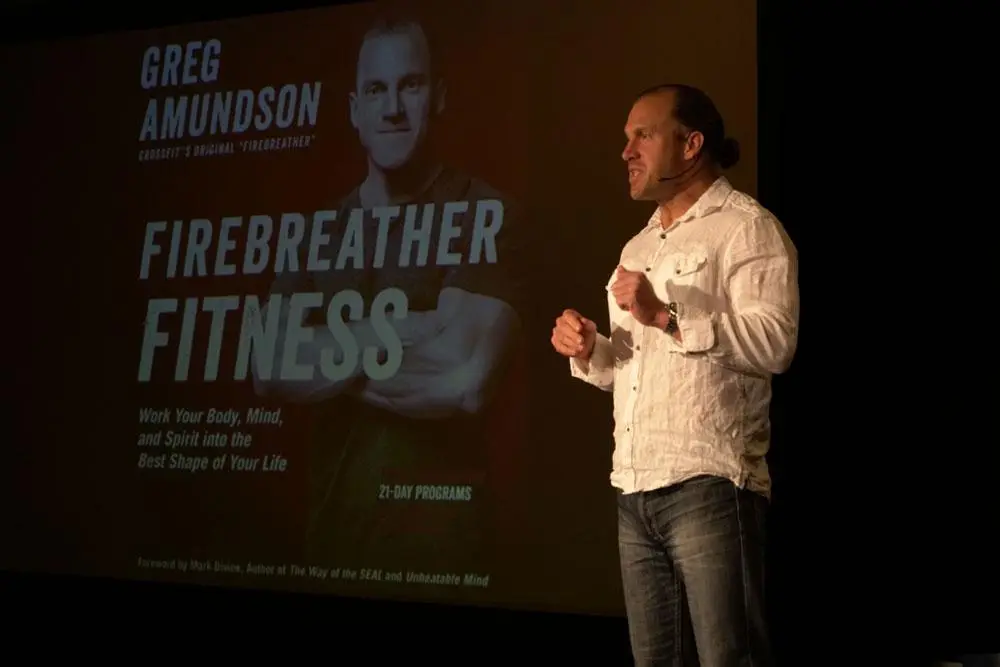
Greg Amundson is the founder of Satvana Yoga, Krav Maga Santa Cruz and CrossFit Amundson, all located in Santa Cruz, CA.
Greg is one of the original Crossfit athletes, having started Crossfit in the very beginning under coach Greg Glassman. He’s also served as a Santa Cruz County Sheriff, Special Agent with the DEA, and as an officer in the United States Army.
Greg is the author of four books, Your Wife is NOT Your Sister, God In Me, Firebreather Fitness and United States Army National Guard: Tips For Success. Greg is also a minister, highly respected lecturer and educator on such topics as Universal Law, Leadership, Warrior Spirit, and Gods Love. Greg’s Podcast “The Greg Amundson Show” has been praised as an encouraging warrior’s perspective on the Word of God. Greg is currently a Graduate Student at Western Seminary in Milpitas, CA., where he is pursuing a Masters of Divinity.
Transcript
Machine-generated from the episode audio and lightly edited — may contain errors.
Chris Albert (link to this point)
What's going on Warrior Soul nation? Welcome to another edition of the Warrior Soul podcast. This time around, we've got an awesome interview with Greg Amundson. Greg is the author of Firebreather Fitness, and, he's an absolute beast. Like, the guy is super jacked, like, super strong, super endurant, like, everything.
And that's because he was one of the original OG CrossFitters. He's been doing CrossFit since, like, the beginning when it was just coach Glassman and, you know, a parking lot and a bunch of his equipment out there, and people traveling from all over the place to go up there and work out. But Greg came on today because he wanted to speak to our audience, US military veterans. And Greg's the author of a book called Firebreather Fitness. And in that book, what what really makes this book special is that, yes, it goes into workouts, it goes into, the types of, high intensity workouts that that you'll find from an outstanding CrossFitter like Greg Amundson.
But it also goes into some theories about mindset and theories about spirituality and fitness. And Greg is also a law enforcement officer, and he served in the United States Army as an officer as well. And he has a lot to say about the power of spirituality, keeping you on your path when it comes to fitness. So this is a great interview. Greg's an awesome guy, and, he really wanted to come on to speak to our audience, and I always appreciate that.
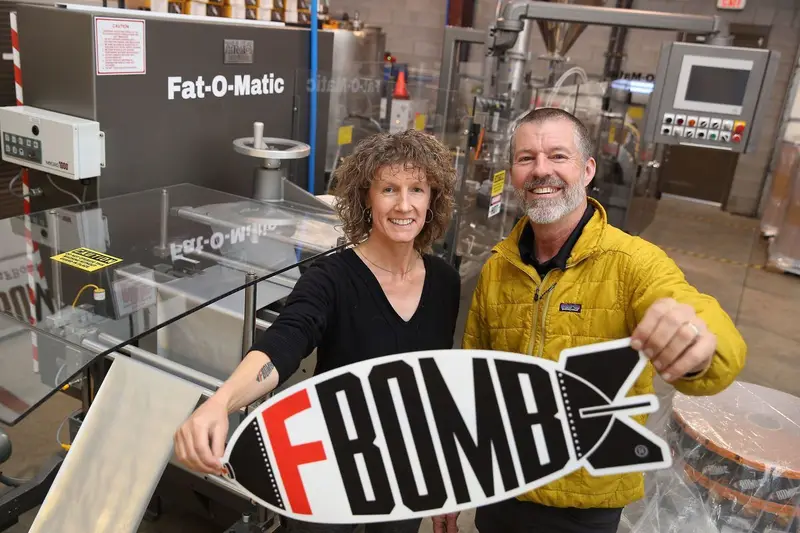
But before we get into that interview, I want to give you a note from our awesome sponsors, F Bomb Nutrition. Just had Ross and Kara on for an interview the other day. That interview is gonna get posted next week. But these guys are amazing. They've created these individual packets of fat.
And when I'm talking about fat, yeah, you have packets full of MCT oil, coconut oil, olive oil, and and, you know, the basic basic fat packets that they have. And those are great because you can't always find good sources of fat on the road if you're doing a high fat diet. But they've also got these awesome fuel packets, and these have macadamia nut butter in them as a base. And then they've got macadamia nut butter mixed with coconut butter, they've got macadamia nut butter mixed with chocolate, macadamia nut butter mixed with sea salt, and these are so good. I I eat like two or three of them a day.
They help me keep my fat intake up. I'm always talking about the benefits of including great sources of fat in your diet, helps to improve your hormones, helps to give you more long lasting energy. And so they give our listeners 20% off of their first order. If you go to www.dropanfbomb.com, they will give you 20% off of your first order if you use the code Warrior Soul at checkout. Definitely check them out.
And with that, let's get into this interview with OG CrossFitter, law enforcement officer, US Army officer, and awesome guy, Amundson, and his take on spirituality and fitness.
Chris Albert (link to this point)
This is Chris Albert, and I'm here to remind you of one thing. Someday, you're going to die. Now that's not some morbid statement or scary idea. It's solid fact. Your time here on this earth is limited.
We need to be reminded of this as much as possible for one simple reason, to live your best life while you can. This is the Warrior Soul Podcast.
Chris Albert (link to this point)
Greg is an OG CrossFitter. He comes from law enforcement and he served as an officer in the United States Army. And we'll get a little bit more into his background in a second, but the reason why I brought Greg on is because he's got this amazing take on fitness that has to do both with what you're doing physically, what you're doing in your mind, but also what you're doing spiritually. And I think that a lot of us who who are very into the now, very into taking action, moving forward, getting things done in our lives, a lot of times we end up missing that spiritual aspect. And I myself, I find this a weakness in myself too, just to get a little bit vulnerable here.
Sometimes I'm missing that higher purpose what I'm doing physically. And so I decided to bring Greg on because he's developed a ministry. He's well known in CrossFit circles. He's the author of a book called Firebreather Fitness that I've gone through over the past few weeks and and I find it absolutely fascinating. So first, Greg, welcome to the Warrior Soul podcast.
Greg Amundson (link to this point)
Brother, thank you for having me on. It's an honor to be here with you and your guests today. Thank you.
Chris Albert (link to this point)
Absolutely. First things first, I wanna give the audience just a little bit of a background because there's so much about you that could relate to these guys, you know, between your law enforcement experience, your military experience, and your athletic experience?
Greg Amundson (link to this point)
Yeah, absolutely. Those three things are all really merged, think, very well together. The fitness was the foundation, CrossFit fitness was the foundation for what I feel was really responsible for giving me the opportunities I had through my military and my law enforcement career. So I started my law enforcement career here in Santa Cruz where I now live as a deputy sheriff. Within just a few weeks of starting my career as a solo deputy following what's called field training, I found CrossFit.
Now what's interesting about the timing is that a week before finding CrossFit, I had been in my first all out fight on the street as a cop and I got my ass handed to me by a parole, which was alarming to me because the greatest enemy I faced in that fight was my own lack of physical fitness, which is, you know, for a law enforcement officer, when the enemy you're facing is not just the assailant but yourself, that realization happens, that's terrifying, that was terrifying to me And the concern I had following that when I reflected was, I felt there was a great disservice that had been done during the academy because the academy instructors had me convinced that this methodology of Monday, Wednesday, Friday, long slow distance running, Tuesday, Thursday bodybuilding type movements, that that would somehow prepare me for the unknown and unknowable nature of law enforcement.
Chris Albert (link to this point)
What year are you talking about there? What year was that?
Greg Amundson (link to this point)
That was in 2001. Wow, yeah. 2001. It the summer of two thousand and one that I went through the academy and then December 2001 that I found CrossFit.
Chris Albert (link to this point)
I'm laughing about that to myself because I went to Parris Island Marine Corps boot camp in 1999. And in the Marine Corps at the time, it was exactly like what you were talking about. You know, long slow distance runs, a lot of bodybuilding stuff, some pull ups because they were in our they were in our PFT and some crunches. And that's pretty much all we did back then. Unless you're out in the field, of course, you did you did a lot of humping, lot of rucking, that kind of stuff.
We did a lot of tactical stuff, but we weren't doing anything else to keep us prepared. I think that's how it was back then at that point.
Greg Amundson (link to this point)
Right, absolutely and sadly in my travels, I worked for CrossFit as the law enforcement liaison, so I travel around the country lecturing departments and individual officers on the significance of CrossFit for their profession and several of the departments and academies I visit are still embracing the old school methodology that you experienced or that I experienced all those years ago. You know, sadly some parts of our country are almost in a protected balloon where they're unaware of the advancement in training principles that have taken place.
Chris Albert (link to this point)
Wow, wow. That's just fascinating to me just knowing what we know right now about training and I always say cause I'm in better shape right now, I can say at 38 than I was back when I was when I was an eighteen nineteen year old Marine. And a lot of that has to do with because back then I was drinking a lot and smoking cigarettes. But at the same time, I mean, I just know so much more about training because of things like CrossFit because of the vast amount of knowledge out there, it astounds me that people aren't gaining access to this somehow.
Greg Amundson (link to this point)
Right, yeah it is, well I think the awareness is there. You know, you can ask people if they're aware of CrossFit or aware of functional fitness or aware of the different types of training that are available, yet there's a difference between being consciously aware of something and then having just a vague awareness. So the only way to have conscious awareness of the implications of CrossFit is to actually do CrossFit. You have to do one of these workouts and experience that sensation of, if I do one more burpee or one more kettlebell swing, I'm gonna die.
Chris Albert (link to this point)
Yeah.
Greg Amundson (link to this point)
You know, what's to kind of go full circle with the introduction, that was my experience in my first CrossFit workout. So after having nearly lost my life because of my lack of capacity, you know, my mind was telling my body to do something that my body was unable to do. That's terrifying when your life depends on your body's ability to follow the command of your mind. So following that fight, I started to try to recreate some type of evolution that could give me that feeling because intuitively I knew that unless I could recreate that feeling and that level of exhaustion, unless I could recreate that on my own, the next time it happened on the street, I would still be at a lack. I would be able to thrive in that environment and I tried a variety of things, but ultimately was unable to create that sensation on my own.
Thankfully, found Coach Glassman and CrossFit and it was that very first CrossFit workout where halfway through, I feel like I am fighting for my life. It's just like I'm back on the street in this workout. When the workout was all said and done, I looked at Coach and in my mind I'm thinking this guy's got the holy grail of fitness and you know, keep in mind that this was way before, this was way before the website, this was way before the conception of the CrossFit games. So the reason I embraced CrossFit was it was a matter of life and death for me. Every time I did CrossFit, to me that was officer safety training.
Yeah. I was making an investment, you know, in my own safety and the safety of my partners.
Chris Albert (link to this point)
That's something I wanted to mention here too because when I said that that Greg here is an OG CrossFitter, I mean, like, OG from the original gym. Like, learn directly from the founder of CrossFit. I think it was back, he had like a parking lot kind of thing going on where, I mean that's just the kind of legend I hear where he had people driving in from all over the place to work out there and things like that.
Greg Amundson (link to this point)
That's accurate. It was a very small, maybe 800 square foot garage with a big roll up door, and yes indeed, as the word started to get out, there was a pilgrimage that would take place. People came from all over the country, then all over the world to meet with Glassman and to spend time in that little gym. It was like a sacred pilgrimage for people that were devotees of that level of fitness. It was awesome.
Chris Albert (link to this point)
That's cool, that's cool. So you went through, know, you find CrossFit, and how long so immediately there's this connection between your fitness and your existence, right? Your existence as a human being, ability to breathe on this earth is determined by or your ability to continue to breathe on this earth is determined by your ability to become fit because of your job as as a as a sheriff. Right?
Greg Amundson (link to this point)
That's correct. Yeah.
Chris Albert (link to this point)
When you were getting into this, you know, were were you immediately like, okay, I've I've gotta integrate this into every aspect of my life or or was it a slow transition into this? The first time after you did that workout, were you like, oh my God, because I remember the first time I did it, were you like, oh my God, this was crazy, it sucked so bad, I don't want anymore for a while. Was it slow to get into it?
Greg Amundson (link to this point)
No, it was immediate. The next day I was back, there was an immediate bond that I felt with Coach Glassman. My dad had passed away approximately nine months before I met Coach. So in many respects, saw Coach as a father figure that would continue to carry the torch of the legacy my dad had been in my life. My dad was, wow, I mean, word it began on my dad, chiropractor, former naval officer, bodybuilder, champion swimmer, minister, he did it all.
He was a Renaissance man, a true warrior and he inspired me from a young age to understand the implication of integrated holistic fitness. That idea, that concept had been in my mind from a very, very young boy. My earliest memories of my dad and I, he's driving me to the YMCA to work out and on the way there we're listening to audio cassette of Deepak Chopra. Wow. So, you know, my dad was very, very integrated, very holistic, very new thought in many respects.
You know, what's becoming more common thought in our society today was at that time radical. The way my dad approached chiropractic was radical. But as I grew up, that's all I knew, yet I lacked until I found CrossFit an environment where I could ultimately merge all these qualities together, where the mind, the body, the soul, the spirit, these could ultimately merge together in a single variable, which was CrossFit. Wow, wow.
Chris Albert (link to this point)
So you're in law enforcement at this point, found CrossFit, what created the impetus to join the army?
Greg Amundson (link to this point)
That was, you know, was around 2004, I had a really solid career. I was on a very upward trajectory in my department. I was on the SWAT team. I had now taken the role of field training officer. So despite the horrific mistakes I made as a young deputy, I started to progress up the ladder. I was, you know, well respected at CrossFit. I was on the traveling circuit going all over the country, teaching with the CrossFit level one staff. Yet during this time, in addition to developing, like for example, the relationship with my body, that's a relationship we have with our body and space and time. More importantly, I was developing a relationship with God and the closer I drew to God, I started, it's a delicate process for a warrior because, you know, we resist surrender, know, the notion of like tapping out for a warrior. It's like, no, we resist that, but what found and I'm still like unpacking this, is that the more that I can subject my will to God's will, the greater opportunity I will have in life.
So part of that process was really trying to listen authentically to God and the direction that He wanted me to move in my life. And I just felt so led, so called into the Army National Guard. I just couldn't resist it. You know, it didn't make sense on paper, but I just could not shake the thought that this is the direction the Lord wants me to go. So I just trusted and took a leave of absence from the sheriff's office and off I went into the army.
First I was enlisted, I was MP enlisted, then ultimately felt the higher calling into serving as an officer. That's really where I felt God was leading me was to be a leader. And then the pinnacle of my career was amazing. It went full circle. I was a, what's called TAC officer, which is teach, assess, counsel, so I was teaching the next generation of a platoon leader the position I had, they had me teaching, get this, yoga, CrossFit, leadership, combative spirituality, like I was teaching everything I was learning immediately to the next generation.
It was just a perfect fit for me. So between 2004 and when I retired in 2012, that path I took as it was continuing to evolve for me, it was so clear, okay, I am in alignment with God's will. This is clearly part of his purpose in my life.
Chris Albert (link to this point)
Yeah, I see that and you know, I I think that people who are on a mission, people who are on a mission in life, who who who believe that they're here for a purpose, they they bring a little bit of extra dedication to everything they do. Yeah. Now, I know that there's a lot of non believers who listen to this podcast. Right? I I know that there's a lot of people out there who, you know, it it and it's and the funny thing, Greg, is like, in today's society, it's almost like people look at you crazy if you're talking about God.
You can talk about any number of controversial issues, but if you start talking about God, you know, people look look at you like you have have three different heads on.
Greg Amundson (link to this point)
Brother, you're still right.
Chris Albert (link to this point)
And so I think it's it's important for a lot of us in this community, the veteran community, for people who are still looking for their purpose after the military, find their next mission to find something like this.
Greg Amundson (link to this point)
Brother, you're onto something. You really are and I hope your listeners are like really embracing what you have to say. You have such a great message for our country and for veterans, for warriors and here's a, let me propose something. To be a non believer might not be accurate or at least we should further define our terms because I have yet to meet a non believer. I've met people who do not believe in God, but they believe in something.
Right. So, you know, an example would be, and this is so beautiful. Have you heard this example, Jesus is teaching the power of faith and He describes the opportunity that even a mustard seed of faith can have. He says, if you have the faith of a mustard seed, you can move a mountain. So this is the example of non belief.
You could have even a little bit of belief in the right thing and still experience salvation, still experience joy, still experience direction, still find fulfillment of life purpose, even a little faith in the right thing, meaning God. However, most people have that equation flipped upside down and they've got a lot of faith in the wrong thing.
Chris Albert (link to this point)
Yeah.
Greg Amundson (link to this point)
Which is the recipe for disaster, and usually the litmus test for deciding and recognizing if we're placing our faith in the right thing is to simply understand the difference between temporal and eternal. So most people like me that are non believers, they believe in something that is temporal. And when that temporal object of their attachment and faith and belief, when it, because of its temporal nature, when it's gone, the faith and the belief they had, the identification they had goes with it.
Chris Albert (link to this point)
When you're saying temporal, you're talking about something that's attached to time, Something that's attached to something that comes and then goes, right?
Greg Amundson (link to this point)
Yeah, I mean the most general articulation of temporal is anything that we could attach to with our senses. In other words, anything in the world that we see is temporal. Another way of describing this is if you can take it with you, meaning when you die, that's eternal. Gotcha. Anything that's going to be left behind is temporal.
Chris Albert (link to this point)
Gotcha.
Greg Amundson (link to this point)
It's temporary.
Chris Albert (link to this point)
Yeah. Yeah. I wanted to wanted to say that because, you know, some people might might not have known known what that meant. So where at what point in your life did you find that, you know, your spirituality really began contributing to who you were and where you were going?
Greg Amundson (link to this point)
Yeah, mean, that's such a great question. If, you know, if I do, if I'm on a podcast or if I'm speaking before a group of people regarding faith, spirituality, God, the most common question that we'll ask is when were you saved? Have you heard that question before?
Chris Albert (link to this point)
Yeah, I've heard it before.
Greg Amundson (link to this point)
When did you receive salvation? When did you accept Jesus Christ into your heart? Again, like thinking back in terms of, well, when did I start fitness? When did I start to understand the relationship between the mind and the body? When did I start to understand the nature of the power of our spoken word with our thoughts?
Those are my earliest childhood memories, that's all I've ever known. And so I was raised to have faith. It's no different to me than making my bed in the morning or brushing my teeth every morning. It's just part of my nature. To exist without that faith would separate me from the identity I have with myself.
I wouldn't know myself without knowing myself in relation to how I believe God knows me. Mhmm. That makes sense.
Chris Albert (link to this point)
That definitely makes sense. Would tell me about a time when because I imagine being a law enforcement officer. I've never been a law enforcement officer. It's gotta be a really difficult job just dealing with what you guys deal with all the time, you know, dealing with some of the darker sides of humanity. Was there a time when your faith in in God was shaken by what you saw there?
Greg Amundson (link to this point)
That's such a good question, brother. You know, here's how I can answer that. I can answer that by sharing a most recent story. I just got back from Virginia, Virginia Beach. Mhmm.
As in, I'm not sure when this will air. It was on Sunday, this past Sunday, which was where are we? Looks like it was the twenty fifth, so just a couple days ago. And I was brought out to speak on spirituality to a group of 14 veterans who were part of the Overcome Mindset Academy. And this is an awesome academy that was started by a former Navy SEAL named Jason Redman.
This is absolutely awesome. So Jason brought me out to speak on spirituality, on establishing a relationship with God, keeping in mind, Jason warned me, that many of the veterans I'm going to be speaking to do not have a relationship with God, or in other words, are non believers. So I went out there, the most profound experience happened. I was preparing a sermon all week because part of this presentation would be Sunday morning, a voluntary, what Jason called Warrior Church. That was voluntary, they did not have to attend that.
The rest of the day, my presentation on spirituality, that was part of the curriculum. They needed to be in attendance to graduate the course, but church was optional. So I prepared a sermon and I then prepared a subsequent lecture. Uncertain, just hours before I'm going to give the sermon exactly what I'm going to say, not even sure who will be in attendance. I get up early and up to this time it had been raining in this part of Virginia.
This particular morning, the sun rises up over the East Coast Ocean. I haven't seen a sunrise like that in my entire life. I'm a West Coast guy. It was incredible And as the sun rose, it was as if I later described to the veterans, it was as if God put a zip file in my mind. And I knew without knowing what I was going to say, if that makes sense.
I knew that if I could just stand up before the group, God would handle the details of my delivery. And He does in the most profound way, because what God spoke through me as I was giving the sermon and all the guys attended, it was incredible. What God put through me was to say these words to the veterans out there, and maybe it's for your listeners as well. Yeah. And that is, God loves His warriors.
And as I said that, I made eye contact with a gentleman that just, he was just covered head to toe and burns, catastrophic burn, missing both arms. He would take notes with prosthetic arms with hooks at the end on an iPad that was containing software designed for him.
Chris Albert (link to this point)
Yeah.
Greg Amundson (link to this point)
We made eye contact as I said those words and you could just see the tears streaming down his face. Well, later that day in private conversation with some of the veterans, they expressed to me that that was a life changing idea, that God loved them. Because when they looked in the mirror, the greatest enemy they faced was themselves. And the question they asked themselves is, if there is God, how could this have happened to me? And I think that we're all unified in asking that question.
I recall when I was in the army, my drill sergeant said, Hey, listen up, everyone wants to be in the army on a bright sunny day. Right? But let's face it, in the military, how many bright sunny days are there? Not very many.
Chris Albert (link to this point)
No.
Greg Amundson (link to this point)
So the military is an opportunity for us to show up in faith, regardless of the conditions we're experiencing. That's what a warrior does. A warrior shows up ready to leave, ready to follow, regardless of the conditions. And that's what faith is all about as well. It's easy to believe in God when everything's going great.
Right. That's easy. Yet, if we look at the Bible, what we find is that the great heroes of the Bible, they retain faith in God through the ebb and flow, through the variety of seasons they would experience. And that's been my experience as well. Like, we're all unified, not so much in, you know, the wounds of the flesh, as I'm sure you heard Josh Mantz speak about.
What unifies us as human beings as brothers and sisters is the wounds of the heart. Yep. Know what And so, if anyone has ever experienced sorrow, grief, uncertainty, self doubt, we all have, you know, anyone, email me if you've never been without insecurity, self doubt, like, we all have. And so there's so much, I think comfort because what I realized in that conversation with those vets is that they were questioning faith, They were questioning God. And that's the experience that we all have as we go through life.
We question faith. We question things which we cannot see, and we tend to give our credibility and we tend to align with things we can see. Yet the challenges I've already mentioned is that if we're giving our faith to what we can see, what we can see is temporary. What we cannot see is eternal. I'm not here to profess that it's easy.
This is still a challenge I experienced in the ebb and flow of my life. Yet I can attest that if we go to the only assurance we really have, which is the Bible, what we find is that the great heroes and the unified message of the Bible is that God is real. And that if we can have a little bit of faith, even a little bit, in the long run, the eternal long run of our existence, not just on earth, but of eternity, we're eternal beings, That little bit of faith will be sufficient for us in the long run.
Chris Albert (link to this point)
Yeah, I think that the biggest, some of the stuff you're touching on here, in fact, of it, I mean, this isn't stuff that's new age or anything like that. This is stuff that's this is wisdom that's been around for thousands of years.
Greg Amundson (link to this point)
Mhmm.
Chris Albert (link to this point)
And, of course, there's elements of of religion in there. There's also elements of stoic philosophy in there too.
Greg Amundson (link to this point)
Mhmm.
Chris Albert (link to this point)
You know, when you you start to consider the writings of, like, Marcus Aurelius or Thucydides, you know, this idea that we're all gonna face hardship or tragedy in this life.
Greg Amundson (link to this point)
Mhmm.
Chris Albert (link to this point)
It's gonna come to us one way or the other.
Greg Amundson (link to this point)
Now Yeah.
Chris Albert (link to this point)
What what really matters is is how we respond to it, how we handle it, how we integrate it into our lives, how we how we push forward. And this is very much what what Josh Mantz talked about in in his book.
Greg Amundson (link to this point)
Mhmm.
Chris Albert (link to this point)
And it's amazing because I could I could definitely see the the amazing amounts of of influence and and and and just wisdom across time. When there when there's an idea that's been around for thousands of years, you gotta pay attention to it. Yeah.
Greg Amundson (link to this point)
Right? Yeah. And what's so interesting too, that if you, if we move into modern new age thought, even the most brilliant modern minds are basing and substantiating their wisdom and they are indeed wise. Yet nevertheless, the foundation for their wisdom is sound biblical wisdom. These are truths, because the interesting thing about biblical truth is that there was a divine author.
So, if we understand the lesson and the message of the Bible as being divinely appointed to a human author, but the divine author being God, then the Bible is an opportunity for us to know the mind of God. Like God can reveal Himself to us through, I mean, for example, David and Goliath, That story, we all know that story. That story isn't arbitrarily placed in the Bible. There's something about that story that God wants us to know. God is revealing Himself in some way through that story to you and I and to everyone else.
Think about how many, you know, Malcolm Gladwell, you know, brilliant modern mind, he's got a book on this, right? About overcoming Goliath. And we all wanna be David in that story, right? Anyone wanna sign up to be Goliath? Of course not, like we all wanna be David.
But, you know, isn't it interesting that if we think we can fight the battle on our own, we're gravely mistaken. And that's how many people read that story. When a more faithful interpretation of the story might be that David is a representative of God, that David is victorious over Goliath, through his own strength, but through the strength of God. And to miss that is really unfortunate because even David, the hero of the story, as he's running up advancing on Goliath and he's getting ready to loose the rock that kills Goliath, even he says, I come to you in the name of the Lord. Right?
He's not saying, I come to you with years of martial training. No, right? He's coming against his opponent, against the challenge that he faces with the word of God.
Chris Albert (link to this point)
Yeah. I gotta ask you this because I know that there's gonna be people in the audience who are gonna question this as well. So the Bible has some amazing life lessons. Has some some some great wisdom inside of it. There's also some really ugly stuff in there. There's also some some really, really horrible things.
I mean, you know, if you if you go back to some of the the some of the exodus stuff where where, you know, you look at you look at some of the cities and towns they sacked, some of the violence that occurs, what would you say about that to somebody who said, you know, the Bible is full of these horrible, awful things, why would we listen to it?
Greg Amundson (link to this point)
That's such a good question. I'm deep in seminary school, and the part of the Bible that we're studying is Genesis through Song of Solomon, which is tracing this biblical narrative through these very episodes that you're discussing. And it's for this reason that I find when I attend church, whether it be in my hometown or across the country, pastors are more likely to preach from the New Testament. Meaning if that's not understood from a listener, meaning that they're going into parts of the Bible that are more harmonious. It can be challenging to preach from an episode of the Bible where there's immense violence and bloodshed.
Chris Albert (link to this point)
Gotcha.
Greg Amundson (link to this point)
And there's so many potential ways that that can be answered. Something that I'm beginning to discover is that if we look through the biblical arc, through the Old Testament, there was horrific bloodshed, not much has changed in our experience today. So if we were to look at the account of the Bible and if the Bible was written through a storyline in which everything was just harmonious and so peaceful, we may place that on the shelf next to Fable.
Chris Albert (link to this point)
Gotcha.
Greg Amundson (link to this point)
Yet if we looked to the Bible and realized, my goodness, the heroes of the Bible, Moses, David, they were living in a world that was extremely chaotic, immense violence, immense uncertainty. Yet despite that, in some miraculous way, God was still able to establish an ultimate plan of salvation. That plan of salvation is still unfolding in our life today. So the Bible is real. It's a very real account of very real modern issues. Yeah, I And I think, you know, one thing further, this is why I felt so certain that message, that word to the veterans is really an important message for anyone that walks the warrior path to hear and really resonate with. The archetype of the Old Testament that was responsible for fulfilling the hope of God was the warrior archetype. So God used, through that account, through the Old Testament, God used warriors to further His existence in the world. And I believe that God is still using warriors to this day, and that is why warriors are so desperately needed. Our country's only hope is in the warrior archetype.
Chris Albert (link to this point)
Wanna Really quick, let's get a quick definition of the Warrior Archetype. Oh yeah. A lot of people, they listen, you know, they'll listen to Jordan Peterson and he's been going through the Bible on YouTube for quite a while and talking about talking about the archetype. But could you quickly explain that for for some of the listeners who might not have encountered the term before?
Greg Amundson (link to this point)
Absolutely. I mean, this is something I'm so hungry and thirsty for, you know, to use the words of the New Testament, have to have hunger and thirst for something is beautiful. And it's the warrior for me. And part of the warrior archetype, there's this continual flow that takes place, an ebb and flow between this very physical representation of the warrior that needs to ultimately balance itself with an internal development of the warrior as well. So we tend to gravitate toward that physical expression, the identification with the physicality of the warrior, with the implements, the tools, the technology that expresses the warrior.
Yet the other end of the spectrum, the mind, the spirit, the soul of the warrior, those are a little bit more elusive and maybe more challenging to identify and cultivate. Yet ultimately they are far more important. That is the essence of the warrior and I would encourage the listener to also look into, and you as well, I'd be happy to make the introduction, Mark Divine, former Navy SEAL, founder of SEALFIT Unbeatable Mind, he's at the tip of the spear on this subject as well. And Mark and I were in a podcast together talking about the Warrior Archetype and what we created this imagery of, you have a coin and on one side of the coin is mastery, self mastery, on the other side of the coin is service. And those two qualities, this notion of mastery in service, The warrior strives to master themselves to be of greater service to the world.
That's the essence of the warrior, one who seeks self mastery, not for self righteousness. I don't master myself for my own benefit or my own merit. Ultimately, every day I embark on the path of self mastery because only by mastering myself can I then serve other people? Otherwise you become ronin.
Chris Albert (link to this point)
Yeah, you're a warrior with no master.
Greg Amundson (link to this point)
Yeah, exactly. And that's what's so beautiful like when I get up and when I talk warrior archetype, one of the most beloved warrior archetypes is the
Chris Albert (link to this point)
Samurai.
Greg Amundson (link to this point)
One of the qualities of the Samurai that's so beloved is the Samurai's devotion to, get this, their Lord. Yep. Without devotion to lord, they were ronin, the despised class. With devotion to lord, they had the esteem of samurai, and the samurai was so loyal to their lord, if their Lord died, the samurai would elect suicide. They would end their life, why?
To continue to serve their Lord in the afterlife. They were that loyal to the Lord. Well, when we look to, for example, because it's such a common story, David and Goliath. In that respect, David is a modern, for that era, samurai. Why?
Because he was loyal to his Lord. He was loyal to God. And to put this in contrast, another really interesting part of the story is that the person who should have been fighting Goliath was King Saul, the leader, the king of the Israelites at that time. He was the elected leader, yet Saul lacked faith in God and Saul knew there was no way he, based on his own capacity, could overcome Goliath. David, on the other hand, he wasn't even in the army.
David arrived on the battlefield that day bringing his brother's food. He sees Goliath and realizes that forty days have gone by, no one stepped up to face this guy. And get this, the question David asks, this is so brilliant for understanding the mindset of the warrior. David asks, what will be done for the guy that kills this Goliath? Right, so have you heard the expression, are you feeding the dog of courage or the dog of fear?
Chris Albert (link to this point)
Fearing the courage, wolf or the fear wolf, yeah.
Greg Amundson (link to this point)
Exactly, courage wolf, fear wolf, dog wolf, courage. The idea is that our mind is always divided between positivity and negativity, courage and fear, optimism, unfaithfulness, right? It's divided And the Bible tells us a house divided cannot stand. And so the warrior realizes that they peel back from the consciousness of their mind and they begin to witness, where am I gravitating? What house am I in?
They men devote through their willpower, the commitment to move into and residing fully the house of optimism, the house of positivity, the house of faithfulness, the house of feeding the wolf of courage, that's where they reside. And that's what David did. David was residing in the house of God. He was a samurai serving his Lord. And through that service, he was ultimately victorious in battle.
Wow. Ain't that cool?
Chris Albert (link to this point)
Yeah, that is very cool and while you're going through that, know, it just brought a lot of clarity to your book, the fire breather fitness and why these three things are so important. The controlling your body controlling your mind and and and having a spirituality component to your to your fitness routine and and it's because of exactly what you said, you have to master yourself so you could be of service to others. So Exactly. The spirituality brings a higher purpose to everything you're doing, and then mastering your mind and mastering your body allows you to serve that purpose.
Greg Amundson (link to this point)
Brother, perfectly said, well consolidated. That is the message right there. And here's something that Josh and I are up to when I was speaking on this when I was in Virginia, and this may have been the example, the metaphor that really resonated with the guys and girls out there. I think they got this. For years, as I was participating in CrossFit, I was fully in with CrossFit.
I embraced it, I realized there were phenomenal changes happening, even changes I couldn't articulate, I knew something is happening and my peers, the deputies I work with, they recognized it as well. They saw the changes that were happening in the totality of my character. Yet if someone asked me, what are you doing? You know, someone said, what is CrossFit? I would have a hard time defining what I was doing.
And for many years of my involvement with CrossFit, quite frankly, maybe even Glassman had a hard time defining. He knew he was onto something yet exactly what was happening, the methodology, the science behind it, wow, I mean, Glassman essentially had to create the equation to express what was taking place. Talked about genius. Yeah. And I recall one day, Greg brought me around the whiteboard because I had expressed interest in the why of what I was doing.
So as a student, I would go to the gym and have faith. I trusted Glassman. Whatever he put on the whiteboard without question, without concern, I followed. I followed his order like a good soldier. Yet in my evolution, I started to ask myself and then ultimately ask Glassman, what am I doing?
And on this particular morning, Glassman brought me on the whiteboard and he defined CrossFit. And the definition of CrossFit, Glassman said it so perfectly. He's like, you know what kid? CrossFit is what CrossFit does. And what CrossFit does is constantly varied, high intensity, functional movement.
So we have these three categories. Well, on that morning, Glassman broke down functional movement for me, because by understanding physically what I was doing, then I could understand the quality and the nature of intensity and variance. Once I understood the relationship of the movement he had selected to represent CrossFit. So one of the definitions of functional movement is that functional movement allows a lateral contraction of power that originates in the core, then expresses itself through the extremities. So an example would be a punch or throwing a ball, the action, even though you may not be able to see it, begins in the core. The final expression of the power is in the articulation of the wrist.
Even the articulation of the fingers, if you imagine a pitcher throwing a fastball, the last part of their body to articulate is the fingers. Gotcha. But the power, that 100 mile an hour fastball, it started in the core. So core to extremity was vital in my understanding of cross and what coach said, get this, it's so brilliant. Coach said that core to extremity, that principle was essentially an independent variable that would ensure my success in the other subcategories of functional movement.
So you take, for example, the squat. Squat, some of the subcategories of performance points are weight in the heels, knees out, maintain lumbar spine, yet the most important in the hierarchy is core to extremity. If you're violating that principle, doesn't really matter if the weight's in the heel. So, as I continue to mature and progress in life, the physical is surrendered to a greater interest in the spiritual. What I realized is that the physical is a perfect representation of the spiritual.
What we're trying to do in the CrossFit gym is strengthen our core, because by strengthening our core, we can create power. Power is another independent variable that is responsible for improving any other goal that we have in a fitness program. Well, if the core is that important in athletics, in CrossFit, in the gym, in any physical endeavor, how much more important is our spiritual core in the totality of our life? Gotcha. So in other words, our true core is the independent variable in the expression of our life, or our core spiritually is the independent variable in the extremities of our life.
If we want all the extremities of our life to come into alignment, then we have to reverse engineer the core is ultimately responsible for any further expression, both in the gym and in life. And only by strengthening our spiritual core can we ever hope to achieve what we're all born to experience. We have to have a strong spiritual core.
Chris Albert (link to this point)
And by spiritual core, I mean, I assume this includes your values, your reason for being, your why, why you wake up in the morning, what you want to accomplish in your life, what's most important to you, those types of things, right?
Greg Amundson (link to this point)
It's definitely a starting point. It's a step in the right direction to begin to establish and identify with character values that are more in alignment with our true nature. Yet the foundation needs to be deeper because as a deputy sheriff, I was assigned to a gang task force. I was apprehending and pursuing gang members who still had a value system. According to the gang member, they had loyalty, they had integrity.
When I was an agent with the DEA pursuing the world's greatest cartels, the cartel leaders, they were in alignment. They thought they were serving a higher purpose. They claimed to have value, character, right thinking, something was missing. So I recall when I was in bootcamp, you'll love this, my senior drill instructor, day one says these words, he says, Bootcamp will be hard enough physically, so don't go beating yourself up mentally. Wow, that's number one.
When he says that, he hooks me. He's got my undivided attention. Then he says, in boot camp, your thoughts will become your words, your words will become your actions, your actions will become your habits, your habits, your character, your character, your destiny, and I want warriors.
Chris Albert (link to this point)
A lot better I got in boot camp. Isn't that brilliant? Yeah, I was basically screamed at.
Greg Amundson (link to this point)
He was screaming those words in me right in my face. Yet nevertheless, that principle, I mean that's a rough paraphrase of the words of Gandhi. And what we learned is that between our destiny and the inception of the journey is space. The ultimate foundation for where we're going is our thinking. Yet even our thinking is arising from something we're not even aware of. Like you and I think effortlessly, that's a unifying human condition, the nature of the mind to produce thought. The origination, the point where thought originates from, it's known in different circles by different names, collective consciousness is a common term and new thought, that field where thought is arising from is pure.
Yet oftentimes by the time the thought reaches our consciousness, it's become distorted. That distortion, if we allow it to manifest and germinate in our mind, that creates thought, which creates word, which creates action, which creates tap and we have the snowball effect.
Chris Albert (link to this point)
Yeah.
Greg Amundson (link to this point)
So part of strengthening our spiritual core is bringing our thinking, which is going to ultimately be responsible for our destiny into alignment with a word or a thought that is supernatural, that is beyond human intellect. And that is the gospel. That is the reason that in all society there is some conception of a spiritual text. So in India we see the Bhagavad Gita and the Yoga Sutra and that was identified by that class as a word and a means of aligning thought with a power that is greater than human intellect because human intellect would ultimately fail. Gotcha.
You know, the most concise way of articulating that is the Bible says, lean not on your own understanding, but trust in every word of God. So, you know, we see these two paths and they're divergent. I'm either going this way, I'm trusting myself, I'm believing in myself, or I'm going this way, I'm gonna be like David, and I'm still gonna be strong, I'm still gonna be a warrior, I'm still gonna fight battles, yet I'm gonna base and substantiate that strength on God, on the word of God.
Chris Albert (link to this point)
Wow. You know, and I mean, as we look at some of the things that veterans are going through right now, right? So number one, of course we have the issues with post traumatic stress, traumatic brain injury, the signature injuries over the last decade of war. But we're also starting to see some other things here. You know, one in four veterans admitted to the VA system has full blown diabetes. We're seeing more and more chronic disease, more and more heart disease, more and more autoimmune disease.
Greg Amundson (link to this point)
Yeah.
Chris Albert (link to this point)
And more and more obesity. So, you know, I can't emphasize enough to to the guys listening to this right now. You know, this isn't this wasn't an attempt on my part to to convert you or anything like that. Right? And and that's that's not why I brought Greg up.
What reason why I brought Greg on is because I need you to understand that you need another mission. Right? And and and I think that that that kinda sums that up as far as everything goes. You know, you you gotta be constantly looking for that next mission. You you gotta constantly be looking for that higher purpose.
And and, you know, it's kinda like at the beginning of your book, you talk about why you got into CrossFit. Right? And you talk about how, you know, the bodybuilding thing, the vanity kind of thing, it really wasn't a motivating factor. CrossFit on the other hand was was performance based. Right?
And and through that, you found, you know, a true system to to make your body healthy, to make your body perform better, but also to look good, right, as a byproduct, right? Mhmm. I even think now that CrossFit is so popular. I find that even performance these days is not a motivate, a significant enough motivating factor. And let me explain the, you know, the fran time, the the the the the tests. When you got bills to pay kids to feed, things like that, those things will always get a little bit old. Right?
Greg Amundson (link to this point)
Mhmm.
Chris Albert (link to this point)
And and and you're gonna prioritize, you know, feeding your family or or or what you think is more important.
Greg Amundson (link to this point)
Right?
Chris Albert (link to this point)
But when you have something bigger, when you start telling yourself that fitness is an essential part of my story, an essential part of me being me mastering myself so that I could be a better father, so that I could be a better husband, so that I could be better at my job and better at my mission in life. And that brings a bit of a different story here, and that's what I really appreciate about this.
Greg Amundson (link to this point)
Yeah, well said. You know, that's so key, is that this principle of embracing the warrior archetype because the warrior understands the relationship between serving, whether that service is to the country as a Marine, an Airman or a soldier, or whether that service is to a wife, a child, a business. Either way, in order to serve at the highest potential we have, self mastery ultimately has to become a priority. So the order of events is it's mastery in service. If we're so focused on serving that we're not taking care of ourselves, not mastering ourselves, sooner or later our ability to serve will suffer.
Yep.
Chris Albert (link to this point)
Oh, big time. And, you know, I also I think we're in a time and place where, you know, people are clinging on to things like he's kinda what like we alluded to at the beginning, clinging on to things that don't really matter. So we've got and people say religion isn't everywhere. It is everywhere right now. Religion is actually people are treating, you know, the way they eat as a religion. People are treating their their political beliefs as a religion, you know. And and I think that that the thing is, I mean, our it could be debated about whether these things are are productive or not.
Right? But what we're talking about here is is, you know, something that can create a higher purpose in your life. Something that can bring back that meaning. And Yeah. I talked to so many guys, so many guys are searching for that right now.
Greg Amundson (link to this point)
Yeah. We all are. It's part of our storyline. You're talking about unifying qualities of the human experience, where we can find relationship. Any person you meet, they're a stranger yet unified in the fact that as we go through life, we are all searching for meaning. We're all searching for purpose.
That's part of what God imprinted into our DNA and ultimately what we are searching for, the purpose of our life, ultimately at the, you know, the ultimate expression of a purpose in life, which is temporary, we're here for a set period of time, the purpose we have is to establish a relationship with our Creator, with God. As a subsequent expression of that purpose, other purposes are then essentially gifted to us. So through CrossFit, that wasn't my purpose yet through CrossFit, I was able to find greater understanding of my purpose, which was a relationship with God. Law enforcement, that's not my purpose, it couldn't be my purpose because what would happen if I could no longer serve in law enforcement? Does that mean my purpose is gone?
No, anything that we are attached to that is temporary, if we assign purpose and meaning to that, you know, we're setting ourselves up for pain, for suffering. Yet that temporal object of our desire or expression of purpose, if we understand its nature, the nature is to ultimately direct us and turn our eyes to something beyond that, then it's great. Then you can fully embrace it and enjoy. The danger is if we're attaching to something temporal and assigning it eternal substance. So if we mistake something that's temporary for something that's eternal, recipe for disaster.
Right. However, if we understand that it is temporary, that actually increases the enjoyment because it's temporary. Right. So let's relish this, let's savor this, let's honor this, let's respect this, let's take care of this because it's temporary. Right.
And when it goes, it will be replaced by something else that I can enjoy and savor and love and understand this too is temporary, Right? Like the great wisdom tradition teaches this too will pass. Right? I mean, that that understanding is so helpful in life.
Chris Albert (link to this point)
Yeah, Well, that will definitely we'll end there on that bit of wisdom and and, you know, I can't emphasize that enough. You're you're not gonna be here forever. Yeah. You know, take care of what you got while you can. And and and that's so it's so true.
Greg, I wanna thank you for coming on today. Where can people get in touch with you?
Greg Amundson (link to this point)
Oh, thanks for asking me, and thank you for having me on the show, brother. I think probably gregoryamundson.com, That's kind of a consolidated landing page on my website and that can get people to my podcast, my book, my CrossFit website, other projects I'm working on. Might be the most consolidated landing point for connecting with me. There's an email contact form there as well. So that would probably be the best location.
Chris Albert (link to this point)
Awesome, awesome. And I will definitely get links to that up on the show notes. And I wanna definitely recommend Greg's book, Firebreather Fitness. It's honestly a fantastic book. And, you know, not just for the for the introductory fitness things that are in there, but but also because of everything we've talked about on this on this episode, you know, as far as making sure that you're mastering yourself so that you can serve others.
Greg Amundson (link to this point)
And Brother, thank you. You know, I I I gotta make make a small plug. I have a new book coming out. Awesome. The Warrior and the Monk.
The Warrior and the Monk. Yeah, I've got a, this is like a pre, yeah, you can see that it's a pre release copy It's of the a fable and the two characters in the book are the warrior and the monk and it's fable format of essentially everything we just talked about on the show. You have a warrior who is searching for treasure and treasure is simply a metaphor for anything that the warrior perceives will provide happiness. As they're searching for treasure, they're simultaneously defending their treasure against dragons. Dragons is a metaphor for anything that we perceive is a threat to our identity or our ego.
And this constant struggle between treasure dragon, treasure dragon, it just led the warrior into the abyss of depression. Well, he meets a wise monk and the monk helps the warrior realize that the ultimate treasure he's looking for is not out there in the world, it's in his heart and the dragons that he's facing are not out there in the world, they're in his mind. Wow. And so many of the great mentors in my life, such as Mark Divine, they make appearances in the book characters who are furthering the warrior's journey.
Chris Albert (link to this point)
That's awesome.
Greg Amundson (link to this point)
So it's very easy to read and it's full of pictures as well. It's kind of a universal spiritual message that can reach people wherever they are, even kids. I've had parents read pre released copies to their kids and even the kids are able to embrace and understand this timeless message that's in the book. So I've got other books out but this is like, I'm so pumped about this. I feel like it's a message that just needs to be in people's hands.
Chris Albert (link to this point)
Tell you what, I'm gonna actually get that today and then I'm gonna read
Greg Amundson (link to this point)
It's through not available yet. Okay. Yeah, order starts on March 27.
Chris Albert (link to this point)
I'll definitely check that out.
Greg Amundson (link to this point)
Yeah, I'm just starting to talk about the book now. Yeah. It's like hot off the press.
Chris Albert (link to this point)
Yeah, once get my hands on a copy, I'd love to have you back on and talk about that book, I think.
Greg Amundson (link to this point)
It'd be awesome, It'd be an honor.
Chris Albert (link to this point)
Awesome, awesome. Well, Greg, thank you so much again for coming on and for everybody out there, again, you know, like I said before, regardless of where you're at right now with your own spiritual beliefs, I think that the biggest thing to understand about this is is that we need to have something bigger than ourselves that we're living for. We need it's it's kind of the condition of being human. Right? We we get all these amazing things.
We get we get a consciousness. We get we get a subconsciousness. We get, you know, all of these awesome things. But but we've got to have something that's that's bigger than ourselves that we're living for right now.
Greg Amundson (link to this point)
Awesome.
Chris Albert (link to this point)
So I hope that you use this episode and and others that we put out and others that that Greg's been on and and whatever information that you can come across to find that purpose. Because once you do, that's when life starts to change. That's when you start to get the most out of being a person on this earth. And and I'll end with that. And to everybody out there, get out there and live your best lives while you can.
Host of the Warrior Soul Podcast and founder of Warrior Soul. Worldwide trainer and nutrition coach, contributing author at Testosterone Nation and Muscle and Strength.