Podcast episode
How to Build a Business: The FBOMB Story
Hosted by Chris Albert
The Warrior Soul Podcast
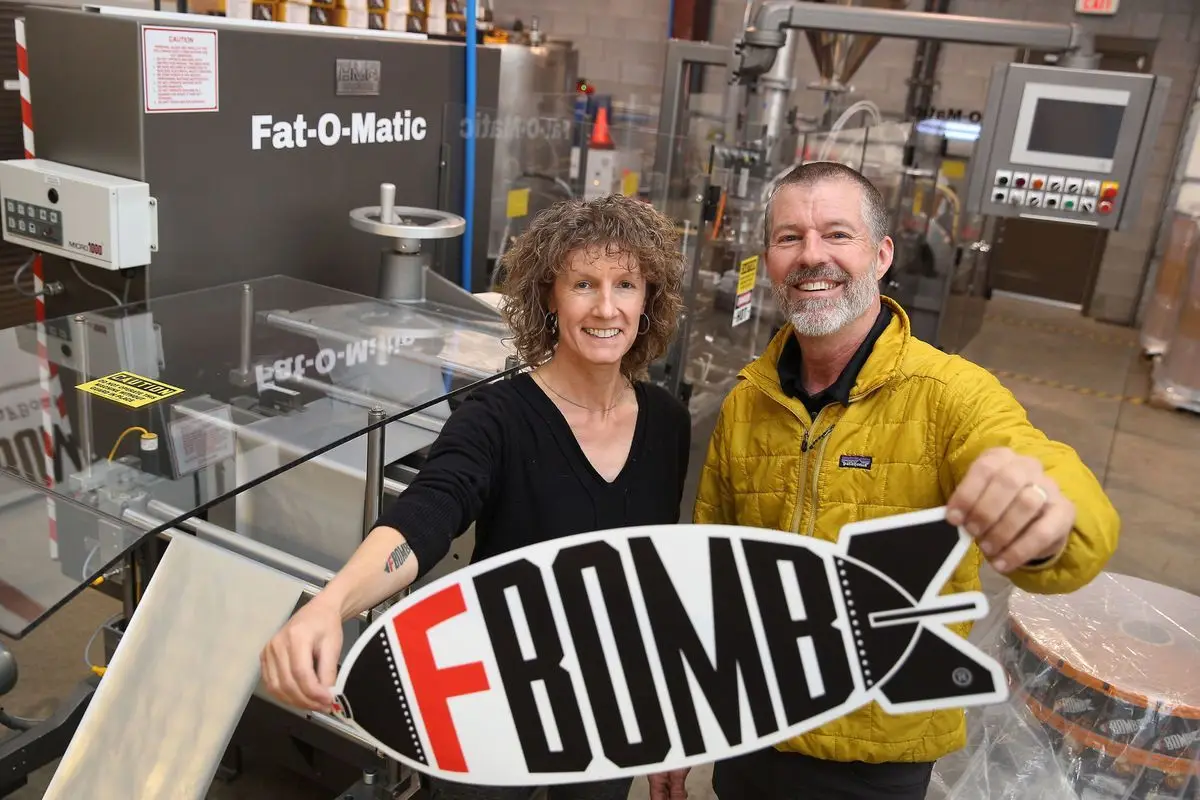
Ross and Kara of FBOMB Nutrition started their entrepreneurial quest when they saw a distinct problem: so many people were going low carb, but there were very few low carb high fat snack options on the market.

They decided to fill that hole in the market with their FBOMBS, packets containing nut butters and oils that provided a quick and portable snack to low carb dieters. If you are amongst the thousands of veterans in the community who are seeking to open their own business, you need to listen to this episode, and if you are seeking an amazingly delicious and healthy snack, you need to try their FBOMBs!
As with any business story they’ve had ups and downs, but met each obstacle with grit and determination to help their business to succeed. Now, armed with a new manufacturing facility in Flagstaff Arizona, they are seeking to bring their product to the world, and they want to help US Military service members by sending packs of their healthy snack alternative to troops on the front lines.
If you know of a deployed unit, email us over at info@warriorsoulapparel.com and we will get a shipment of healthy FBOMBs out to them!
Transcript
Machine-generated from the episode audio and lightly edited — may contain errors.
Chris Albert (link to this point)
What is going on everybody? Welcome to the Warrior Soul podcast. And as most of you who listen to this podcast know, we have an absolutely amazing sponsor. And in this particular episode, I have the privilege of bringing that sponsor on. I wanna welcome Ross and Kara from F Bomb Nutrition, Two amazing people who have been so supportive in everything we do here at the Warrior Soul podcast, simply because they really wanna help veterans out.
And I I really can't ask for more than that. I think that's that's absolutely amazing. I met these two back at Paleo FX two thousand seventeen in Austin, Texas. They had this big awesome truck that said f bomb on it. And so I had to go up and see what was going on.
And they handed me a package that contained a bunch of little packets like this. And they were full of fats. And I've been doing the ketogenic diet for about six years now. And it's it it was awesome. I tried some of the stuff in there.
They had these ridiculously delicious macadamia nut butters mixed up with like sea salt and chocolate and everything like that And I got to know these two. I got to go out to Flagstaff, Arizona about a week or two ago and see how where this stuff is created and see how far they've come. So I wanted to bring them on the show because as an entrepreneur myself, I love to hear about the entrepreneurial journey. And a lot of times when people look at successful entrepreneurs, they see, you know, the the branding. They see the the success. They don't really see the pain. They don't see the sleepless nights. They don't see, you know, you ripping your hair out because you're you you can't get a label right or because your your your website isn't working well or because you can't figure out how to get these shipments right or anything like that.
They don't see all the work that goes into it. So I wanted to bring Ross and Kara on to kinda talk about their story. So guys, welcome to the Warrior Soul podcast.
Ross (link to this point)
Thank you.
Kara (link to this point)
Thank you. Thanks for having us.
Ross (link to this point)
Although we've had none of those issues you mentioned. No. None.
Chris Albert (link to this point)
None. It's just been all easy.
Ross (link to this point)
I think everyone everyone from typos on packages to labeling issues to sleepless nights. I I know we wouldn't have traded it for anything.
Kara (link to this point)
No.
Chris Albert (link to this point)
So And fun. Let's start at the beginning, and and kinda talk about, one, how'd you guys meet up? How did you guys get together first off? Because because you seem like such a great couple. Where what's what's the story behind that?
Ross (link to this point)
We actually met through my ex wife, but oddly. No.
Kara (link to this point)
Well, really, we met at the gun show.
Ross (link to this point)
Yeah. We met at the
Kara (link to this point)
gun show. It's a long story. A good story.
Chris Albert (link to this point)
The literal gun show you guys met at a gun show.
Kara (link to this point)
Because we met at a yeah. Yeah.
Because that's a great place to meet people.
Chris Albert (link to this point)
Absolutely.
Kara (link to this point)
Yeah.
Chris Albert (link to this point)
Yeah. Awesome. Awesome.
Ross (link to this point)
You know, so my ex wife had gotten into CrossFit, and Kara and her ex husband were doing CrossFit at the time. And through just a couple of CrossFit parties, I had met Kara and we chatted, and I knew her first name, didn't know her last name or know her well. And we both ended up divorced just separately, obviously, but I had taken my former stepson to the gun show to look at knives, and Kara was there with a couple of her co workers looking at pistols, and as a former police firearms instructor, I dropped the best line on her ever. I said, you know, if you buy that pistol, I could polish your feed ramps for you. I thought that was a bit forward of it. Thought it was a bit forward, but I meant it.
Kara (link to this point)
It all worked out.
Ross (link to this point)
I've been through the Glock Armorer School and so she was looking at a Glock and that's how we met. We texted and ended up having lunch the next day and here we are.
Kara (link to this point)
Yeah, you have it.
Chris Albert (link to this point)
That's awesome. That's awesome that you guys both met at the gun show, and that's awesome that Kara was there looking for pistols, and and that's a really awesome pickup line. Very, very cool.
Kara (link to this point)
So Yeah. So No.
Chris Albert (link to this point)
Getting into into this realm that you stepped into, so you're both you were both in the CrossFit world. When did you start thinking about the ketogenic diet and and learning about the ketogenic diet? At what point did that happen?
Kara (link to this point)
Ross' story.
Ross (link to this point)
Actually, I came into keto through the Atkins program about twenty six years ago. My father had passed away. My father and both his brothers, all three of them were medical doctors, and my dad had passed away. It was suicide and depression, but you know, still he had diabetes issues. Both his brothers had diabetes.
One ended up with a pancreas and kidney transplant, all kinds of issues. And it was all related. We have this family history of diabetes. So my uncle Dean, who was still practicing as a cardiologist at Johns Hopkins at the time, gave me an Atkins book. And he said, you know, I think this is a better way for us to eat with this family history.
I did it now for a long time, about twenty of these twenty six years, I was eating too much protein. The Atkins program is sort of soft on protein, but still I would stay ketogenic as much as possible. With too much protein, still get the cravings, you end up converting protein to glucose and it makes it more challenging. But once I added in a lot more fat, it became much easier to sustain and just smooth and painless and comfortable. And so that's how I came about this and kind of what led us to the business.
But I'll let Tara share her keto paleo story.
Kara (link to this point)
Yeah, and I kind of came in from the paleo side of it, which I was was working well for me from some food sensitivity issues, and then learn more about keto, and that really made sense because I had some insulin resistance and some of that stuff going on that so many people do, and keto was a good fit.
Chris Albert (link to this point)
Awesome.
Kara (link to this point)
That's how I got there.
Chris Albert (link to this point)
So And
Ross (link to this point)
it was, I was a police officer at the time down for the city of Phoenix. And of course, being keto was great because there were a lot of times when during the shift, you know, you couldn't eat despite your best intentions, you can't eat and you don't want to get hangry and shaky and not a good scenario. So it was very convenient. I have not suffered any of the health issues that, you know, my other family members have had and it's just worked out well for me. But it was the keto and the need to get extra fats into our diet that really led us to start Love U Foods and the F bomb stuff.
Chris Albert (link to this point)
Yeah. That's really interesting, the police officer aspect of it, because, there's studies that look at decisions that judges have made, and they find that judges may actually make more lenient decisions if they've had lunch and their blood sugar is not low. You can imagine, mean, just my experience in the Marine Corps, I remember, you know, when I if I hadn't had chow for a while, if I ran out of things to snack on on my MREs, I I would start to get a little bit foggy. I'd start to fall asleep, you know, and I would do everything I could to try to try to stay awake. And I imagine just, know, the ability to make a split second decision that could determine life or death as a police officer really helps to have a very stable blood sugar, right?
Ross (link to this point)
Absolutely. And, you know, just being able to get through a shift and feel okay if you can't eat, All of that's tied in together. I mean, there's so many health benefits and life benefits to keto, and we're not out to convert anybody, but we're certainly believers just because of how it's worked for us. Absolutely.
Chris Albert (link to this point)
So you when you were out I mean, did that feed into, you know, building f bomb? Was that was that part of it being out and and on patrol and and not having, you know, or maybe needing to take a bottle of olive oil with you on the road or some coconut oil or something like that.
Kara (link to this point)
Yeah.
Chris Albert (link to this point)
Where where did you guys get this idea? When did you decide to pull the trigger on it?
Ross (link to this point)
Actually, I've been out of I'm old enough. I've been out of law enforcement now for twelve years. In the last ten or so, I had worked in the renewable energy, wind energy business traveling around the world and I was spending a lot of time in India or Japan, and Kara and I were getting little Ziploc bags and filling them with oils and fats and making our own blends to put in coffee. And, of course they would leak, so we'd put them inside an algae bottle so you don't end up with the, what do you call it, the luggage emergency or disaster.
Kara (link to this point)
Disaster, yeah.
Ross (link to this point)
And it was really that. You know, you can find proteins almost anywhere. You can find vegetables almost anywhere. But we're always reluctant to use the salad dressing at a restaurant. You don't have much sugar as in it.
Kara (link to this point)
Good oil or bad oil or
Ross (link to this point)
Yeah. And so it was the fat component that we felt was hard to get when you weren't home. And that's what led us to start making our own stuff. And then we realized, of course, that if we can't find what we want, there's there's a hole in the market.
Ross (link to this point)
So we were both working full time. Kara was working as an accountant, and I was working in the wind energy business, doing training and project management, and we started doing this part time in 2015, and that's what led to where we are now.
Kara (link to this point)
Mhmm.
Chris Albert (link to this point)
And I can also imagine traveling to places like India, You know, you probably don't wanna be, you know, eating something that's been been washed in water over there or anything like that for fear of food poisoning and things like that. Right?
Ross (link to this point)
It's just part of going there. I mean, and I knew I would go there and I would have I would have the issues for a week or two and then I'd be okay. But yeah, they're I think it's hard, especially the places I was working, they were not the tourist areas. We were out in the middle of the tar desert or down in villages that you had to hike back to in Tamil Nadu, and yeah, you kind of are stuck, and there's this acclimatization process where you just kinda, you go through it.
Kara (link to this point)
Wow.
Ross (link to this point)
Yeah. Having the extra fats was healthy or helpful.
Chris Albert (link to this point)
Yeah. When you get into
Kara (link to this point)
That's this not how it works. Yeah.
Chris Albert (link to this point)
So you get into this and you start doing it part time, how how did that come about? Were were you just were you just packing? Did you have like a little space to work in? I I went to your original space. Was that the space you were in out there with incubator or was it another, was it something you had just started doing in your garage or anything like that?
Ross (link to this point)
Actually, FDA and the health department rules won't let you sell product across state lines anyway, or outside of your local region, it's in a commercial inspected kitchen space. So we started in May 2015?
Kara (link to this point)
Put the company together, set the LLC up, and did all the details in May 2015. And then when did we move? We did move into a space that you didn't see. It was a smaller space in the there's an incubator facility here in
Ross (link to this point)
Flag. Right across the parking lot. So the space you saw was nine sixty six square feet. We started across the parking lot in a little 400 square foot space. We got it approved, had to do a couple minor things in there to get it set up as a commercial kitchen space, but we got it inspected and approved and in about August 2015, and then started our our first sales were 10/15/2015.
Yeah. In that little space.
Chris Albert (link to this point)
Oh, wow. That's pretty awesome. And and so how much were you were you just going in there after work at nights and and just grinding grinding up things or filling up packages and things like that?
Ross (link to this point)
Exactly. You know, and and you talk about the entrepreneurial start that if I can, the typical process, if you want to start a food business, most people go down a path of finding a co packer, a contract packager, and you tell them what you want and what kind of product and what kind of packaging, and they'll help you formulate it. And they make a bunch of it, and then you just sell it.
Kara (link to this point)
Like really a lot of it. Yeah. A really big pile of it, whatever it is.
Ross (link to this point)
Their minimum order quantity is actually pretty large, and the investment's large. And we realized that for us, we would rather build something local and have that control of quality and not be locked into having 200,000 packets of one thing. So we took what money we would have spent with a co packer and instead bought some small equipment and we're able to be a little creative about packaging that allowed us to launch with four different SKUs, four different products, instead of just 200,000 of one thing.
Kara (link to this point)
One thing. I think that was really helpful. And that was Ross's genius to find the equipment and figure out that we could do it ourselves. It wasn't wasn't that out of reach that we needed to hire.
Ross (link to this point)
She called she said genius. She called me genius. I'll have to record this. You know, we started with these packages and we had them custom made and we found supplier that was able to produce pretty small quantities, but you still have to pay for and for those not on video, I'm holding up a packet, you know, you have to pay for print rollers for every color. So there was a black and a red and a white, which meant if we had a different product, it would have a whole different set of print rollers.
What we did was we left a section blank on the front and the back of the packet and got clear labels with white printing. And so we were able to buy enough pouches to meet the minimum purchase requirement, the minimum order. And then we put labels on the front and back.
Chris Albert (link to this point)
That was one of the painful things you were talking about.
Kara (link to this point)
Yeah. That was one of those.
Chris Albert (link to this point)
So you were literally going through each package and putting on, you know, macadamia nut butter with with sea salt, macadamia nut butter with coconut butter, like, just slapping those on?
Ross (link to this point)
Yeah.
Kara (link to this point)
Yep.
Ross (link to this point)
We were having to put one on the front and then one on the back that had all the nutrition information, the ingredients, the barcode. And so we took a pack. The pouches we were paying, we paid a little extra to have rounded corners. We wanted them to be durable and comfortable if you put it in your pocket or something. But we were paying at the time, I think $0.14 per pouch, and then $0.11 or $0.12 for the front label and $0.17 for the larger back label.
So we tripled the cost of the pouch. And in retrospect, maybe that wasn't the best thing because it increased our cost, but it allowed us to launch with several different products and then do some product testing. Try one, see if it works.
Kara (link to this point)
Having that flexibility was great.
Ross (link to this point)
Yeah.
Kara (link to this point)
Test things out. We only dropped one variety.
Yeah.
We had a plain macadamia with no salt, and it had two loyal fans, but that was kind of it.
Ross (link to this point)
There were a lot of evenings where we would sit there with, we made a little hand crank labeler so you could crank it and it would feed the label out and you put the packet on it on the front side. There were a lot of evenings with a glass of wine labeling pouches and
Kara (link to this point)
My hobby for a while.
Ross (link to this point)
Yeah, it was a pain, but it allowed us though to get into multiple SKUs at launch. And I think that's part of There's a good trade off. What made it attractive to people.
Chris Albert (link to this point)
Yeah. And and so when you were putting this thing together and you were trying to figure out what types of fats to put in. So, you know, just to go through your your your product variety from you have your fat packets, you have the MCT oil, the coconut oil, the olive oil, and then you've also got your your fuel packets, which are a macadamia nut butter base with you have one that's that's with coconut butter, one that's just with macadamia nut butter and sea salt, one that's with with chocolate, and you have a new variety coming out that's gonna involve I don't know if you want me to say what it is yet or not.
Ross (link to this point)
But Sure. It does.
Chris Albert (link to this point)
It came up last week. Macadamia nut macadamia nut butter with pecan, and and I absolutely love it. It's awesome. Delicious as hell. So when you were when you were sitting, what made you decide on the macadamia nut butter base?
Ross (link to this point)
Primarily the good fat profile, you know, macadamia nuts are very much a premium nut. They were not the cheapest nut by any stretch of the imagination to use, but, you know, almond has a lot of protein in it. All the other nuts, except maybe pealy nuts, have pretty high percentage or ratio of carbohydrates. And we wanted as much fat as possible because, again, finding the protein or even finding healthy carbs was not the challenge for us. It was finding the good fat. And we heard an interview. We heard an interview with a world record holding ultra runner. Mhmm. And in the interview, he was talking he was asked he's keto, and he called it his secret weapon.
And he would ask about one of his favorite snacks. He said, I love macadamia nuts, but they're hard to eat when you're running. And we said, oh, we could grind them and put them in packets. And there are a couple sources of macadamia nut butter in jars, but nobody at the time, and I think still, was putting macadamia nut butter in pouches, which was kind of our goal. Our whole focus was on finding the extra fats when you weren't home.
Kara (link to this point)
Portability.
Ross (link to this point)
Yeah, portability was always one of our key tenants. And so we started with the macadamia nut butter. We did some investigation, we ground it, we tried different roasts and grinds and came up with one. If you if you just grind macadamia nut butter like you would peanut butter or anything else, it comes out almost like as smooth and creamy as maybe sour cream.
Kara (link to this point)
Mhmm.
Ross (link to this point)
It's got so much fat. It's really creamy. We wanted a few little nuggets in it, something we kind of joke, something to do to pick out of your teeth and chew on after you've had the pack and, you know, to keep you interested. Yeah, little texture. So we had to had to get some grinding equipment and then modify it to grind with the fines or small particles in it.
It took a bit. It was a challenge and macadamia nuts don't have a very long shelf life compared to other nuts. But the foil barrier liner in the layers of our packaging really helps with that. So we've got a good fourteen month shelf life and we're confident with that. And it's worked out well, but it was not the easiest nut.
If you were looking to start a nut butter company, picking a macadamia nut, again, looking back, some of the things we do now, we're really glad we did, but when we look back, we think, wow.
Kara (link to this point)
Yeah. Why did we do that?
Chris Albert (link to this point)
Yeah.
Kara (link to this point)
And I love that.
Chris Albert (link to this point)
What amazes me is is, you know, the for containing macadamia nut butter, like, you go into the bulk foods aisle at at, like, a Whole Foods or any place, you try to get raw macadamia nuts or or even roast macadamia nuts. I think they're like $18.19 dollars a pound or something like that in the shop. So this is actually a really cost effective way of getting macadamia nuts into your diet. Like, it it's it's pretty fantastic what you guys have done here. Tell me about the scariest moment at the beginning.
What was the scariest part of this this whole thing for you?
Ross (link to this point)
Well, I know. I think the scariest moment was when I induced on Kara. So a quick background. I mean, we get along so well, but we look at things and approach things very differently. Kara is very analytical.
Yeah. It's great. Kara is very analytical. She'll create a spreadsheet. She has this amazing documentation of every cost, everything.
She calls it the mother sheet, the spreadsheet of all spreadsheets. And, you know, I'm more, I heard somebody interviewed of, I don't remember who that was, but somebody was interviewed and they said, you know, I'm more the kind of person who makes a promise and then figures out how to keep it. And so I announced to the world that we were going to start sales on 10/15/2015, which is how we know that date so well.
Kara (link to this point)
Mhmm.
Ross (link to this point)
And Kara had a bit of panic, like
Kara (link to this point)
We were not quite ready for that.
Ross (link to this point)
You what?
Kara (link to this point)
You told people that?
Ross (link to this point)
And that was a that was a scary moment. But, again, in retrospect, you know, it forced us to meet a deadline, and we were up all night for several nights after that filling orders.
Kara (link to this point)
Mhmm.
Ross (link to this point)
I wouldn't change it. Maybe Kara would change it.
Kara (link to this point)
No. That's good. That's we're a good counterbalance for each other that way. So that's good.
Ross (link to this point)
She tempers me, and I draw her out. Yeah.
Chris Albert (link to this point)
Yeah. Mean, like, you know, sometimes it's it's right before you're beginning to launch a product or start a business that, you know, you get those really, really terrified nights and then it's like this thing's really gonna happen. This thing's really gonna open up. We're gonna be doing all this stuff and and, you know, I've definitely been there on a couple of different occasions. When so at the beginning, how did you develop your initial following?
What you know, how are you how are you getting people aware of the product?
Ross (link to this point)
Our first sort of, I guess, exposure to the keto community came through Jimmy Moore's podcast. And we had read Jimmy's books and had reached out to him before he started sales. We were on a budget, we were self funded, and, you know, so we had a limited amount of money, but he was gracious and was supportive of what we wanted to do, which was bring a keto product to the market that wasn't filled with a lot of extra junk. And we reached an agreement to sponsor his podcast.
Kara (link to this point)
And That was a little scary. Yeah. That was a commitment of, you know, our own money going into that, but that worked out really well.
Ross (link to this point)
And so, you know, we still work with Jimmy as we do with you, you know, we respect him and his podcasts and what he's trying to do. His mission is good. He's a good authority figure in the keto world. And so it was his podcast that sort of exposed us. Then for quite a few nights after that first launch, we were back in orders and grinding stuff and trying to keep up.
But that was our exposure. But really, we focused on trying to be as organic as possible and work through social media. Neither one of us have had an interest in the past in social media. I never had a Facebook account. We we started one for their business, but we found that Instagram and some of the communities and support and comments we've had on social media have really been key to expanding our awareness.
We don't have your following, but, you know, we're doing pretty good.
Kara (link to this point)
Come come along.
Chris Albert (link to this point)
Yeah. Well, I'd say you guys are doing awesome. When we Yeah. I definitely thought you guys are doing awesome. It's because you got a great product and and people rave about it. And, you know, I think it's also because anybody who comes in contact with you, you're you're great people. You know what I mean?
And and and anybody I've known who's ever come in contact with you has has said the same thing. So was was there like a lot of like like, travel were you were you doing a lot of trade shows at the beginning? Were you were you putting putting the name out there in those ways? Were you or or was it literally just
Kara (link to this point)
What What was that?
Just a few. We went to Paleo FX where we met you. And then I guess we went to
Ross (link to this point)
Would it be okay to say that the best part of Paleo FX was meeting you? No, we met some other people there as well. You know, Jodell and some other people. Paleo FX was a good fit for us because their product is also paleo. But they were not at the time very supportive of keto.
I know they've jumped into the keto world, but we went to some of those primarily because we thought you have to.
Kara (link to this point)
Mhmm. We went to another one that was more general fitness, and the more focused events we attended, the better the outcome. We ended up meeting some really great people. KetoCon, Low Carb USA, those were really good.
Ross (link to this point)
Yeah, this year we've actually pared down quite a bit. And right now we only have commitments to be at two actual conferences. One is KetoCon down in Austin, Texas, and the other is the Low Carb USA in San Diego. And we are probably not going to go to others. We're going to be busy.
We're going to be at several of the Ragnar events. We're going to an American Diabetes Association event up in
Kara (link to this point)
California. Yeah.
Ross (link to this point)
Somewhere there. Napa, the wine country. But I think we're only going to those two conferences this year. There are some others that are really good, like the, what's the truth? Tripping, tripping Tripping over the truth.
Tripping over the truth, a very technical conference. I would love to get to that, but it's just not in the cards this year.
Kara (link to this point)
Yeah, there are lot out there. You know, It seems like
Chris Albert (link to this point)
And we found them. Oh, go ahead.
Ross (link to this point)
I'm sorry.
Kara (link to this point)
To be just meeting people more than I know some people go to these things and they wanna sell a bunch of product and they wanna get new accounts. And we were actually, for most of us, we're a little afraid of that. Yeah. We didn't wanna overdo, but we also I remember going to Paleo FX. I was hiding behind the screen trying to fill orders to mail from there, and we didn't have a lot of extra product to try to sell there.
We were kind of making everything just it was just in time production.
Ross (link to this point)
Yeah. No. I don't know if you knew that, that we literally behind the screen had a printer set up, and we had a bunch of product in the back of Keto One in our vehicle, and we were filling orders. And then every day in the afternoon, we were sending some of our friends out to the post office to send orders because it was just the two of us.
Kara (link to this point)
Yeah.
Ross (link to this point)
If we were gone for four days, that meant orders wouldn't go up for four days.
Chris Albert (link to this point)
So Oh, wow. Wow.
Kara (link to this point)
That's good deal.
Ross (link to this point)
Seen all the stages here, Chris.
Chris Albert (link to this point)
Yeah, definitely. Definitely. You know, in the beginning, you're stretching yourself out thin and, you know, you got to figure out some creative ways to do things. It seems like keto is almost everywhere right now. You know, six years ago when I started the ketogenic diet, I was almost afraid to talk to people about it, because I came from the bodybuilding world. I was a big muscular guy at the time. But if I was telling people that, you know, 75 to 80% of what I was eating was fat and, you know, I wasn't eating 250, 300 of protein a day that, you know, people would look at me like I had three heads. Where do you see this movement going? Where do you see the the whole movement behind ketosis going?
Ross (link to this point)
I, well, let me just address your earlier comment when you said people speak nicely of us and I appreciate that. But I think part of it is that we were not looking for a trend or a fad or noticing that, hey, keto's trending upward and, you know, we're in it because we needed something. And I think people recognize the genuine approach there. We are really excited that more and more people are talking about keto. We're also kind of excited.
I've had to get talked off the ledge a couple of times. And recently I did delete a post where I was a bit maybe rude, but you know, you see so many anti keto articles now. And I think that's a good thing. You know, the keto community and the keto awareness and all of the success and benefits that people are seeing challenging some of the traditional teachings and people who have been entrenched in keto and taught that and told everybody that, you know, a grain based, fiber based, low fat diet is the way to go or getting their world a bit, and are retaliating by writing a bunch of articles about how bad keto is. And I think that's all a sign that it is becoming more mainstream, that it's becoming more well understood, I guess, and more accepted. You know, I'm with you back, you know, then tell people, yeah, I'm doing Atkins. And they, people would say, well, you're not fat, you're not overweight. That's not why I was doing it then. And that's still not why I'm doing it.
I kind of maintain my weight. I don't get hungry and I just feel really good.
Kara (link to this point)
My guess is that it will. Now it is a trend. And it's also, I think that popularity will peak and then it'll kind of level out, but it'll be much more widely known and accepted, and that's great.
Ross (link to this point)
Yeah, I think more and more people are realizing that fat is not the enemy. And even the, you know, very quietly a couple of years ago, the US government changed the guidelines on cholesterol.
Chris Albert (link to this point)
Right.
Ross (link to this point)
They didn't say, hey, we've been wrong. Didn't come out and say, hey, folks, we've been wrong all these years. Eat as much cholesterol as you want. They just very quietly changed it to say eat as much as you want. It's no longer a nutrient of concern.
But I think the restrictions on fat will just kinda quietly become less
Kara (link to this point)
Fade away.
Ross (link to this point)
Yeah. They'll fade away.
Chris Albert (link to this point)
Yeah. It's it's interesting to see like these it's it's almost like the last gasp of a of a dying paradigm. Right? Where we see, you know, the the the stuff that came out about coconut oil. I think it was like six, seven months ago where they were saying that nobody should be eating coconut oil.
It was never good for you or anything like that when we know that it's a fantastic source of energy. It's antimicrobial can seriously help your digestion use inflammation a whole host of different things and then, you know, we saw that I think that article that you post or well, you might have posted on Instagram and then I think I think somebody made you take it down but but about the Men's Health article that said you don't want to be in ketosis. It's a dangerous kind of thing that's going to make you feel like crap or anything like that. And and I think people are getting more and more educated. But for so long, we've been we've been kind of bullshitted about our nutrition and it hasn't helped any of us.
And, you know, there's so many things going on out there right now. You know, we're finding that more and more that disease is a result of inflammation. We're finding that mental illness many times as a result of So I think, you know, we're at a weird point in history right now. We're at a really weird point because people are starting to wake up to certain things and then people are are also reacting and there's a very reactionary element that's against the high high fat, low carb movement out there.
Kara (link to this point)
Mhmm.
Ross (link to this point)
I, yeah, absolutely. I think that reaction is a sign that maybe we're on to something and maybe more and more people are figuring it out. Like you said, you know, it's reactionary and defensive and the last gasp and you're right, that was the article. And because I said it, I used a word in there to describe it.
Kara (link to this point)
You were unkind.
Ross (link to this point)
I was unkind, and I should have been more kind. But just we have UnitedHealthcare as our insurance medical insurance provider. And I just got this long newsletter article about how to eat better and the nine foods you should be eating. And one of the things they of course, they said eat more grains, eat a whole grain diet, lean meats, low fat. But then it said, and for oils, eat healthy oils like olive oil or canola.
Like really canola, I rapeseed was just shocked. Of course, there's nobody there to email or, you know, but there's still a lot of bad information, but I think you are absolutely right that more and more people are getting their eyes opened and becoming aware and It'll happen. And experimenting on themselves. Yeah. Kara and I eat a little differently, and Kara is doing more experimentation right now with even dairy free keto.
Kara (link to this point)
Mhmm.
Ross (link to this point)
I think it's important for everybody to try to see what works for you.
Kara (link to this point)
Yeah.
Ross (link to this point)
You know, the whole n equals one. Do your experiment on yourself and see. Because you are different than I am. Kara and I are different. And, you know, I can have a little more chocolate than she can or maybe not.
Chris Albert (link to this point)
Yeah.
Ross (link to this point)
And Yeah.
Kara (link to this point)
No, that's huge. I think that's a good way to eliminate. A lot of people are afraid. They're afraid of fat. And that's what we've talked about with people.
Do some blood work, try it. Try it for a few weeks and then do some more blood work. That's probably not going to kill you. Try it out, see if it works for you. You can test these things.
You don't have to just assume and just believe it blindly. You can test it.
Chris Albert (link to this point)
Yeah. I really think that, you know, we're talking about things like this, the whole vegan movement, there there there they there's a lot of vegans who are anti keto and needlessly in my opinion because, you know, with the ketogenic diet, it's not a meat based diet and that's the thing that people have to understand here. You can load up on fibrous vegetables. You can get a lot of great micronutrition from that and then with products such as yours, which is vegan by the way, you know, there's not animal products this thing. I mean, I definitely think that that, you know, a vegan could find a lot of benefit from doing the ketogenic diet.
Then, you know, the other thing people have to realize is that there's more than one way to skin a cat, right? So you can find ketosis through intermittent fasting, you can find ketosis by doing three day fast, you can there's a whole bunch of different ways that you can do this. But but the point is that ketosis is part of our evolution. We developed the ability to do this for a reason. And that's because somewhere in our evolutionary history, actually for a good bit of time in our evolutionary history, food was scarce.
It wasn't everywhere. We needed a fuel source to carry around with us when there wasn't, you know, there wasn't a good crop or when when when, you know, we hunted out all the animals and things like that. When we were starving and needed to move, we needed ketosis. And that's why we're able to take advantage of that today.
Ross (link to this point)
Absolutely. And, you know, traditionally the first parts of the animal that would be eaten and prized by the hunters were the organs, the organ meat, the offal and, or awful, offal.
Kara (link to this point)
Good.
Ross (link to this point)
You know, wildlife biologists would be, Good. You know, and then the lean cuts of meat go to the dogs. We've just completely changed that and gotten away from fat. And you're right about the the vegan community. There is a bit of a we've noticed a trend.
We've had to fight that a little bit where they will jump into our threads and talk about how terrible keto is on the assumption that we're proposing you kill all the animals and eat them all. And when we point out that there are keto vegan groups on Facebook and social media, and some of our customers are really avid ketogenic vegans. And that, like you said, our products are vegan or vegetarian friendly. And then they go, oh, okay. But there's that assumption that you're only eating meat.
And there are a lot of people lately who are doing the, you know, all meat carnivorous diet. And if that works for them, great. But we eat a lot of broccoli and artichokes and other vegetables, and it's not what people think.
Chris Albert (link to this point)
Right, right. I had Shawn Baker on a few weeks ago. Great guy, I disagree with him a lot, but great guy, he's been doing the all meat diet with no vegetables, nothing else. And he's developed quite a following, I mean, but I marketing there is like, hey guys, you want a diet? You'll be eating a delicious rib eye steak every single night for the rest of you.
You know what I mean? Like, that's that's awesome marketing. You can't beat that.
Ross (link to this point)
Oh, and that was a that was a great podcast too. I know that one exactly. And, you know, he he talked a lot about how you can get all the micronutrients you meet you need from meat and he takes a little bit of supplemental stuff. But yeah, so I'm certainly not knocking that. But for me being keto, I found that for a long time I was eating too much meat.
That was the problem because as I came in through the Atkins program, I kind of thought that keto was all meat all the time, and it isn't. And so but everybody's keto is different too. Yeah,
Kara (link to this point)
know, some like people that's of ways to do it.
Ross (link to this point)
You've met one of our customer friends who uses keto to control her epilepsy, and for therapeutic reasons, she's got to keep her ketone levels pretty high. If our ketone levels are lower, that works for us. And so we can tolerate more carbohydrates than other people. But everybody's got to figure out what works for them.
Chris Albert (link to this point)
Yeah, absolutely. Absolutely. I, you know, I used to eat five pounds of meat a day when I was a bodybuilder. Like, that was I literally, I used to go to the market every single day to try to find the budget meat like the ones that was just almost to the the expiration date. And like, I'd go home and I'd cook it up right away. Come home from Costco with these big giant giant packages of chicken breast and eggs and and ground beef and I'd cook it all up and I'd spend like three hours in a day cooking. It was crazy. But wait.
Yeah, my last bodybuilding show I did using the ketogenic diet and it looked great. I think I looked better there than any other bodybuilding show I'd ever done. And I placed second overall out of a very large class in the very first classic physique competition in the MPC. And you know what, it was, I was eating one to two meals a day literally and and very, very minimal protein. And, you know, I was getting lots and lots of fats in.
But but that's how it went. And and, you know, anybody who says that this thing can't work is I don't care if you say you don't like the diet. I don't care if you say that it's not good for you. But for you to say that it's unhealthy and can't work or anything like that, that that's just talking out of your ass in my opinion. You know what I mean?
So.
Ross (link to this point)
Totally, totally. No, we agree. And of course, you know, Robert Sikes and he talks a lot about how he did his first bodybuilding competition, keto, and how pained everybody else was by trying to dehydrate themselves and get cut. And one person he competed with couldn't even finish the poses because I just did that on video. I shouldn't even do that because I thought you looked silly.
You know, couldn't got cramped up and couldn't finish the competition after all that self torture. And Robert, like you probably just felt really good. Hey, I just modify a little bit at the end and I feel good. That's why you do so well.
Kara (link to this point)
Yep. Yeah.
Chris Albert (link to this point)
It's very interesting.
Ross (link to this point)
You know, bringing this around, you talked about diet and everything and bringing this kind of around to the veterans and the warriors. You know, one of our goals is to support the military and and try to get more fat out to the places. You know, my oldest son is in Hawaii. He's in the Air Force. He's stations in Hawaii.
He can find fat there in surfing. But, you know, troops out at some forward operating base or a little post out in the middle of Afghanistan or something, they get what's choppered in and we understand that. And so we're one of our goals is to work towards getting more fat out to the troops in a way that, you know, they can take it out with them and supplement the primarily carb based food that they get out there. And like you said, you know, a lot of that causes inflammation and maybe a factor in TBI issues or making those issues worse or PTS issues. Yeah, anything we can do to help in that respect.
And that's part of why we love your message.
Chris Albert (link to this point)
Absolutely. And that's something I want to put out there to the audience right now, because I know you you've asked me, I put this out on a couple of announcements on previous shows. But if you know of any unit that is currently deployed right now and you have you have their their FPO address, hit us up over here at the Warrior Soul podcast and we can put you guys in touch with Ross and Kara because they've been looking to help as much as they can. And and, you know, I think that that this is a big part of their mission. And and the things that that we're alluding to here are, you know, the idea that the food you're eating in those MREs, in many cases can cause a good amount of chronic inflammation.
Now, you might not feel it right off the bat right now, but as you get older, what happens is you start to feel it in your joints. You start to feel it in your back. You know, those of you who are serving in the infantry, I remember, you know, a lot of the guys who were just 24 or 25, which is ancient by the way in in the military. Absolutely ancient. You're an old man by that point.
But a lot of the guys who were 24 and 25, they were dealing with joint issues, knee issues and walking around like old men. And a lot of that comes from diet. So, you know, and then the other point is this, if you do sustain a traumatic brain injury, it could become much more severe if you're in an inflamed state and can lead to significant problems down the line. So the point is that, you know, Ross and Kara are trying to provide something you probably not gonna be able to get rid of MREs, but you can at least supplement them with something that's anti inflammatory that's better for you. And so they want to send some stuff out there to the troops and and they're doing it out of the goodness of their heart.
So so let us know if you have an address and and we can get some sent over there.
Ross (link to this point)
Right on. Thank you. We appreciate that. Yeah. We love to send some cases over there.
Kara (link to this point)
Yeah.
Chris Albert (link to this point)
Awesome.
Ross (link to this point)
Thanks, Chris.
Kara (link to this point)
Yeah.
Chris Albert (link to this point)
You know, a few other things. So just going back to the entrepreneurial journey here, I I went to this I guess it was the second space that you guys had had utilized. And I saw where you guys kind of started out, and they have a great program down there in in Flagstaff for entrepreneurs. Do you guys wanna talk a little bit about that program and and how that came about?
Ross (link to this point)
Sure.
Kara (link to this point)
Yeah.
Ross (link to this point)
So in Flagstaff, like down in Phoenix too, they've got a great incubator program. But up in Flagstaff, they've got the Northern Arizona Center for Entrepreneurship and Technology. It's kind of a mouthful, and they've been in the process of rebranding as Moonshot, but it's a program in a building, a set of buildings now owned by the city of Flagstaff. Their mission is to help young businesses sort of fledge and grow. They provide support services there in the way of staffing, mentors.
I know early on we talked to an attorney who comes up and mentors and he's a patent and trademark attorney and give us some good input there. And those services are really free plus they had rental lease space there and we're very flexible landlords in that respect. We were able to move from one building to the other. And we had a two year lease in that space you saw, and we were not in there nine months, I think, before we outgrew it. But they, as long as we stayed within the city of Flagstaff and we've built a business here with, you know, employees now, they were fine with us breaking the lease with no penalty. So all of those things contributed to, you know, an environment where we, think we're able to be successful in part because of that.
Kara (link to this point)
That's awesome. Yeah. Very helpful.
Chris Albert (link to this point)
Very yeah. And it's a really cool space you guys have now, with a lot more production capability and a lot more ability to get orders out. So so, you know, I it's pretty cool to see how you guys are scaling this. It's it's pretty awesome.
Ross (link to this point)
It's awesome. Like you said early on, it's also scary. You know, think the week before you were out, we'd spent three nights at the office there. There's a futon sofa upstairs. I mean, just trying to get caught up on things, but that's all part of running your own business because there's nobody to, I mean, the buck stops with Yeah. It's all you.
Kara (link to this point)
Absolutely. Good.
Chris Albert (link to this point)
Are there is there any bit of it? What would you tell something? What would you tell a young veteran who's thinking about being an entrepreneur? What's the biggest piece of advice that you would give them?
Ross (link to this point)
Kara's philosophy. You can say it.
Kara (link to this point)
No, I can't.
Ross (link to this point)
And don't screw it up or don't mess it up. You know, too many people, I think, are afraid. You've got to be willing to take some chances. But once you take a chance and you get some positive feedback and you have a good thing, then don't screw it up. We have been asked several times to put stevia in our product.
And we kind of fought that. And I think that was a big part of the reason that we are different and we're successful because, you know, we're true to our roots and we didn't want to screw up what would have been a, you know, we don't want to screw up a great product by adding stevia to it when we don't use the artificial sweeteners. In many times or in many cases along the path now, we've come to a point where we've said, yeah, stick to our guns, let's not screw up what's working. And I think that's Kara's big bit of advice, and I
Kara (link to this point)
Yeah, and I'd just add, I think it's good to if you've got a mentor, access to an incubator, it's good to get an outside perspective. You fall in love with your idea. I think it helps a lot to be solving your own problem. And you know, that kind of means you at least have a market of you. You know there's a need there.
And then once you get a little bit of validation, it's always, if you can get somebody to buy the thing, that's great. And then once you've done that, then you just have to be persistent. Yeah. Once you know it's a little bit of a thing, then you can dig in and, you know, stick with it.
Ross (link to this point)
There's a lot of truth to the concept of a minimum viable product. You know, our first, like I said, our first package had a label applied to it. It this package shape is not as easy to use or convenient as our new one. But if we had waited for perfection, and I think too many people get, what's the what's the saying? You know, help me, Chris.
What's the saying? You know, stalled by the perfection, the need for perfection.
Chris Albert (link to this point)
Yeah.
Ross (link to this point)
Well There's a there's a saying there, but
Chris Albert (link to this point)
What's it called? It's paralysis by analysis. And and
Kara (link to this point)
Yeah.
Ross (link to this point)
Or that perfection is the enemy of the good or something but No.
Chris Albert (link to this point)
I and I see that all the time. You know, I train entrepreneurs for for London Real through the London Real Business Accelerator and I see so many people come through who are scared to make a decision. They're scared to take that first step. They're worrying about things like their logo or their domain name, and they're ripping their hair out about it for hours. The thing is, think that if you're gonna get into this line of work, you gotta worry about the big things first.
You gotta execute because at the end of the day, only execution matters. That's it. And and Mhmm. You know, beyond that, every all the little things you're worrying about, all the little things that you're you're tearing your hair out about, you know, you you probably move beyond those. It might be okay to create a package and just slap a label on it or, you know what I mean?
And you have to go through those types of things if you're going to try and succeed.
Ross (link to this point)
You know, you gotta, yeah, you gotta believe in yourself and take chances. You also need to listen to others, but I think ultimately, you've got to believe in yourself and your product. Try it. It may not be perfect. But if people like Kara said, if people buy it, that's your validation.
We look back and we kind of joke that if we had gone into the incubator and said, hey, we want to sell packets of fat under the brand name F Bomb, they might not have accepted us into the program. That's not a critique on the program. Shared this with them, but we had an idea. We saw a need. There was a hole in the market.
We were fixing a problem for ourselves. Now, you don't want to get so sunk into something that nobody wants that you're just spinning your wheels or bleeding money. But we had faith because people were interested. We got good feedback when we launched, we got some good sales even initially, and that just told us we were on the right track. And from that point on, then you follow Kara's philosophy, don't screw it up.
Chris Albert (link to this point)
Yeah.
Kara (link to this point)
Yeah.
Chris Albert (link to this point)
And that's the thing. If so, if we're looking for steps here so far, number one, they scratch their own itch. They solve the problem that they had themselves. And that's if you can do that, you're ahead of the game in so many different ways because if you suffer from that problem, then it's likely that other people suffer from it too. Number two Yeah.
They they got proof of concept. Right? So they created a minimal minimal viable product. They started putting it out there and lo and behold, not only was it something that they wanted for themselves, other people were willing to pull out their wallets and pay some money for it. So if somebody's willing to do that, it's probably a good indication that your product will work.
And the question is, well, how do you grow the thing? And the answer has to be gradually. You can't take on too much before you're ready and they did that.
They working nights, they had their day jobs coming back, grinding away, creating, you know, filling up these packages and things like that, labeling themselves, and they spent some time doing this before they were able to hire people and move into a bigger facility. And then after a whole lot of work, a bit of travel, and a lot of word-of-mouth campaigning. They they're now in a pretty big facility and able able to fulfill a bunch of different orders, which is going to allow them to grow. And if you're out there and you're thinking about building a business, understand it's gonna take a lot of work. Understand that there's gonna be some sleepless nights where you're sleeping on the couch in the office three nights in a row.
But also understand that if this is what you want, that's what you got to go through. That's what makes it worth it at the end of the day.
Ross (link to this point)
That's exactly right. Those were the steps. We're still working. We're still very much entrepreneurs, but it feels really good to be able to, we're just now at the point where we can start to help others. We're working with local group that, you know, works with handicapped and we've got crews from that organization in here three or four days a week now.
And, you know, it's there's still a lot of work ahead, but we see that light at the end of the tunnel and we're in a position now where we can start doing some things to to help others and get back. And that feels good. Even when you don't sleep, it feels good.
Chris Albert (link to this point)
That's awesome. That's awesome. Well, I want to let you guys get back to work. I know that you're both very busy. I want to thank you for sitting down with me.
Is there anything you wanna leave with our audience? Any any bits, tidbits of advice, or anything like that?
Kara (link to this point)
Think Ross put it out there.
Ross (link to this point)
But Yeah. No. I just I wanna I wanna reiterate your offer. We would love to send, you know, cases of product to the troops deployed. You know?
We do have a a military discount that we just with the new website launch this week, the app crashed. So it's not working right now, but I'll get back up.
Kara (link to this point)
Back us on that. Yeah. We do that.
Ross (link to this point)
But, you know, we just we we would love any feedback. And if you can get some addresses, we would even send the product to you and then you could send it on just for, you know, security reasons if necessary. But whatever we need to do to help facilitate that, we will.
Chris Albert (link to this point)
Absolutely. I'd be happy to do that. And and if you're looking to get yourself some f bombs, and I highly recommend these things, they are absolutely awesome. I I probably eat three of these macadamia nut with coconut every single day. I I have a little method that I do with them.
Right? So I'm gonna show you my method real quick for how to how I do this. Right? So I'm gonna rip this open. Alright.
So what I do is I bunch the nut butter up right there. Alright? Like that. And then I get it right at the edge. Right?
Then I stick my whole mouth over the whole thing. So and it all goes goes down. Right? It all goes into the mouth just like that. It's absolutely phenomenal. I love these things. They these things fuel me throughout the day. They'll feel it fuel you too.
And, you know, www.dropanfbomb.com. Really, really awesome stuff. Ross and Kara, I wanna thank you for coming on today, and thank you for providing this amazing product to the world.
Ross (link to this point)
Thank you, Chris, and thanks for everything you're doing.
Chris Albert (link to this point)
Absolutely.
Ross (link to this point)
Yeah.
Chris Albert (link to this point)
And for all of you out there, remember this. If you've got an itch and you wanna scratch it, just record how you're scratching it. Right? Because that in turn could lead to a business that's gonna change your life and that could help others and change their lives as well. And I want you all to get out there, take some action, and live your best lives while you can.
With that, I will talk to you all next week.
Host of the Warrior Soul Podcast and founder of Warrior Soul. Worldwide trainer and nutrition coach, contributing author at Testosterone Nation and Muscle and Strength.