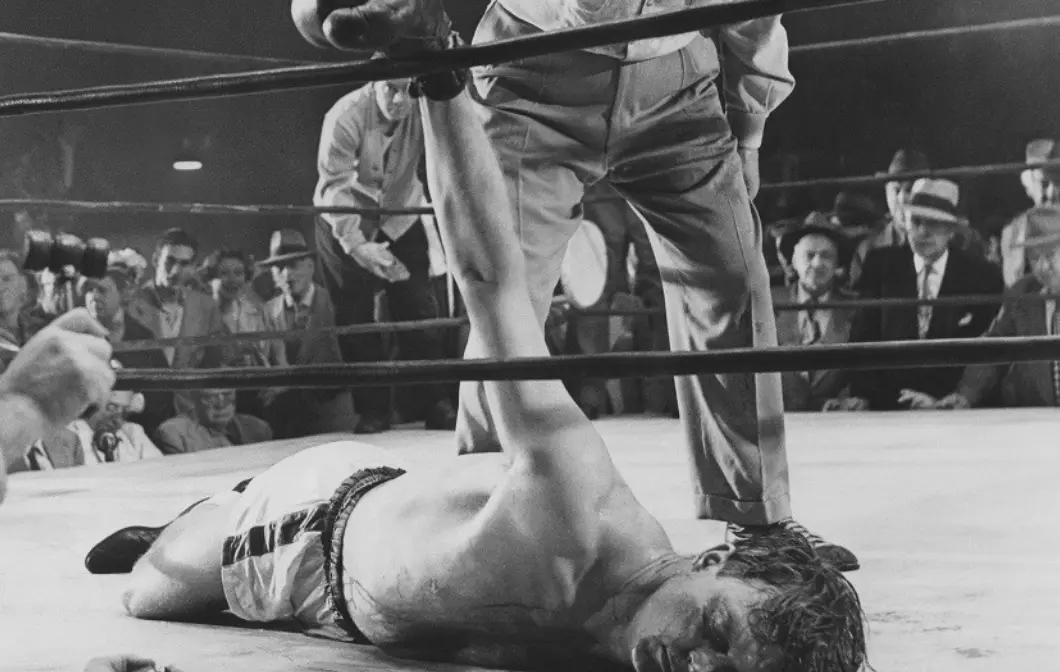
How to Deal with Failure
If you have big goals and seek to maintain high ideals in your life, inevitably at some point you are destined to fail.
What really matters is not the failure itself, but whether or not you keep going.
We all know this, but there isn’t really a guidebook out there for how to deal with the crushing disappointment we often feel when we experience a failure. Moreover, when we fail, we often feel isolated and alone.
This Warrior Notes episode takes you through steps to overcome failure and to get yourself back on the path to success as quickly as possible. Additionally, it provides you with examples of successful people who’ve faced failure many times. Men like Winston Churchill and Chesty Puller who fell flat on their faces, but then went on to achieve greatness.
It explains:
- Why you need to read
- That failure should never be taken personally
- You should never dwell on a failure
- Why you shouldn’t worry about being judged
- If you find yourself stuck, you should seek coaching and mentorship
- How failure brings new opportunities
This episode takes you through 6 big tips to help you to get through inevitable failures in your life.
Warrior Soul Fitness Challenge
Warrior Soul is now running it’s very own fitness challenge. No this isn’t one of those challenges where you need to buy supplements or a program to join. All you need to do is join our private Facebook Group The Warrior Soul Fitness Academy and post your workouts every day. The person with the most workouts posted each month wins prizes including Amazon gift cards, Warrior Soul Gear, and other prizes.

If you’d like a leg up in the challenge with a FREE 14 day training plan and other resources, you can register at http://menshealth.warriorsoulagoge.com
Transcript
Machine-generated from the episode audio and lightly edited — may contain errors.
Chris Albert (link to this point)
Hey, what's going on everybody? Just a quick note before we start this podcast. If you're going to be in the San Diego area on October eleventh and twelfth, Clever Talks is holding a conference and the conference is Made in America, and it's going to have speakers including Jocko Willink, Tim Kennedy, Marcus Luttrell, and so many other inspiring men and women who serve this country. I really suggest you get down there. I'm gonna go get down there.
I'm gonna go to the conference. I'm gonna listen to speakers, and, it should be a really great time. They're, giving our listeners a 10% discount on all tickets, the general admission ticket actually isn't that expensive. But if you wanna get a 10% discount on your tickets to the Clever Talks Made in America in San Diego, then, use the code Warrior Soul Agoge 10. And you can get that by heading over to www.clevertalks.com.
Again, the code is Warrior Soul Agoge 10, and you can get that by heading over to www.clevertalks.com. Also want to give a quick shout out to our sponsors F Bomb Nutrition. They make delicious portable packets of fats and these guys are sending packages of this stuff out to the troops on the front lines. Every month they're they've been sending out packages to guys, in forward deployed units so that they could supplement their MREs. And they make these awesome delicious packs of fats.
And I'm a big fan of their macadamia nut butters. They're absolutely delicious. And, if you stay tuned after the episode, we're gonna give you a special discount from them for Warrior Soul listeners. You can get up to 20% off on your orders and, really great company, like I said, and, they're a big reason why this show occurs. So with that, let's get into this episode of Warrior Notes for the Warrior Soul podcast.
This is Chris Albert, and I'm here to remind you of one thing. Someday, you're going to die. Now that's not some morbid statement or scary idea. It's solid fact. Your time here on this earth is limited.
And we need to be reminded of this as much as possible for one simple reason, to live your best life while you can. This is the Warrior Soul podcast.
What's going on warriors? This is Chris Albert, and this is another edition of Warrior Notes. And as I put these Warrior Notes episodes together, I I want you to understand something. And that is that as we go into this subject matter, you might be tempted to think that I am somebody who is lecturing to you because I've gotten through everything, that that I have it all figured out. And the fact of the matter is that I don't.
I don't. And one of the big reasons why I do this podcast, why I do these Warrior Notes, Why sit down with people who are much smarter than myself? Because like you, I'm trying to figure things out for myself. I'm in the trenches with you. I'm I'm clawing my way through this earth. And I'm trying to overcome the same imperfections, the same personality flaws, the same weaknesses that each and every one of you have. I'm not some wise man sitting on a mountain.
I am very much a regular person who is struggling through a lot of the same pain, a lot of the same problems, and a lot of the same imperfections that you might have. And in fact, I'm I'm pretty certain that there's a lot of you listening to this podcast who probably have it a lot more figured out than I do. But today's subject matter, I think, is is something that applies to each and every person no matter what level they're at. That is how to deal with a failure. You know, particularly on a podcast like this where we ask our audience to to really set their sights on high achievement and high ideals.
There is no way you're gonna get around experiencing some sort of failure at some point in your life. Right? To to the very act of trying to achieve high standards and and and to set yourself to high ideals is to open yourself up to failure over and over again. In fact, if you haven't experienced failure, if you haven't experienced defeat at some point, you probably haven't stretched yourself far enough. You know, I I put a post up on Instagram the other day and it said that if you haven't experienced failure at some point in your life, you haven't truly lived a real life. And I believe that. I believe that. And I I don't think we should ever be scared of failure.
But for those of us who do experience it, and who do stretch ourselves to the point where we falter from time to time, it doesn't make it hurt any less. It doesn't make it an experience that's pleasant. Doesn't make it an experience that that we enjoy. So what I want to talk about today is is how to get through it. How do you deal with it?
How do you spit that dirt out of your mouth, dust yourself off, and get up, and keep going. That's what really matters. Right? You know, it's it's not whether you fall down or not. It's whether or not you get comfortable on the ground.
And I think that, you know, in this quest to to to reach those high ideals and to to set yourself to those high standards, the real danger there is that you're going to get so comfortable where you are that you're not going to do that anymore.
And why is that dangerous?
Well, in my opinion, there's nothing more dangerous to society than men, people, in general, who who aren't living out their purpose, who aren't living according to the principles that that they have for themselves. And I'm not talking about violent danger. I'm not talking about destructiveness or physical destructiveness. I'm talking about the destruction of society. When people aren't happy, they don't give back.
They don't contribute. They don't help each other out. And because of that, they they they no longer serve. They're no longer in service to their fellow men. They're no longer in service to this society that we have.
And that's why it's such a destructive force, because it forces people to go inward. It forces people to be more jealous of each other. It forces people to to be in this place where they don't feel like they have control over their lives, so they don't want to help anybody else. When that happens, a narrative starts. And that narrative says something like, you know, if you do try to strive for these high ideals, if you do try to strive for greatness, then you're just setting yourself up for a miserable life.
And that if you don't want to be miserable, you need to commit to this plan that everybody else has laid out for you. That plan that your soul is is revolting and screaming against, that you don't want to commit to, but you feel forced to commit to it. And nowhere is that danger of you submitting to that immeasurable pressure more great than after you've experienced a defeat, after you've tried at something, tried with all your heart, still fell and landed flat on your face. So this podcast is is for those of you out there who are wondering or questioning yourselves, who are constantly up at night thinking about where your path is gonna bring you. This podcast is going to show you what you should do when you experience these types of failures, and when your soul feels crushed, and when you feel like you're about to submit to the path that you don't want to take. So let's begin. The first recommendation here is is that you need to read.
And not just read, but specifically read the stories of great people who've come before you. You know, a lot of times, when we're on a path towards something that that could change our lives or something that's extremely important, it's very, very lonely. And you feel a lot of times like like there's nobody out there who can teach you. And you might search for a mentor, you might try to find somebody who who who can mentor you through your obstacles and and through your trials and your tribulations. But for a lot of us, we don't have access to those kinds of people.
Or we think we don't have access to those kinds of people. But you do. You do through books. When you read about the lives of great men, great people, you start to understand something. And that is that there's nobody out there who's ever done anything great with their lives that hasn't experienced a failure.
You know, I just had on, Stephen Mansfield, and that episode is gonna be published on Monday. But Stephen did a biography on on Winston Churchill, and I think that this is is one of the figures in history that that's probably shaped our society today the most. Churchill, during World War one, was first Lord of the Admiralty. And he constructed a plan to attack Turkey. And that plan led to the deaths of over a 100,000 British soldiers.
And because of that, he was demoted. He was demoted, and he chose to to go back to the army and serve as an officer on the front lines. And after doing that, he he got out and he came back to parliament. And as the years went by and and the war drums were starting to beat again in Europe and and Nazi Germany was rising, he was sounding the alarm. But nobody wanted to listen to him.
In fact, the prime minister Chamberlain at the time was was obsessed with appeasement. He didn't want England to get back into another war. But Churchill knew that the Nazis weren't just gonna go away. And so Churchill was laughed at. He he was considered a warmonger, and his reputation from before hung over his head.
But it didn't stop. And as it became more and more clear that Nazi Germany posed a threat and that England's very existence and the very existence of democracy was now in question, Churchill eventually rose back to prominence and became prime minister. And it was largely because of Churchill that England stood fast during the war, didn't get defeated. Now you have to ask yourself, what if Churchill gave up? What if he gave up way back when?
What if he never tried? You know Churchill had a really rough childhood. His father absolutely hated him. What if Churchill, in his childhood, decided that he wasn't anything and that he wasn't enough and that he couldn't keep going? The world would probably look very different.
And that's not to say that Churchill didn't experience dark moments. He was known to be prone to depression. He was known to to be prone to I think he called it the black dog. Right? Very, very dark personality in some ways.
A very jovial personality, but also a very dark personality. But he didn't. He kept going. And and one of his quotes, this is something that I I absolutely love, and I just posted this on Instagram yesterday. His quote is, success is not final.
Failure is not fatal. It's the courage to continue that counts. Remember that. Your your successes aren't final. And even in in the glory of of winning a championship or accomplishing something great, you could experience a defeat the next day.
But also understand that your failures, they're not fatal to your success. Now we see so many guys who cling on to the past, who dwell on different things, whether it's their victories in high school, but they peaked in high school and they never achieved anything again, or whether it's people who've experienced a failure and they just can't get over it. You have to understand that none of that stuff is final. Failure definitely isn't fatal. If you keep going, if you dust yourself off, if you get up again, and keep trying and you apply the lessons you learned from that failure, you can still achieve something great.
You know what? Another great person that I've read about is Chesty Puller. And for those of you who didn't serve in the Marine Corps or who don't know who Chesty Puller is, he was probably one of the greatest Marine Corps officers in history. And he was responsible for, you know, a lot of campaigns in World War two, serving on Guadalcanal. He's probably most famous for his service at the Chosin Reservoir, where he was surrounded by multiple Chinese divisions and and his division fought its way out during Korea.
But what a lot of people don't understand about Chesty Puller is that before he became the marine warrior that he's known to be, before he won, you know, five navy crosses and and, you know, attained all of the achievements that he attained as a Marine Corps officer. Chesty Puller failed three times to become a Marine Corps officer before he actually made second lieutenant. For the first time, he had gone to OCS right at the end of World War two or World War one. And at the end of World War one, like we have throughout history, the US military was downsizing, and it decided that it didn't need so many Marine Corps officers. And right after Chesty had had earned his second lieutenant bars, he was told, go home. Get another job. You know, thank you. We're glad you signed up to serve, but but that's that.
But he didn't he didn't give up. He got a job with the Haitian gendarme, which was accepting US marines into its service at the time. And he took a demotion. He went down there, and he got valuable combat experience. And he continued to serve.
You know, he went on to serve in Nicaragua and throughout Central America. But, you know, during that time period, he tried again to become a Marine Corps officer. And he went to OCS, and he failed out. And then tried a third time. And on that third time, finally made it.
He finally got his bars and became a full Marine Corps officer. And then even then he didn't stop failing. He tried to get into aviation, and apparently he did so bad at aviation school, he wanted to try again, but they said, No, don't come back. So what did he do? He went back and he shifted his gears and he decided that he was going to be one of the greatest infantry officers that ever lived.
That's the chesty puller that we know of. And had chesty puller not kept going, had he decided that, you know, it was too much for him, the Marine Corps would probably be very different than it is now. Potentially, US history would be extremely different than it is now. So my advice to you is, when you feel alone, and when you feel like there is nobody else out there to help advise you along your path, along your way, Pick up a book, read about the stories of great men, read about the trials and tribulations they faced. From that, you find a whole lot of lessons that can help you, And you can learn through somebody else's experience. The second big tip I have for you in facing failure and overcoming failure is to not make it personal. You know, when you experience a failure, particularly with a business or in a relationship, you can take it as a personal front to yourself.
And you just say, you know what, maybe I'm not good enough. Maybe I am just not enough of a man. I've had that thought go through my head so many times. I I can't tell you how much that thought has crushed me. How much it's kept me up at night, wondering if I'm I'm good enough to be doing what I'm doing.
I can tell you that as I'm recording this podcast, the thought crosses my mind wondering if if I'm good enough to be the instrument to give these thoughts to you. But what I've come to realize is that my failures are not the flaws of any part of my character. My failures are simply because I'm constantly trying to stretch my limits. I'm constantly trying to reach for things that are greater than myself. And that's the very act that is gonna bring success in the end.
If you're not stretching your abilities, if you're not stretching beyond what you're currently capable of, then you're never gonna get stronger, and you're never gonna get better, and you're never gonna get yourself to a point where you can gain the skill set that you need in order to overcome that obstacle. This is something that practicing jiu-jitsu has taught me. You know, when I first stepped onto a jiu-jitsu mat, I prided myself on my physical strength. You know, I was somebody who could deadlift over 600 pounds. I could squat 500 pounds for reps.
I had a very, very strong body on the first day I walked onto a jiu-jitsu mat. And you could imagine my frustration when the first time I rolled with somebody, that person was about half my size, and that person broke me in half. Literally, I was getting my face rubbed into the mat. And at first, I thought to myself, well, how weak could I be? How could I let this this little guy just absolutely destroy me?
But as I become as I've begun practicing jiu-jitsu, and actually trying to get better at it, I started to realize something. Because I'm a white belt. Because I'm a beginner. Because I didn't have the skill set to begin with. It's not a flaw in my own character.
That person isn't a better person than me. That person has just been there before. He has more experience. He knew what I was going to do. And so, that's what I'll say to you.
When you're getting your face ground into the mat, when you're falling down, it's probably because you simply just tried to stretch yourself, become better. It's not because of any personal flaw. You just don't have the skill set yet. But in order to move forward, in order to find success, you've got to keep going, and you got to keep practicing so that you can get that skill set and that so that you can overcome that obstacle that you're currently facing. The only time it becomes a character flaw is if your mind is too close to accept the fact that you have something new to learn.
And so with the understanding that you can't make any of these defeats personal, you should also keep an open mind to the flaws that caused your failure in the first place. And you should seek out those flaws that you can learn a lesson from the failure. And then focus yourself on making those weak points strong points so that you can move forward and overcome the obstacle. The third factor in in overcoming any failure is is to learn from it, but not dwell on it. If if you're dwelling on your defeats, it's kind of like wasting time.
Basically, what you're doing is you're replaying an event from the past over and over and over again in your head. And a lot of times that that's gonna just put you into a place where you're not gonna learn anything from it. The reason why you're not gonna learn anything from it is because you're not focusing on the imperfection or the the weakness that led to the defeat. When you're dwelling on a defeat, you're really just wallowing in self pity. You're beginning to feel sorry for yourself.
And the type of self talk that comes about when you're when you're dwelling on something is, well, why does all this stuff happen to me? Why? Why does it happen to me and nobody else? Why does the world hate me right now? And when that type of self talk starts, you immediately submit power to powers external to yourself.
Right? So when when when you're talking to yourself like that, you're not accepting fault for the imperfection that that led to your your your downfall. What you're doing is you're starting to blame the world, and you're starting to put all of your energy into really questioning why the world is against you. When the reality is that that it's something you probably gotta fix for yourself. This is why I like Jocko Willing's concept of extreme ownership so much because what it does is for all of your problems, all the obstacles you face, it puts ownership directly in your hands.
So when you're facing an issue, when you face a failure, when you face a defeat, do yourself a favor. Immediately take ownership over it. Immediately say, Okay, this was my fault. What am I going to fix? And how am I going to change in order to overcome it?
Keep a journal. Write down exactly what happened in your mind, what types of mistakes you made. Try to get feedback from others. See how they would have approached the situation. But the worst thing you could do is just sit there and wonder why the world, the universe, God, whatever it is you want to blame has cursed you.
Don't sit there and dwell on it. Come up with solutions to fix it. The fourth thing is this, don't worry about being judged. Don't worry about other people judging you, measuring you, criticizing you, hating on you, whatever it is you think that they're doing. Why?
Because nine times out of 10, we as human beings are over evaluating our impact on others. Most people don't care. Most people just want to go about their lives and mind their own business. And if you fail, if you have a downfall, it's not really impacting their lives. It's not really impacting them.
And even if you do get somebody is blatantly judging you and blatantly going out of their way to make you feel bad about your failure, think about the type of person that that person must be. You know, they they probably don't have a lot going on in their own lives. They probably don't have much to care about in their own lives. And so they are focusing on you for a reason. Because they as a person are probably empty.
That's the type of person you probably want to get out of your life anyways. Remember that the harshest critics we have are almost always ourselves. Your your your biggest enemy, your harshest critic, your your biggest judge is the person staring right back at you in the mirror. That's the main voice you've got to deal with. That's the main obstacle you've got to overcome.
That's the main tripwire that's gonna keep you from getting to your goals is yourself. And if you're overweighting the impact of others, the impact of their judgments, the impact of their opinions, then it's really not even a problem with them. It's a problem with you and how you're allowing their opinions to affect you. So as the person in the arena, you're the one who is gonna have to decide whether or not you're gonna allow those those critics and those judges to impact you or not. You have to choose.
My suggestion is to choose to put them to the side as long as their criticism is not constructive. And if it's it's destructive to your being, then put those opinions to the side and to keep going. The fifth big thing that you need to do to overcome failure is to humble yourself and to seek coaching and mentorship. Now, as I just said, you don't want to be overly concerned with the opinions of others, but you do want constructive criticism. You do want the advice of others who could potentially see the flaws that you have that you can't see.
These types of people can help you to work on your weaknesses. They can help you to identify your weaknesses, which I think is probably the hardest thing for any person to do, to identify the weak points that they've got to make stronger, and they can help you to become better. And I know that a lot of times it's hard to find a person around you who's able to give you good constructive feedback, but one awesome thing that we have this day and age is is the Internet. And so we have a lot of online groups. There's groups of entrepreneurs, groups of fellow veterans, groups of fellow athletes.
And if you're working on something and it's a project that you need advice on, put it out there. See what others have to offer offer you. If, you know, let's say you're you're trying to to start a business, and you're trying to to start a marketing campaign, but the marketing campaign starts failing over and over and over again, try joining a marketing group on Facebook. Put one of the campaigns up for everybody to see and and see what kind of critiques they can give you. If you're an athlete and you're you're trying to get stronger or you're trying to get better at your sport, of course, and most athletes know this, but but seek coaches that can help you along on your way.
Now, if if you're dealing with relationship problems in life, then maybe join a men's group or a woman's group and see how others are dealing with similar types of problems, and maybe put your problem out there for advice. But the point is that that you don't have to go this alone. If you humble yourself and and you seek the advice of others, you probably get a whole lot out of it. Now also understand that that online education is is probably easier to access now than it ever than it's ever been. You know, for us particularly for those of you who are in the veteran community, I just interviewed Phil Randazzo from American Dream U, and he's got a a full online platform up there with Mission Next where you can get taught so many different things.
You can get taught about finding a job, about starting a business, about getting started in ecommerce. And he he doesn't have any slouches teaching for him. He's got guys like Tim Ferriss and and so many other people who who've achieved so many great things in business and in life up there, and they're teaching veterans absolutely free. All you got to do is you got to go over to the American Dream U website and put your information in, and you have access to a veritable MBA full of information. You know, the resources are out there, ladies and gents, and and it's up to you to find them, and it's up to you to open your mind, humble yourself, and begin to learn from them.
The last thing I just want to tell you guys is this. Remember that failure is never final. And in fact, every failure you experience brings you a new opportunity. Brings you a new opportunity to find a new weakness, a weakness that you can turn into a strength. So when you face failure, when you get your face kicked in the dirt, when you fall flat, just remember that every time you fail, it's a new opportunity to find success.
What's going on, guys? I just wanna thank you for listening to this episode, and I hope that you got a lot out of it. You know, we're always trying to provide you with the best tools, tactics, and information here at the Warrior Soul podcast, and we do this for free. We really don't ask for anything in return except for you to spread the word about the show. So if you can, and this costs you absolutely nothing, if you could just share this episode out with anybody who needs it, a friend, a coworker, a family member, somebody that you know of, maybe somebody that you served with.
It really helps to get the word out about the show and it can provide them with some valuable tools and information that could help them in their lives. And above all, if if if you want to pay us the highest compliment, if you could write us a review on the iTunes Store. Just a a quick two or three sentence review, about how you feel about the Warrior Soul podcast. Whether or not it's helped you, things we could do to improve, you know, and and again, this is something that really helps to spread the word about the show and helps to get it into the hands of more people and more veterans who need to hear this advice. One more announcement guys, and then I'll let you go.
This podcast is sponsored by f bomb nutrition. F bomb is a really awesome company. I love these guys so much. They've been sending their product out to troops on the front lines to help them to supplement their MREs. And, the product is absolutely amazing.
It's delicious portable packets of fats and my favorites are their macadamia nut butters. These things are absolutely delicious. There are just no sugars in them and they've got macadamia nut butter mixed up with chocolate, mixed with sea salt, and mixed with pecan butter. And again, like I said, taste so good. They're like a crushed up macadamia nut butter cookie and there is no sugar in them.
If you're interested in getting a package of f bombs and you want to try them out, they're giving 20% off to our listeners. If you go to www.dropanfbomb.com and use the code warrior soul at checkout, you'll get 20% off of your first order. With that guys, again, I wanna thank you so much for listening to the Warrior Soul podcast. Be sure to check out our website over at www.warriorsoulagoge.com. Check out all the other awesome content we've got.
Like I said, it's up there entirely free for you, and for your benefit. Talk to you guys next time. Make sure you're getting out there and living your best lives while you can.
Host of the Warrior Soul Podcast and founder of Warrior Soul. Worldwide trainer and nutrition coach, contributing author at Testosterone Nation and Muscle and Strength.