Pain is a fact of life. It’s also something that keeps us from being who we truly should be.
That’s because whenever we go through intense pain the human tendency is to try to put our minds somewhere else. When it comes to physical pain, this tendency allows humans to accomplish many things. Extreme athletes, for example, are able to put their bodies through immense amounts of punishment.
When it comes to mental pain, however, this tendency to mentally run away from discomfort can push us further from reality. It can also keep us from overcoming the challenges that we need to face in order to move forward in our lives.
The fact is that if we truly want to live our lives the way we should be, we can’t run away from pain. We have to live with it.
Our tendency to avoid it drives us toward drug abuse, alcoholism, and other addictions while also strangling our mental growth.
In this episode we discuss ways of living with pain in a healthy and productive manner.
Transcript
Machine-generated from the episode audio and lightly edited — may contain errors.
Chris Albert (link to this point)
This is Chris Albert, and I'm here to remind you of one thing. Someday, you're going to die. Now that's not some morbid statement or scary idea. It's solid fact. Your time here on this earth is limited.
And we need to be reminded of this as much as possible for one simple reason, to live your best life while you can. This is the Warrior Soul Podcast.
You know, a funny thing happens when you're in physical pain. Your synapses they're all kicking in. Messages are going up to your brain and they're telling you that something's wrong. And you're experiencing it and it's hitting you. And you try your best to put yourself somewhere else.
You try your best to take your mind off of it, but the more you do, the more the pain seems to intensify. And it's a funny thing to watch a lot of professional athletes who who are in certain sports like these CrossFit athletes you see at the CrossFit games. They have this ability to kind of go somewhere else while their body is going through this immense pain, going through this excruciating experience. Physical pain is something that innately we try to avoid. We try to stay away from it as much as possible.
Mental pain is something a little bit more deep. When we experience mental pain, lot of times the experience can imprint self on us and that creates fear. I've been through both physical pain and mental pain and I can tell you that physical pain is nowhere near as bad as what the mind can put you through when you're going through mental pain. Today I want to talk to you a little bit about that. And I'm not quite sure where this discussion is going to go, but I think it's something that we need to talk about because there's a lot of people out there dealing with a lot of mental pain.
And that's the basis of I think what I'm going to try to get to is that we can't avoid it. You can't just run away from mental discomfort. You've got to face it. You've got to deal with it. Because if you don't, then what happens is you keep yourself from actually living life.
Before we get into that discussion, I just want to tell you a little bit about who I am and and what we do here. My name is Chris Albert, and this is the Warrior Soul podcast. This podcast focuses on helping US military veterans and anybody else willing to listen to live their best lives. The reason why I put this podcast together is because over the past decade and a half of war, The US military veteran community has faced extremely high rates of suicide, depression, chronic disease, and homelessness. And the bottom line is this, there's a lot of people out there raising awareness about these issues and I think that's a great thing.
I think raising awareness is amazing, but I don't just want to raise awareness here. Whenever I put out a show or an episode, I'm going to help you with a tool, a tactic, an idea, something you could take away from the episode and apply to your life to help you to push forward to become a better, stronger person. And if you're not a veteran, stick around because anything we talk about here could apply to to anybody. I also want to mention that this podcast is made possible by the good people at F Bomb Nutrition. They make awesome packets of fats, and I'm a huge fan of their macadamia nut butters.
They mix them up with chocolate, with sea salt, with pecan butter, with coconut butter. And there's no sugar in them, and they're absolutely delicious. You can head over to www.dropanfbomb.com and use the code Warrior Soul at checkout. Now, discussing pain and mental pain, and I kind of have to go back a little bit into my history, which I often do on this podcast. And it's not to say that that my story is particularly special.
It's it's just because I think that people learn a little bit better when it's it's attached to a real human experience. My experience with with mental pain, like many people's experiences with mental pain comes from having my heart broken. Know, at one time, I was in a relationship with a woman and I was in a relationship with her for for five years. And, I loved her, but was not a good time in my life. I was, heavily consuming alcohol.
I was not being the man I should have been. And a lot of that came from just trying to numb myself to the world and trying to numb myself to everything that was going on around me. I was I was fresh out of the Marine Corps and, you know, just trying to figure life out. And I retreated like a coward to alcohol. And she got fed up with me and eventually wised up and left me.
And she left me for somebody who I knew in my town. And it got to the point where I told myself I could either stay there for the rest of my life, and sit on that same barstool I was sitting at and watch them have a family together and watch them, you know, grow their lives together while while mine fell apart, or I could move on. So, I decided to move on. And that's when I made the decision to move out to California and try to start a new life. But, in the process, I made a mistake.
And the mistake was in thinking that a new location would magically help me to get rid of all the pain I was carrying around. To get rid of that feeling of inadequacy, To get rid of that feeling of shame. And I remember moving out here and waking up and being more lonely and more depressed than I ever was. I was thousands of miles away from my family, from my friends, from people who love me. But I felt like I couldn't go back, and I couldn't put myself in front of them because of the shame I was feeling.
And what I didn't realize about shame at the time was that it was something that I was conjuring up in my own mind. You know, I'd screwed up. I hadn't been the person I shouldn't have I should have been. But at the same time, running away like that wasn't making me a better person. What would have made me a better person was working on myself.
Or would have been committing myself to not drinking, committing myself to becoming more fit, committing myself to building my career, my job, committing myself to doing things and creating things. But instead, I ran away and I retreated into myself. And that led to more alcohol abuse. And that led to more loneliness. And that led to, you know, one day dealing with pain and then one day waking up and not really feeling anything at all.
For a long time, I'd say about a decade, I didn't really have an identifiable emotion. I didn't experience sadness. I didn't experience happiness. I didn't experience fear or anything else. Just kind of experienced monotony.
Retreating further and further into the recesses of my own brain. And the work I was doing at the time kind of contributed to this. I was in the academic realm studying for my PhD, out at UC Santa Barbara. And the life of a doctoral student is not a social life. It's a very lonely life where you're committing yourself to research, committing yourself to spending long hours with your own thoughts, your own ideas and books.
Now, I eventually moved on and and went into business. And all of that stuff I was I was hiding came with me. And that's what I want you to understand. It's not that the emotions weren't there. It's just I wasn't allowing myself to experience them.
I wasn't allowing myself to to feel the pain. I was trying to put myself somewhere else, much like those CrossFit athletes I'd mentioned do. I was trying to to just focus on something so that I couldn't focus on the pain. But that pain, that feeling of shame, that feeling of inadequacy that I had kept following me. And when I went into business, you know, I went in with the mentality that I was eventually going to fail.
And I was eventually going to fail because in my mind I wasn't a good person. In my mind, I wasn't enough to be able to be successful. And those same feelings of inadequacy caused me to not trust people. It caused me to not make the contacts that I should have been making. Caused me to not allow myself to to learn or humble myself enough to learn from other people. Because the only way you can learn from other people is if you do trust people. If you're willing to open yourself up.
If you're willing to to entertain the idea that the thoughts that you're conjuring up in your own mind may not be correct. So, the reality was that in closing myself off from my pain, and closing myself off from other people, I was limiting myself, limiting my growth, limiting my ability to learn. Limiting my ability to learn things that would have made me successful at the time. But instead, like I said, I kept closing myself off. I kept pushing myself off into a corner and eventually found myself in a position where I wasn't getting the clients I wanted, wasn't building the business I should have been building and eventually losing the business that I had.
And it wasn't until I lost everything that I found myself in my car one day, telling myself that I couldn't retreat any longer. That I couldn't move forward unless I stood up and actually experienced the pain and the difficulty of learning how to become a stronger person. I also want to say that, you know, relationships during this time period were were a problem for me. I had I was dating. I was dating a lot of different women, but I never actually committed myself to any of them.
And the reason why I committed my wouldn't commit myself to any of them is because I refused to let them in. I refused to let them in emotionally. I refused to get to know them on any other level besides sexual. And each time I went through one of those relationships, I just felt more and more lonely. I felt more and more lonely because I continued to try to close myself off from other human beings.
And I have to say it it really wasn't until I met my current girlfriend that that I did have an identifiable emotion. That I did have the ability to to really feel. And I remember it clearly because I was sitting with her a restaurant and asked her out to lunch, and we're having a conversation. And for the first time in a long time, I literally felt like I didn't want to be any other place on the planet. Now, here's the thing, guys.
We all have this tendency. It's an innate human tendency. There's nothing there's nothing dangerous or psychopathic about retreating until you let it go too far. All of us have this tendency to try to run away from pain and try to run away from our feelings. But what becomes dangerous is when we pack those emotions away so tightly, that we can't access them anymore.
That we can't can't allow ourselves to feel anymore. And I'm no psychological expert. But the biggest thing you can do is to kind of look objectively at yourself, and to understand what you're running away from. And what you're running away from isn't just the pain, isn't just the problem. What you're running away from is that opportunity to grow.
That opportunity to become a stronger person. There is no person on this planet who doesn't experience pain at some point, who doesn't experience tragedy, who doesn't experience hardship. But the people who come out the other end stronger are those who who integrate the lessons from that pain, the lessons from those problems, the lessons from those tragedy tragedies into their lives. The other lesson from this is is that no matter what happens in your life, you've got to continue growing. You know, know that there's so many of you out there who are experiencing loss and and hardship on on levels that I probably can't even comprehend. There's so many of you who are mourning friends that you lost in combat. So many of you who are mourning family members who might have died from tragedies or from sickness. There's so many of you who probably had relationship breakups and divorces and things like that, that are probably way worse than I've ever experienced. But I also want you to understand that in the grand scheme of things throughout human history, people have always experienced loss.
Men have been going off to war since the dawn of time. And men have been getting killed in battle since the dawn of time. And what makes things back then different from how they are now is that those men would come back to the tribe. And they'd return and become productive members of the tribe. Some of them would become leaders in the tribe.
Some of them would would go back to attending their fields. Some of them would go back to their families, and they would continue to lead their families towards survival. And in this day and age where, you know, on the home front, we've got survival pretty much covered. We've got everything that we could possibly want, you know, right in our houses, you've got entertainment, you you can go to the refrigerator and get a snack. It's so important that you grow enough so that you can move on to the next mission.
It's so important that that you take up that next mission, and that you continue to fight. That mission might look like anything, it might look like, you know, getting your degree, it might look like starting a new career, it might look like starting a new business, it might look like, you know, just helping people. But whatever it is, you need to find it. And in order to find it, you've got to look into your soul, and you can't be afraid to experience that pain that's there in your heart. Because the more you try to run away from it, the more you try to to act like it's not there, the more it's gonna grow.
And the more it will catch up with you. And it will catch up with you when you least want it to. It will catch up to you when you're trying to start a new relationship or you're trying to to to get yourself onto a new path, that's when that feeling of shame, that feeling of inadequacy, that feeling of depression that we try to run away from is going to find us. It's going to find us in a corner. And, you know, that's when we'll be least prepared to deal with it because we've been running away from it for so long.
You know, I feel like so far in this episode I've given you a lot of summary, and I've discussed the issue, but I don't want to end this episode without giving you some solutions for how you can better face your own pain. And these are some tools that have worked for me in coming to terms with my past, and in really learning and growing from them. So the first thing is this, and it's gratitude. And I know this is this is almost cliche these days because everybody's talking about keeping a gratitude journal and and writing down the three things that they're grateful for every single day. And in my experience, the way most people do it, you know, you can only be grateful for your house, your family, and all the good things in in your life so often before it just becomes a meaningless ritual.
One of the things I really try to do every single day is to be grateful for a lot of the negative things that have happened to me. To be grateful for the obstacles in front of me, to be grateful for the pain I've had in my past. And so, I'll think about why that breakup was painful for me, but also think about why it's helped me to grow. I'll think about how it's helped me to really approach my relationships in a different way. I'll think about my alcoholism, and how going through that helped me to really appreciate what it's like going through life with a clearer mind, and without alcohol in my body.
I'll think about the fact that I have ulcerative colitis, and how having ulcerative colitis has taught me so much about nutrition, and has allowed me to have empathy for those who are going through physical pain with chronic disease every single day. And in doing that, all of my negative experiences from the past, well, this exercise allows me to turn them into positives. And it allows me to create opportunities to learn from them and to appreciate them, deal with it. The other thing I that really, really helps me is to really allow myself to feel whatever emotion is coming over me at the time when I think about something. So the other day, I was listening to the, song on Pandora, you know, that Internet song playing thing.
I'm from the nineties, so used to listen to a lot of CDs, but now we've got the Internet radio. But anyways, I was listening to Pandora, and a song came up, and it reminded me of a friend that I had, who passed away last year from a heroin overdose. And my initial impetus was to turn the song off, and to not want to listen to it. But it stuck with me for a second, and I said, no, I'm not going to turn it off. I'm going to allow myself to feel this right now. And then, once I felt it, once I understood that that sadness was there, that that grief was there, I was able to to really be okay with the fact that it was there.
I was able to to live with it. I didn't want to just push it down. I even allowed myself to cry a little bit. And I know it's it's an idea that that men shouldn't cry. And I I do believe that men need to be strong.
I do believe that we all need to be strong. But if something's emotional, you should allow yourself to feel it right then and there. You shouldn't allow yourself to be guided by your emotions, but you also can't run away from them. So when the grief or the sadness or the negative feeling comes up, allow yourself to experience it. And then move on.
Another thing that's helped me a lot is physical exercise. And this is something that my friend Mike Ergo, US Marine Corps veteran and triathlete, and the host of the Transitions From War podcast that he kind of taught me. And that is that when you're doing something like endurance training or, you know, really hard physical exercise, you've got to allow yourself to to really experience the thought. It's a good way of of putting those thoughts front and center because if you're doing a long run, or you're putting yourself through something that's excruciating, inevitably a negative thought's gonna come up. And allowing yourself to experience that thought, allowing yourself to to go through it and to work through it, allows you to be more comfortable with the fact that it's there.
Doesn't doesn't take the pain away, but it allows you to live with it. And that's the bottom line. You have to understand that you can live with pain. You can live with discomfort. It's when you try to numb yourself to it, or try to run away from it, that pain is eventually going to take you over and it's going to really change the course of your life.
So again, you know, sometimes when I do these episodes, it's literally me in a room in a house by myself with my dog by my side talking into a microphone. And, you know, on these solo episodes, I I don't have anybody to kinda flesh these ideas out with. So I really wanna hear from you guys. What's your thoughts on what I'm saying? You know, is is the advice that I'm giving out here good?
Is it something you can apply? Is it something that is there something here that I'm missing? And so let me know. You can head over to the Warrior Soul Fitness Academy, our private Facebook group, and you can open up a discussion with me. And I also want to mention this, you know, the downloads for this podcast have been going through the through the roof recently.
And it's because more and more of you are listening and more and more of you were spreading the word. And, you know, like I said, I don't think that I'm the authority on any of this stuff, but I do know that this podcast is helping people out. And I really appreciate when people get in touch with me and they let me know how much the podcast is helping them out. So if you're getting something from these episodes, you got something from this episode, please write us a review on iTunes and, you know, let us know how this has impacted you and and that it's helping you out. Give us suggestions.
You know, those those reviews really help us to spread the word, and it helps me to improve this content. It also helps me to get high level guests who are gonna come on and who are gonna be able to explain things and teach things in a way that I probably couldn't. So definitely definitely get on iTunes and write us a review. I also want to make an announcement. Warrior Soul, as you know, has this media arm.
We and we've been doing fitness for for quite a while, writing fitness programs and doing merchandise. Recently, I just opened up a a business consultancy. And and this isn't gonna be for everybody, and so I'm not gonna be talking about it on the podcast much. But my aim with the new business consultancy is to take those of you out there who are business owners, who might have an online business that looks like Warrior Soul or might look like something completely different. Specifically, those of you who are in the coaching and consulting areas, you know, basically selling your knowledge and helping people out through that.
I'm making it a point to help small business owners to take their businesses to the next level And helping them to to get higher paying clients who are going to really transform their lives through the knowledge that you provide. So I'm putting a bunch of different material out there through Warrior Business right now. And, if you're interested in learning more about that, you can head over to www.warriorbusiness.net, and you can learn a lot more. I want to thank you guys for listening, and I will be back at you on Monday. We'll have Sal Di Stefano from Mind Pump.
Really awesome guy with a lot of intelligence. Really, really smart guy. We talk about fitness. We talk about life. We talk about putting your best foot forward, and taking charge of your life and not playing the victim.
So thanks guys. Talk to you all soon.
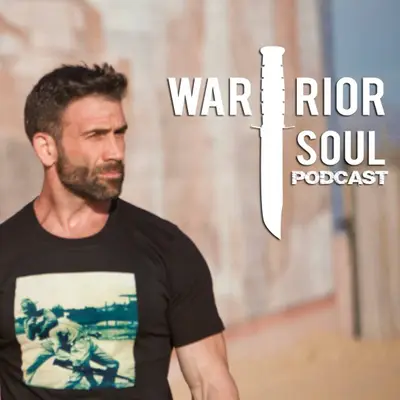
Host of the Warrior Soul Podcast and founder of Warrior Soul. Worldwide trainer and nutrition coach, contributing author at Testosterone Nation and Muscle and Strength.