Podcast episode
How to Overcome Loss: Lessons from Theodore Roosevelt
Hosted by Chris Albert
The Warrior Soul Podcast
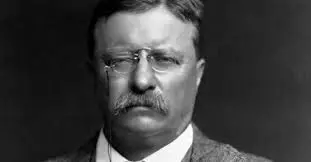
Theodore Roosevelt lost his 22 year old wife and his mother on the same day. He lost his brother 10 years later.
When Theodore Roosevelt was just 24 years old, he lost his mother and his wife on the same day just three days after the birth of his first child.
Theodore experienced the loss of his brother Elliot less than ten years later to alcoholism.
Despite the immensity of these losses, Roosevelt was not broken by them. Instead, he pushed forward on his work, became a noted author, a politician, and eventually, President of the United States.
This episode explores the good and bad lessons we can take from Theodore Roosevelt for how we deal with our own loss in this life.
Transcript
Machine-generated from the episode audio and lightly edited — may contain errors.
Chris Albert (link to this point)
The Warrior Soul podcast is written, edited, and produced by me, Albert. Our mission is to provide tools, tactics, strategies, and ideas that help The US military veteran community to show up as the wisest, strongest, most capable versions of themselves in the civilian world. If you're not a veteran, stick around because anything we talk about will most certainly apply to you as well. This podcast is made possible with the help of f bomb nutrition. They make delicious packets of fats that you can carry around anywhere with you in little portable packets.
They make macadamia nut butters. They mix them up with chocolate. They mix them up with sea salt. They mix them up with coconut butter. They're absolutely delicious, and they're really good for you.
They don't have any sugar. They also make a lot of cheese snacks. They make meat sticks, and it's just a great company. These guys send packages of this stuff to the troops who are on the front lines overseas to supplement their MREs, and we didn't ask them to do that. They just did that on their own initiative.
Really great company. If you wanna get 20% off your first order of f bombs, head over to www.dropanfbomb.com and use the code Warrior Soul at checkout. This podcast is also brought to you with the help of Save The Brave. Savethebrave.org is a five zero one c three charity for veterans. They run camaraderie events that include fishing, golfing.
They also do a lot of work with gold star families. And unlike a lot of other organizations, their board doesn't take a salary. Really great organization that is doing amazing work. So go and check them out at savethebrave.org. With that, thank you guys so much.
Let's get into today's programming.
This is Chris Albert, and I'm here to remind you of one thing. Someday, you're going to die. Now that's not some morbid statement or scary idea. It's solid fact. Your time here on this earth is limited.
And we need to be reminded of this as much as possible for one simple reason, to live your best life while you can. This is the Warrior Soul Podcast.
You know, if you were to look at the life of Theodore Roosevelt from the perspective of reading his resume, you'd probably think this is a guy who was born with a silver spoon in his mouth who never encountered any adversity. He graduated from Harvard. He was born into one of the most illustrious families and well-to-do families in the state of New York. He got into politics relatively easily, became a New York State Assemblyman. After that, he went to work in the federal government as a civil service commissioner.
He eventually became vice president. And then after the assassination of president McKinley, he became the youngest ever president of The United States. I mean, reads like something out of a fairy tale. But if you actually study the life of Theodore Roosevelt, you see that he overcame some things that most of us would have crumbled in the face of. He was born asthmatic, and he was a very sickly child.
He was skinny. He was constantly in bed, constantly going through these fits. And his father had to sit him down one day and tell him, you know, you're not going to naturally be strong. If you want to be strong, if you want to be the kind of man who is going to do big things in this world, you need to build your body. You need to make your body, I think is the words he used.
Teddy became fascinated with that. So he dedicated himself to fitness, he dedicated himself to making himself as hard as possible. And today he is known for his energy, for his ability to hike and to be an outdoorsman, to be an avid hunter, for his practice of martial arts like judo, jujitsu, and boxing. And we tend to think of that when we think of Teddy Roosevelt, right? We don't look at the resume, so to speak.
One of the other things about Teddy Roosevelt, however, is that he's also somebody who's faced great loss in his life. When he was 22, he married a young girl that he fell in love with. Her name was Alice Lee. And they had a baby together, but shortly after the baby was born, three days after and two years after he married Alice, Alice passed away. And Theodore was at the age of 24.
Not only did Alice pass away that day, only hours before his mother passed away in the same house. Now, I couldn't imagine this. You lose your mother, you lose your young wife all on the same day, and you're left as a very young man at the age of 24, as a single father, and lots of loneliness, I can imagine. As far as this story, I'm reading a book right now. It's called The Rise of Theodore Roosevelt, and it's by Edmund Morris.
It's an excellent book. The reason I want to bring this up is because in the human condition, there's a few things that are true. We are all going to die someday. But more importantly, you know, what's probably going to have a greater effect on us because we're not here after we die, is that we're going to lose others. We're going to experience loss.
We're going to experience grief. And there's a lot of you out there in this audience who've who've had experience with this, who have lost loved ones, who have lost brothers in arms, who have lost friends. And it's one of those things that when it comes up in your life, it could break you. It could take away every single thing that you once had. It could take away your joy, take away your happiness, take away your sense of security.
Right? Because you start to realize that every single one of us is vulnerable to death. And then you begin to dwell on it. You begin to think about that person constantly. Their thoughts haunt you.
The fact that they're not there haunts you. And then when the happier times come up in your memories, all of a sudden, they get marred away by this black feeling. This feeling that you're never gonna see that person again. It's tough. It's one of the hardest parts about being a human being, a conscious human being who understands death and who understands loss.
And I think that looking at the lives of great men and great people who have experienced tragedy, who have experienced this condition, I think that it's important for us to look to them to see ways that we could get around it ourselves. Now, thing about Teddy Roosevelt is that he didn't just lose his mother, didn't just lose his young wife, he also lost his brother at a very young age. His brother was an alcoholic, and Teddy and his sister did every single thing they could to intervene, to try to get him sober, to try to get him on a path where he could live his life in a productive manner. Teddy and his brother Elliot were extremely close when they were young. And when Teddy was in his thirties, his brother took his own life.
Believe he jumped out of a window. And again, you see what helped Teddy to overcome these losses. The thing about Theodore Roosevelt was that he wasn't one to dwell. You could see that these things affected him greatly. He was extremely sad.
He, for a time, he couldn't even look at his daughter Alice, the daughter he had with his first wife. But rather than dwelling on the situation, he got back to work. He got back to work as a New York State assemblyman as soon as possible. And then he continued taking trips out West. He became a cattle rancher.
He filled up his bucket with productive things. Now, there's healthy aspects of what he did and there's unhealthy aspects of what he did. Let me tell you about those unhealthy ones because I think that there's some things here that we shouldn't be doing that Teddy did himself. One of those things was he never spoke of his late wife again. He tore her name out of all of his journals, he wouldn't speak her name when he eventually went on to write his autobiography, he did not even mention her.
And that was his way of dealing with grief, right? He pushed things down so far that they were nearly inaccessible. He wouldn't bring them up, he wouldn't tolerate anybody else bringing them up, he wouldn't talk about the situation. He still had a relationship with his late wife's parents because he wanted his daughter to know their grandparents, her grandparents, but he did not dwell on her memory at all. And that's unhealthy.
You know, a lot of times when you push things down and you don't bring them up and you don't allow yourself to feel the grief in any capacity whatsoever, well that grief is going to come up at some point, right? So that's probably something we don't want to do. We don't want to push it down so far that we're trying to hide it from ourselves, because you can't run from yourself, you can't run from your own conscious. But what you can do is you can keep going with life. And this is something that Teddy did.
Like I said, he dove back into his work as a New York State Assemblyman. He went out and he did his cattle ranching. He dedicated himself to writing books, he was a noted author in history, and he continued on with life. And that's the thing, guys. We have to remember that this world is bigger than us, and it's bigger than our loss.
And it's going to keep going with us or without us. And so given that fact, we need to continue with our lives as much as we can. It's not to say that you push that grief down. It's not to say that you don't go through the grieving process. You don't remember them.
It's not to even say that you need to be in a really good mood. Right? Because you're obviously not going to be. But when these things come up, we cannot take it as a license to put our lives on hold. Cannot take it to as a license to to throw our lives off the rails.
We can't dive into alcohol, we can't dive into drugs because all that's going to do is it's going to numb us and just like pushing that grief down really far, only going to lock us in with the ghosts in our own head. But what needs to happen is we need to begin making new lives. We need to begin dedicating ourselves to a purpose, to something with meaning. And that's something that I've brought up time and again based on the book Man's Search for Meaning by Viktor Frankl. Frankl was a Jew who spent three years in a Nazi concentration camp, experienced loss beyond human comprehension.
Lost his entire family, lost friends, lost everything. And yet he was able to keep going because he was able to derive meaning from his experience and meaning from his existence. And so one of the lessons we can take from that is something that Teddy Roosevelt did himself. He dedicated himself to a higher purpose. He dedicated himself to something that was bigger than him, bigger than his life, and bigger than his loss.
And that's where we need to be. When we experience these things, when we experience death, even when we experience things like financial loss, when we are at our wits end, we need to find something that is bigger than us. We need to realize how small we actually are in this world. And we need to bring meaning to this life, new meaning. Now, you're probably saying to yourself, well, how do you do that?
What can I do right now that would take me out of this situation, that would allow me to bring meaning to this life? And it's tough to say because this is different for everybody. Right? For me, my meaning is derived from doing this podcast, from helping this community, from doing everything I can to promote the idea of veterans taking active roles in their own lives. And that was a meaning that I came across.
It kind of illuminated itself to me when I came out of my own bad state. I was living out of my car prior to starting this podcast, I was in a really rough place, and I saw something out there that I wanted to to help with, something out there that that I thought I could lend my hand to. And there's a lot of opportunities like this in this world today, particularly with what we're going through right now. You might not be able to to find surface meaning in the situation or from your job or from from whatever's happened with work since this whole situation began. But that might be because you're not looking for it.
There's people out there who need your help. There's a society out there that needs fixing. There is a whole world of opportunities to make this world a better place. So one way to start is by taking some sort of action in trying to do so. And if you still can't see that, one of the other things I invite you to do is is again, and I say this over and over again, to begin reading.
To begin reading about others' lives. Men like Teddy Roosevelt, men like John D. Rockefeller, people, people, women like Mother Teresa, read. Read about other human beings. There is so much that you can learn from doing so.
So much you can learn about life, so much you can learn about this world, so much you can learn about other people, and honestly, so much you can learn about yourself. Because when you do realize what other people went through in other times, you realize exactly how your situation is is probably not that much different or or probably not that much worse, and actually probably that much better than so many people who went on to do great things. So that's all I got for you guys today. I hope that makes sense. I hope that you all experience happiness and joy and meaning in your lives.
And in those situations where you do experience loss, I hope that you choose to allow it to let you grow rather than allowing it to break you. And with that, guys, we'll be back at you next week with some more awesome content. This is Chris Albert with the Warrior Soul podcast, and I am out.
Host of the Warrior Soul Podcast and founder of Warrior Soul. Worldwide trainer and nutrition coach, contributing author at Testosterone Nation and Muscle and Strength.