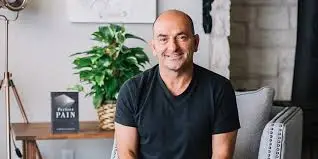
Param Parastaran is an entrepreneur, author, and recovered addict.
Param Parastaran is an entrepreneur, author, and an Iranian immigrant. Pram immigrated to the United States with his family in the midst of the Iranian Revolution.
His family worked extraordinarily hard for their future, and Param eventually went to college and became an entrepreneur. He became extraordinarily successful, on the surface, but developed a massive drug addiction.
This all came to a head when his wife found him passed out naked on top of his home bar with white powder and broken glass surrounding him. He went on a journey to heal himself through psychoanalysis and self-exploration. His book, Perfect Pain, chronicles this journey.
In this episode, Param and I discuss his story, how he healed himself, and his advice for others facing the perils of addiction.
Transcript
Machine-generated from the episode audio and lightly edited — may contain errors.
Chris Albert (link to this point)
You know, one thing I think that is very difficult for people who've never had a lot of money and and I can say confidently that I've never had a lot of money is that they think money will fix their problems. They think that success will fix their problems. And here's the deal. One of the things about success is that it can amplify all of the bad tendencies, the bad habits, all of the negativity in your mind can actually amplify it. And my guest this week, I wanted to bring him on because he's a really good example of this, is somebody who became very successful, had his life fall apart, and then brought it back together.
His name is Param Parastaran, and he's the author of a book called Perfect Pain. And his story, it it almost it it rings very true of the American dream. He grew up in Iran, and his family had to escape Iran during the Iranian revolution. They had to travel hundreds of miles, sometimes on foot, just to get to safety. And then eventually, they came to The United States.
His parents worked very hard, and he learned from a very young age the value of hard work. As he got older, he started to obtain success, but at the same time he had a lot of pain inside of him. He was turning to a lot of drugs and alcohol and he nearly self destructed. And I wanted to bring him on today to talk to you about his life and his story. Because sometimes you look out at people and everything looks as if it's perfect, but you never know what's going on inside.
You never know what kind of pain they actually have. And you're going to get a lot of insights from this conversation. You know, I hope that you are all doing well during this COVID nineteen situation. We've been talking about it for a few weeks now. And, you know, this is a time where I think the world is going to change after this.
I hope that everything goes back to normal, but I think that that people in general are going to change. Now, that's both good and bad. It's a little bit scary. Right? But there's a lot of opportunity out there.
And I hope you guys are opening your eyes to that. In the meantime, you know, one of the things I've been trying to do is I've been trying to put a lot of resources out there. We've done some podcasts with people who are bringing resources to the table as far as jobs that are available for veterans and opportunities for assistance. And I hope that you guys are taking advantage of that. You can find those up on the site at www.warriorsoulagoge.com.
And I'm going to continue to do so. In the meantime, feel free to reach out to me. Let me know what you're struggling with. Let me know how I can help you here on this podcast, what I can bring to the table to serve you. Because that's what this podcast is for.
Our mission here is to empower US military veterans and anybody else willing to listen to show up as wiser, stronger, more capable human beings in the civilian world. And you guys are a big part of that mission. You are the mission, in fact. And there's nothing special about me in doing this show. I've done a few podcast interviews where I went on other people's shows.
And I talk about the fact that no one special and quite honestly, the vast majority of you out there are probably way more capable than I am. I do this because I love this community. I do this because I see the potential in this community. And I do this because this country needs this community. We need you to step up.
We need you to be leaders. We need you to be the people you know you are. And so I hope that this conversation provides value to you, and I hope that everything we do here at the Warrior Soul podcast does as well. If you enjoy this podcast, please share these episodes out with somebody who can use them. And please head over to iTunes and write us a written rating and review.
And with that, let's get into this conversation with mister Param Parastaran about his book, Perfect Pain and his life. Alright, Param. Welcome to the Warrior Soul podcast, man. How's everything going?
Param Parastaran (link to this point)
Everything's going well. Doing the best we can surviving this very unique time.
Chris Albert (link to this point)
Nice. You are out in Illinois right now. Right?
Param Parastaran (link to this point)
Yeah. Just about a 120 miles south of Chicago, a couple hour drive to Chicago, just south, straight south.
Chris Albert (link to this point)
Outstanding. Outstanding. So let's start this off. If you can give the audience just a kind of a three minute synopsis of who you are, where you're coming from, what your background is.
Param Parastaran (link to this point)
Sure. I'm from Iran originally born and, came to The United States when I was nine, under circumstances, less than, you know, basically, well, basically we escaped from Iran during the revolution. We were not Muslim and the Islamic revolution happens. And so anybody that wasn't Muslim was either being killed, jailed, tortured, name it. And all my family were Baha'is at the time of birth.
And so we, it's a long story, but finally, just me, my mother and my brother, my dad escaped earlier because he was almost kind of killed at the place that he was working and that's what led us to escape. And so we made arrangements to fly out the Iran Iraq war was going on, airport got bombed. So we weren't able to fly out and then through a series of car rides and crazy trade rides and through the desert and through walking and hiking and all these things after two or three days, we finally made it into Pakistan. And then from that point, we got political asylum and came to The US as refugees around 1980, while the Iran hostage crisis was happening. So it wasn't exactly a pleasant time to be an Iranian when I first came and so struggled with everything.
We were poor, we got, we had nothing. And I moved 11 different times from the time I came here in fourth grade to my freshman year in high school. I was abused in Iran. And so that was one of the blessings that happened to me was having to leave Iran and ended a one year abuse situation with a cousin of mine. And so finally get to The U S and just like I said, moved around, my parents worked at, you know, McDonald's and Bob Evans and my dad worked at comedian stores, drove a bus and name it.
We did it and bootstrapped it and worked our way through it. Fast forward a little bit, got to college. I played competitive tennis, taught a lot of tennis, I was a tennis pro, saved up a bunch of money during college, got into business, and became fairly successful in a short amount of time. While all this is happening and sort of the business success is going on, I started little by little developing a massive substance abuse problem to the point where we got where I was spending $1,000 to $1,500 a week on cocaine, drinking a bottle at night, just in a really bad place, but very functional. I went to work, I still built my business and somehow was grinding through this.
And I had started having a family at this time, which basically started destroying everything that was around me between my family, my business and the drugs and the alcohol was taking its toll. And then around 2003, I started getting help and help that I actually could stick to. And that was a doctor named Doctor. Jekyll. He's a psychoanalyst.
That is his actual name, Doctor. Jekyll.
Chris Albert (link to this point)
Wow.
Param Parastaran (link to this point)
Yeah, it's true. A lot of people, when they read my book, they think that's a made up name, but no, that's his real name, Lawrence Jekyll, amazing guy, but he practices psychoanalysis, an MD.
And so started doing psychoanalysis and, and little by little, little by little started working away and really realized that I didn't have like a drug problem. I really had, you know, I had depression, I had massive, massive depression. And I was just using drugs and alcohol. And in many ways I use drug alcohol. I used being successful, making money, being popular.
I used all these things as medicine and to medicate my really underlying problem, which was depression. My depression was basically, obviously I told you I was abused in Iran. Lots of, lots of things happened to me as a child that, that, you know, others people would say is not normal. So anyway, fast forward again a little bit. I do all this therapy right now in seventeen years of therapy.
I went three times just this last week. I go all the time and I passionately study, you know, myself and why I am the way I am and why I behave the way I am. And little by little, my little worked my way through it and obviously quit the drugs and wrote a book called Perfect Pain. And the, the, really the message of that book is obviously the story of how I got into drugs, how I got out of drugs and, you know, relationship with my parents, etcetera. But really what it was is that I was blessed to have all these things happen to me.
And that's really the message of the book. I'm really glad I was abused. I'm grateful. I'm glad I had to escape Iran. I'm glad I had to be in poverty and live in the projects.
I'm glad for all these things because had I not done some of those things, I wouldn't be where I'm at. And that's why the book is called Perfect Pain. I just had enough pain where I was able to get to the other side. It wasn't bad enough where, you know, I ended up dead because, you know, many times I did want to be dead, but I didn't and somehow escaped to the other side where I look back and I go, thank God I have all these problems because I would have never got the help and done the work to get here. I know that was more than three minutes, but
Chris Albert (link to this point)
It's all good, man. It's all good. Yeah. There's a lot there. There's a whole lot there.
And so let me start with this. So you came to The United States. And how old were you when you came to The United States?
Param Parastaran (link to this point)
Nine.
Chris Albert (link to this point)
You were nine years old?
Param Parastaran (link to this point)
Fourth grade.
Chris Albert (link to this point)
Yeah. So you probably have distinct memories of trying to get out of Iran, trying to that five day track you made to Pakistan. Right?
Param Parastaran (link to this point)
Yeah. I mean, I have really great memories of that. And that's, what's really interesting about the psychoanalysis is that, that up until I started really working at it, I had actually memories of it as if the same way that you'd have memory of an airplane flying by or something. But I had no feelings associated with it. I was dead.
I was deadened to psychologically help me probably through the mess. And that deadening was also part of what created the depression and, you know, putting, you know, wrapping sort of a band aid around things. And it wasn't until psych analysis that I was unable to unravel it. And that's when I started being able to feel those things. But yes, I have incredible memories of it, but I wasn't scared during those memories because at that time, I don't think I had the, you know, sometimes your body just does things and it didn't allow me to be scared until, but I just hit it all.
You know, I bottled it all, bottled it all until, you know, it erupted in $1,500 a week cocaine. Make sense?
Chris Albert (link to this point)
Yeah. No, it does. It does make sense. And, you know, I think that that, you know, what you said before, a lot of times when we're going through things, they seem like they seem like the most horrible things in the world. And, you know, there the idea of keeping a gratitude journal, it's become something that's been very popular over over the last, I'd say, five years.
Right? One of the things I think that people get wrong is they only trying to find good things to be grateful for. And I think when you can get yourself to a place where you're grateful for all the bad things that happen to you as well, and you start to see them as happening for you rather than to you, that's sort of really important place to be.
Param Parastaran (link to this point)
It's perfectly said. And it's, I wish I could just tell people and just do that, but it's just one of those things that are difficult to get to. And that in itself, feel blessed that I got the help and I was able to sort of reconstruct those and get back to that to where I could actually be grateful for that. And when I say I'm grateful for being abused as sexually abused as a child for one year of my life, I really am because I learned a lot from it. I'm still here, I'm talking to you, but I got a lot out of it.
Lucky, I don't know. I had to go and show up and do the work, but I knew that there was a bigger picture to all this stuff. And I've always just general, maybe by functions. So I've not been, I try not to let events dictate how I feel and events are just part of the process. And it's really what I think of those events that really matters.
Chris Albert (link to this point)
Right. Right. And and for those of you at home, you know, you might be sitting there and you might be saying, well, how could it be grateful for that? What what good could come from that? And the thing is this, you know, you have to understand that you're not going you wouldn't be the person you are without the trials and tribulations you have in your life.
And whenever something bad happens to you, you always have a choice. And the choice is either to allow that situation to break you or to allow that situation to make you stronger. And if you can get to the point to where, you know, you're it it's like like being a fighter in a nineteen eighties movie where you're entering the ring, and you pull that sweater off or that shirt off, and you got you're you're the the the cock diesel guy who's got scars all over his body, and everybody's, like, freaked out by it. Right? But, like, you know, in a good way, they're like, oh man, this guy's going to kick some ass right now.
And that's kind of what Param's talking about right now. Right?
Param Parastaran (link to this point)
Yeah, absolutely. Absolutely. And, and the other, the other part of it is, and this is whether it's trained, you know, how much it was just innately built inside me. I don't know, but, I try not to look at, you know, I just said with events, but I try not to put a positive or a negative sort of, definition on things that happen. And I just kind of think of them as events, cause I don't know, you don't know what you don't know.
And, we say this cliche, but you don't know if something really bad that just happened to you, isn't the best thing that ever happened to you, because you just don't know the future. You don't have a crystal ball. And the idea is to believe that. And if you can get yourself to believe that it actually will happen because we sort of dictate how we want to look at something. Nobody dictates it to us unless you allow that to happen or get sucked into that way of thinking that unfortunately so many people do.
Chris Albert (link to this point)
Yeah. So let me ask you this. So you go through your childhood, obviously, gotta be difficult for somebody to come from Iran, move to The United States, foreign country, try to make it, you know, your parents are working all the time. They're trying to trying to build the American dream. You know, as a kid, how how did you deal with that that sense of loneliness that that, you know, probably came about from you being a what was essentially a foreigner in a completely new world?
Param Parastaran (link to this point)
Yeah. I mean, it's a great question because you nailed it. For one, I had an incredible sense of loathing this and the irony of this is, and this is something that there are many chapters in the book that talk about this is that what I actually did was, for example, I tried to assimilate as fast as I could try to be American. I wouldn't tell people I was from Iran. I would tell people I was from Persia.
It sounded better. And so you've had these little short term tactics because it wasn't great to be an Iranian during the hostage crisis here in California. Also what I did was I really focused on being popular. I really focused on being funny. I realized that in America, everybody appreciated athletes and I dove straight in.
And luckily I was blessed that I had good hands and good eye hand coordination and every sport that I did, I excelled at it. And so that got me popular. So what I did deal with my loneliness was not allow myself to be lonely, not to reflect. So basically I was just go, go, go, go, go, go. And that's what sometimes people call ADHD or people that have ADD and they think it's some chemical thing, but I was diagnosed with ADD, but I didn't really have ADD.
I was just go, go, go, go, go, I didn't want to sit for a second in my loneliness. I wanted to push that and ward that off as far away from me as I possibly could. So I basically surrounded myself by a lot of accolades. I surrounded myself by a lot of props, like props in a movie. I surrounded myself with props, popularity, being funny, being a good athlete and just embracing myself or just basically throwing myself into those things and making them the most important thing.
The problem was when it all came down and when the high was that was over, the balloon crashed because it wasn't sustainable to feel popular all the time and feel, you know, all those other things that you get from all the props of the accolades.
Chris Albert (link to this point)
When did you decide you wanted to be an entrepreneur?
Param Parastaran (link to this point)
That was a long time ago. I think, you know, when I was, so I came to America, then I, like I said, I moved 11 different times. One of the places I lived was Gurnee, which was in the, I moved there when I was in fifth grade, which is a Northern suburb of Chicago. But we were not very well, we were poor. We didn't, you know, people had money and I wanted to go to Great America and it was $29 for the pass.
And so I built a lemonade stand and turned one lemonade stand into two and three sort of franchise that out in the neighborhood. And I had like multiple lemonade stands going. And then I realized, Oh, this is how you can make money. I just badly wanted money. And I felt that there was not a cap to being an entrepreneur.
I was so hungry for money that for example, my mom would like be a doctor or be an engineer or be an accountant. And I would like, kind of think about it. I'm like, well, most of the doctor could make us this, or most of the accountant can make us this as it's salary. And they're working for somebody. And I basically didn't want to have a limit and it kind of showed them my lemonade stand.
If I just had one lemonade stand, I can only make X amount, but if I had 10 of them going simultaneously, I could potentially make 10 times that. And so that's kind of when I knew that I wasn't, and, and part, and the other part of it was I started, I worked since I can remember, and I worked at fast food places, McDonald's, Hardee's, Bob Evans, name it. I worked there doing dishes, short order cook, and I realized I didn't like answering to people. So that was the other part of it.
Chris Albert (link to this point)
Yeah. So so you're going through that and, you know, you go through through working at these fast food places And you were a tennis pro while you were in college, you were saving your money. What was your first big business venture and how did you get into it?
Param Parastaran (link to this point)
Yeah. So there was a, so as I was telling you, my dad and mom did all kinds of stuff to just figure out a way to, you know, put a roof and food in front of us. And my dad got talked into moving to Champaign to open up a muffler shop, a little bit of a muffler shop, part of a franchise. My dad didn't speak very good English. And so when I was in college and I had about $60,000, $70,000 saved up from being a pro, I was watching my dad and doing this business and was kind of struggling at it a little bit.
And so I loaned him a little bit of money, helped him, helped him out a little bit. And next thing I realized was that, well, I don't know anything about cars and fixing cars, but, it's just business. It's no differently than anything else. And so I decided that, I would use my money to head twofold and it would help the business and help get him, get him going a little bit. Cause like I said, his English was poor and late, and this was a customer service business.
So I got into that and I put my money into that and sort of helped repair that store and opened up my second store, but that was really the beginning was it. And obviously it was a struggling store. It could hardly make any money, but over time I figured it out and realized, Oh, it's just customer service. And that's what I did in tennis. And it was a people business.
And so the business sort of became really easy for me. And to be honest with you, because all I had to do is just treat people well. And that was very easy for me. And we did that. And next thing you know, I had two stores and three stores, and then I just kind of went on my own.
About three years ago, I sold my company, which I had 18 stores at the time to a public company. And then that's, that's, that was it, but it started with that little transaction. Yeah.
Chris Albert (link to this point)
That's awesome. That's awesome. And, you know, one thing about a job like being a tennis pro is that you probably got you're probably working at country clubs. Right? And and you probably got to interact with a lot of people who, who had, you know, good financial knowledge and, and good business acumen. Right?
Param Parastaran (link to this point)
No question. That's a good observation. I personally didn't work at country clubs because I was a private instructor. So I privately taught these kids, which was even more because these are the kids of doctors and business people, people.
And so I was constantly around those people and subconsciously, they were having an impact on me. I wanted to be them.
Chris Albert (link to this point)
Wow. And so, all right. So, and I like doing this. I like being a little bit narrative here, but you know, you're going through, you open up these three stores and you're automatically you're successful. What was that like for you?
Was it okay, awesome. It's party time or were you more of a workaholic?
Param Parastaran (link to this point)
I was both. So if I tell you how I was at that moment, as opposed to reflecting back during while this was happening, I was so determined to become successful. So determined to be rich that you would say I was a workaholic for that first, you know, two, three year period where it was just balls to the wall and I had to just get everything going. I didn't have anything. Once I actually had it a little bit stable, once I had it really stable, then unfortunately the unintended consequences started happening and those were that I got cocky, I thought I was rich, I thought I was incredibly successful.
Then, you know, then I partied a little bit more party, more party, more party, And I did everything too soon. I put the cart before the horse, as they say, and I started thinking I was too big from a bridge. And the reality was I wasn't really even making money. I just looked good because I was like, wow, at 26, I had what, I think 10 stores at the time when I was in 21, I was 26 years and it just looked great. And, but not a single store made by I was, it was just, it was a disaster.
The banks were loaning me money, but I looked great. I looked great. And I played the game, you know, I played, I faked it, you know, and it made it look like I was more successful than I was. And then really that's the, that was the beginning of the downfall. And I kind of lost everything.
I had 10 stores when I was 26. And then two years later, only had three stores, had to close seven stores, regroup. And truthfully, because I was just doing it for all the wrong reasons, but I had a little bit of all of that in there, but at the end of the day, Chris, it was just all manic. You know, whether I was working too much, I was manic, whether I was partying too much, it was manic. There was no organized, you know, it was just imbalanced.
Always, I was always operating in balance with imbalance, I should say.
Chris Albert (link to this point)
Interesting. Interesting. So so you had to you had to sell seven stores, you went down to three, and was there like a regrouping phase right there where you like, oh, shit, I got a problem. You know, what how did you come back from that?
Param Parastaran (link to this point)
Yeah. So I had to I did divest of seven stores and because they were just bad stores and with those three stores had to pay the debt of those other seven stores. And so really, really difficult time and one thing that happens again sometimes under crisis, and you could probably relate to this from your background, but under crisis, you just, you've kind of do things because you're not thinking. So when I fell under the crisis, under the financial crisis, the bank is going to take my business away. I sort of didn't think anymore.
Just did. And I just did what was natural and little by little got myself out of it. But the sad part was I needed the crisis to get myself out of it. Needed that really difficult situation that Gundyr had moments that all of sudden made you focus and do those things. And it's, and that's not healthy, That's not healthy.
It's not organized. It's not, you know, it's, again, it's imbalanced and that wasn't healthy either, but I did. And it but again, you wouldn't do the same thing. If it was a matter of survival or not, you figure out a way to survive. You've done that.
And it's, it was very similar in business for me. Sadly, I liked that. And so that became something I had to really work on the therapies that I kind of enjoyed the chaos. I function better under a mess. And if you look at my background, it makes sense.
Chris Albert (link to this point)
Yeah. I'm the same way. I, you know, I, one of the best times in my life was when I was living out of my car.
Param Parastaran (link to this point)
I love it.
Chris Albert (link to this point)
It was just awesome. This crazy sense of freedom but at the same time, yeah, that's not healthy and it's not applicable to getting females involved in your life either. So how did the substance abuse problem start? How did you, how did you end up starting with cocaine?
Param Parastaran (link to this point)
Yeah, it was funny because cocaine was one of the things I basically said I would never do because I was like, have an addictive personality And so I'm never going to do it. And then, you know, I drank a lot, I smoked weed in college, I did a lot of acid and mushrooms. I like psychedelic stuff because I like to think I was a, they helped me think and look at the world a little bit differently. But just kind of one day at one of these parties just did cocaine and liked it and did it, you know, started to it more. But we, again, I go back to what I said, it wasn't necessarily the cocaine, but it was the distraction that worded it off.
And the problem with also my cocaine thing is it first started off a little bit of social and then it was within a very short period of time that I didn't do it socially. I actually would disappear for three days and lock myself in a room or in a bathroom for twenty four hours at a time and twenty hours at a time. It was very isolated. And that was the depression really was a big part of that. And so the cocaine, it could have been cocaine, it could have been work, it could have been food.
The timing was just right for me to need to disconnect and get isolated. And that's what that cocaine did for me. And it was an awful, awful, awful period.
Chris Albert (link to this point)
Yeah, it's interesting. I think everybody's wired differently. And, you know, just my own experiences with drugs in the past. I mean, I've had my own problems, but cocaine never did it for me at all. I was like first time I tried it, I was like, shit, wars are fought over this? People die over this? What the hell? You know? And and but I guess I've had friends who got so addicted to it that, you know, they they end up, you know, a $100 in the hole and and and, you know, in in a matter of months.
And and, you know, it's it's a crazy thing how how people are different wired differently with different substances.
Param Parastaran (link to this point)
Yeah. And I'll add something to that. And, you know, sometimes this doesn't go over well, but definitely agree with, you know, some of the wiring part of it, but also, the ones that get really, really addicted are the ones that go off and, you know, you know, lose their houses and cars and stuff. They had, they had more underlying issues that was unmet and that wasn't, that wasn't resolved. And so the cocaine just made it worse.
Right. And it was so necessarily it wasn't the cocaine or the actual drugs of it. And so like, when someone like you, I'm really curious, like why the cocaine didn't do it for you, but maybe, maybe you were more self regulated than you think. I felt like more on control than you think as opposed to somebody else.
Chris Albert (link to this point)
So I'll say this, I'll say this. The when so with cocaine, it felt like a cup of coffee. You know what I mean? But and and it didn't really do much. First time I tried opiates, I was like, oh, I knew I was screwed.
You know what I mean?
Param Parastaran (link to this point)
That's interesting.
Chris Albert (link to this point)
Because the second it hit me, I was like, you know, this is amazing. This is the the and I hate talking like this because it's a it almost it almost ended me, you know, but but, you know, the first time I felt it hit my system, I was like, woah, you know what I mean? All my worries shedded away everything, you know, I felt and I felt energetic. I felt like I could think clearly. And that's when I knew I was screwed.
Because I from that moment, for a period of time, I felt like I couldn't get through my day without it, you know. And and so it again, it's just interesting to me because some people will take some of the opiates I took in my time, and they won't feel any energy whatsoever. They'll just wanna sit on a couch. You know what I mean? For me, it was like an impetus to go out and work more and and to to write and to be creative and to do all these crazy things, but it was a false economy because it took so much away from me at the time.
Param Parastaran (link to this point)
No. That's a good point. That's a good point. And it's it's true. It those things that I I get that part.
I definitely get that.
Chris Albert (link to this point)
Hey, guys. I hope you're getting a lot out of this interview. You know, the Warrior Soul podcast is built with the mission to empower its listeners to live absolutely epic lives. And that's why we recently created a group called the Warrior's Obituary Society. This group is built to empower its members to live epic lives worthy of epic obituaries.
And it starts with an eight week development program. And with this development program, what you're gonna do is you're gonna outline a vision for your life. You're gonna get very specific about what you want. Because without that specificity, you don't know where you're going and you don't know what you're doing. From there, we help our members to develop specific goals, objectives that they are going to push toward, and that their fellow members of the Warrior's Obituary Society are going to hold them accountable too.
From there, we're getting down into specifics. We're going to help you to develop and customize your own personal fitness and nutrition plan to help to fuel your body and fuel your mind for the quest ahead. From there, we're going to work on your personal finances. We're going to help you to knock down debt, We're gonna help you to start saving money and to create a plan so that you can start investing in your dreams. Then we're gonna get into your business and career.
We're gonna help you to develop the skills that you need to develop yourself so that you can have a major impact in the field you choose. If you choose to go into business, we're going to help you to set up the foundations that you need to create your own company and get started on your path in life. From there, we're going to be working on your relationships, we're going to help you to develop a world class network, and all along the way, you're going to have your fellow members of the Warrior's Obituary Society pushing you in every single area. We meet once a week over a live call, and we're constantly communicating over our own private floor forum on Slack. We don't do anything over social media, and that's because I don't want anybody feeling like anyone's looking over their shoulders, and I don't want you exposed to the crazy distracting alerts that you get on Facebook and some of the other social media platforms.
Normally, programs like this cost thousands of dollars. This one does not. For the price, it is the best development program on the Internet. And that's because our mission here at Warrior Soul is to empower people to get more out of life so that they can in turn make the world a better place. We've got a great mix of active duty military, US military veterans, and civilians in this group.
We wanted to keep it really eclectic so that we get a lot of different types of views up there and a lot of different people with different areas of expertise. If you think that this is something that would be of interest to you, and that this is something that could empower you to live your absolute best life, head over to www.warriorobituarysociety.com. That's www.warriorobituarysociety.com, and you can sign up today. And if you have any questions about it, just reach out to me at chris@warriorsoulagoge.com. That's chris@warriorsoulagoge.com.
I'm happy to even sit down with you for a phone call for a few minutes to see if the group is right for you. I look forward to seeing you guys in there, and let's get back to this awesome interview. With so so were you married at the time while this was going on?
Param Parastaran (link to this point)
Yeah. Yeah. Just recently married. So I got married in '1 and really this stuff started happening after I finished grad school. So around ninety nine, two thousand.
So I was kind of a year into the party thing with the cocaine and things like that. But, but it wasn't destructive yet. It was just, I was just having fun. And, and, and at the same time, I guess, you know, I was high on the business part of it. It was just, it was just this really manic period of time, but it was all just on a, on a house of cards.
So it was just an absolute house of cards and a ticking time bomb. And it was, it was kind of obvious when you look back, but while you were in it, you, you know, I thought it was incredible. I could do it all. And, but yeah, so I got married and, I hid that from her really, really well. She was a, she's an incredible woman loving and she was a nurse.
And so she worked twelve hour shifts. So I had my routine of how I hit it and did all that stuff. And I would go away on three day work trips and literally I'd go one mile away and check myself in the hotel for three days, you know, and then I'd come back and be great husband for four days. And it was just a crappy, crappy routine, but I was unfortunately married.
Chris Albert (link to this point)
It's hard to hide from a nurse, man, because I'll tell you, you know, when I had my problem, my girl's a nurse too. And, you know, one time I forgot my pills, and we went out for a hike. And, you know, just ended up starting to sweat and cold sweats and shivers and stuff like that. And she's looking at me. She's like, what's what's wrong with you right now?
And she's like she immediately knew. She's like, I gotta get you home. You gotta get in bed. And if you ever do this again, I'm leaving your ass.
Param Parastaran (link to this point)
But yeah.
Chris Albert (link to this point)
Wow. Wow. Yeah. It's a it's a it's interesting, man. With you call your book Perfect Pain.
What why is it called Perfect Pain?
Param Parastaran (link to this point)
So the reason it's Perfect Pain is, and actually when I started writing the book, already had wrote the name of the book on a piece of paper and said, this is the perfect pain. I kind of saw the visual of how this book was going be laid out. And what I really wanted to tell a story to people was that I'm going to present you with what a lot of people will read, because I know this from my friends and people that I know of the kind of the story of a part of my life and be like, holy fuck, there's
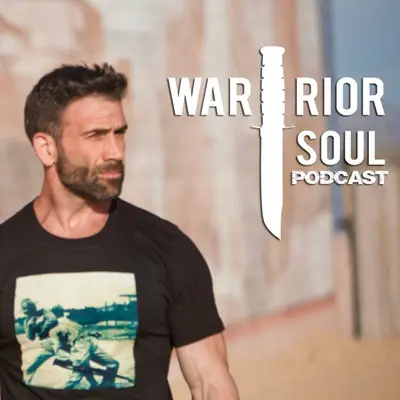
Host of the Warrior Soul Podcast and founder of Warrior Soul. Worldwide trainer and nutrition coach, contributing author at Testosterone Nation and Muscle and Strength.