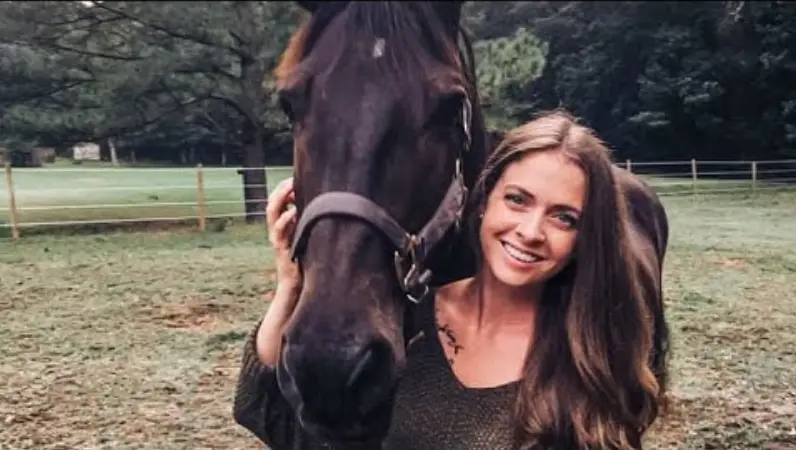
Kayla Arestivo is a Certified Mental Health Counselor and the Founder of Trails of Purpose, an Equine Therapy Organization for Veterans.
Kayla Arestivo is the founder of the Trails of Purpose, an organization that provides equine therapy to veterans around Hampton Roads, Virgrinia.
Kayla’s work is largely informed by the loss of her father, who tragically perished along with his co-workers in the terrorist attacks on the World Trade Center on September 11, 2001.
In this conversation, we discuss Kayla’s work, the importance of mental health, and steps people should take during the Covid-19 crisis to keep their heads together.
Transcript
Machine-generated from the episode audio and lightly edited — may contain errors.
Chris Albert (link to this point)
The Warrior Soul podcast is written, edited, and produced by me, Chris Albert. Our mission is to provide tools, tactics, strategies, and ideas that help The US military veteran community to show up as the wisest, strongest, most capable versions of themselves in the civilian world. If you're not a veteran, stick around because anything we talk about will most certainly apply to you as well. This podcast is made possible with the help of f bomb nutrition. They make delicious packets of fats that you can carry around anywhere with you in little portable packets.
They make macadamia nut butters. They mix them up with chocolate. They mix them up with sea salt. They mix them up with coconut butter. They're absolutely delicious, and they're really good for you.
They don't have any sugar. They also make a lot of cheese snacks. They make meat sticks, and it's just a great company. These guys send packages of this stuff to the troops who are on the front lines overseas to supplement their MREs, and we didn't ask them to do that. They just did that on their own initiative.
Really great company. If you wanna get 20% off your first order of f bombs, head over to www.dropanfbomb.com and use the code Warrior Soul at checkout. This podcast is also brought to you with the help of Save the Brave. Savethebrave.org is a five zero one c three charity for veterans. They run camaraderie events that include fishing, golfing.
They also do a lot of work with gold star families. And unlike a lot of other organizations, their board doesn't take a salary. Really great organization that is doing amazing work. So go and check them out at savethebrave.org. With that, thank you guys so much.
Let's get into today's programming.
This is Chris Albert, and I'm here to remind you of one thing. Someday, you're going to die. Now that's not some morbid statement or scary idea. It's solid fact. Your time here on this earth is limited.
And we need to be reminded of this as much as possible for one simple reason, to live your best life while you can. This is the Warrior Soul podcast.
What is going on, everybody? Welcome to the Warrior Soul podcast. My name is Chris Albert. This is actually the first time I've been recording in a while. You guys have have been hearing three episodes a week, but I had to take some time off from recording.
I basically preloaded a bunch of bunch of episodes up because I had to take a trip out to Florida to prepare for our permanent move out there. And I've been back and forth across the country. I've been dealing with some other things, so it's good to be sitting here and speaking in the microphone right now. One thing I wanted to bring up is that I am gonna be moving soon. Right?
So what I'm gonna be doing over the next few weeks, I'm probably going to be doing some repeat episodes of of some people I've had on in the past, and I've had on some really great guests. And essentially, what these will be are they'll be episodes that have been recorded months ago or or released months ago that maybe I think didn't get enough play out there by you guys. So I'll be putting those up, and I'll be putting a little bit of additional commentary on them with some of the lessons I learned from those episodes and some of the lessons I think you should take away from them. In addition to that, I'll be continuing with my solo episodes, the Warrior Notes episodes. That's where I deliver some solid advice that you take with you right after the show is over and begin applying your life.
Today, however, I have a great guest for you. Her name is Kayla Arestivo. She is the founder of an organization called Trails of Purpose, and that's where she is getting veterans to work with horses. I had on a gentleman not long ago, a marine who rode across country on the back of a horse. His name is Matt Luttrell.
He's doing similar work. And the thing about horses is this, they're prey animals. That means that they can tap into your feelings. They know when you're feeling a little bit uneasy because we're predators. Right?
We're predators. They're prey animals. And if you are bringing a sense of nervousness, a sense of unease to the situation, then that horse is gonna feel it. And that's why they they they make such great therapy animals. And Kayla came in to talk about the great work she's doing out there in Hampton Roads, Virginia area.
She's a great lady. I really enjoyed speaking to her, and you guys are really gonna get a lot out of this conversation. So with that, without further ado, I don't have many announcements or anything like that. Let's get in this conversation with Kayla Arestivo of the Trails of Purpose organization. Kayla, how are you doing today?
Welcome to the Warrior Soul podcast.
Kayla Arestivo (link to this point)
Hi, Chris. I'm doing well. It's pretty early for you though. I think it's like what eight in the morning right now?
Chris Albert (link to this point)
That's not early. I've been over a few hours. I'm hardcore. Come on.
Kayla Arestivo (link to this point)
Come on. Come on. Good for you.
Chris Albert (link to this point)
It used to be early. When I was, a teenager, I wake up, roll up, roll out of bed around eight, trying to roll out of bed at around eight. And then on the weekends, it'd be like eleven. But then Marine Corps knocked that out of me.
Kayla Arestivo (link to this point)
So Oh, yeah.
Chris Albert (link to this point)
Real quick. Yeah. Yeah. Exactly.
Kayla Arestivo (link to this point)
A 1.5 year old or well, I guess she's really closer to two at this point. So sleeping in hasn't been a thing for at least two years. Oh man, oh man.
Chris Albert (link to this point)
Yeah, I can imagine. I can imagine. So I wanted to talk a little bit about what you do in your organization. Can talk to the audience a little bit about that?
Kayla Arestivo (link to this point)
Yeah, absolutely. So I'm the founder and president of Trails of Purpose Veteran Nonprofit. We're a five zero one(three) that is based out of the ISAY Hampton Roads area of Virginia. So that encompasses Chesapeake, Norfolk, Virginia Beach. And the reason why is because we have two separate locations, one in Chesapeake, one in Virginia Beach.
And we service veterans from all over that area. And then we also have a working relationship with the Department of Veteran Affairs Medical Center, the hospital in Hampton, Virginia, which is just about thirty minutes north of where I am in Chesapeake. And so they bring their inpatient residents out. So I just kind of say Hampton Roads in general. And so what we are is a certified PATH center, PATH standing for Professional Association of Therapeutic Horsemanship.
It's an international association, and that's how we have our accreditation. I'm a certified instructor, and we have other contracted instructors that we are hiring. And so we offer equine assisted activities. We're really an organization that is after community. We partner with horses in doing that, but at the end of the day, what we care about is the conversations that's happening around the table when we eat lunch together and we have social hour together.
And so that's a little bit about what we do. We service veterans of all branches. You can still be active duty. We have a working relationship with special warfare organizations. So it's kind of a broad spectrum.
And we have my youngest participant, I think is about late 20s, 30. And then my oldest is somewhere up in his 80s. We've got and we're coed. So there's a whole wide range of demographic. As long as you have a DD-214, you can come on through.
Chris Albert (link to this point)
That's awesome. That's awesome. I had a gentleman on not long ago, a few months ago. His name is Matt Luttrell. He rode across country And on a one of the things he was telling me is that since horses are prey animals, they sense human emotions, they sense human beings.
If you got a little bit of uneasiness, they sense it. And s what s so good about them for therapy is that they can really channel what you re feeling, right?
Kayla Arestivo (link to this point)
Yeah, oh, absolutely. I mean, I am sure you could do it too, right, Chris? We as humans, we can walk in a room and if somebody is ticked off, are going to feel it. But more so the horse because, like you said, they are completely prey animals. So their best defense is to run.
They're constantly on alert for what's going on around them. They're herd animals, so they're looking out after others. And so that mentality of, gotta be looking for other people or other horses is just so naturally organically ingrained in them. And then the other piece of that would be, Chris, are you there?
Chris Albert (link to this point)
Yeah, I'm still here. Just, I had to cut it out. There's like a million people using Zoom right now. We are, I'm trying to make sure that our bandwidth stays up.
Kayla Arestivo (link to this point)
Oh man. Yeah, that's the Corona, right? So with the horses, as I was saying, they're so great. And the reason why and we could do this as humans to pick up on other people's emotions, but the horse does isn't judgmental. We as humans are judgmental. That's just even like if we want to be less judgmental, that's a goal of mine, to always be less judgmental towards other people. You immediately, within three seconds of meeting somebody, have kind of made an assumption about them in some way, shape, or form just by physical appearances.
That's like a fact. We can't necessarily as humans change that. It doesn't mean it's a bad judgment, but we've made a judgment. And so horses don't do that. And that's what makes them so great to work with, especially with veterans, is they're a herd animal.
They're looking out for danger. They're not judgmental. So they're going to just kind of reflect the energy that you're putting out there.
Chris Albert (link to this point)
Gotcha. And so when the veterans come in and they work with the horses, are they learning how to keep the horses? Are they riding the horses? I'm sure it's all of this, right?
Kayla Arestivo (link to this point)
Well, not actually. It's kind of a little more specific. So we are a ground based program because I have some guys who are paraplegics. I have some folks who are, and when I say guys, I mean it in a unisex sense, guys and gals who are fully ambulatory and there's no physical strain whatsoever. So we just to keep everybody level is everybody's feet are on the ground.
Horseback riding is amazing, and I do it. I enjoy it. But you can get a horse to do a lot of things when you have your aids, such as reins and a bit in its mouth and you're on top of it. When you get your feet on the ground and you're eye level with a horse and you're asking it to do something for you, it's going to take a lot more patience and humility to do that rather than using physical aids. So we are all based on the ground and that just kind of helps also.
Nobody's above one another. It's not like, oh well, if you're in a wheelchair, you can't do this exercise. Everybody can do the exact same thing, which takes a lot of brainstorming on the instructor's end. Is this exercise going to be okay for everybody involved? Is it challenging enough?
Because you know better than anybody that our vets need a challenge, But is it also going to be able to meet them where they're at and not going to be intimidating or make them feel like they're out of place? So yeah, we do everything on the ground. And an example of that would be like a challenge course. Maybe I'll team you up with another veteran, whether that's a male or a female or whatever. You make a bond with somebody in the group, and I'll just kind of put you guys together.
And we'll have one veteran blindfolded while leading the horse, and they have to listen to verbal cues from their veteran partner on where to go, how to navigate the challenge course that's set up in the arena.
Chris Albert (link to this point)
That's awesome. That's awesome. How have you guys been impacted by COVID-nineteen far as things go?
Kayla Arestivo (link to this point)
Man, it stinks. So we're blessed enough that we are a startup. We started last year. And that's playing in our favor right now because we've been a volunteer organization. So I don't have salaries to pay people.
That's been everybody donating their time, their resources, their effort. So praise the Lord for that, that I don't have to worry about getting loans and whatnot. Have donations completely come to a standstill? Yes. So our program is 100% free of charge to every veteran.
So we don't have a steady source of income. And so donations are stopping, which makes sense. A lot of people are tight on cash right now and are worried about the economic future of this country. But more so, we've had to stop meeting because we are group classes. That's the point is that we're all in community together.
And we've had to completely stop those classes until we're trying to project right now, it's April 29. We're trying to project May 8 because that's what our governor was saying to hang on to for non essential businesses and gatherings of more than 10 people. So that's the goal, but I don't know. I mean, man, last week I had seven veterans all within like a two day span email me and say when are we doing this again because my mentality is suffering. And you know I will never name names but to hear that from so many people within just a couple days being like, I'm isolated. I got nothing else going on. All their other activities are stopped too.
And they're like, can we do this again? So I think we're going to see from this corona thing not just economical impacts for a while, but really emotional and mental ones for a while to come.
Chris Albert (link to this point)
Yeah, it stinks because I really think that the emotional and psychological impact of isolation is such a devastating thing. I think that, you know, on the one hand, we have this situation where we have this dangerous virus that is out there and, you know, people are trying, people are scared. On the other hand, I think that the amount of death that could potentially come about and ruined lives that can come about and things like that, And plus, a lot of people in this community, they've gotten laid off because of the situation. It's just so devastating. I wish there were more people thinking about that that part of it.
Kayla Arestivo (link to this point)
Yeah. And I mean, I wish in a way that we were thinking about it all the time because I've seen so many, which is beautiful. The social media community can be our downfall, but it can also be wonderful. And that we're bringing attention to what isolation does to people. And we're bringing attention to the anxiety about financial and how this is a transition for everybody.
And I'm like, that's what so many of our veterans struggle with every single day. Doesn't take a national health crisis to cause that. They're in their own crisis. And so we've got these people who are struggling with anxiety and isolation. I'm like, can we somehow also piggyback off of that and realize what you're feeling right now, some of our veterans are feeling every single day.
And then now we get them in a place where we're putting them in a program, Trails of Purpose, and they're thriving and making friends and feeling good, and then we stop. And it's just so devastating to me to be like, we were really making an impact with that person, and now they're back in isolation again.
Chris Albert (link to this point)
Yeah. What in your mind are some things that veterans who might be feeling isolated right now, what are some things they could do while this whole lockdown's going on that's within their control.
Kayla Arestivo (link to this point)
Yeah, within their control. So for me, the number one thing I would say, I'm also a mental health counselor in residency in the state of Virginia. So I have that mental health piece. I work with children on my personal side aside from Trails of Purpose and the first thing I say is what vitamin D are you getting? How are you getting outside and getting fresh air?
Because it is so easy, especially then if I m going to focus on veterans who have anxiety going outside. Maybe they're triggered by just turning on the car or taking a drive, whatever it is, the wind blows, knocks in and over. So it's safer to hide in their home, especially now we're quarantining. So it's kind of like, okay, I don't need to go outside of my comfort zone. But like we absolutely as human beings need fresh air.
We need time in nature. We need vitamin D. We need the sunshine. And to remember that there's life outside of the four walls that surround us every single day in the air that we breathing in. So that is my number one that you can control.
Go for a walk. I know maybe in the state of California, like you not supposed to go to parks or stuff. Chris, what is
Chris Albert (link to this point)
We can. We can. Yeah, we can go out to parks. I mean, like, this it depends really on where you are, and that's the crazy part about it. Like, everything is so contradictory.
I'm in San Bernardino County, and and, you know, cops aren't arresting people or anything like that for not wearing masks. But if you go to other parts, it's a little bit more strict. And I think one of the things one of the problems with this whole thing is that everything is so contradictory. Like, people are the the government is simultaneously saying social distance, but go to the grocery store, take care of the elderly, things like that, you know. Right.
There was a really funny video out the other day. This this woman was doing like a mock press conference and she was talking about all the contradictory things.
Kayla Arestivo (link to this point)
Oh, I saw that. My mom sent that to me. Yeah, it is. And it's confusing. So then you're like, well, I don't want to do I'm not I don't want to get in trouble. I don't want to mess up.
So I'm gonna do nothing. Yeah. But that's definitely my number one is like get outside and get some fresh air. I wish I could be like And then the other part is like find someone that you can keep in touch with, whether it's via the phone or Zoom or Skype or whatever. You know, a lot of that is maybe unrealistic, especially to the veteran who kind of wants to self isolate, but step one, get outside, be in the nature, even if it is fifteen minutes a day.
Chris Albert (link to this point)
Yeah, absolutely. Absolutely. Get out there, maybe get your heart rate up a little bit.
Kayla Arestivo (link to this point)
Yeah. Exercise and some endorphins, please.
Chris Albert (link to this point)
Yeah, exactly. What else? What else in your mind?
Kayla Arestivo (link to this point)
Well, okay, so I was talking about this to somebody else that I was having a chat with recently, and it's the routine piece of things. And so one of the reasons I think I my husband is in the military, I am not. But what attracts me to people who are in the military or the military lifestyle is the routine of things. And let me tell you, I'm a with horses, I live on my property and other farm animals, and like I said, have a 1.5 year old, almost two year old, I am like so rigid on routine. That doesn't mean routine can't be broken, but I like to follow the same type of routine every day.
You're waking up super early, five in the morning, you make sure that you make your bed, you work out and stuff. And so what I have noticed for myself and being a more routine focused person I am surprised about is that it is like, okay, we will stay up and watch an extra episode and it is 11PM. Now we are going to bed at midnight and then I'm supposed to wake up at five in the morning, but then my alarm goes off and I don't want to get up at five in the morning. So now I'm just like, you know what I mean? Like all of a sudden, I'm not in routine mode because I don't have work to go to.
I mean, I have work online, but I feel like everything's getting just kind of like put to the back burner of, well, I'll get to it. I have so much more free time. And one, when this does lift, because it will lift, it's gonna like really suck to get back into that routine.
Chris Albert (link to this point)
Yeah.
Kayla Arestivo (link to this point)
Right? Like I am gonna have to start waking up early again. And two, is this like, you don't feel as I don't know about you, Chris, but like, I don't feel productive when I don't stick to a routine.
Chris Albert (link to this point)
Yeah. No, I actually get more stressed when I'm not in a routine. Like I start to get more stressed and I start to get more anxiety when I'm not in a routine than when I'm perfectly scheduled out. Like this morning, woke up at 04:45. I I got my initial work done.
I did my meditation. You know, got got some of my client programming together and I got some of the prep for a meeting that I have later on prep for this. And like, it felt good, and I was calm. I had my country music playing. You know, it it was just going, you know?
Kayla Arestivo (link to this point)
Yeah.
Chris Albert (link to this point)
But if if I wake up and I get dragged off my routine somehow, and like, I look at my cell phone and like, usually, there's like 10 emails there from from from my boss being like, dude, you got to do this, you got to do that, that kind of That kind of stuff throws me off of my routine and it keeps me from being actually productive. It puts me on somebody else's program immediately.
Kayla Arestivo (link to this point)
Right? Yeah, absolutely. And your brain kind of goes all over the place too, right? Like what was the next thing I was going to work on or whatever? I'm a big fan of written out lists.
Like I got a whiteboard in my kitchen, and I'll redo that list two or three times a day if I need to, just because I like to see what's next, scratch it off, and start over. And without having any routine or normal routine right now with corona, I mean, know you're doing a whole lot. So some of us are like, it could be either way for people who are listening. Some of us are stuck at home and can't do much. I'm pregnant, so I'm thirty six weeks pregnant, so I'm high risk and so I can't really do anything right now.
First is other people who are frontline workers or I know you're working like three different jobs right now, Like that's not routine either. That's the other side where you're doing too much and it's like frazzling. So I think for me at least just making sure that every day the night before and right now some sort of schedule kind of brings normalcy or feeling like I do have some type of control over what I'm doing every day, even though the government is pretty much making the decisions. They are making the decisions here.
Chris Albert (link to this point)
Yep.
Kayla Arestivo (link to this point)
Yeah.
Chris Albert (link to this point)
I think, you know, one thing that's gonna happen when this stuff does get lifted, I think there's gonna be a lot of businesses scrambling to catch up on that business that they lost. And you're gonna see a lot of people. I mean, it could feel overwhelming. Right? And and one of the things you have to do, you have to be prepared for the fact that it could be overwhelming.
And you have to prioritize. You have to make that list. You have to show, you know, determine what's important, what's the most important, what can you put off till tomorrow, and you gotta focus on, you know, three to five things that you could do in a day, right?
Kayla Arestivo (link to this point)
Yeah, absolutely. You're going crazy.
Yeah, bite sized pieces. I mean, people talk to me all the time and one thing I was talking about with somebody the other day was how to start a nonprofit? How do you start a business? How do you start up a career? And my suggestion was it's literally one thing, one bite sized piece a day instead of looking at the whole big picture because we get overwhelmed. Sure, we have these long term goals and those are important, but before you get to the long term goal, you've got like six short term to even get you there and you got to break it down.
And so just starting with the first one piece by piece and so I was equating that to how you start at the nonprofit. You just do the first piece of paperwork, the next one, then the next one, and before you know it you know you're up and rolling. Is It's not going to be done in a day for people who like instant gratification or businesses that want to all of a sudden bounce back right away. It is just finding those SMART goals, right? Capital S M A R T where you have actual projected timelines that are realistic and achievable and timely.
And so that's like, especially I think in with Trails of Purpose, how do we, you would be like, I want to be right back to where I was with that veteran. And like, it's not going to be realistic to be that. So start slow and just be thankful for, Okay, we can start classes for just two hours instead of our normal three hour programming or whatever.
Chris Albert (link to this point)
Right. And one other thing I want to emphasize here, you know, with this situation that we're in, you know, I reached out to the Vet Center out here in San Bernardino a few weeks ago, and I was just like, because I was getting a little bit stressed. I was getting a little bit off of my game, and I reached out to them. I said, hey. Listen.
Do you guys have anybody I can sit down with over Zoom and just talk it out for a bit? And they're like, yeah. Absolutely. And and, you know, if if you guys are feeling isolated while this thing is going on and and, you know, a lot of these programs are are down, mean, I highly suggest reaching out to your local vet center or or or any of the other charities or 501c threes that that are doing this kind of work to see if there's somebody you could sit down with and talk with and because there's definitely resources for that while this whole thing is going on.
Kayla Arestivo (link to this point)
Oh, absolutely. There's plenty of ways, although we can't physically connect, there's plenty of ways that we can connect. And that's one thing that we've been trying to portray through social media and through our database emails is like with our participants, hey, this is weighing on everybody. Take care of mental health first. Reach out if you need something.
Even if it's like you can't because some of our participants, fifty percent of them probably, are high risk because they have combat injuries. And so that happens, and that really seriously affects your physical health, right? And so I'm like, even if you need groceries, whatever it is. So yeah, making sure that you know what resources are available to you and reaching out if you can.
Chris Albert (link to this point)
Yeah. One other thing I want to ask, because there's the group that's been laid off, group the that's helmed right now, but then there's also the group of people who are essential. And and they're they're out there. They're, you know, working in the packing houses. They're working at Amazon.
They're working at at at in the slaughterhouses. They're they're they're providing food to the country, they are the first responders, police, the firemen. Their schedules might be a little bit crazier than everybody else's, and might even be a little bit crazier than they once were. You know, and one thing I think that is important to emphasize is that while yes, your job is important, you cannot do your job unless you are mentally well. Are not going to be able to be the best that you can be at your job and providing for your family unless you've got everything together in your head, right?
Kayla Arestivo (link to this point)
Right. Absolutely. And the other part of that is I'm hearing these situations of spouses, married couples, where one is completely at home now or furloughed and the other one is still essential. And so they're going, you know, fifty, sixty hours a week, and they're strained. And so now there's this completely like disbalance within the home of like somebody who's just getting stir crazy sitting at home and the other one who's never home and really stressed out about it.
And finding a way to meet your partner, whether they're your spouse or your roommate or your friend or your whatever, in the middle ground there is super important and being able to have compassion for both sides there and recognizing that I don't think one is more difficult than the other. I think they're both equally difficult to either be on the front line or to be at home. But you're absolutely right. One thing that I've learned in my own life is you cannot pour from an empty cup. You will do way more harm than good.
So knowing when, at what point are you like, I'm burnt, like absolutely burnt. And I know I'm essential, but I can't. And so what we've seen, I don't know if you saw on the news, Chris, is this new wave of frontline workers, ER doctors, people who are working hospitals who are really struggling and having now mental collapses or committing suicide. And we have to be aware of that as well because that's if corona if you're in that place truly, anybody who's listening to this, if you're in that place, if corona doesn't kill you, and you're like struggling mentally, you're gonna break in some other way. And so now we've defeated the purpose of you being essential.
You know what I mean? Does that make sense?
Chris Albert (link to this point)
No, absolutely. And, you know, my fiance is a nurse, and she goes to work every single day. She's not dealing with corona patients or anything like that. One thing to emphasize here, though, is that, you know, if you take a city like New York City and we are looking at the death rates there, on average, even when corona is not going on, eight seventy and nine fifty people die in New York City every day. From different things.
And so these people who working in these hospitals, they're dealing with death every single day. And some of the stories that I've heard just from my fiance and her fellow nurses, I mean, the mental load that comes with seeing people grow before their time in so many cases, it's significant. And I know there's quite a few veterans out here who are medical professionals who went on into nursing. Right. And they deal with that stuff as well. And you have to take care of yourself.
If not, you're going to break. It's really, really important. Right.
Kayla Arestivo (link to this point)
And you have to process it somewhere. And so obviously I'm a mental health counselor. And so I'm like, biased towards that. But even if it's just calling up somebody that you trust your friend and being like, I'm absolutely overwhelmed right now in some way or shape or form that what's going in, the negativity that's going in has to be exported. Just to And so, know, I feel for people like your fiance, because although she's not maybe working with corona patients, she's still going into a high tense environment every single day.
That hospital that she's at is probably at a 10 when normally maybe it's at an eight. And that intake of energy every day is just, it's overwhelming and it's exhausting. So reaching out to people that or talking to your spouse when you come home or journaling if that's what is helpful for you. But knowing that there has to be one proactive step to releasing everything that's coming in.
Chris Albert (link to this point)
Exactly. Exactly. Well, Kayla, number one, I want to thank you. I think what you're doing is absolutely outstanding. Where can people learn more about your organization and where can people follow you?
Kayla Arestivo (link to this point)
Yeah, absolutely. So we're always looking for participants and volunteers. If our class load gets large, we just wait list. But we have an introductory class every supposed to be when there's not coronavirus every eight weeks to new clients and new participants in. Or if you're looking to volunteer, if you're a veteran that wants to become a mentor or somebody who just has a heart to help out, we're always looking for volunteers.
You don't need to be a horse person to engage with us. And so www.trailsofpurpose.com is our website, and then info@trailsofpurpose.com is a good email, and then a direct line to me would be kayla@trailsofpurpose.com. And we're on all social media and every type of platform for donations and whatnot. So you can reach us pretty much anywhere.
Chris Albert (link to this point)
Outstanding. Well, thank you so much, Kayla. Again, I just want to acknowledge you. I think the work you're doing is extraordinarily important. I think whenever anybody puts work into doing things like this, introducing veterans to new concepts that can help them to expand themselves and to center themselves emotionally, I think that's amazing.
And, you know, to everybody out there, again, I know this situation we're all in is crazy. It's unprecedented. It's it's something that that, you know, we never thought would happen. But at the same time, it's not the worst thing that's ever happened in the world. Right?
And so we always have to remember that too. We have to be grateful enough to to for the fact that we've been born in this time and in this country
Kayla Arestivo (link to this point)
Yes.
Chris Albert (link to this point)
You know, at at probably the height of height of civilization where things are easier than they've ever been. And in the long run, this is gonna be a minor inconvenience. But during this time, please make sure you're taking care of yourself. Please reach out. Like we said, there's numerous resources that you can take advantage of now.
And when we're back online, get out there and check out Trails Purpose and let's all improve together, right?
Kayla Arestivo (link to this point)
Yeah, absolutely. The one thing I would say to kind of end this is like have compassion for everybody around you. Have it for yourself, have it for your neighbor, have it for your coworker, for your spouse, whoever, right? Frontline, essential, or staying at home right now. I think we can all better learn to be compassionate with each other's circumstances.
And thank you so much, Chris, for having me on. I really appreciate it and the work that you're doing and being able to be a light into other people's lives, especially via podcast right now when people are maybe stuck at home. So it's amazing. So thank you so much.
Chris Albert (link to this point)
Thank you. I appreciate that. And and, you know, it's it's really organizations like yours that I think do the real work. I sit here with my recording. So Come on.
It's cool. Alright, guys. Thank you so much. We'll be back at you later on this week with some more outstanding content. And for now, it's Chris and Kayla, and we are out.
Alright, guys. There you have it. That is our conversation with missus Kayla Arestivo. Again, really, really great person. She is doing great work for veterans out there in Virginia, and I hope you guys got a lot out of that conversation.
One thing I mean, man, this shutdown has really put a damper on a lot of the work that's being done out there for the veteran community. And what I want you guys to understand is this, you are never alone if you are feeling like you can't move forward, like, if you feel like you you you needed to speak to somebody, there are so many people out there who want to speak with you. Alright? I I I brought this up a few weeks ago. I was having some issues a few weeks ago, really, really hard mental issues.
And I reached out to my local vet center. They got somebody on the line with me right away. And I normally don't talk about my own issues, but I think it's important for you guys to understand this. You know, I I might be running a show here, but I'm no better or even more capable than you are. Right?
I there there is nothing special about me. I'm in this struggle just like you are. I've got my shit that I have to deal with, and I've been close to breakdown over the past three hundred and sixty five days. And I'm actually lucky. I'm lucky because I found some things that helped me to get out of it.
But I want you to know that I'm here with you, that this community is here with you, and that we are strong enough to get through this, and we are strong enough not only to get through this, but to thrive. To thrive and to have a real fingerprint on what this society looks like as we move forward. And that's what this podcast is about. This podcast has never been about preventing veteran suicide. It's never been about, you know, just just keeping veterans from becoming homeless or anything like that.
This is about making veterans what they should be, and that is giants in our society. Giants who are helping to shape The United States Of America into a greater and stronger country, a greater and stronger society for our children, for our families, and for the citizens of this great country. And I hope that you are getting a lot out of what we do here. So with that, guys, it was a short interview today. I had to to have a lot a lot of craziness going on in my life right now with the move across the country, but I am gonna continue to work for you, and I hope you're gonna continue to listen.
So big thanks to Kayla Arestivo for coming on. And to everybody out there, thank you for listening. We'll be back at you later on this week with some more awesome content. This is Chris Albert with the Warrior Soul Podcast, and I am out. Get out there and live your best lives while you can.
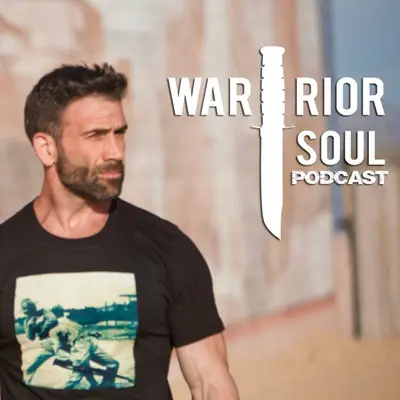
Host of the Warrior Soul Podcast and founder of Warrior Soul. Worldwide trainer and nutrition coach, contributing author at Testosterone Nation and Muscle and Strength.