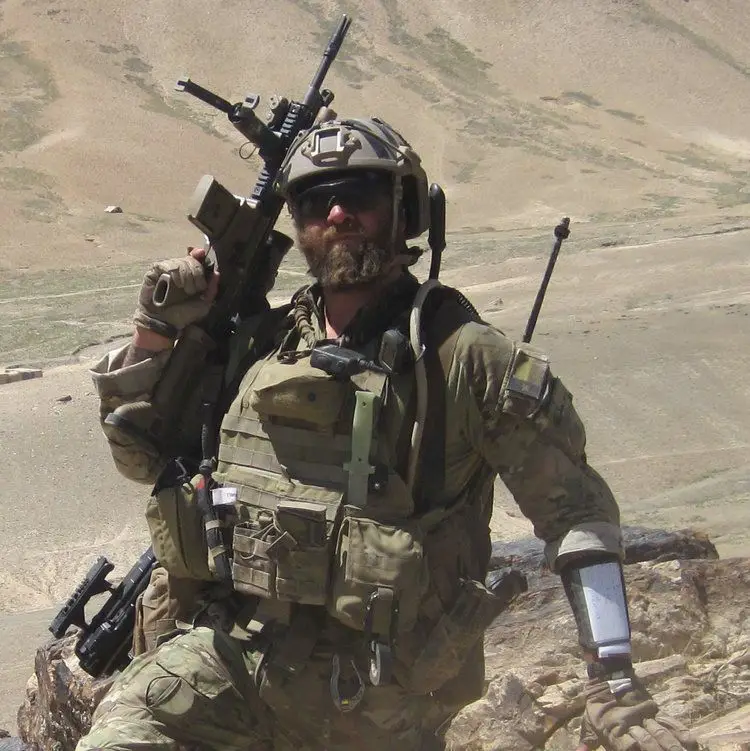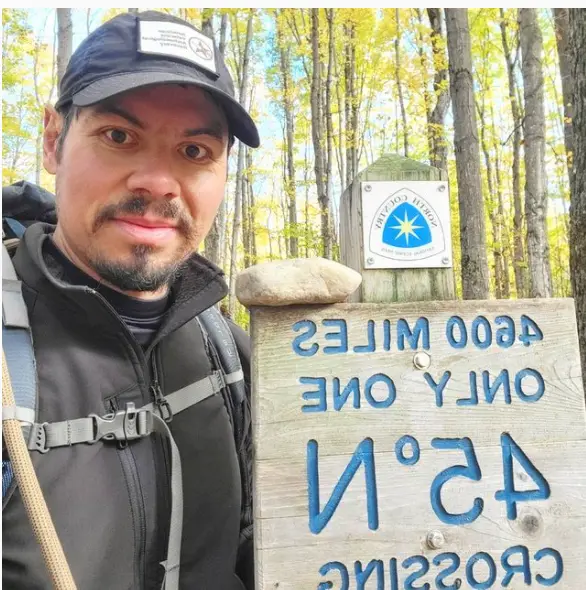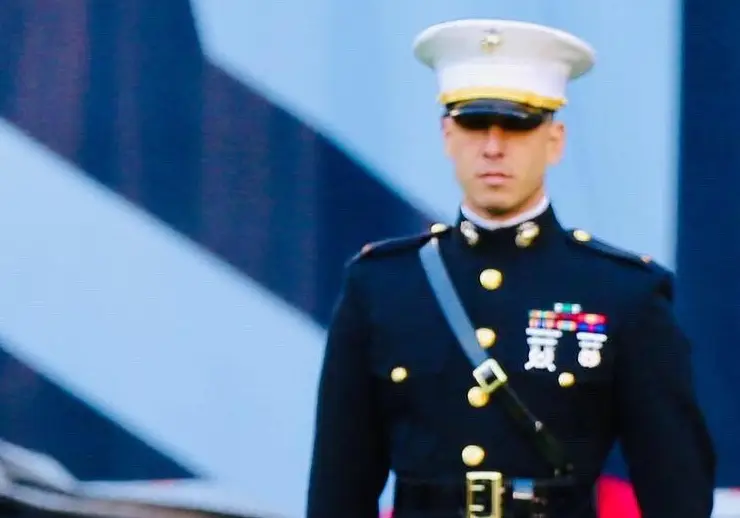
Mark Pellon is an active duty CWO3 in the United States Marine Corps
CWO3 Mark Pellon is an active duty Marine, K9 decoy, and Brazilian Jiu Jitsu Purple Belt. Mark currently serves as Band Director for the Parris Island Band at MCRD Parris Island.
Mark's journey in leadership began as an enlisted Marine. It was during this time that he began to understand the importance of being a good leader and a good follower.
As he was making his transition to Warrant Officer, he began to understand the importance of having a vision as a leader. We get into what a vision is, why it's important, and important lessons in both leadership and followership during this outstanding conversation.
To follow Mark on LinkedIn: http://linkedin.com/in/mark-pellon-120348b9
To follow Mark on Facebook: https://www.facebook.com/mark.pellon.7
Transcript
Machine-generated from the episode audio and lightly edited — may contain errors.
Chris Albert (link to this point)
Mark, what's up, man? Welcome to the Warrior Soul podcast.
Mark Pellon (link to this point)
What's going on, Chris? How are you?
Chris Albert (link to this point)
Good, man. Good to see you again. We met back I think it was before the holidays. I think it was, like, closer to October. You're at Yeah.
An open mat at Alliance South Florida, my my jiu-jitsu academy that I train at. And kinda kinda hit it off. We rolled a little bit, talked a little bit about your background, found out you're in the Marine Corps. But, for the audience, can you talk tell tell everybody a little bit about who you are, where you're coming from, what you're doing?
Mark Pellon (link to this point)
Sure. Yeah. First of all, it feels like it was, like, two days ago that I
Chris Albert (link to this point)
I know. Right?
Mark Pellon (link to this point)
And because so much has happened since then. But, yeah, I'm a I'm an active duty marine right now. I'm a chief warrant officer down at, Parris Island back where we make marines. No disrespect to the West Coast guys. But, I'm the, director for the marine band down there.
So I I essentially lead everybody in the musical group. We do colors and graduation ceremonies and all sorts of performances up and down, the Eastern Recruiting region. So, professionally, that's that's what I do. And, yeah, obviously, we met, down at Alliance. Man, what a cool group of people too.
I used to train out in San Diego at Alliance San Diego, which is why I checked out the school while I was down visiting my sister. And, man, tough guys down there. Yeah. You caught me off guard, man. I saw the at the time, by the way, congratulations on your blue belt.
That is huge. You absolutely deserve it.
Chris Albert (link to this point)
Thanks, man.
Mark Pellon (link to this point)
I remember rolling with you very vividly because I was like, oh, white belt. I could take it easy, and I could not take it easy.
You are just tough as nails. But yeah. So that's a little bit about me.
Chris Albert (link to this point)
Yeah. I appreciate that, man. The that it's a really tough academy. I mean, I've there there's there's killers up and down the line there, and there there there's not really any easy rolls at the whole place. It's pretty crazy.
Mark Pellon (link to this point)
Yes. Definitely.
Chris Albert (link to this point)
Yeah. Well, dude, so, let's talk about a little bit about, like, your history in the Marine Corps. Chief warrant officer, you know, not everybody that's that's kind of a rare breed. Right? So so Yeah.
How did that whole thing happen? How how how'd you get to that point?
Mark Pellon (link to this point)
You know, it's funny. When I first joined, you know, I was I had an incredible beginning to my career. I, I went, obviously, boot camp, MCT, and then my school was at, Little Creek, Virginia. And when I got there, I ran over to the the NEX, the naval exchange or whatever, and I saw this coffee cup that had a chief warrant officer five, like, logo on it. And I didn't even know what it was.
You know? They don't, like, necessarily drill you on chief warrant officer ranks. But, obviously, like, the CEO for the school, the naval school, was a chief warrant officer. I think it was a four at the time. So I you know, being a young motivated marine, I was like, I gotta rise to the top.
And I just assumed, like, being an officer has to be the highest, you know, thing. And I went and bought that cup, and I put it in my room, and we had a an inspection. And my platoon sergeant comes in and sees this cup and just tears into me. What the hell do you think you're doing? You don't rate this cup?
And I I was a little bit not a little, a lot ego driven back when I was younger. And I basically said, like, you gotta dress for the job you want, staff sergeant. Like I said to him so fast forward, you know, I I do a couple of tours under my belt. And I at my second tour, in particular, at the second marine division, I had a really bad tour. I almost left the Marine Corps.
I do a lot of canine work outside of the Marine Corps, and I was supplying to all sorts of police departments and stuff like that. And I happened to have a master gunnery sergeant check-in about five maybe five months before the end of that tour. And I had pretty much set my mind up on leaving the Marine Corps when he showed up. And as soon as he walked in, he he kinda saw something in me, and and he started putting me in really important positions within our unit, just to to show me, I think, that I could I could make a difference in the lives of the marines I lead. And, he he basically saved my career.
He sent me to advanced school. He changed my mind about leaving the Marine Corps, and I stayed in. And, he was he was an incredible marine, master gunny, who was a a musician but had multiple deployments under his belt. He also did an IA billet out in, Kuwait, I think it was, voluntarily just because he wanted to be a part of the Marine Corps in that way. And he was just a big motivator.
His name is, Matthew Boatwright was his name. And he's still I I keep in touch with him today. So at that point, I'm, like, two tours in, and I'm like, I wanna be a master guns one day, which is funny because here I am right now. So I dedicate myself to becoming what he was, which is a leader, and somebody who, identifies what the marines need that are in my charge and how do I best serve them. I think that was where he really came into into play.
So I go to advanced schooling after my second tour, which is called the senior musicians course, which is typically a course that, we send our most senior leaders to if they aspire to be officers or senior enlisted. And after that tour, I went out to the third marine aircraft wing to serve there, and I checked in with my brand new boss who was a brand new warrant officer at the time. And he sits me down, and he says, so what's your plan? My job as your officer in charge, I need to tailor, you know, your path to your goals. I need to test you appropriately.
So what is it that you wanna do? And I told him my plans. Basically, I wanted to, you know, achieve this billet, that billet, go to a b billet to drill instructor school, and then, eventually become a master gunnery sergeant and lead marines like I was led. And he said, that's a great plan. Why?
Why do you want that? And I told him the reasons, and he and he asked me a tough question that totally changed my career. And at that point, I think I'm about eleven, twelve years in at that point. And he said to me, what is the difference between an officer and an enlisted? And to a lot of people who are in the military, I think we superficially, we all know the answer to that for the most part.
You know? But what I didn't understand was really the the depth of the question was what is the role of an officer versus an enlisted? Because I have a master sergeant right now who's my senior enlisted. He's got twenty plus years. I've only got eighteen.
So he's got a college degree. I don't. He could clearly I think if I'm dead sick with COVID like I was in November, you know, whatever, he could clearly stand in my place and get the job done. So the question then I had to really chew on it, what was the role of an officer versus the role of an enlisted? And when I dug deeper into that, I realized that, I think we sometimes value officers more than enlisted or we somehow think that that that it's a higher level of position because we get saluted.
But the truth is is that I think leadership is very, broad. An officer's role is much more about vision, much more about intent and creating a direction to go. Whereas on the enlisted side, it's more about taking that vision and implementing it, finding ways to make it come to life. And what I realized is that my personality and my skill sets and the thing the way I think is much more in line to be an officer in the sense that I'm much more vision oriented, much more driven about what could be, what direction are we going versus making other people's vision come to light. And that changed my trajectory again where I realized, I think I'm better suited as an individual in my personality to go into that role versus an enlisted role.
It also made me realize that we, as a military, often look at the collar, and we we put people in a certain podium or pedestal in the wrong way. I think we need to start looking at it and saying, what are the roles of those people's jobs, and are they in the right role for their strengths and their weaknesses, so to speak. I never wanna be with a visionary senior enlisted because that's what I do. And I would be missing that person who's analytical, a logistician, somebody who can coordinate events, somebody who can find the problems with my vision, fill in the gaps, and then let's make it happen. So, that's kinda how I ended up where I'm at.
It was a a very big roller coaster of a career so far. I feel very good where I am now and very blessed to to kinda have gotten here.
Chris Albert (link to this point)
Let me ask you something. So being a visionary, is is that something that somebody's born into, or is it something that you can can establish in yourself?
Mark Pellon (link to this point)
You know what? I'm I'm a believer that a lot of us have, like, a nature to us. Our soul. And I love the the title of your show. You know?
But I what is a soul? I think that's something that when you're born, that is something you have. Of course, our life experiences shape us in some but I do believe that we are every single person given a soul that has unique characteristics that are unique to us. We might have similarities to other people, strengths or you know, one of the cool things that that master Gunny made me do when I first met him and he made the whole team do it, we had 50 marines. He said every single one of you is gonna take a Jung personality test.
And what he was doing was he was trying to figure out what kind of people do we have and who works best together so we can create teams that when we have projects, we have the right people working together. Because if you have the same type of people for everything, sometimes you miss something. Right? I I believe that there's a lot of ways to lead, and every personality can introvert, extrovert, everybody can lead in different ways. But when it comes to being a visionary, I think it's just something that you you kind of discover about yourself that it's something you're inclined to.
I think there's people who maybe want to be visionaries, and they might struggle to do that. I think Simon Sinek talks about, you know, like, 2% of the population can is really a visionary type. Like, that's their personality. And then you have early adopters, which is, like, the next category of, like, 10 15% of the population. I'm a believer that just because you're a visionary, it doesn't make you better than anyone.
It's just how your mind might work differently than other people. I suck at details. I suck at, like, being really detail oriented. It doesn't mean I couldn't get better at that or learn at it, but it's definitely not within my my nature to be super detail or or planning and things like that. I think very broad, and I get very creative, and I go on wild goose chases in my brain about a lot of things.
And it takes a lot of work for me to to kinda create discipline within myself just to pass, so to speak. So that that's kinda how I feel about that.
Chris Albert (link to this point)
Well, one of the things one of the reasons I asked that is because we're talking about the Marine Corps here. Right? And I love the Marine Corps. I had a great time when I was in the Marine Corps. You look like you're having an excellent time in the Marine Corps.
There's a lot of people who don't have an excellent time in the Marine Corps. Right? And and I think, like, one of the things that can can that can depend upon is who your leadership is when you eventually get to your first duty station. Right? And one of the things I've seen over my time is that the Marine Corps can have an uncanny ability to kill the visionary in a lot of people.
Mark Pellon (link to this point)
I agree.
Chris Albert (link to this point)
As can most facets of the US government, not just the Marine Corps. And and, again, I love the Marine Corps. I think it's the the best thing that ever happened to me, but but I've seen this over and over again. I hear it from veterans all the time. You know, I I I get active duty marines who comment on my stuff all the time.
How do you beat that? How do you get around that?
Mark Pellon (link to this point)
Yeah. That's an awesome question. And, honestly, over the last five years, I became an officer in 2017 is when I went to officer school. And over the last five years, that's been the most kind of apparent light bulb that has gone off because I'm on a different side of the spectrum today than when I first joined, obviously. So the hard thing is this, when we come in let's just talk Marine Corps, I guess.
When we come in, they tell us every marine is a leader. Every marine. The the lowest Lance Corporal, PFC, whatever, if there's two of you, one of you is leading, one of you is following. Right? They teach us that in any scenario, next man up is everybody's gotta be ready to step up and lead.
Right. But the that topic is that when you hit the the fleet, heck, even some of the MOS schools early on, what are we told most often? Shut up, fall in line, do as you're told. That's what we're expecting.
Chris Albert (link to this point)
Such a fucking suck. That's what you hear.
Mark Pellon (link to this point)
Here's the conundrum. Right? As your career progresses, our roles tend to change. Look at non NCOs, your privates through Lance Corporal. They are very much, I like to break it up into three categories.
Your non NCOs, they are the future. They determine what our capabilities are a year, two, three years from now. Right? So that's how I view that whole group of people. They gotta be amazing at everything because they're the newest guys.
They better be the fittest, the fastest, the everything because they're gonna determine what we're capable of to move forward. Then you have your NCO ranks, corporal sergeant, and those that crew essentially is the implementers of the Marine Corps. They are the doers. They make visions happen. And then you have your staff NCO ranks.
And to me, the staff NCO ranks, their job is to foresee the challenges of the vision from the officer ranks. Look at what's wrong with the plan, advise, recommend, come up with solutions before the problems that, you know, arise. Here's the issue. When you're a young marine, you can't see the Marine Corps that way. You only see it from the lens of personal self.
And if you're a young marine, but you have the skill set that a senior or even a junior officer supposed to have, you find yourself in a in a difficult spot where you're saying, I I'm being told to color, shut up and color, but I can see what's wrong with all of this, and I have a much better way to do it. But you're not in a position yet to actually make that happen. Right? Right. This is where I found myself, my second enlistment at Camp Lejeune, terrible leadership, wanted to get out because I was like, this is insane.
I could do so much better if they just give me a chance, but I was a a, you know, senior sergeant, junior staff sergeant at the time, and it was, like, pulling teeth to the point where I said, screw this. You know? They don't want my skill set. That's a very it's a difficult spot because in many ways, it can be true, but it's also myopic to look at it that way. Because eventually, if you don't focus on what you're not capable of doing today, but focus on the bigger picture again, this is partially a vision thing.
And sometimes it's a maturity thing. I did not have much maturity early in my career. I had to a lot to get some maturity. But once you're able to break out of that idea that, you know, screw this because this is just a freaking crap show. I'm not, you know, I'm not happy here.
Once you're able to break through that idea and start to look bigger and start to ask yourself, when I am in the position to, what will I do differently? Then your your thinking goes from self preservation to serving others. So if you stop looking at it and going, everything sucks for me, and start looking at it and saying, what can I do today to learn how not to lead so that in the future when I am a leader, my marines will never experience that? You I'm sure you ran into senior, you know, leaders who were awesome. And most tell you, I had crappy leaders early in my career, and I learned a lot of lessons through what not to do.
Chris Albert (link to this point)
Mhmm.
Mark Pellon (link to this point)
Yeah. It it's it's, you know, it's normal for a young person to say, screw that. I'm out of here. But the problem with that is you might be a great marine or a great leader who's basically leaving everybody behind who stays. So now you could have been that guy that could have fixed, let's call it, fixed the system, but instead you looked after yourself instead of look at looking to how to serve other people.
And I don't blame anybody for doing that, Chris, but at the same time, I feel very fortunate that that happened to me when I was a little bit later in my career, and I didn't cut bait, and I stayed so that I could help serve, you know, and lead marines in a capacity where I am today. And I and I it was a great decision. Very, very lucky that I was at that point in my career to stick around because if my first tour was, like, my second, I probably would have been gone by my first tour.
Chris Albert (link to this point)
What so did you, when you joined, did was it initially with the band, or or or you're doing something else and then got a got assigned a billet there? How'd how'd that work?
Mark Pellon (link to this point)
Yeah. So, for the marine bands, we have, we have 10 fleet bands. We're not so I I should preface this because I know a lot of listeners probably aren't, like, intimate with the program per se. Right. A lot of questions about that, but, like, the president's band, the President's Own, they're completely separate.
There's a lot of questions I get about, like, do you guys go to boot camp? All the fleet bands, the 10 fleet bands, they all go to boot camp, MCT, all that stuff. We all shoot every year, etcetera, deployable. But the President's Own is a completely separate thing, and so a lot of times people, you know, just ask that question. But we do have to audition Mhmm. Prior to enlistment. Right. So we have, like, basically, the same process as everybody else plus one more step pre boot camp, which is a an audit process. So, yeah, I came in just for this program specifically.
Chris Albert (link to this point)
That's cool. That's cool. The the I think, you know, in a lot of ways, we when you're in a billet like that, that's, like, high visibility for the Marine Corps, you know, sometimes people, like, look at that with, like, a lot of jealousy. Like, if you're with Eighth and I or you're you're you're with the the Commandant's Own or the President's Own or things like that. A lot of times people look at that with a little bit of jealousy because, like, you know, I think about the way I felt about it.
Like, when I was enlisted, I went and I watched Eighth and I perform. Right? And I was like, oh, man. These guys look awesome. It was so cool.
I felt so proud to be a marine. On the other hand, I also felt like I was buried in the fleet and, like, was, like, a no name, nobody who, like, you know Sure. Like, was just a number and stuff like that. And and the reason I asked that is because I'm sure there there there's gonna be a lot of people in the audience who who are gonna feel like that. You know?
Mark Pellon (link to this point)
Yeah. I it's a difficult, thing, and I've talked to lots of, you know, retired, active duty, everybody throughout eighteen years now about, how marines feel. You know, I'll just say it from my lens, from the music field. Right? Like, should we even have a band?
That conversation comes up all the time with, I will say it, especially, inventory based, MOSs. I mean, I I've seen it left and right comments about why do we even have this, take that money and put it into equipment and you know? And and it's a fair thing to say. But, again, I think this is all about perspective sometimes. So you mentioned, like, some of these MO
Chris Albert (link to this point)
Oh, I don't wanna stop you there, but from my perspective, having been an infantry marine, I always liked the fact that we had a band. I always liked the fact that we had an Eighth and I because, like, that was the thing, like I mean, I'll be honest. Like, it was the guy in dress blues slaying the dragon that that made me wanna join. You know what I mean? Like like, that's why I joined.
I I wore my dress blues, like, twice in my life. Like, never wore them outside of that. Like but that's besides the point. You know what I mean? It's like, that's the thing that made me wanna get into it.
And so when the Marine Corps can do things like that with high visibility, that helps all of us because it brings more people in the Marine Corps.
Mark Pellon (link to this point)
I'll tell you a quick story, that a lot of people don't know about. During World War two, the when The US was basically trying to march its way through the Pacific, we were running out of funding. The the country was basically begging the citizens to buy war bonds so we could sustain beans, bullets, and band aids. Like, we really couldn't shoot a bullet anymore because we were running out of money. And that was about the same time frame that we were gonna go fight at Iwo Jima, and and we take Mount Suribachi.
Now what a lot of people don't realize, like, when we start to talk about these these support we'll call them what they are. Right? Supporting MOSs. They're not directly attached to the the war fight, but they are in some way trying to influence the American public and and garner support from the American people. So when that combat cameraman took the photo of us raising the flag on Mount Suribachi, that picture was posted on the front page of almost every major newspaper in The United States within days.
And the title, the headline for all the newspapers was the same, basically. It was we're winning the war by war bonds. They were basically it was a rally cry to the American people to gain trust that we can totally win this world war because it was a kind of touch and go situation. And all of a sudden, the US government was able to raise hundreds of millions of dollars, and this is at a tough time economically for the country and the world. And we sustained the war effort and we win the war.
And a lot of people think that that picture, if you really think about it, was the catalyst to really pushing us to the finish line. Now I I will never claim that, like, what I do today can never compare to something like that because you when that moment happens, that cameraman doesn't know that that's what the result is gonna be. Right? But, like, what we have to always remember is every so often, as an example for the Marine Corps, the the government will question, do we need a Marine Corps? Do we need to have this?
Why don't we just integrate the Marine Corps to the army? You know, this conversation has happened, you know, every so often, every other decade or something. And the the answer to that is, you know, in in a great quote, the the country doesn't need a Marine Corps. It wants a Marine Corps. Part of that is that we have to gain trust from the American people.
We have to show them why they should have a Marine Corps and why they should always want us around. First to fight concepts, ready at all times. The fastest, most deployable military we have, That's the, you know, United States Marine Corps. So, like, it's for me, I look at that message, that idea, and I see my job, which is a tiny, tiny piece of a very big machine. And I and I realized that everybody's got a role to play in all of that.
And sometimes it's hard for people to just kind of understand that perspective, but I also get why I see people say, like, screw that. We shouldn't have that. I just want bullets and bombs and this and that. I get that too. But always gotta keep things kind of in a balanced thought process. There's a lot of strategy to fighting. So yeah.
Chris Albert (link to this point)
No. Absolutely, man. You you recently overcame a a really bad injury too. Right?
Mark Pellon (link to this point)
Yeah. I had I had a knee surgery back in July of last year. So I actually, when I met you, I had that I think that was my first time training since the knee surgery, which was awesome because your gym was freaking tough. And I was like, that that motivated me. You know, I think my first roll was with the I can't remember his name.
I feel terrible. He was an awesome guy, the brown belt there.
Chris Albert (link to this point)
It was probably Brian.
Mark Pellon (link to this point)
Yes.
Chris Albert (link to this point)
Have you got, like, super flexible?
Mark Pellon (link to this point)
Yeah. He's I think I started stretching to warm up, and he's like, wanna roll? And I, you know, I'm the visitor, and I'm just like, okay. My first roll was with him, and we went for a couple of rounds straight. But, yeah, I I had the knee surgery back in July.
And ironically, an injury is what got me into jiu-jitsu. I had spinal surgery in 2010. And after my recovery from spinal surgery, I started watching the MMA team, which was on Camp Lejeune, just practiced. It was led by a guy named David Porter who is an amazing black belt. He's under Pedro Sauer.
I love him to death. In fact, when I got promoted to blue belt, I wasn't training with him. He gave me his actual personal blue belt to wear. And I wore it full time as a blue belt because it was, like, such a huge honor. You know, for us, our belts are really special, and he gave me his blue belt.
I still have it till this day. But David Porter, he he basically, you know, allowed me to come watch the team, and I had just had a huge like, this spinal surgery was to save my life. I still can't feel my right side of my body on the surface level of my skin. I can't feel anything from my belly button down, basically.
Chris Albert (link to this point)
Mhmm.
Mark Pellon (link to this point)
So Dave, you know, said, yeah. Come on down and just watch. After about three months, I said, hey. I really wanna train with you, but I'm scared because, you know, I just had this back surgery. And he goes, listen.
I'm gonna be the only one you roll with. I'll teach you techniques. I will only put as much pressure on your body as you put on on me. And he was amazing of that. And literally in a month, I was, like, rolling maybe 50% speed with him.
And about two months later, I was kinda rolling full out. And this is, you know, three and a half months removed from spinal serious spinal surgery.
Chris Albert (link to this point)
Mhmm.
Mark Pellon (link to this point)
A few weeks later, MCCS, Marine Corps Community Services, tells Dave that they're gonna sponsor the team to go fight at a Naga tournament for, you know, for jiu-jitsu. And I've never competed. I've never trained jiu-jitsu up until that point. And Dave says, hey, guys. MCCS is gonna pay for our hotel, our food, and the tournament fees.
Who wants to go? And I said, I'm in. I gotta do this because it's an awesome, you know, opportunity. I go and I it's I'm doing no gi at the time. I had never put on a gi in my life at that point.
And I compete in my weight class and then the open class. I entered both divisions. I weighed about one seventy at the time. And in my weight class, I won my first match, lost my second one. I was I basically didn't even medal in my weight class.
But in the open, I won two matches by submission, and then I got to fight for gold against the hundred pounds bigger than me. He was a huge he weighed two seventy. He got the takedown right away just from sheer explosive, like, hugeness. And for the rest of the match, his coach yelled at him to hold me. Just hold him.
Hold him. Hold him the whole match. I lost by one point after multiple sweeps and this and that. So I was so proud. In fact, I I have to find a picture, but I'm I'm standing there.
You know, my hand is not raised. His hand is raised. Mhmm. But I huge smile on my face, and he's, like, holding his knees from, like, being exhausted because I was just I wouldn't stop. You know?
I took my silver medal. I sent it to my neurosurgeon who just did this spinal surgery five months ago.
Chris Albert (link to this point)
Mhmm.
Mark Pellon (link to this point)
And he calls my commanding officer and basically tells him, like, I have destroyed my back for life. I will never be able to serve in the military. It's over.
Chris Albert (link to this point)
Oh my god.
Mark Pellon (link to this point)
So as I said, I was pretty stupid when I was younger, and maybe I'm don't know if I still am, but I didn't read any of the discharge paperwork for the surgery. I didn't look at what I should do to heal. I didn't do any of it. And, you know, like, we have what's called limited duty status.
Chris Albert (link to this point)
Right?
Mark Pellon (link to this point)
Mhmm. So I was supposed to be on limited duty for a year after this severe surgery, and I'm out here grappling at tournaments five months later. So we ran a bunch of tests, and, basically, the surgeon calls me and says, are you sitting down? And I just break into tears. I'm I'm I'm afraid.
I'm like, it's over. You know? My career is done. My my health is done. And he basically says to me, I don't know what you've done.
I don't know what you ate. I don't know what your routine was, but I wanna run a study on you because you are a miracle of science. Your back is totally strong. Like, all the ligaments are there. And, you know, I I tell everybody that's just that was god without question.
For me, that was god that saved me legitimately. They tried to process me to get out of the Marine Corps at that point because the doctor was like, I don't think this kid could, you know, do what you need him to do physically. I took a physical fitness test a month after they put me on a medical board. I scored a a I scored, like, a two ninety out of 300. And they basically said if he can do this, he can stay in the Corps, and I got to stay.
And then, like, you know, seven years later, I'm an officer, and I'm at TBS going through the infantry training stuff. And I'm, like, always looking back to that point as a very strong pivot in my life. But, yeah, injuries are part of the game. I'm sure sure you've had your share too.
Chris Albert (link to this point)
And Yeah. A few.
Mark Pellon (link to this point)
Today is you know, for me, I'm at an awesome school here in Beaufort, South Carolina called Stillness Academy. My instructor is Cesar Clavijo, and he's a Roy Dean black belt who is phenomenal. And in fact, he's really an interesting guy. He we none of us wear a colored belt in our school. Everybody wears a white belt including him, and he's a Roy Dean black belt.
You know?
Chris Albert (link to this point)
Oh, wow.
Mark Pellon (link to this point)
But it's a very humbling place. Nobody cares about, you know, what your belt is. We're all there for each other. We're all there to get better, and that's it. But today, my focus is, like, how can I do jiu-jitsu for the rest of my life?
I love competing. I'm a very competitive guy, but it's not the thing that that drives me as much anymore. I really just want to do jiu-jitsu forever so that it's something that keeps me healthy and not breaks me down. You know?
Chris Albert (link to this point)
Yeah. Yeah. I got a friend who who just started. He's a little bit older than I am, mid forties, and and he's a white belt. And I told him, man, like, take the ego out of it.
Tap early. Tap often. Don't get into death matches with other white belts, try to roll with the higher belts, that kind of stuff. You know? But I think the biggest thing is just relaxing and, like, not not worrying so much about getting tapped or anything like that, but just learning.
Mark Pellon (link to this point)
For sure, man. For sure.
Chris Albert (link to this point)
Well, man, I appreciate you coming on. Can you tell the audience how they can how they can find you? How how can they get touch with you? Are you you on social media?
Mark Pellon (link to this point)
Yeah. I you know, I have two Facebook accounts. One of them is basically, like, my canine page that I pretty much just only focus on, like, all the I I do a lot of protection work is what I kinda specialize in with these working dogs, German Shepherds and Rotties and Malinois, all that. And to find me, you would just look up Mark Pellon, h e l p e r, Pellon, which is my last name, p e l l o n. So that's how they'll find that page.
A helper is the guy that basically the dogs bite, and I help the dogs develop. And so I just made that my that's not my real middle name, but I made that so that I can distinguish my normal page from my my dog, you know, training stuff. And then my normal page is just my first name, last name, Mark Pellon. I I I plan on you know, in the future, I have some some entrepreneurial, you know, big visions for that. I I wanna open up my own jiu-jitsu school one day.
I have a logo that I've already created. I have all that stuff, but that your audience doesn't need to know any of that until a couple years from now when I retire and and I start to to move down that road. I just, you know, I just really wanna encourage everybody, really. I I know that this this show is is really dedicated to to the concept of being a warrior and the soul of a warrior. And that means that if if you are dedicated to being a warrior, that means you're gonna run into a lot of friction points in your life.
You're gonna run into valleys as as much as you're gonna run into peaks. We are the men in the arena as they say. And I just wanna encourage everybody because I have had a lot of valleys, moments where I didn't think I could go on, moments where I was really in despair. And those are the times where we are truly being made into who we're going to be, and we can't see it. We can feel that it sucks though.
I just wanna encourage everybody to live with boldness, with vision, to believe that even if something seems insurmountable, it is not. Especially if you're out there and you're listening and you're a marine or you are are out of the Corps at this point or whatever, don't let go of who you really are. A lot of guys get out of the Corps and all of a sudden they they go back to some sort of, like, pre Corps life because they had a bad experience in the Corps, but you became a marine. You did your boot camp time. You did the crucible.
You did something that few have ever even considered. Take those principles of honor, courage, and commitment. Live them. And and, you know, I just wanna say that, you know, I got a lot of respect for everybody who served, and I appreciate all of those folks. You know, they set the path for us whether they did four years or forty.
And, hopefully, we're we're living that up right now and doing them justice. So I appreciate y'all.
Chris Albert (link to this point)
Awesome, Mark. Awesome. Well, guys, I hope you got a lot out of this episode. Mark's got a great story here. And, you know, I think with every episode and every guest we bring on, there's always little gems you can take from their story, from their life.
And and, you know, really think about it. You know? Where can you access vision? How can you make your vision come to life? Are you somebody who who who is a visionary?
Are you somebody who is an implementer? Think about all those things. You know, maybe do some self assessments regularly, you know, because people change over time. I'd like to do a self assessment quarterly, and and think about where it's gonna leave you lead you and, live your best lives while you can. This is Chris Albert and Mark Pellon, and we are out.
Host of the Warrior Soul Podcast and founder of Warrior Soul. Worldwide trainer and nutrition coach, contributing author at Testosterone Nation and Muscle and Strength.