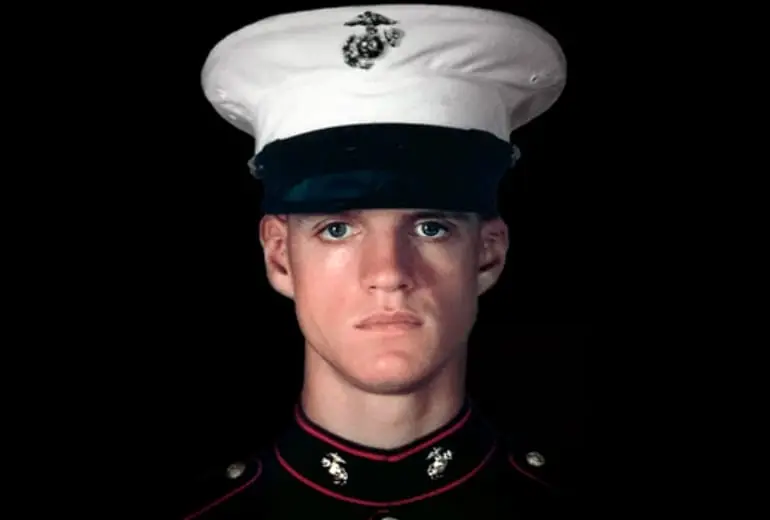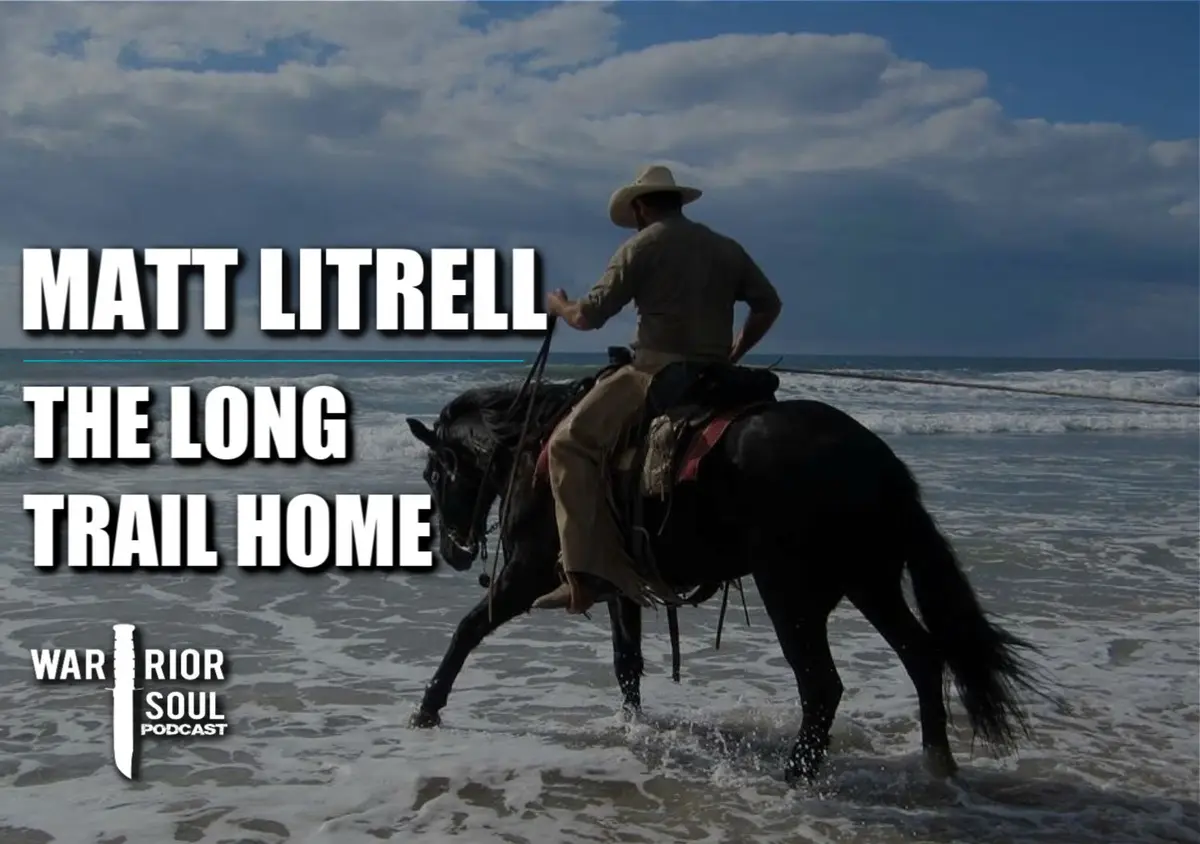
Matt Litrell is a US Marine Corps Veteran who served with 2/5. In 2014, he rode his horse from Camp Lejeune to Camp Pendelton.
In 2014, Matt Litrell decided that he needed to make a change. Since he’d gotten out of the Marine Corps, he hadn’t been doing much except for drinking and sitting on his couch. Staring at his 9mm pistol, his demons started putting ideas in his head.
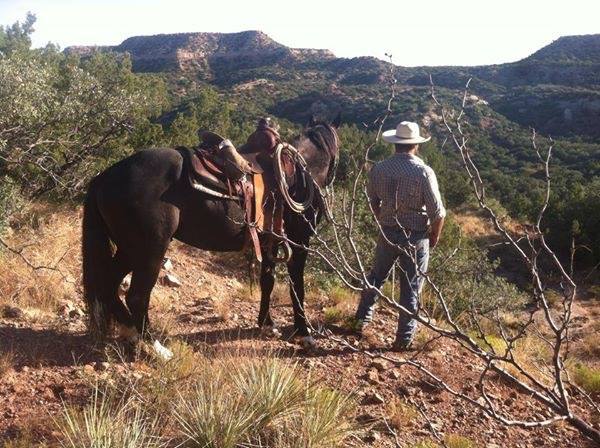
Then he got an idea. Matt decided that he was going to ride his horse across the country from Camp Lejeune, NC to Camp Pendelton, CA. In addition to that, he was going to use the ride to raise money for the Semper Fi Fund.
Matt Litrell started a Facebook page called The Long Trail Home to raise awareness about what he was doing, and to his surprise, thousands joined.
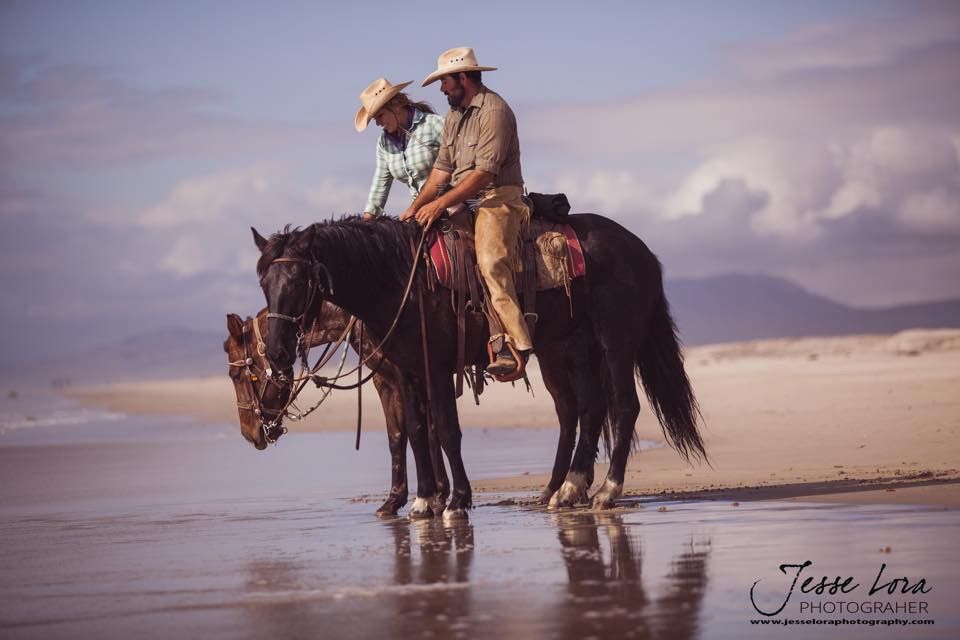
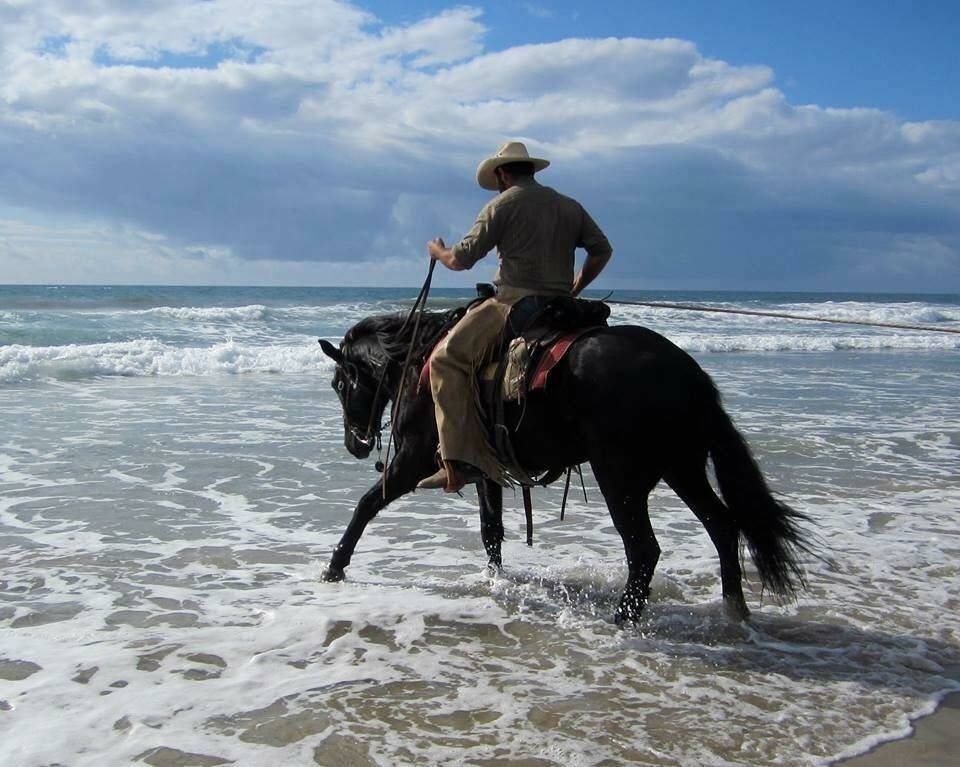
He began his journey, along with his riding partner Ray by wetting his black mustang’s feet in the Atlantic coast of North Carolina. Then he and Ray headed south toward Georgia and then turned west. Seven months later, he wet his horse’s feet on the beach near Camp Pendelton.
Along the way, Matt met many amazing people, including his future wife and many fellow veterans. This episode details his story and the work he’s currently doing with veterans at the Valhalla Ranch in Colorado.
If you loved this episode, please be sure to write us a review on iTunes, and check out this other awesome episode:
Transcript
Machine-generated from the episode audio and lightly edited — may contain errors.
Chris Albert (link to this point)
Warrior Soul podcast is written, produced, and edited by me, Albert. Our goal is to empower US military veterans to live their absolute best lives, and we do that by providing tools, tactics, strategies, and ideas that they can apply into their lives to become wiser, stronger, smarter, more resilient, and more capable human beings in the civilian world. If you're not a veteran, stick around because anything we talk about here can obviously apply to you. And if you like what we have to say, any information we provide, and the guests we bring on, please head over to iTunes and write us a written rating and review. It really helps to spread word about the show and to get this helpful information into the hands of more veterans so that they can in turn improve their lives and shape the future of this country.
This podcast is brought to you by the amazing, the wonderful f bomb nutrition. They make awesome, delicious packets of fats. These are portable snacks that you can carry with you anywhere. It's so hard to find a low carb snack out there, but these guys have done it. They got macadamia nut butters, they mix them up with chocolate, they mix them up with sea salt, they mix them up with pecan butter.
They've got awesome meat sticks, and they've got these delicious cheese snacks that they put out there. Plus, they're an amazing company. They send boxes of this stuff out to the troops on the front line. It's not something we ask them to do, it's something they volunteered to do. So if you wanna get some of the best low carb, high fat snacks on the planet, head over to www.dropanfbomb.com.
Use the code Warrior Soul at checkout, and you'll get 20% off your first order. This podcast is also brought to you by the amazing awesome people at Save the Brave. Save the Brave is an organization that provides camaraderie events for veterans. They do fishing events. They do golfing events.
They do other sporting events, and they also do a lot of work to help gold star families. And look, we've all heard stories about veterans charities where the executive boards are taking these giant salaries, and I don't have a problem with that at all. But here's the thing, I wanna make sure that whatever organization I'm talking about is doing amazing work. Savethebrave.org is doing absolutely outstanding work. Their board doesn't take any salary whatsoever, and they are having an amazing impact.
They're focused on getting veterans to live their absolute best lives, and that's what this podcast is about, and that's why we wanted to work with them. So if you're interested in volunteering or donating to save the brave, head over to www.savethebrave.org and make your donation or your request today. Finally, this podcast is brought to you by Warrior Soul Apparel. This is a clothing company that I actually helped to start a couple years ago as we were beginning the brand Warrior Soul. We've got some amazing t shirts.
We've got skimmy shirts with some pretty funny funny sayings on there like, I love Jesus, but I cuss sometimes. We've also got some awesome hero shirts. We have the amazing hard times, breed hard people series, and these are just great shirts that I've helped create, and they support the show. So if you're interested in getting some Warrior Soul shirts, head over to www.warriorsoul.shop. And finally, if you're interested in joining a new group that we are putting together here at Warrior Soul, a group for those who are looking to live epic lives worthy of epic obituaries, stick around to the end.
We'll have some information for you to check out. With that, let's get into the episode.
This is Chris Albert, and I'm here to remind you of one thing. Someday, you're going to die. That's not some morbid statement or scary idea. It's solid fact. Your time here on this earth is limited.
And we need to be reminded of this as much as possible for one simple reason, to live your best life while you can. This is the Warrior Soul podcast.
You know, if you are trying to make your life better, if you are trying to improve yourself, one of the things you have to understand is that it's not gonna happen by just sitting on your couch and doing nothing. You're gonna have to get out there into the world. You're going to have to face some struggle. You are going to have to do some difficult things. And my guest today figured that out.
And he figured that out, and then he did something absolutely epic. His name is Matt Litrell. He's a Marine Corps veteran. And like many veterans, when he got out, he was facing a lot of demons. He was facing a lot of dark times.
And he decided that he was gonna face those demons by taking his horse and riding it across the country from Camp Lejeune, North Carolina all the way out to Camp Pendleton in California. And it turned out to be an epic journey. He inspired over 50,000 people on his Facebook page, ran into a lot of fellow veterans along the way, a lot of people who helped him out. He even met his wife on the journey. And today, he's living out in Colorado with his wife.
He just had a second child, and this is just a really great story. So I wanted to bring it to you guys because I think that there's so much inspiration in hearing this. So without further delay, let's get into this conversation with my fellow marine brother and absolutely epic adventurer, mister Matt Litrell. Matt, what's going on, man? How are doing?
Matt Litrell (link to this point)
Oh, pretty good. Little chilly, but good.
Chris Albert (link to this point)
Yeah. You're out in, Colorado right now. Right?
Matt Litrell (link to this point)
Yeah. Yeah. East of, Kiowa, so about an hour and a half, two hours Southeast of Denver.
Chris Albert (link to this point)
Nice. We're talking a few days after Christmas. We tried to do this the other night, and they had a storm rolling through. So Matt and I were operating on, like, a five second delay when we were talking, but right now, everything's so much more clear. I want to just say for everybody out there, this story is a really great story.
Matt and I came in contact with each other over social media, learned a little bit about Matt, served as The United States Marine, rode a horse from North Carolina around the area of Camp Lejeune all the way out to Camp Pendleton. And it's a really, really awesome story. Wanted to bring it to you guys. Matt, number one, you know, could you just talk a little bit about how you ended up in the Marine Corps, where you're from, and and and that kind of stuff?
Matt Litrell (link to this point)
Yeah. You know, I I wound up in the Marine Corps after, I I went to the University of Kansas for a semester and had a really, really, really good time. And, so that's how I wound up in the Marine Corps. No. My my grandpa, you know, he he was a Marine.
He was there at Peleliu, Okinawa, you know, the the who's who of Marine Corps battles. And so it it was always kind of there. But, you know, I I think it took that point seven five GPA at KU to really give me that push. Yeah. It wasn't for a lack of, as a buddy of mine says, intellectual horsepower, but, more a, effort to try to achieve the level of partying that's necessary to be in the barracks.
So that that's, that's how I wound up there. And, I joined actually in June 2001. And so right before nineeleven and all that. And, so I, I remember calling up my recruiter that morning at nineeleven. I was like, what do I do?
He's like, get your ass down here. You gotta run. So because I I was kind of a fat kid.
Chris Albert (link to this point)
You know? That must have been pretty crazy joining up, you know, in June 2001. I joined in 1999. And then, you know, 2001 came around, and it was very different after afterwards. What was it like for you?
What you know, when did you end up heading to boot camp?
Matt Litrell (link to this point)
I I went to boot camp December god. Was it sixteenth sixteenth or seventeenth? 2001. And, I I feel that that group of guys was really, really special, you know, because I I think the vast majority joined November 12 or September 12, you know? And so it was, I think it was a different group, one that, that normally wouldn't enlist, but they did.
And I think it was kind of special, you know, as I think we were a little bit older than the average, you know, 18, 17, 18 year olds that went in, you know, that it, I don't know if that lended a little bit of maturity or well, hell, I mean, what 20 year old is mature, but No. Comparatively to a 17 year old man to the old man. But I I I don't know. It was a really cool group. It was really cool group. So that's awesome.
Yeah.
Chris Albert (link to this point)
Had to boot camp the week before Christmas. And
Matt Litrell (link to this point)
Yeah. You know, they they got me with the old, we'll give you a little bit of a bonus if you go before Christmas, and we'll make sure that you see that, you know, it's three years. So Yeah. It was it was good times, You know? And then so I, after bootcamp, the whole deal, and I always looked back at bootcamp fondly, man. They fed you every night. They made sure you slept. And I mean, sure you did push ups and got yelled at, but I mean,
Chris Albert (link to this point)
we've No matter what, you were gonna get eight hours of sleep. No matter what, you were gonna get through I mean, you might have had two minutes to eat, but you were gonna you were gonna get your meals. You know what I mean?
Matt Litrell (link to this point)
Like Yeah. Exactly. And, you know, boot camp was pretty easy. I mean, especially, you know, the whole as long as you know it's a game and you're never gonna do anything right, you're good.
Chris Albert (link to this point)
So And you were in San Diego, not Parris Island.
Matt Litrell (link to this point)
Right? Yeah. Yeah. San Diego. Then after that went to SOI and then to a golf company second battalion fifth marines.
Chris Albert (link to this point)
So Nice. Yeah.
I my like, I absolutely loved SOI. I thought it was the coolest Oh, shit. Ever.
You know?
Because you I don't know. I just I I love that. So I when I look back and I think of my favorite favorite times, that was awesome.
Matt Litrell (link to this point)
Yeah. Yeah. You know, it it was pretty chill. That's, you know, the first time you really get to play with actual machine guns and, you know, it good times. And, you know, they're like, oh, these hikes are going to be brutal.
Then you get to the fleet and you're like, oh, I'm not going to have any knees left.
Chris Albert (link to this point)
Yeah. Yeah. Exactly. Exactly.
So from there, you get out, you you know, you ended up going on a couple of deployments. And, what was that like? What was your time in the Marine Corps like?
Matt Litrell (link to this point)
You know, the first deployment was, the initial invasion over there, 2003, March 2003 or whatever. And I still have general Mattis's letter that he gave us, which Mattis, man, I love that guy. He, and you know, that the the first deployment got it, it was like a glorified drive by. I mean, we're just laying tracks and trying to get wherever sitting up in the tracks. It sucked, but, it it it didn't suck in the same way as the second deployment.
Then my second one was to, Ramadi, 0405. And that one, it was, that one was legit. We, you know, there there was quite a bit of fighting. We took quite a few casualties, and it was it was a fight. It was a good fight.
You know, I, one of my proudest things was all my boys came back. And, you know, at the end of the day, that's all we can do. So I, I got pretty damn lucky there. And, you know, like I said, we, I think my squad was a pretty special group, and, I I think we we just meshed perfectly. So we we all came home.
But, you know, there there's there's a song that, Casey Donahew, he's a red dirt Texas guy, put out recently. It's, it's it's called, oh god. How's he going? He said, he made it home, but he still ain't made it back. And I I think that applied to me and a lot of guys.
So when I when I got back, you know, I I I still wasn't present. I still wasn't here. I I was still in that mental head space of being over there and hanging onto those things and not being able to live in the here and now. And doing that, chasing that high, chasing that rush, we talked about before, I think everybody that comes back has some kind of drug, be it booze, pills, whatever horrible, terrible women. That that was my drug.
Booze and and bad women.
Chris Albert (link to this point)
Booze and bad. Yeah.
Matt Litrell (link to this point)
Yeah. God. They'll kill you every time.
Chris Albert (link to this point)
Yeah. I've I've been on those drugs before.
Matt Litrell (link to this point)
Yeah. I think we all have.
Chris Albert (link to this point)
Did you stay in for a while after you got out? Did you have time left in, or, or did you just did you did you head back to Colorado pretty soon after that?
Matt Litrell (link to this point)
It it was pretty soon after. We we got back, god. I wanna say April, April 2005. And I had enough terminal built up and a friend at admin. So I got out pretty shortly thereafter.
So it was, you know, several months back in Cali and then boom, go home. And so, you know, the whole going home thing, you were still kind of jacked up and and, not really calm and ready to reenter civilian life.
Chris Albert (link to this point)
Yeah. So this is this is a big thing I wanna I wanna ask you because I think I wanna get into the mindset. For those guys who are still in, right? The guys who are about ten years younger than you and I or or I'm saying ten years. Twenty years younger than you and
Matt Litrell (link to this point)
I. Yeah. That's good.
Chris Albert (link to this point)
Shit, man.
Matt Litrell (link to this point)
Time time rolls, dude.
Chris Albert (link to this point)
Yeah, man. The the guys who are are twenty years younger than you and I I hate saying that, but, you know, your mindset getting out at that point, what what were you thinking? Were you thinking, alright, I'm just gonna go on, gonna move my life, move on with my life. I'm gonna go find booze and women in other places. I'm gonna, you know, just do it with more freedom, have more money, that kind of stuff.
What were you thinking there?
Matt Litrell (link to this point)
You know, I I I think part of it was, you know, you come back and and you think, you honestly believe that, you know, everything is going to be so much better. Life is going to be so much easier. Women are going to fall at your feet. People are going to buy you drinks. You're going to have some phenomenal job just because you got shot at.
And, you know, and that you're special. And the the thing is, yeah, we we are special in our own right, but nobody owes us a damn thing.
And we have to, you know, one of the things that I think, especially with Marines, once a Marine, always a Marine, which yes, that's true. And in a way that's bad because you cannot throw an 80 pound pack on my back right now and tell me to go hike 20 miles. I will die. I have to become something else. If I'm always just a Marine, then I'm that dude that's, you know, decked out.
I have all the bumper stickers and all that, and I've never moved forward in my life. I've never made progress. I've, I never finished the race. I'm stuck back there in 2005, which
Chris Albert (link to this point)
frigging what, fifteen years ago now. Yeah. Don't remind me.
Matt Litrell (link to this point)
Yeah. One twenty years ago, it was 1980.
Chris Albert (link to this point)
Right?
Matt Litrell (link to this point)
But we, we, we don't move forward. We get stuck. We get stagnant. And I mean, of a gunfight, move, move, move, move. And when, when we're not moving, when we're stuck in the same identity, then we just spiral.
Go downhill, we isolate, we find negative things to just fill our lives with. And we, we don't actively participate in our lives in the present.
Chris Albert (link to this point)
Yeah. I I remember, I think, like, after 09/11. Right? Because I was in in in earlier than that, and and I came from New England. Right? And in New England, joining the military is an act of revolt.
Matt Litrell (link to this point)
Yeah.
Chris Albert (link to this point)
Right? Because your your friends, your family, everybody's talking about college. Right? Like, and we come from a state like Connecticut. And I don't I mean, Connecticut's like a foo foo state.
You what know I mean? Like, I used to be ashamed to tell people I was from there. And and there's nothing to be ashamed of. Right? If you're from Connecticut, there's a lot of great people, a lot of awesome.
But I came from Fairfield County, the richest the richest ZIP code in the country. Like, more rich than Beverly Hills. I wasn't rich. My mom, you know, was a single mom. But my mom always always was like, you know, she came from the Vietnam era.
She didn't want when she heard I was joining the Marine Corps, she tried to chase me around with a broom, tried to break my leg, that kind of stuff. Right? And my friends, they had no love for it. They were like, you're an idiot. You know?
And even though I was joining in 1999 when nothing was happening. Right? After 09/11, what I noticed was like, you know, the tone kind of changed, right, with with a lot of stuff. And and a lot of the guys who are going in, I think that they wanted to serve more, know, and I respected that so much, but they also expected more. They didn't expect that they that they were going to be treated a certain way.
They expected that the country was gonna have a certain amount of gratitude, and that was gonna last forever. Yeah. And the thing was, I I had a little bit I wasn't that much older, but I had a little bit of of of knowledge of what had happened before. And I knew at a certain point that was gonna run out. And if we got into a long, long engagement over there, there was gonna be guys coming home without much support.
One of the things I think I noticed early on. I think that a lot of guys, they came back and I fell into it too, came back with chips on their shoulders thinking, you know, hey. If I'm gonna go to school, right, I'm gonna use this post nine eleven GI bill. I'm gonna I'm gonna be a superstar on campus. Girls are gonna love me.
I'm gonna go if I go into the civilian world, if I go into a civilian job, people are going to they're they're gonna automatically wanna confer leadership status upon me, that kind of stuff. And it doesn't work like that. Every stage in your life, there's new shit you gotta learn. You gotta learn you can't expect people to adapt around you. You gotta adapt around people, and you can't have that mentality that says, hey, I'm just a pissed off veteran.
I'm gonna freaking you know, I'm not gonna change. I've been hardened by combat, that kind of stuff, and people can't people can't do this. You know, to me, like, you've got to to be willing to to be a human being and to to to, you know, learn. Right.
Matt Litrell (link to this point)
Right. You know? And I I think like, you know, my my grandpa, for example, that that whole generation coming back from, you know, the Pacific Theater, you know, fighting the Nazis in Europe, all that stuff that what they did was absolutely hell. I mean, you know, just look at that. Peleliu got, they, they lost more guys on Peleliu than we have in Iraq.
I haven't checked my figures, but, anyway, but those guys, they came back, and what did they do? They put their head down, and they went to work. Yep. Now granted at the same point, they they didn't deal with a lot of things that they should have. You know?
It wasn't the way. But they moved forward. And they you know, I I'm sure a lot of them developed a lot of unhealthy coping mechanisms along the way. But I think that's one of the things that, that our generation is lacking is put your head down and go to work. And, you know, we just gotta, sometimes you just gotta push through.
And, and I find that, you know, out here at the ranch that we run, the guys that we come out, the Marines to me seem to have a little bit harder time moving past that identity because of that, once a Marine, always a Marine thing. And, you know, there there's that old joke that there's only two branches of the military, the army and the Navy, the air force is a corporation and the Marine Corps is a cult. And it's absolutely true. And it is so much your identity that it's hard to get a new one. And and we need that.
We need a new identity.
Chris Albert (link to this point)
Yeah. The and there's gotta be healthy ways of incorporating that too. You know? I mean, I'm the one to talk. I mean, I got the flag right behind me.
My whole room's kinda decked out here. I got pictures of me over there, that kind of stuff. But like, I mean, there's be healthier ways of incorporating it. And I think another thing to remember is this. You know, no matter what, like, when you think about those guys from World War two, Korea, Vietnam, no matter what, we had it a lot easier than them.
We did. I mean, like and and and, I mean, I don't know about you. I mean, I watched an entire freaking season of Sex and the City on deployment. Like, freaking you know, like I mean, we we had shit. Like, we had luxuries.
You know what I mean? Like, it's fucking that luxuries that a lot of the I mean, you think about guys in battle of the bulge. Like Yeah. Freezing their asses off, losing fucking fingers and and shit like that. You know what I mean?
Like, that's the I mean, I think our minds couldn't comprehend that.
Matt Litrell (link to this point)
You know? No. You know? And, like, during during the initial invasion, I mean, during the push, we we, you know, we really outran all of our supplies and everything. So, I mean, yeah, we we were sharing an MRE between two guys over two days, and, you know, you had one little thing of water to last you the day.
But at the same point, it was still food. Was still water. Know, we didn't shower for sixty some odd days, but I got, you know, some friends that don't shower for sixty days. I mean, you couple that with God. I mean, that trench warfare, that being in the jungle, just it was nothing.
Had a roof, you know?
Chris Albert (link to this point)
So Speaker Or reading about or listening to like Dan Carlin's description of world war one. Right?
Yeah.
Battle of the Somme, you know, living in trenches that are built out of the bodies of your comrades.
Yeah. Right?
That's that for two or three years. Right? Not six months, not a year for two or three years. Right? That is insane.
Matt Litrell (link to this point)
Insane. I mean, it can't even fathom what that was.
Chris Albert (link to this point)
Yeah. Bad.
Well, so you you get back, and then you fall into this this haze of alcoholism, women, bad women. And and at what point did you realize that that you needed to do something?
Matt Litrell (link to this point)
You know, it was New Year's Eve two thousand thirteen. That that's where everything came to a head. And, you know, I was sitting there staring at that pistol on the table in front of me. And, you know, it was at that moment where that was an option. That was a strong option.
And, you know, then it, the, the biggest thing was actually, I was there at my mom's house. They, they were somewhere else and I was not going to have her find that. And I wasn't going to do that to my family. And so I made the choice not to. And, I called the, the VA crisis line and I spoke to somebody there who pretty much just read me a script.
And, and it, it pissed me off because at that point, you know, I just wanted to talk to somebody, but I thought there's probably some guy out there that hasn't made the decision not to. And he calls the one place where they're supposed to give a damn and they're just punching the clock and it could have pushed him over the line. And so I went to bed mad and I woke up mad and I woke up and just knew that I was going to ride a horse from the Atlantic Ocean to the Pacific. And I was going to do it to try to help these guys, to try to help myself. Know, I needed to take my walkabout and if I could do it and try to help somebody along the way, then that's what I was going to do.
And so at the time, the, my horse, he, he was older and so he wouldn't have been able to make the journey. I had to go and find the horse that I was going to ride. And, I wanted it to be on a Mustang. I'm a farrier full time. So I, you know, I trim and shoe horses and, I was at this one place working a lot and they had a lot of these Mustangs that the, the prisoners down at Cañon City actually trained a lot of them.
And, there there's just something about a Mustang where they are so much more in tune to you than a domestic horse because they, I mean, they, they were born wild. They had to be in tune with, you know, their surroundings, especially we're a predator. That's what we are. We are predators and they are a prey animal. So they really, really, really pay attention to you.
And, one of the best ways to kind of get your mind right and really, you know, come down, so to speak energy wise is crawl underneath a thousand pounds of I can kill you in a heartbeat. And cause if you're jacked up, man, they are too. Sense it, they feel it. They're nervous. They're excited.
They're in preservation mode. And so you have to, with your energy, bring them down with yourself. And so they, they really taught me that. And, so I found this horse. He, he had about thirty days training on him and, he was this black Mustang named Crow.
He, he came off the Red Desert, Wyoming. And the first time I crawled on Crow, just to try him out and see how he is. He tried to buck me off and I was like, yeah, this one will do. And, so I spent the next about year getting him ready to go. And so we, we started me and, Ray, he's an old cowboy friend of mine that I've known since I was four years old.
We started May 1 in Surf City, North Carolina. So, and, we had at the time Crow and then Ray's horse Tequila Sheila and, yeah. Oh yeah. She's she'll kill you too. But, and, and then we had our pack horse Roy.
These horses like Crow and Tequila Sheila, they're, they do really good if you ride them 10 miles a day, every day. But if you give them a couple of days off, they're, they're going to try to buck your ass off, but they're gritty, they're tough. And, you need that. I mean, we're looking at putting 2,800 miles down on them. We need it gritty.
We need it tough. And you know, I have a saying, know the horse, know the man. And they're, they're a reflection of us. And so Crow's kind of an asshole. And I don't know what that says about me, but, we get along.
And, so we, we, we step off from a Crow has his feet wet in the Atlantic Ocean, May 1. And, he got them wet in the Pacific there at Pendleton on 11/30/2014.
Chris Albert (link to this point)
Oh, wow. Wow. So that was that's what? A a seven month journey. Right?
Matt Litrell (link to this point)
Yeah. Seven months.
Chris Albert (link to this point)
Wow. Wow. And so when you're you're you're shoving off, you had you had supplies, you had all this stuff played out, you had a a social media kinda network built up around you so that people knew you were coming. Right?
Matt Litrell (link to this point)
Yeah. Yeah. Supplies wise, we had enough. We had the amount of supplies that we could pack on Roy. So we had about 60 pounds of supplies.
And that was always started with to get across The U S. Okay. And I knew where I was going to stay the first two nights. That was it. And, so I, I just get on Facebook, you know, where, where we got, where we were staying that night and, tell them where we're going to try to be.
And every single day, every single day for seven months, we had a place to go along the route and people brought us in, they fed us, the horses mowed their lawn for them. And, it was really, really truly amazing. The, the number of people that just came out and support and, you know, there, there was only one night where we just had an open field to sleep in And, that, that was on the July 4 and we were seven miles east of the Mississippi River. And, I told you the story the other day, but I love it. This, Me and Ray, we settled in to have our July 4 dinner of peanuts and hot water.
This guy pulls up. He found out we were there. His name was Jerry Brown. And, Jerry brought us Mississippi barbecue, two cold beers, and a couple of cots. And, he said, I brought some cots for you.
I said, Oh, Jerry, we're all right. And he goes, Boy, have you ever slept in the Delta? No, Jerry, I haven't. He goes, Do you like sleeping with water moccasins? No, Jerry, I don't. He goes, Take the cot. So we slept on cots that night. But the rest of the time, you know, we just throw a bedroll out on the ground and sleep under the stars.
Chris Albert (link to this point)
He's right, man. Camp Lejeune, few guys will wake up with snakes in their sleeping bags.
Matt Litrell (link to this point)
Yeah. It's that's horrific. I hate snakes.
Chris Albert (link to this point)
Man. So your your route, when you took it, you went from North Carolina, you went south first down to Georgia. Right? And then
Matt Litrell (link to this point)
Yeah. I hit, North Carolina, South Carolina, Georgia, Alabama, Mississippi, Arkansas, Oklahoma, Texas, New Mexico, Arizona, California.
Chris Albert (link to this point)
Nice. And and so when you crossed the continental divide, you told me this the other night, you guys, you weren't at that high of an elevation. You kept it down to like 7,000 feet.
Matt Litrell (link to this point)
Right? Right. Right. So they're, they're in the Southern Rockies there. So we crossed that, I believe it was Pie Town, New Mexico, and it was only like 7,000 feet.
So it was just kind of a gradual hill. Instead of like crossing here on I-seventy in Colorado, that, that would have been a little tougher. So, I mean, it it was tough enough. No need to make it harder.
Chris Albert (link to this point)
Now you said you you met some interesting people along the way, and you met one particular interesting person that had a huge impact on your life and and since then. You wanna talk about that a little bit?
Matt Litrell (link to this point)
Yeah. So, we, we we were riding into, this barn training facility in Alabama. And, these, these two ladies, they had set us up and, Sue and Cassie are their names. And, they, they got their friend to, go get beer and pizza for me and Ray that night. And she was like, I don't have any time to do this. And I go, just, just do it.
Just run a pie real quick. And so there's a, this gal pulls up to the barn and she was actually training out of there and she steps out of the truck with beer and pizza. And, I looked at her and I said, you're the prettiest girl I've seen this entire ride. She goes, yeah, I bet you'd never say that. And, so we, we kind of hung out a little bit that night, kept talking a little bit.
Then she actually wound up joining the ride in Oklahoma, cause I was going to give Crow a week or so off. So she brought me her mare and, and so she was going to take that, take Crow down to Texas to just kind of kick him out on pasture for a week or something, then bring him back to me and Ray's horse Tequila Sheila, that the day she was going to leave wound up stepping on a nail going down the road. And, so she was there with her trailer. We could dock her on Tequila Sheila and move her up. So she wound up just staying.
And so she finished the ride with us, from Oklahoma to California. And then, she moved back to Colorado with me. We got married a year to the day after we met, we got a two year old son and we are having a baby girl tomorrow morning at 09:30.
Chris Albert (link to this point)
That's amazing, man. Congratulations on that, man.
Matt Litrell (link to this point)
Yeah. We're we're pretty excited. So life's about to change yet again.
Chris Albert (link to this point)
Hey, guys. I hope you're getting a lot out of this interview. You know, the Warrior Soul podcast is built with the mission to empower its listeners to live absolutely epic lives. And that's why we recently created a group called the Warrior's Obituary Society. This group is built to empower its members to live epic lives worthy of epic obituaries.
And it starts with an eight week development program. And with this development program, what you're going to do is you're going to outline a vision for your life. You're going get very specific about what you want. Because without that specificity, you don't know where you're going and you don't know what you're doing. From there, we help our members to develop specific goals, objectives that they are going to push toward, and that their fellow members of the Warrior's Obituary Society are going to hold them accountable too.
From there, we're getting down into specifics. We're going to help you to develop and customize your own personal fitness and nutrition plan to help to fuel your body and fuel your mind for the quest ahead. From there, we're going to work on your personal finances. We're going to help you to knock down debt. We're going help you to start saving money and to create a plan so that you can start investing in your dreams.
Then we're going to get into your business and career. We're going help you to develop the skills that you need to develop yourself so that you can have a major impact in the field you choose. If you choose to go into business, we're going to help you to set up the foundations that you need to create your own company and get started on your path in life. From there, we're going to be working on your relationships, we're going to help you to develop a world class network, and all along the way, you're going to have your fellow members of the Warrior's Obituary Society pushing you in every single area. We meet once a week over a live call, and we're constantly communicating over our own private forum on Slack.
We don't do anything over social media, and that's because I don't want anybody feeling like anyone's looking over their shoulders, and I don't want you exposed to the crazy distracting alerts that you get on Facebook and some of the other social media platforms. Normally programs like this cost thousands of dollars. This one does not. For the price, it is the best development program on the Internet. And that's because our mission here at Warrior Soul is to empower people to get more out of life so that they can in turn make the world a better place.
We've got a great mix of active duty military, US military veterans, and civilians in this group. We wanted to keep it really eclectic so that we get a lot of different types of views up there and a lot of different people with different areas of expertise. If you think that this is something that would be of interest to you, and that this is something that could empower you to live your absolute best life, head over to www.warriorobituarysociety.com. That's www.warriorobituarysociety.com, and you can sign up today. And if you have any questions about it, just reach out to me at chris@warriorsoulagoge.com.
That's chris@warriorsoulagoge.com. I'm happy to even sit down with you for a phone call for a few minutes to see if the group is right for you. I look forward to seeing you guys in there, and let's get back to this awesome interview. Tell me a little bit about Ray because he sounds like an interesting character as well. He was your partner for the whole ride.
Right?
Matt Litrell (link to this point)
Yeah. Yeah. Yeah. Ray rode with me all the way to California, and then let me and Kristen finish. So Ray Ray is about as cowboy as cowboy gets.
He, he was born up in the, the border of South Dakota. He's 70 years old now. He he's tougher than old boot leather. You know, he grew up cowboying all across the West, the biggest ranches he's worked. He, at 70 years old, he's calving out his first year heifers, on the biggest ranch here. You know, he's still riding colts, still putting first rides on colts, which is a young man's game, but don't tell Ray that. And, and he's just, he's as tough as they come. And so when I, when we were getting the horses ready, I was going to do it myself. He was helping me get everything ready and doing all that.
And while I was working, he'd go out and put rides on Crow and get him legged up. He, one day he said, I, I got to ask you a favor. What's that Ray? He goes, can I go with you? I said, well, and I don't know if you've ever seen a Lonesome Dove, but I said, well, Woodrow, let's go to Montana.
And so he, he rode with me and, and, I was dang glad to have him along, you know? So and, yeah, he's just tough, tough old cowboy.
Chris Albert (link to this point)
That must have been important to have somebody like that with you, you know, who who could kinda gauge everything a little bit and and keep you sane. Keep doing stupid.
Matt Litrell (link to this point)
You know, because riding, putting down 15 miles a day, you know, in in the East, especially, it turns into long kind of boring days where, you know, you you have a lot of time to think and a lot of time to reflect, but then there's also times where you have the opportunity to really just try to drive each other nuts. Like, I think we were riding across Arkansas and it was, you know, July. And I asked her, I said, you know, I think we need some music. Ray's like, where the hell are we going to get music? So I started singing jingle bells at the top of my lungs going down the road. And he, he tried to ride away pretty quick after that, but I caught up to him, but it was fun. We had a lot of philosophical conversations and a lot of nonsensical ones too.
Chris Albert (link to this point)
That's a, it's just like the Marine Corps. You sit down, those long hurry up and wait moments where you sit down and just talk about whatever. Right?
Matt Litrell (link to this point)
Yeah. Yeah. You know? And if you if you do it in different accents, there's more people in the conversation.
Chris Albert (link to this point)
So That's amazing. Different what type of accents did you, did you adopt?
Matt Litrell (link to this point)
Oh, man. There's the Russian. There's the Scotsman. There's the Aussie. There there's this one special creation I came up with a long time ago.
Elroy. Elroy is kind of like from Appalachia. He lives in the backwoods, doesn't have running water, kind of weird, but, you know, it's just things to pass the time.
Chris Albert (link to this point)
That's awesome.
That's awesome. And and you met a lot of other interesting people along the way too. Right? Like, a lot of a lot of veterans came out and showed up, and, a lot of people came out and showed up just trying to help you guys out. Right?
Matt Litrell (link to this point)
Yeah. Oh, yeah. Every day. Every day. And I I I think we're we're talking about that story the other night.
We we were in, this place called De Valls Bluff, Arkansas, and you can fit it, you know, in a parking lot. And this is where, you know, we were riding into town, had this, it was a long, hot, sticky ride. And the guy that was going to put us up that night, you know, I talked to him on the phone the day before and, you know, just didn't get a warm and fuzzy from him. He, he kinda seemed like a very big fish in an incredibly small pond and, you know, very self important. And we pulled into town and I called him.
I said, all right, you know, just shoot me that address and we'll be there pretty quick. And he was like, no, I'll come down and meet you. I said, well, if you could just shoot me the address, I'd really like to get the packs off these horses. They're hot, they're sweaty, and I need to take care of my mounts. And he said, No, I'll come down to meet you.
It hangs up. I'm like, Well, that was kind of rude. And at the end of a hot, sticky day, that's strike one. And, then he, he pulls up and it's in his truck and doesn't get out of the truck and just waves us over. Like, well, that's kind of rude.
And I guess that'd be strike number two. And, my patience was getting a little bit thin at the end of the day anyway.
And we had a guy helping us that day.
And, he walks up there to say hi to this guy, shake his hand. And he goes, so are you one of the riders? He said, no, I'm just helping him. And he waves him away, just shoos him away. I saw that.
Well, that was strike three. And so I rode up there and I said, you know, we found somewhere else to stay. I sure appreciate it though. And rode away and rode up to Ray and he said, so we got somewhere else to stay? I said, not yet, but we'll find one.
And, so I put it out on Facebook where we were and where we were trying to be somewhere real close to there. And, so we, we started riding west and the guy comes back and he gets out of the truck this time. And he says, you know, I need five minutes of your time. And Ray pulls his sleeves up, looks at his watch and goes, you're on the clock. And Ray's kind of a crusty old cowboy. And so then this guy puts his hand on Tequila Sheila's neck and cowboy etiquette says never touch another man's horse without asking permission. And so Ray just goes, Nope, puts his heels in her belly and off they go. And so I'm stuck there with, with this guy. And he said, you know, I got this house all cleaned up for you guys and this and that. I said, you know what, I appreciate it, but you hung up on me.
You were rude to the guy that was helping us and you wouldn't even get out of the truck. And he said, I never hung up on you. I said, no, you did. He said, Are you calling me a liar? And I'm still on Crow.
I lean over, like I said, it's the end of a long, day. My fuse is a little short. I looked down at him and go, I'm calling you a liar to your face. And big fish, small pond, no one's ever talked to him like that before, don't think. And he just kind of melted away.
And, so we start riding and, somebody offers us a place to go. So we, we go there and it's this old guy and, we're sitting around talking and I asked him if he, if he knows what we're doing, why we're riding. And he said, no, I just heard you're a couple of cowboys going down the road. I offered my place. And I told him exactly what we were doing, you know, the PTSD, the veteran suicide.
And he got really quiet. And, he said, you see that house across the rice field? He said, my son watched their boy die in Afghanistan. And I don't know how to talk to my son anymore. And we sat up and talked the whole night and it was all because this guy was rude and I didn't feel like putting up with it and something just didn't feel right.
And I listened to that and it put me exactly where I needed to be. And it, and that was just one day on the ride, You know, things like that happen all the time. And it was so, so many things that were so beyond my control that just were perfect, that it it was it was truly something special.
Chris Albert (link to this point)
When, when you ended up wetting your feet wetting your horse's feet in the Pacific Ocean. What did that feel like? What was that, what was that experience like for you?
Matt Litrell (link to this point)
Man, it was so surreal because they, they they actually opened up the, the South gate there by, Oceanside so we could ride out to the beach right there past, some officers' quarters. You know, the MPs are right there at the gate, you know, open it for us and escorting us through. And it was so weird riding onto Pendleton. It was like coming home, you know, cause that's where I was stationed. It was, you're, you're, you're nearing the end of your goal.
And, you know, I, I told everybody from the start, we're, we're gonna, I was gonna ride across The United States ocean to ocean. And, and here we are fulfilling that. And it, it was such a long process. And there are so many things that happened along the way that it was, it was so surreal, you know, and we hit the beach and my family's there and there's all these people there. I ride Crow out into the water.
Jesse Lohr, who, a friend of mine in Southern California, he was a Marine. He was, he's a photographer, an amazing photographer. And he captured this picture right when Crow hits it and Crow's got his foot up and he's just pawing at the water. And it was just, we did it. And, and Kristen rides up next to me and, and I look at her and I go, well, now what?
So it was, it was so cool. It was one of those once in a lifetime moments that's just incredible.
Chris Albert (link to this point)
And you know that that question, well, now what? Right? I I know that that must have been coming down on you pretty heavy after something like that, you know, you you do something that epic, and then now it's time to go back, and it's time to go back to normal life. Right? And that Yes.
Demons don't catch up to you while you're you're doing something and you're keeping yourself busy to catch up to you when when you got downtime. Right? When when when life is a little bit more quiet and it gets down to routine. What was that next few weeks like for you? And and did the demons show back up up again, and and how did you deal with them if they did?
Matt Litrell (link to this point)
You know, they they they've never come back the same way. But you settle into I mean, on the ride, you know, the the Facebook page, you know, had 50,000 people on it. People were, you know, hooked on what we were doing. You know, you got an audience. Have your you feel important and you come back home and, man, it's time to settle into real life.
It's time to go back to work. It's, you know, you got to get up and feed horses and break water tanks and, and just do the nine to five, this is life. And that's hard. It's hard to go, you know, just like coming back off a deployment where you have mission, you have purpose, you have drive and clarity of vision to just life. And, you know, combat, combat was easy.
You, you had a specific goal. You had a specific mission. Had, you were surrounded by a group of like minded individuals that will fight and die for you. And then, but life is just life. It's anticlimactic.
There's no, this is exactly what you have to do today. This is exactly your purpose. This is exactly your mission. This is exactly who you are. Life is just what what you make it.
And and it's boring, and it's it's just the every day. And so that that's hard. It's hard living in the every day, not super exciting. So it was, you know, just finding, finding the new mission, finding the new purpose. And, you know, it's what, what makes this life worth it?
How do you make this world better? And like we talked about the other day, I think that when you are living in a space where the only thing that you're trying to make better is yourself, you're missing the point. You're missing the boat. I think a life in service of trying to help other people is so much more fulfilling for, for other people and you get so much more out of it. And you know, the guys that come out to the ranch, you know, I believe that we, we help them quite a bit, but at the end of the day, I think I get at least as much, if not more out of it than they do. You know, when we are in service of our brothers, we are truly living.
Chris Albert (link to this point)
You, so you started this this program, you have veterans actually come out and they work with horses, they work they they put labor into the ranch and everything like that. When did you start that? And and and how do people get in touch with you if if they wanted to come out?
Matt Litrell (link to this point)
It started just a few months after the ride, came back home, and then another guy from my company killed himself. You know, another name up on the board, so to speak. It was like, you know, we did this entire thing and it's still happening. So we got to do something more. And so I started Valhalla Ranch. It's run on our place and we, we are, we do have our nonprofit. So we bring guys out and basically for lack of better words, do cowboy shit.
You know, we, we, we push cattle, we, we doctor on cattle. We, we go ride, we fix fence, we muck stalls, we bang on steel on the anvil because you know, being a horse shooer, I do a lot of that. And we work, we get tired. At the end of the day, we have a sense of accomplishment. We have, you know, something to be proud of.
We did this today. We got this done. It's on Facebook, MK Horsemanship slash Valhalla Ranch. And, so it's kind of the, our training page and the veterans program all in one piece. And basically, you know, it just sent us a message on there and the, yeah, I I've had a lot of guys ask, you know, cause I'll call them up and we'll talk about things and you know, where they're at, you know, what they're, what they're wanting to do.
And, they're like, you know, is there an interview process? Do we have to submit our DD-214s and all this? We're doing it right now. You know, we, we talk on the phone and go from there. And, you know, it's we're we're very there there's not a ton of structure, which I I find is is good.
We we can kind of tailor things to each individual guide and follow a rigid program. And, you know, there's if they wanna ride, we're gonna ride a lot. If, you know, they wanna sit around the campfire and not say a damn word to anybody, we'll we'll do some of that too. You know, there there's no leather couches to sit back and talk about our feelings and our deep seated childhood emotions, because that is way beyond my scope. You know, I I did the whole therapy thing right when I got out.
And I I told you this before. I literally had this burmy little dude in a tweed jacket with the leather patches, and he'd sit there. He had a lisp too. It drove me nuts. And, you know, I'd sit there and talk about Ramadi and he's like, I understand.
I'm like, the hell you do. There's absolutely no way you understand any of what I'm telling you. And you know, out here, I can look these guys in the eye and say, I understand. And I think that that goes a long way, you know, it's we're brothers, you know, we may not have been in the same unit, but we're brothers and sisters, you know, I, well, I'm not a sister, but it's, it's almost twenty twenty man. There there's the options are endless, but, you know, it's, I think being around each other is so key to moving forward. You know, I look at, you know, programs like the VFW and things like that, you know, and they were so popular with the older generation and they did so much just bringing guys together. And, you know, I think now they're, they're struggling with this younger generation. But what I have noticed a lot of, it's like motorcycle clubs, motorcycle clubs are huge now.
And I think it's great. You know, these guys are getting together and they, they kind of, they're just brothers getting together. And I think we need that. I think we need the camaraderie of being around each other. And I think that's so key.
We know each other and we were not alone. You know, like coming back here to Kiowa, I think there's like two or three guys that serve and, you know, we're all so dang busy. We never get a chance to just hang out and stuff, but it's you come back and I think you're alone. You know, sure you got your friends and family, but you don't have your brothers that you know will die for you. And I think that's such a huge thing.
Chris Albert (link to this point)
Yeah. You know, I think, in a lot of ways, we're so much more isolated now. Like, even though we're connected via social media, even though you and I are sitting here talking into plastic boxes, and we're about, you know, 700, 800 miles away from each other. And, you know, I think that that we live in a time and a place where if you don't want to speak to a live human being for for, you know, an entire day, you don't have to.
Right.
And and that's a little bit crazy because we're we're travel people by nature. Right? Yes. People around us, we need other people as much as you you want to say you hate other people and and you want to be left alone. The more you do that, the more you're hurting yourself.
And you got to force yourself to to get out there to meet people, to talk with people, to to to interact. And if you're not doing that, you're gonna lose part of yourself.
Matt Litrell (link to this point)
Right?
Chris Albert (link to this point)
Yeah.
Matt Litrell (link to this point)
Yeah. I, I, I definitely think so. You know, I, I think that the isolation is such a big deal. You know, guys sit there and they in some dark room playing video games, yelling at somebody on Xbox or something. And they're, they're not doing anything active.
I think, you know, the, the one thing that we say out here at the ranch is a tired body makes for a tired mind. Know, sleep is such a huge deal for so many guys, but what are you doing to make your body want sleep? Sitting on the couch, drinking, and playing video games doesn't make your body tired. It just has a completely negative effect. You got to get out, you got to move, you have to do something.
I mean, you just sit around and get fat and which adds another dimension of depression and you just spiral and isolate further and further and further, and that pistol on the table gets closer and closer and closer. Right.
Chris Albert (link to this point)
Right. So right now, like you said, you have a child coming tomorrow.
Gotcha.
You got a son. What's next for you? What working on the ranch, bringing these veterans out. Any anything else you're working on right now?
Matt Litrell (link to this point)
I I I'm a sheep farmer now. Was not my decision. There's always something new. We had a couple of bottle lambs here last year, it and was such a pain and I swore I was never going to do it ever again. And, but then they came back from the locker plant in these little Ziploc baggies and they were so good.
And so, we we're in the sheep business now and you know, it's not majorly. We only have, you know, 10 head of sheep, but you know, it's cool. You bring guys out and, you know, there's baby lambs running around and we're, we're, we're having to do things with them and, you know, going down there and helping these lambs be born. And, and we're always having colts born at the place. And, you know, we're, we're bringing life into the world.
And I, I, it's cool. It's a good change of pace. And, you know, we stay busy out there and, you know, especially guys coming from town, you know, they don't see open spaces and they don't they don't see, you know, farm animals. They, they don't really do these things and get their hands dirty and, and get back to the earth. And, you know, they, they don't, they don't see where their food comes from. And I think it's huge, you know, that my freezer's full of meat right now, but I know exactly where it came from. I know exactly what it was doing.
And it's a connection to the ground that I think is huge. And being an active member in what we're putting into our bodies responsible for it. And, you know, it's, I don't have my squad that I'm responsible for anymore, but I have a lot of animals that if I don't feed them, they don't eat. And so it's just keeping the ranch going and just building the ranch and having guys come out and be a part of that and have some ownership in it. A friend of mine that I made, he he's come out here, probably about four times to the ranch, you know, and he, he helps me build pens and do this and he has some ownership in it. And, and I, I think that that's giving them some responsibility, some pride and, and just being a part of something. And I think that's, you know, the, we're just going to continue what we've been doing, you know, and keep building.
So
Chris Albert (link to this point)
That's amazing. Are you are you planning on putting any of this down on paper, writing a book or anything like that?
Matt Litrell (link to this point)
Oh, at at some point. You know, it's it would on the ride, I I would make, you know, entries on Facebook, like every night. And it it was kinda keeping a diary and, you know, of kind of saying where where I was, where I was coming from and my, my journey back to the land of the living, so to speak. And so I I do that every night. It was, I could pretend that nobody would see it.
I could just, you know, mental vomit, so to speak on the page. And even though, you know, 50,000 people were seeing it, but I could convince myself nobody did. And when we got to the end of the ride, I said, you know, I said what I had to say, and now it was time to go live my life. That's kind of been where I've been at. You know, I kind of said where I had to say, but it would be good to put it down on paper.
And Kristen, she tells me that frequently. And one of these days I I probably will sit down and just put it down.
Chris Albert (link to this point)
Yeah. I think you should, man. And I think one of things you got to remember, it's not for you. It's for, you know, not just our generation, but you think about it right now. Marine Corps, the army, they're transitioning to garrison right now.
Right? Right.
These guys, know, I mean, haven't been around in the nineties and you've been in Marine Corps for a couple of months before nine eleven kicked off, you remember what garrison's like, people lose not, you know, not the combat skills because they're still training, but but the mentality and and and those little things about coming home and and what it's like, and and there's generational disconnect. And I think the more writings that are out there, the more chronicles like this, you know, the the the better they're gonna have it, you know.
Matt Litrell (link to this point)
Right. Yeah. Yeah.
Chris Albert (link to this point)
You're right.
So, hopefully, man, we'll see we'll see a book at some point. Where can people find you? Where can people find your ranch?
Matt Litrell (link to this point)
We we are seven miles east of Kiowa, Colorado. So and, like I said, the the Facebook page, MK Horsemanship. So Mike Kilo Horsemanship, dash Valhalla Ranch. You can find us on Facebook there. And like I said, if guys need help getting out, we have funds in place to to bring guys out and, you know, pay for everything while they're there.
There's, there's no cost at all nonprofit. It it's our little way, you know, and, so that that's where you can find us. And we're probably going to be in a little bit of a hiatus here, you know, with little girl coming. Probably take a couple months off just to get life back to normal. And it's cold and frigid and nasty, and know, nobody wants to go ride in 11 degrees as it is right now anyway.
Chris Albert (link to this point)
So Well, that's awesome, man. Number one, just wanna acknowledge you. I think that that, you know, what you did is absolutely outstanding. I mean, it takes will, it takes courage, it it takes knowing yourself and knowing what you need. Right?
And I think that's that's a huge factor for a lot of guys is just admitting that there's something wrong, that they need to go out there, find find a way to fix it. And Yeah. That's that's amazing that you were able to do that.
Matt Litrell (link to this point)
You know what? That that's our biggest challenge at the ranch is that the guys that really, really, really need it, they're not reaching out. They're not looking for help. And that's a symptom that I think we all carry coming from that environment that any any admission of supposed weakness is a bad thing. And saying I need help is a bad thing. And if you don't reach out, if you don't get help, and if you are in that spot, you will wind up dead one way or another. There's no if, ands, or buts about it. You'll either drink yourself to death, overdose, get in the car, drunk and kill yourself, or God forbid, kill somebody else, or sit there and put that 45 in your mouth and pull the trigger.
It's it will happen. One of those things will happen if you don't get help. It, it, it sounds, you know, a little bit of warnings like, but it's true, man. We we've lost more guys since we've been back out of just my unit than we did overseas. And that's, that is fricking shameful that it's something needs to happen.
And it starts with ourselves. Nobody can make us better. We can only do that ourselves. We can get help along the way, but we have to make the decisions. Have to make the effort to put that foot in the stirrup, throw a leg over and ride.
That's, you know, that's a metaphor, but you know, know, every, every posting that I had on Facebook, I would end it the same way. And it just, it came from this one night in South Carolina where this nasty, nasty storm was rolling in and those rainstorms down South, man. They just, like Forrest Gump said that water just came up from underneath you. And it was a nasty one, but I made the decision that night that we were going to ride the next day. And I said, come hell or high water tomorrow we ride.
And that's how I'd end every night. Tomorrow we ride. Because we we said we would. And so I I think that at the end of the day, before our head hits the pillow, we gotta say, tomorrow we ride. We get up, we do something.
Make ourselves better tomorrow and the next day and the next day we make ourselves better every single day. We put down more tracks and we get closer to the end of the journey.
Chris Albert (link to this point)
Yeah. That's a that's a really great way of putting it. And, you know, I wanna remind everybody out there too. You might think there's not help out there, but there is. There are currently 433,000 active charities just dedicated to veterans alone.
Matt Litrell (link to this point)
Wow. 433,000.
Chris Albert (link to this point)
You know, including including what what Matt's doing, including numerous other ways that you can reintegrate yourself back into the world, you know, and and we try to cover a lot of them here. You know, my my friend David over at, ListeningPostAir, he's he's compiled the database with a lot of links, where you guys can go and, you know, just realize that the help is out there. There's human beings out there who wanna help you, and, you know, you're not alone in this. So, Matt, thank you so much for coming on today to talk about this journey. And thank you for everything you're doing to help the community, and thank you for your service.
Matt Litrell (link to this point)
A lot.
Chris Albert (link to this point)
And, you know, to everybody out there, you know, take this stuff to heart. Don't don't sit there and wait. Don't sit there and and, do nothing. Take some action in your life and and realize that you're the only one who's gonna be able to pull you out of this. Not the government, not some angel that's gonna fly down from heaven and and do that.
It's gonna be you. So any last words, Matt?
Matt Litrell (link to this point)
Man, it was a pleasure to be on here. I'm sure glad we finally got this accomplished. You know, it gets windy out there and it blows my smoke signal away.
Chris Albert (link to this point)
So That's cool, man. That's cool. I'm glad we got a chance to do it too. And to everybody out there, you know, get out there, live your best lives while you can, go to bed tired every night. And, you know, we'll keep doing what we do here.
We'll be back at you later on this week with some more awesome content. And this is Chris and Matt, and we are out. Alright, guys. So there you have it. That is our interview with mister Matt Litrell.
I really enjoyed speaking with this guy. He's he's just an amazing individual, and hearing about his story is so inspiring. For those of you out there who really wanna support this show, who feel like you're getting something out of this show, I really wanna encourage you to head over to iTunes and write us a written rating and review. Our mission is to help as many veterans as possible to live their absolute best lives. And the way we do that is by getting more listeners.
And the way the iTunes algorithm works, the more reviews we get, the more they put it out there in front of people. So if you could do us that one small favor, I don't care if you ever buy anything from us or anything like that, but if you could do us that one thing and head over to iTunes and write us a written rating and review, I would be eternally grateful. You'd be helping us out. You'd be helping a lot of veterans out. And if you do wanna support us by spending a little bit of money, you can head over to the Warrior Soul shop.
That's up at warriorsoul.shop. We've got some amazing t shirts designed, printed, and made by US Marine Corps veterans up in our Santa Barbara print shop. These are some great shirts. We've got some skimmy shirts. We've got some graphic design shirts.
You guys should check those out. Beyond that, if you wanna support yourself, you can check out the Warrior's Obituary Society. And I talked to you about that at the middle of the show. And if you want to go and support yourself that way, you can head over to www.warriorobituarysociety.com. I wanna thank you guys so much for listening.
And again, I really, really it's really an honor for me to do this show. I love serving you guys this way, and I hope you're getting a lot out of it. And with that, guys, I'll be back at you later on this week with some more amazing content. This is Chris Albert, and I am out.
Host of the Warrior Soul Podcast and founder of Warrior Soul. Worldwide trainer and nutrition coach, contributing author at Testosterone Nation and Muscle and Strength.