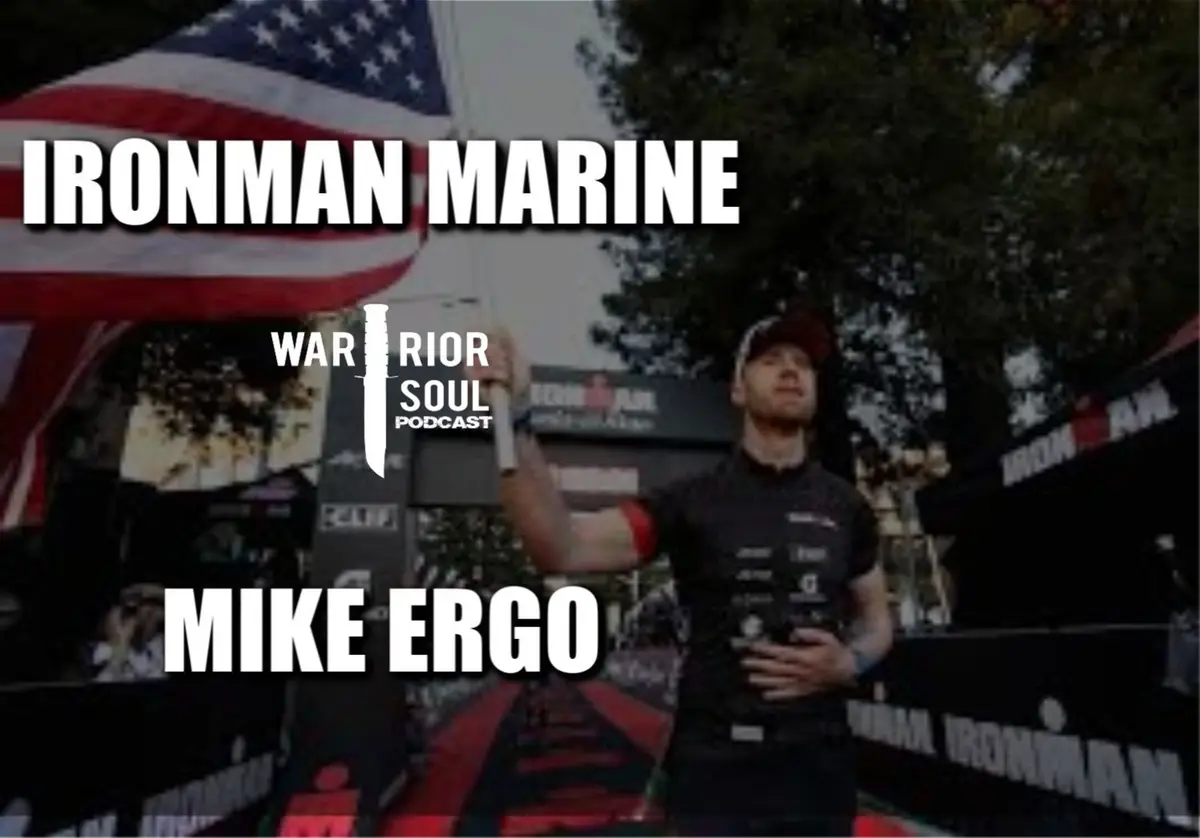
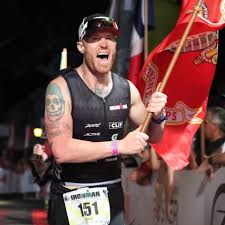
Mike Ergo is a US Marine Corps Veteran, an Ironman Triathlete, and the co-host of the Age Groupies Podcast. He is also a multi-time guest on the Warrior Soul Podcast.
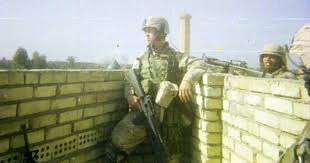
In his post-military life, Mike became a drug addict. For ten years he turned to drugs to numb himself to the memories of the deaths of the Marines and Sailors of the 1st Batallion 8th Marines that he lost in combat.
After finally becoming sober, Mike turned to endurance sports. He found the sport of triathlon and he eventually made his way to Kona for the Ironman Triathlon.
When Mike competes, he’s adopted the practice of carrying the name of a fallen service member with him. Additionally, he raises money for gold star families with every race he competes in.
Mike is heading back to Kona this year, and I brought him on to talk about the race and what he’s been up to in recent months.
SUPPORT MIKE’S EFFORT TO RAISE MONEY FOR GOLD STAR FAMILIES!
Mike is the cohost of the Age Groupies Podcast. Check out their show here!
Transcript
Machine-generated from the episode audio and lightly edited — may contain errors.
Chris Albert (link to this point)
The Warrior Soul podcast is written, edited, and produced by me, Albert. Our mission is to provide tools, tactics, strategies, and ideas that help The US military veteran community to show up as the wisest, strongest, most capable versions of themselves in the civilian world. If you're not a veteran, stick around because anything we talk about will most certainly apply to you as well. This podcast is made possible with the help of F Bomb Nutrition. They make delicious packets of fats that you can carry around anywhere with you in little portable packets.
They make macadamia nut butters. They mix them up with chocolate. They mix them up with sea salt. They mix them up with coconut butter. They're absolutely delicious, and they're really good for you.
They don't have any sugar. They also make a lot of cheese snacks. They make meat sticks, and it's just a great company. These guys send packages of this stuff to the troops who are on the front lines overseas to supplement their MREs, and we didn't ask them to do that. They just did that on their own initiative.
Really great company. If you wanna get 20% off your first order of f bombs, head over to www.dropanfbomb.com and use the code Warrior Soul at checkout. This podcast is also brought to you with the help of Save the Brave. Savethebrave.org is a five zero one c three charity for veterans. They run camaraderie events that include fishing, golfing.
They also do a lot of work with gold star families. And unlike a lot of other organizations, their board doesn't take a salary. Really great organization that is doing amazing work. So go and check them out at savethebrave.org. With that, thank you guys so much.
Let's get into today's programming.
Chris Albert (link to this point)
This is Chris Albert, and I'm here to remind you of one thing. Someday, you're going to die. Now that's not some morbid statement or scary idea. It's solid fact. Your time here on this earth is limited.
And we need to be reminded of this as much as possible for one simple reason, to live your best life while you can. This is the Warrior Soul podcast.
Chris Albert (link to this point)
Transition in life is often difficult. It forces you to grow, it forces you to learn, And sometimes it forces you to cut away bits of your past. Bits that weren't serving you anymore. My guest today is also a past guest on the show. We've done quite a few episodes together and he's an old friend.
His name is Mike Ergo. He's the host of the Transitions from War podcast and he's an Ironman triathlete. If you're not familiar with his story, should definitely go back and check out some of the shows we did. You should also check out his podcast Transitions from War. But Mike is a former drug addict, and he had battles with substance abuse, battles with infidelity, and a whole lot of internal battles.
And this guy has completely turned his life around. Today, is an Ironman triathlete, and he just made the Kona Ironman Triathlon for a second time, I believe. And he is currently raising money for Gold Star families. Every race, he carries the name of a fallen brother with him, and he's worked to raise money for Gold Star families and has helped a lot of Gold Star families. This is just a really good dude who's made mistakes in his past, completely turned his life around from those mistakes and is now working to really help the community out and help the world out.
And I love this guy. So with that, let's get into this conversation with my friend and fellow marine, Mike Ergo.
Mike Ergo (link to this point)
Got it. Alright. We've synced up. That's good.
Chris Albert (link to this point)
Nice. So what's going on, old friend?
Mike Ergo (link to this point)
Dude, it is good to talk to you, man. Happy 2020.
Chris Albert (link to this point)
Happy 2020. For those of you who don't know, Mike Ergo has been on the show multiple times before. I think almost more than any other guest. We've we've talked quite a bit and, great dude. And for those of you who haven't checked out those other episodes, I highly suggest you check Mike's story out as well as his podcast Transitions from War.
But you got a lot going on for 2020. Right?
Mike Ergo (link to this point)
Yeah. I got a lot going on. I'm my main goal right now is I will be racing in the Ironman World Championships in October and carrying the flag for the entire marathon portion. That's the that's the run for a fallen marine from first battalion fourth marines. I I know his mother pretty well, and she actually helped me start.
We cofounded what we call the Gold Star Initiative. So it's veterans and Gold Star families teaming up at an Ironman race to remember the fallen. So this is the first time we're gonna bring it to the national actually, international stage, the world championship. So I am I mean, to say I'm stoked is an understatement because I am so pumped up for this.
Chris Albert (link to this point)
That's the thing. Like, so Kona Kona is like the Super Bowl of Ironmans. Right?
Mike Ergo (link to this point)
Like Dude, Bowl World Cup World Series. Yeah. It is that is like the triathlon dream race right there.
Chris Albert (link to this point)
And and in that race, you're going across, like, multiple different terrains, like climates, you're you're running over lava, like, all kinds of crazy stuff. Right?
Mike Ergo (link to this point)
Yeah. They set it up in October, which is when the big trade winds come in. And those are the winds that, you know, push the Polynesians from Tahiti up to Hawaii. So it gets a bit windy. And so, yeah, you start off swimming, 2.4 mile swim in in the ocean.
And since it's so warm, no wet suits, but the swim is is so cool. It I mean, you're basically getting to sightseeing, see turtles, and and and fish while while you're swimming. Mhmm. And then the the bike ride, though, is is tough one because of the winds. And the winds kick up and I've seen videos of people getting blown across the road.
And I had a couple moments the last time I did it where, yeah, my butt was puckering because coming downhill probably 30 something miles an hour on a bike is really fast.
Chris Albert (link to this point)
Yeah.
Mike Ergo (link to this point)
And just getting blown across a lane just out of nowhere. Just a so that that's that's what makes the bike course challenging. And, of course, the wind and just, like, feeling like you're not getting anywhere pedaling. And then the run, when you want a breeze, there is no breeze. So they really designed this course perfectly to inflict maximum suffering.
But I mean, it's a beautiful place here in Hawaii. Don't get me wrong. Yeah. And after the fierce few miles, though, you head out of town on the run, and you are just, yeah, running through lava fields. And unless you are, you know, a pro or someone who's gonna finish in less than ten hours, it's the tropics of the sun goes down pretty quickly.
And you the last time I was there, was, you know, running through the dark literally and came in. I mean, you you're on your own. A lot of the races that there's people along the sides of the course cheering for you, you know, clapping, ringing cowbells, and all that stuff. But this one, you're just kinda out with your thoughts and your doubts.
Chris Albert (link to this point)
Last time, yeah, we talked a little bit about that. And you're talking about how you can go to some some really dark places, really dark places while you're out there. And actually, I just I interviewed Nick Bare from he's the CEO of Bare Performance Training. He's actually going to Kona too. Yes.
And he'll be out there. He's a fellow veteran. But he was talking about the same thing. Like, you gotta you gotta you you go to some really dark places while you're out there. And I remember you saying it's like you're facing these things, but it's also like, it's like meditative and therapy at the same time.
Right?
Mike Ergo (link to this point)
Yeah. There's the the mental battle is there. And I I love the mental battle. Like, in the moment, it's tough. Excuse me.
It's it's tough because I remember my mind went to really dark places, especially this because my legs were hurting really badly. And I just started replaying things in my head, like memories from combat, friends I lost, all that stuff. But then being able to refocus myself and and just shift my perspective, that that's that is the coolest thing for me about endurance sports is going to a negative space and then deciding, okay. Do I wanna keep this narrative of everything is bad and I'm in pain? I don't like this.
I wanna be done. Or do I wanna wanna find out how I can refocus my mind and say, oh, okay. My legs are in pain. That means I have legs. That means I'm alive.
I'm getting a race, like, in the Ironman World Championships in the arguably the most beautiful place on earth and see my mood change that way. I mean, it's tough when your body's in a lot of pain because it wants to default to everything sucks. But being able to do that and then the feeling of freedom you get when you realize you don't have to resist feeling uncomfortable anymore, but you can just let that be there and continue on with what you're doing. I love that part about it.
Chris Albert (link to this point)
That's awesome. That's awesome. And how you are you able to recreate that during training? Or is that something that just comes during the race and and during competition?
Mike Ergo (link to this point)
It it happens during training when things get tough when when the, you know, you increase the speed, do some in, like, intense intervals. For me, that happens a lot in the pool. So I'll be swimming, and I I swim with a lot of fast people, and I'm arguably the slowest person there. And so when I'm trying to keep up with some really, you know, really quick intervals, and, you know, doing, you know, hundreds and two hundreds at a pretty quick pace with a lot of breath, there's there's times where I want to give up. And so being able to refocus my mind there happens.
The bike and the and and the run, it happens sometimes too. But that's usually what happens with training for these kind of events is a lot of it is a aerobic heart rate. So you you're doing the training a lot slower. But, I mean, it's long distances, very slow, very low heart rate. And so I think what happens, the mental battle becomes, oh my god.
Okay. This event's six months out. It's really cold. It's dark outside. I don't wanna be here.
What if I just, you know, stopped? What if I did something else? So that, like, when you wake up and when you're out there in the cold and there's no there's nobody clapping, there's nobody giving you attaboys. It's just you in the dark running. That's that's where the mind can can introduce doubts and say, well, what if we just put this off maybe later?
So the the huge buildup is another mental thing to to get through trying to take it one day, one session at a time and actually focus on what you're supposed to be training, whether it's cadence, whether it's your form or whatever it is.
Chris Albert (link to this point)
The when when thinking about this because I mean, it just seems like a sport like triathlon, there's so much prep. There's so many things to to to worry about, so many variables. Right? Like, so the type of bike you're you're riding, right? Like, I'd be the guy who showed up with, like, you know, 1985 BMX bike or something like that by accident.
You know what I mean? How do you educate yourself about that? I know there's probably tons of information out there, but you probably have people who are mentors or people who are teaching you about like the technology of the bike, how to do the transitions, all of, like, little things that that add up to being able to compete at that level. Right?
Mike Ergo (link to this point)
Yeah. The the gear is intimidating with the sport. That was my first impression of the sport is just seeing people in, like, really bright spandex clothes that had these bikes that looked like fucking spaceships. You know? And and all all this stuff like back wheels that didn't have any spokes because they they were like a solid disc, and it it looks like just something from another world. So that was intimidating because I had no idea what that stuff was. So to put all that stuff together and to know how to, one, have the right equipment to set it up in your transition zone, you know, the right way so it's the most efficient so you can quickly take off, say, your swim stuff and put your bike stuff on or your bike stuff off and run stuff on. That mostly just takes experience and practice. And I think just like a lot of other sports or activities, people can get intimidated at the point where they don't wanna start because it looks scary.
And, fortunately, I'm someone who's used to being embarrassed and and being embarrassed in situations. So I said, you know what? I'll just figure it out. And I I did it completely wrong the first one, two, three times, and then eventually, got a little better. But I think it's more about just the willingness to to be okay with either making a fool out of yourself or or just making mistakes in front of other people and being fine with that.
And that's really the way I have to learn. Like, with the way I do anything is, okay, I'll just see how this goes. And then I'll get some feedback probably either that was that was terrible. What are you doing? Or good job.
Keep up with that. So that's that's how I've approached the whole thing.
Chris Albert (link to this point)
Now, you're also a family man, you've got a wife, you've got kids. Obviously, the training for this, it takes a lot, right? So you're probably up earlier in the day and then maybe getting a little bit in throughout the day and stuff. But what's your training schedule like? And how are you managing the time between work, family, and training for this?
Mike Ergo (link to this point)
The the work family, the the balance between family and training is probably the most difficult aspect for me because it takes lots of intention. And I'll tell you what doesn't work is just having a training schedule with without your partner or without your family on board or aware of what you're doing. Recipe for disaster, and it's gonna build up a lot of resentment for and at least in the longer courses that take a lot more training. So what I have done is beforehand talked with my wife and said, hey. This is this is the training.
One, before I got into sports, said, hey. This is what it's gonna take. Are are you okay if I do this? How can we plan this too? When she said she's okay with it, how can we plan this so it it impacts the family met minimally?
And so, yeah, it involves lots of early mornings. So I get up some days, get up at four. Mostly, I'm getting up at five and putting in an early morning session for about an hour to an hour and a half during the weekdays. And then during my lunchtime, I'll have a run or a quick cycle. And then I save all my afternoons and evenings for the family.
And then on the weekends, I'm getting up really early. One thing that saved me a lot of time and made me more accessible for the family too is I have an indoor bike trainer. And so it's like this like, I have my triathlon bike set up on a stationary trainer. And one, it's a harder workout because you can't coast. But two, it's good because I know when my kids get up so I'll start like a you know, let's say I get up at five, start at 05:30 or six, and I'm doing, like, a long bike ride on the weekend, you know, anywhere from two to five hours, well, I can offset, you know, the time away or mitigate how much, you know, time away that is the impact on the family by taking a break when I hear the kids get up and making them breakfast.
And then you they'll usually watch cartoons for a little bit and then go and get back on my bike, and I'm right there too. So it makes me that took a lot of planning because I wasn't sure how to do that, but it I seem to have found a groove. And then for the long runs, you know, it it was easier when my my kids were a little smaller, they could take a nap while I took them on a double double stroller. But now they they like, my my son's three, and he wants to just get out of the stroller and run with me, and he can run for, a block. So and then he's tired.
Awesome. Yeah. Yeah. My daughter actually is is really fast. She's gonna be probably a good distance runner, I think.
Chris Albert (link to this point)
Little girls are always faster than little boys. I remember getting my ass kicked by little girls when I was a little kid. I just and they'd come and beat the crap out of me and stuff. But Yeah.
Mike Ergo (link to this point)
Yeah. It's so that's that's different now. But so, like, my runs again, I'll just be early in the morning. And and my
Chris Albert (link to this point)
You got a treadmill desk too, don't you?
Mike Ergo (link to this point)
Yeah. I'm working on getting a new one because I I wore it out. It actually I burned the motor out of it.
Chris Albert (link to this point)
Oh, man.
Mike Ergo (link to this point)
That was a good thing too. I'm glad you brought that up because that helped me. Okay. So for, like, my warm up and my cool down, I could still be typing in notes, talking on the phone, doing whatever I needed in my office, and then be gone for, only half an hour out of the office. So it looked like I was doing less working out than I was.
Chris Albert (link to this point)
Right.
Mike Ergo (link to this point)
But the other thing about having a treadmill desk that that really helped with my training, it helps just shake out, you know, that lactic acid just by walking it out. And it really improved aerobic fitness just by simply walking at it, you know, even a not even that fast of a clip.
Chris Albert (link to this point)
That's amazing. That's amazing. Now the other aspect to this, we talked about this quite a bit before on the other times you come on the show. You have you you've experienced addiction, and and you were an addict for a while. And and do you feel like this has been something that's replaced that in your life?
Or is this something that that maybe is extending your life in other ways and helping you to build pathways to continue to beat that addiction?
Mike Ergo (link to this point)
Yeah. The the addict mentality can be applied to a lot of things. And I you know, in the endurance world, I see a lot of people in recovery, a lot of former former addicts. And because there's there's an extreme quality to this, especially with these longer distance events. You know, it's a the addict mentality would be, okay.
One's good. Two's two's pretty good. So let's do 500. And that that can get applied to, you know, these ultramarathons or or things like Ironman or, like, there there are races that are two, three, four times as long as Ironman for the the ultra psychos. So I think the way people approach them, the intention they approach them is really important.
And at times, it has become something similar to just a replacement addiction. So, okay, I used to have alcohol, you know, cocaine, cannabis, pills, but now I have this that I'm gonna put all my energy into. And you the the way that I and a lot of mental health professionals define addiction is something that you continue to do despite the adverse consequences that take up a lot of your time either to obtain it, to do it, or to recover from it. So you can insert a lot of things in there. And there's people who will take this fitness thing to an extreme length where it becomes unhealthy.
So what I've done is just keep checking in with my family and just keep checking in. And and the cool thing is I have I have a wife who will be real with me, and she will say what she's thinking. She'll say if this is working or not. So I get some good feedback, which is nice to stay accountable to stay kind of real. I don't I don't have some, you know, a partner.
She's not someone who'll just sing my praises all the time, say, wow, good job. Keep going. So that is very helpful to keep me, you know, humble and real.
Chris Albert (link to this point)
Yeah, you need somebody like that in your life. It's so important, especially a life partner, you know, and see if you don't have that if you don't have somebody who's constantly just, you know, holding that mirror up to you, not not taking you down, but saying, hey. You can do better. That's Yeah. That's so important.
Mike Ergo (link to this point)
That's so sweet spot, isn't it? Base because you you don't want someone who's just gonna doubt you and bring you down like you said. But if you you want someone who's gonna give you good, honest feedback, and you can see that they're doing it through compassion, but by keeping you humble because if if not, then you you can we can delude ourselves. I can delude myself.
Chris Albert (link to this point)
Right. And and that's the thing. I've been in both kinds of relationships. I've been with somebody who who constantly tried to take me down and constantly, know, was was really negative. And then I've been with somebody who's constantly challenging me, and that's the relationship I'm in right now.
And that's amazing. And the thing is, what I've found is you have to grow into that to be able to to handle it. Right? You have to grow into it. If you're with somebody who's constantly taking you down, a lot of times, like, it's it's it's not just that other person who's being negative.
It's also you that's that's allowing it into your life and doing things that's enabling that. And and, you know, a lot of the times and what I tell younger guys, you've got to be matured to the point to where you're gonna recognize yourself, and you're gonna know yourself enough that you're gonna be able to handle somebody who is going to be able to to to challenge you in positive ways.
Mike Ergo (link to this point)
Yeah. I think that's that's right. And I think I think we do know deep down, but there's a there's a lot of noise where we can miss the signal. Mhmm. So I think with with all of us who are human, who have mental chatter, which is, you know, every single person, doing something simple as sitting down to breathe and even if you don't call it meditation, sit and breathe and just notice your body, these things will come up.
You'll get a better signal of what's happening. Because when we do things, we we usually get feedback, you know, of how that feels. That doesn't feel good. That feels right. That feels okay.
But if we live in our heads, we can just block it out. So I'm what I'm doing this year, you know, getting back into meditation, I'm just doing just a little bit. Just a little bit. Just five minutes in the morning and maybe some late later during the day, but without overdoing it. Just enough to get back in touch with with that so I can I can tell because you're right?
You can develop that that sense. You can really hone that and know yourself. And that's that's what the professionals I think on every level are doing is they know themselves so well. They know when to call their own bullshit.
Chris Albert (link to this point)
Mhmm. Yeah, it's big time because I mean, you can fool yourself like crazy. You really can easily. It's it's you're you lie to yourself more than anybody else does. And I've lied to myself over and over and over again.
And I know you and from your situation, just knowing you as a friend, I know you've done it before. And I know you've overcome it. And it's just like, it's something that we all got to overcome. Something that we all gotta gotta face in our lives.
Mike Ergo (link to this point)
Yeah. The and that's the thing with with feedback from people who even when it's constructive criticism, it stings. It sucks. It's so bad.
Chris Albert (link to this point)
Yeah.
Mike Ergo (link to this point)
You know, it's like I hate it in the moment. I like when my my wife will tell me something that I know to be true, but I just don't wanna think about or if I would ignore my kids or or something that's inconvenient to how I see myself. It I hate it. I brace against it. I feel it.
I wanna shut down. I wanna get out of there. But I've developed a tolerance for it because I know it in the context. Like, just because something's uncomfortable doesn't mean it's wrong or doesn't mean it's bad. There's a different kind of discomfort.
You know? There's there's the discomfort of, like, when we're really, really training hard, and it feels like, okay, I wanna stop. But and then there's the discomfort of hearing someone tell you an an inconvenient or uncomfortable truth and wanting to to protect your ego or your self image in your mind. This is stuff that happens at an unconscious level too. So being able to sit with that for a second.
That's where that's where the things like breathing meditation come in because you can notice these things come up and just allow them to be there. And it gives your body some some good training of just how to accept things that are not comfortable, but you don't have to run from.
Chris Albert (link to this point)
Right. Right. And that's yeah. It's it's it's just crazy. It's crazy because and and it comes from do doing hard things because if you're doing hard and difficult things and you're not prepared for it, that's when it's gonna face you.
Just like you said, on on on the runs on an Ironman, like, that's when you're facing your demons. I mean, same thing is true. Like, if you're going on an entrepreneurial adventure, and and you're starting a business, and you you after the initial excitement wears off and you're out there and you're trying to make money and there's nothing coming in and you gotta face whatever it is that's going on and and fix that problem yourself. That's when those demons start to arise, you know, at least in my case. And then, you know, there's there's so many things you could do in this life where you're not going to have somebody right there like we did in the Marine Corps with our NCOs and with our drill instructors looking over your shoulder.
Yeah, it's just you. And that's the thing like, though boot camp might have sucked at the time, or you might have been crazy, you might have been dealing with some NCOs who are really on your ass. There's gonna come a time in your lives for you young guys out there where you wish you had somebody like that. And and you you you praise the Lord that you actually experienced that, but you'll wish you had it again.
Mike Ergo (link to this point)
Yeah, that's that's that's true. When when you have to have that own have that inner voice for yourself to to regulate yourself or to to remind yourself of the things you've accomplished and overcome. That it's it's harder. It's just harder. But it's it's something that I think we don't have to face alone, you know, to find that community.
But it just, again, it comes back to intentionally setting it up, putting those people in your life. But, like, when you're like, when we're in the Marine Corps, like, just in the barracks, that's there. You're just around living around people all the time, so you don't have to put any intention into it. Mhmm.
Chris Albert (link to this point)
Hey, guys. I hope you're getting a lot out of this interview. You know, the Warrior Soul podcast is built with the mission to empower its listeners to live absolutely epic lives. And that's why we recently created a group called the Warrior's Obituary Society. This group is built to empower its members to live epic lives worthy of epic obituaries.
And it starts with an eight week development program. And with this development program, what you're going to do is you're going to outline a vision for your life. You're going to get very specific about what you want. Because without that specificity, you don't know where you're going and you don't know what you're doing. From there, we help our members to develop specific goals, objectives that they are going to push toward, and that their fellow members of the Warrior's Obituary Society are going to hold them accountable too.
From there, we're getting down into specifics. We're going to help you to develop and customize your own personal fitness and nutrition plan to help to fuel your body and fuel your mind for the quest ahead. From there, we're going to work on your personal finances. We're going to help you to knock down debt. We're going to help you to start saving money and to create a plan so that you can start investing in your dreams.
Then we're going to get into your business and career. We're going to help you to develop the skills that you need to develop yourself so that you can have a major impact in the field you choose. If you choose to go into business, we're going to help you to set up the foundations that you need to create your own company and get started on your path in life. From there, we're going to be working on your relationships, we're going to help you to develop a world class network, and all along the way, you're going to have your fellow members of the Warrior's Obituary Society pushing you in every single area. We meet once a week over a live call and we're constantly communicating over our own private forum on Slack.
We don't do anything over social media and that's because I don't want anybody feeling like anyone's looking over their shoulders and I don't want you exposed to the crazy distracting alerts that you get on Facebook and some of the other social media platforms. Normally programs like this cost thousands of dollars. This one does not. For the price, it is the best development program on the Internet. And that's because our mission here at Warrior Soul is to empower people to get more out of life so that they can in turn make the world a better place.
We've got a great mix of active duty military, US military veterans, and civilians in this group. We wanted to keep it really eclectic so that we get a lot of different types of views up there and a lot of different people with different areas of expertise. If you think that this is something that would be of interest to you, and that this is something that could empower you to live your absolute best life, head over to www.warriorobituarysociety.com. That's www.warriorobituarysociety.com, and you can sign up today. And if you have any questions about it, just reach out to me at chris@warriorsoulagoge.com.
That's chris@warriorsoulagoge.com. I'm happy to even sit down with you for a phone call for a few minutes to see if the group is right for you. I look forward to seeing you guys in there, and let's get back to this awesome interview. Wanna talk a little bit about the Gold Star families and the names that that you're carrying around with you. You you'd mentioned the the marine that inspired you to do this and and the the the gold star mother who's helping you out with this stuff.
Who is that marine? And and can you tell talk a little bit about that story?
Mike Ergo (link to this point)
Well, the I was inspired to start racing in honor of somebody else when I first encountered Ironman, and I I saw a a video of a of a woman who was honoring her husband who'd been killed in action, I think, in o seven. And she started an organization not on purpose, but by just going out to run to deal with her grief and to remember her husband. So she started wearing a shirt with his name on it. And something about being able to have a different relationship with grief and remember my friends that have been killed in action was was just it like, all the pieces came together, I said, oh, okay. I don't have to sit at a bar and, you know, like, cry into a cup of beer about my friends.
Like, I can still feel the feelings, but I don't have to do that in a way that's that that sucks. I can deal with grief out in the race course. So I after that, I ran the world championship. I was back in my hometown in in Sonoma County, and and they made me the ambassador for this Ironman Santa Rosa because they're celebrating their fortieth year of Ironman and wanted to to make it really memorable. And so they asked me what I wanted to do to make the race different.
And so I said, I wanna I wanna race in honor of a local fallen fallen hero, and I want to present that flag to his family at the finish line. And they said, okay. Well, you think you can run for an entire marathon with a flag? And and I I I knew I had that knowing that, okay. Yeah.
Obviously, running a marathon is difficult. Adding to that by carrying a flag makes it more difficult physically. But the purpose and finding the why in my mind gave me the resolve that I knew I wasn't gonna I wasn't gonna stop. It it made it easier to to harness my focus and and drive. And so I I carried the flag at Ironman Santa Rosa in 2018 for an army corporal Josh Kynoch, and and I gave the flag to his family at the finish line.
I gave it to his daughter who we barely had met and then and to his mom. So that experience was so cool because I was able to do something that that helped people. I was able to raise something I love doing, but I was also able to to help people to heal and and help people deal with their own grief. And I was able to let the community be part of it too and showing their support for the family, showing their support for veterans. And so it brought together veterans, the community, and Gold Star families who who can be isolated from each other.
So, eventually, I met a woman who's wearing a, you know, a killed in action bracelet, that that black bracelet that we see a lot of times on people's wrists and and had a name on there. I just she was she's volunteering in Ironman. And I said, Hey, is that is that your son? That that bracelet? And she said, Yeah, it was.
And I told her my story. She told me her story. And her son was in first battalion fourth Marines, a guy named Nick Anderson who was killed in action in 11/12/2004 in Iraq. And I I talked with her. I said, I think we're supposed to I I think I think we can do something really cool together because she's involved in Ironman.
I'm involved in Ironman. And so eventually, we put the pieces together. So let's make this flag carrying thing a national movement. Let's see if we can get other Gold Star families and other veterans involved. And Ironman the Ironman Foundation allowed us to create what we call the Gold Star Initiative, where we pair up a veteran to carry a flag for a Gold Star family at an Ironman race and and give it to him at the end and then build that relationship.
We've done that now. We did that in 2019 through four different races. And then in 20 four different Ironman races. And then 2020, we're gonna have 10 different races where we're having veteran carry a flag for a Gold Star family. And so what we're hoping is that by bringing it to the world championships this year in Kona, that it's going to really give it a lot of attention and a lot of people to help fund us and a lot of people to help join in and carry a flag themself or connect a Gold Star family who's really hurting so they can be honored.
So it's it's this is this is a I think a jumping off point for us. It's it's god. It's so exciting because to see that the look on the the family's face at the end or during just knowing that their, their kid is remembered, and that they're not forgotten. That makes like every single training session, every single painful step on the race course, all worth it. It's, I can't tell you how much I love it.
Chris Albert (link to this point)
That's amazing. That's amazing. Now you've also got your podcast, the Transitions from War podcast, which is an excellent show. How's that been going? And and what do you guys what are you guys doing these days as far as growing the show and growing the audience?
Are you talking a lot about your training?
Mike Ergo (link to this point)
You know, I I was invited to be a cohost of another show last year that I've put been putting more of my energy on and figuring out how to to do these two shows at the same time. But so so, originally, Transitions from War was talking about everything. Usually, it's the the, you know, the motto is from combat to active living, trying to to help people make that journey when they get home to find purpose again. And I found that through physical activity. So that was the the the push, the main gist and focus of the show.
I I I run a I co host a show called Age Groupies, and we talk just about mental health and endurance sports, you know, for the age group kind of amateur athlete perspective. And so I talked about most of my training on that show. And then the Transitions from War, I've I've been talking to just a lot of veterans who have made that transition or subject matter experts who know about things like meditation, you know, grief, addiction, whatever things that either vets can benefit from or they might struggle with. And so the show has taken on more, I guess, a more narrow focus. So it's been an interesting interesting year trying to figure out how to balance those two things.
But I'll tell you what, I love cohosting. And so it's much more fun, like, you know, what we can talk with someone else than Yeah. Look myself, like, listen myself talk all the time.
Chris Albert (link to this point)
Yeah. People don't know podcasting is difficult. Yeah. I don't wanna seem like a martyr or anything like that. But, like, I mean, it's it's hard, especially, like, when you're trying to come up with new content, you're constantly trying to come up with new guests and things like that. But I I always think thought you did a really, really good job
Mike Ergo (link to this point)
Appreciate that.
Chris Albert (link to this point)
You know, when when when you're putting information out there. And, you know, I think one of the things I think going narrow, for those of you out there who are thinking about going narrow is actually a better thing. The more focus you bring to a show, the the the more your audience is gonna be engaged. Because it's not about getting a million listeners, It's about getting people who are really involved with what you're doing and what you're trying to do and and who are really gonna listen and who are really gonna benefit from what you're talking about. And so I, you know, I applaud you for having the courage to do that in the first place.
Mike Ergo (link to this point)
Yeah. It's I think you're right. And everything I read about how to to grow an audience and and make a good show is, yeah, you find a specific audience to talk to. Because I I think for a little bit, I just experimented with with how I did the show and worrying about trying to trying to please everybody, a show for everybody, which is, like, really so a lot of times a show for no one. Yep.
You know, when you really connect with something that you consume that you listen to or see, and it feels like it's speaking to you, that's the powerful stuff.
Chris Albert (link to this point)
Yeah. And you gotta be passionate about it because, like I said, it's difficult. Like, we're for those of you. I mean, most of you are listening on audio and watching on video, but we got up at we're doing the show at six zero six hundred. So it's like, you know, you gotta you gotta get the schedule going.
You got that and then Mike's got a full time job, you know, pushing this stuff out. There's a lot of gear you got to do for it. But, if you're gonna get a podcast and do something you're passionate about and bring some meaning to it because that's what really matters. If you if you don't have meaning behind it, if you're just getting into this because you wanna become famous or you wanna become, you know, this or that, it's it's it's you're gonna give it up. You gotta you gotta really have a purpose behind what you're doing and and really wanna help people who are listening.
Mike Ergo (link to this point)
Yeah. That really ties into to to how I've come to really embrace endurance sports because I don't know if we talked about it the last time we chatted, but there's the three types of motivation. There's external, internal, and pro social. The external is you do something to hope to to get validated by someone else. It's like, know, like going to the gym to hope, you know, you get like a six pack or just so girls will notice you.
Okay. That's that's one form. And then the internal motivation, I'm gonna do this because I wanna become a better person or for I wanna accomplish this goal because this will help me improve x. And that's that's a deeper level of motivation. And then there's the prosocial or way of looking at something.
If I do this, this will benefit other people. And that studies have shown is the most powerful, the finding finding a why that involves benefiting other people seems to be the most powerful way to stick to something that's difficult. So if you find something you're really connected with, something that you know is gonna benefit other people, that's gonna help you stick through those, like, the mornings where you get up, you're like, I'm tired. It's cold out. I I just wanna go back to sleep.
Well, other people are expecting or or depending on me. This is gonna help other people. That that's what can help you, you know, get out of bed versus hit the snooze button.
Chris Albert (link to this point)
That's like what Viktor Frankl says with logotherapy. Right?
Mike Ergo (link to this point)
Exactly. Yeah. Our primary our primary driver is is meaning, purpose, fulfillment like that, and not not pleasure.
Chris Albert (link to this point)
Right. Right. Exactly. And and it got to plug that book again, Man's Search for Meaning by Viktor Frankl. I think it needs to be required reading for for everybody.
Like, everybody's gotta read that book. And and for those of you who don't know, Viktor Frankl, survived the Nazi concentration camp for three years, and then wrote about his experiences in that book. And then the second part of the book is he was a psych he was a psychologist. And the second part of the book is his analysis and his critique of Freudian theory, and his his kind of addition to it, which is this concept of logotherapy.
Mike Ergo (link to this point)
Yeah, I love it. That's a the cool thing is it doesn't have to be service and doing doing fun or doing things doesn't have to be a miserable exercise. I've learned in the last few years that you can serve people doing something you enjoy doing that's passionate. It doesn't mean it won't be hard. But my my picture of like, meaning and service before, for some reason, I just had this idea of, like, it like, it's, like, doing miserable things, like digging ditches or filling sandbags or picking up trash.
You know? Like, oh, that's
Chris Albert (link to this point)
I wonder where you got that from.
Mike Ergo (link to this point)
Yeah.
Chris Albert (link to this point)
Exactly.
Mike Ergo (link to this point)
Police calling the quad, picking up cigarette butts. You know? But then I realized like, oh, you can actually enjoy service and want to be there even if it's difficult. So I'm I'm learning a little bit as I guess I grow up.
Chris Albert (link to this point)
Yeah, no, exactly, man. Well, dude, it's it's always a pleasure speaking to you, When when are you heading to Kona?
Mike Ergo (link to this point)
I'll be heading there first couple days of October, and there's big buildup to race week. So I'll be plugging a lot of this stuff via Instagram and Facebook. But one thing I'm doing to help fund this is I'm raising money for the Ironman Foundation, which is the body is the organization that funds the Gold Star Initiative. And so I have a page, you know, we can link to here that that you can support Gold Star families and veterans healing together through the Gold Star Initiative directly. And I I set a goal.
I'm raising I need to raise $30,000 by September 25. Already, just by putting the word out there, I've I've had friends and family donate a little over $2,500 just in the last couple weeks. So we got a lot lot further to go, but I'm I'm seeking out some corporate sponsorships, and I'm seeking out just a lot of people who want to be a part of something that is really going to change the way we look at healing and the way we change the way we look at grief and and how to honor the fallen.
Chris Albert (link to this point)
That's awesome, man. We're definitely gonna get those links up there and and make sure that that people are following along with you and and given some support here for this effort. And where can people find your new podcast? And where can people find you on on the Internet and follow along with you? Yeah.
With all your social media and podcasts and everything?
Mike Ergo (link to this point)
I think most of it goes through Instagram, and it's just transitions underscore from underscore war. And then I have my Transitions from War Facebook page. My other show that I do for endurance athletes is called Age Groupies, and that you can find that on on Instagram at Age Groupies or just look on iTunes, Spotify, SoundCloud, all the places, you know, you can download this podcast. And that's geared towards amateur athletes, first timers, or, you know, up to people who've been in the sport for a while, a way to just make endurance training fun and less intimidating and not so serious. So you can find that at the same place.
You can find the podcast Transitions from War. And then that's that's where I run just about all my stuff through.
Chris Albert (link to this point)
Outstanding, man. Anything else for our audience out there before we jump off?
Mike Ergo (link to this point)
Oh, I'd say, if there's one thing I've learned that's been really valuable is that doing important things that help other people and bring you fulfillment and connection and just a sense of really feeling alive, it can be so fun. And it does not have to be picking up cigarette butts in the morning or picking up trash on the side of the highway. I think we all bring something different. We all get excited about different things. So I'd encourage anyone to to look at what what makes them really excited to to get up in the morning and see how they can use that to help other people.
And you will notice just how much fun and how how big a sense of fulfillment and joy you can get by doing that that you probably would not have imagined beforehand. And that's that's what for me, that's what life's about. And it's so cool. I love it.
Chris Albert (link to this point)
That's amazing, man. That's amazing. Well, dude, I want to acknowledge you. I've you for a few years now. And you put so much passion into what you do.
You put so much passion into this service that you're bringing, and you put so much passion into this quest that you're on. I know you've been through a lot of suffering in your life. A lot of it was self inflicted like a lot of us. And, what what you've been able to do is you've been able to grow, And you've been able to analyze how you were actually inflicting that suffering on yourself. And then you're able to to bring something to the world that is reducing the suffering of other people.
And I think that's great. And that's the track we all want to be on. So, Mike, you're an awesome dude. And I love having you here. And I'm looking forward to seeing you cross that finish line in Kona and and, you know, all of these amazing things happening for you.
So.
Mike Ergo (link to this point)
Hell, yeah, brother. Thank you. Appreciate that, man. And, hey, don't forget to drink water, meditate, and kill bodies.
Chris Albert (link to this point)
Change your socks.
Mike Ergo (link to this point)
Exactly.
Chris Albert (link to this point)
Alright, ladies and gents. Well, this is Chris Albert and Mike Ergo. And, like I said, we'll get all the links up for the show notes, on the show notes for this episode so you guys could follow Mike on his journey. And, take some of these lessons with you guys. Get out there.
Do something. Find something greater than yourself to dedicate yourself to. And, get out there and live your best lives while you can. This is Chris and Mike, and we are out. Alright, guys.
I hope you enjoyed that conversation with my friend and fellow Marine, Mike Ergo. Like I said, he's just a great dude. Just doing amazing things out there for the community, for the world, for Gold Star families, and really enjoy talking to him every time I do. You should definitely check out his new show. You should definitely check out his stuff.
We'll get links to everything up on the show notes. And I want to thank you guys. Thank you guys so much for listening to this show. Thank you guys so much for helping me to build this movement. Right now, I mean, we have literally increased our downloads over the past few weeks by 100%.
And this thing is growing like crazy. And it's growing because of you guys. I I'm just the person who puts this show together. You guys are the ones that spread the word. And, you know, I can't tell you how much I appreciate that.
I wanna keep this momentum going. I wanna get into the ears of every veteran that we can. And the way we do that is by having you guys continue to share these episodes and by having you guys head over to iTunes and write us a written rating and review. Like I said before, I don't care if you ever buy anything from me. I don't care if you ever pull out your wallet and give Warrior Soul or myself a penny.
What I do care about is that we are reaching ears, that we are getting out there and actually changing veterans lives. And the only way that that happens is if that word gets spread. So if you can do me the biggest favor in the world, doesn't cost you anything, just head over to iTunes and write us a written rating and review. It helps so much to spread word about the show, and it helps us to get this information into the ears of more veterans. And if you wanna support the podcast in other ways, you can do so.
You can head over to warriorsoul.shop. We've got some awesome t shirts that you could buy. If you want to support yourself, you can join our mastermind, the Warrior's Obituary Society, and that's a great group. We're changing lives there. We are empowering our members to live absolutely epic lives, worthy of epic obituaries.
But if you don't want to do any of that stuff, just write us a review. Share the episodes out. And that's a 100% okay, and I still love you. So with that guys, I want to thank you again so much for listening, and we will be back at you later this week or next week with some more awesome content. This is Chris Albert, and I am out.
Host of the Warrior Soul Podcast and founder of Warrior Soul. Worldwide trainer and nutrition coach, contributing author at Testosterone Nation and Muscle and Strength.