Podcast episode
On Sacrifice with Gold Star Widow Michelle Black
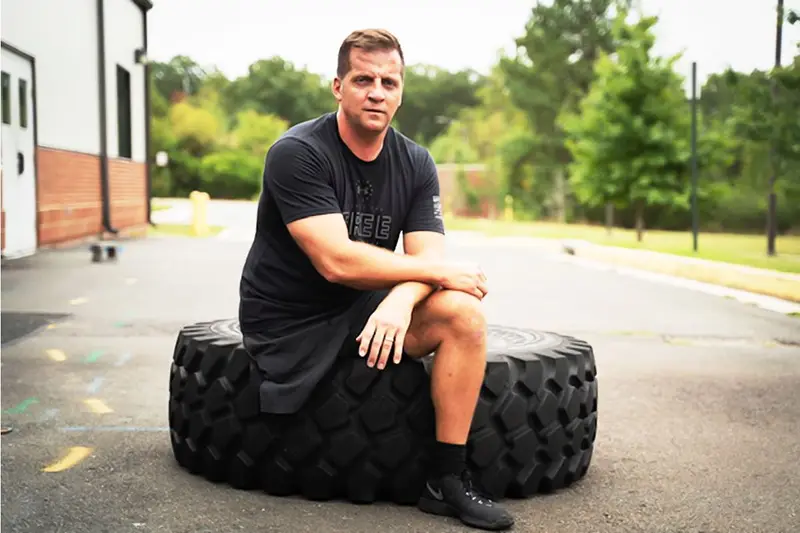
Hosted by Chris Albert
The Warrior Soul Podcast
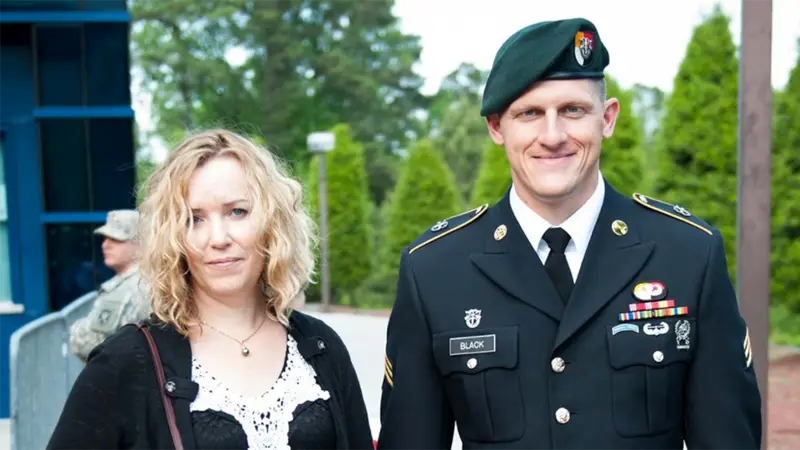
Michelle and Bryan Black
Michelle Black lost her husband, Bryan, when his 11 man team of Green Berets was ambushed by 100-200 Isis Militants in Niger in 2017.
Michelle Black lost her husband Bryan in 2017. Bryan was serving with a team of his fellow Green Berets in Niger when his team of 11 was ambushed by between 100 and 200 ISIS militants.
From the moment she learned of Bryan's death, her life, and the lives of her two sons, were turned completely upside down. Bryan's death became a national incident due to political issues, and this turned the nation's attention away from the men who died and onto political discord.
Then, a ISIS released a propaganda video of Bryan and his teammates being killed. CBS news promptly published the video and put it into the public domain, putting Michelle and Bryan's family into the awful position of having to witness his death on a TV screen.
Through it all, Michelle never quit. She rallied to take care of her two sons while also searching for the truth about Bryan and his teammates' death. To this day, no high ranking military official has answered for the fact that this team of 11 was sent into hostile territory without support.
To get a copy of Michelle's book: https://www.amazon.com/Sacrifice-Gold-Widows-Fight-Truth/dp/0593190939
Follow Michelle on Instagram: https://www.instagram.com/michelleblack71
Transcript
Machine-generated from the episode audio and lightly edited — may contain errors.
Chris Albert (link to this point)
What's going on, everybody? Welcome to the Warrior Soul podcast. My name is Chris Albert. This podcast is here to deliver tools, tactics, strategies, and ideas to the help The US military veteran community and anybody else willing to listen to live their best lives. My guest today is a very strong woman.
Her name is Michelle Black. She is the author of A Gold Star Widow's Fight for the Truth. And in 2017, her husband Bryan, who was a Green Beret, was on patrol with 10 other teammates in Niger. And they were ambushed. They were hunted down by 100 to 200 ISIS terrorists, and they were killed.
And at that point, Michelle's life came crashing down, A life she built up with her husband, her and her two sons, had to figure out a way to keep going. And a bunch of other things happened. Somewhere along the line, this incident turned into a national incident. So Michelle's personal tragedy was then spurted across the news. And in a very public altercation between the president of The United States and another Gold Star widow, the media's attention turned away from the warriors who were killed, and it got put on to politics.
And then from there, things just kept happening. An ISIS propaganda video of Michelle's husband, Bryan, being killed along with three other of his teammates was released, and CBS promptly published it. And that put Michelle and her two sons and Bryan's father and mother and all of the other Gold Star families who lost loved ones that day into an absolutely horrible position, where the video of their loved ones being killed was being published across the Internet and still continues to be published and shared across the Internet to this day. And then there's another aspect to this story, which is why was a team of 11 Green Berets sent out without support, without CASEVAC, into a situation where there was a possibility that they could be ambushed by such high numbers? And to this day, nobody has ever answered for that.
The only thing that's happened is they have tried to pawn the blame off onto the men who were there that day. And it is an absolutely horrible situation. And reading Michelle's book, which is fabulously written, by the way, an absolutely amazing piece of work, I could feel her pain. I could feel her frustration. And that definitely comes out during this interview.
Like I said, Michelle is an extraordinary woman. I have so much admiration for her. And I think that you will get a lot out of this conversation and learn a lot from her in terms of resilience and continuing to push forward and and never quitting. And without further ado, I'm gonna stop yapping my gums here, and let's get into this conversation with Michelle Black, the author of A Gold Star Widow's Fight for the Truth.
Michelle Black (link to this point)
Okay.
Chris Albert (link to this point)
Michelle Black, welcome to the Warrior Soul podcast. How are doing today?
Michelle Black (link to this point)
I'm doing great. I'm so glad to be here.
Chris Albert (link to this point)
You know, I I was telling you before we got started, hitting record. I've been reading your book, A Gold Star Widow's Fight for the Truth. And the story, I mean, there's multiple facets of the story. There's your personal story, your personal journey with your husband, then there's also this kind of national story that was going on. And then there's also the this idea that, you know, a team of Green Berets was sent into hostile territory without proper support, which is another facet of the story that I think we need to talk much more about.
But I wanna to start kind of give a a thousand foot view of of, who you are, where you come from and why you wrote this book?
Michelle Black (link to this point)
Okay. Yeah. How far back do we go? I was raised in California, kind of high desert, born in Bishop and lived in Mammoth kind of ski area. And then my family moved to little town to Hatchbee.
So we lived there and my family were all small business owners. I was the first girl in my family in the line of women to ever graduate high school. So I went on to go to college and I had a passion for snowboarding, so I wanted to compete. And so I moved up to Mammoth after college and started competing. And then I'm not a big fan of comp I don't know, anyway, I just kind of went, I'd rather teach.
So I ended up going in and teaching. I didn't like the pressure of competing. So I enjoyed teaching so much more. So I started teaching snowboarding and then I ran into this weird guy, Bryan at church, he kept bugging me and the next thing we're backpacking all over the upper, the back country there, high country and fell enough, got married and he decided he wanted to join the military. So that's kinda my background.
But yeah.
Chris Albert (link to this point)
He he was an interesting guy too. I mean, like, he was a chess savant. He was a professional poker player, and and he was actually work or he was making money as a professional poker player before he went into the military. Right?
Michelle Black (link to this point)
Yeah. When we met, he was actually playing online poker for a living so that he could ski during the day, which I thought, okay, this guy's probably making minimum wage and then having to pay for his tickets, like this is really lame, he should be up on the hill with us, all of us instructors making good money, like $12 an hour plus tips sometimes. Come to find out, no, he was making a lot of money. And yeah, he had grown up heavily involved in chess and him and his older brother when they were kids like eight, nine, 10 years old were beating full grown adults who were good chess players. They just were very good. And Bryan ended up winning second at nationals when he was, I believe, 11 or 12 years old. So he would fly all over the country and do these tournaments. And, yeah, he was well known throughout the, Tacoma area in Washington state.
Yeah.
Chris Albert (link to this point)
And so you guys got married before Bryan went into the military. Right?
Michelle Black (link to this point)
Yes.
Chris Albert (link to this point)
And and had you had your children prior to that point? Or or or did it happen to
Michelle Black (link to this point)
Yeah. We we got married and we stayed in Mammoth for a year. We had our first son, Ezekiel, then we moved and we had our second son, Isaac. And then the market started crashing in 2008. Then because Bryan and I both had degrees but we hadn't used our degrees.
They were useless at that point because nobody was hiring. And if you didn't have any experience with the degree you had, then I mean, you couldn't get hired anywhere because either you had not enough experience, you're under qualified or you were overqualified. You couldn't get a job at a warehouse but you also couldn't get a job with your degree. So we were just stuck. So he joined the military when Isaac was, I wanna say one and Ezekiel was two.
Chris Albert (link to this point)
And how'd you feel about that when he decided to join?
Michelle Black (link to this point)
You know, he'd always wanted to do it. He grew up just dreaming of becoming a seal or a green beret. And at that point he was having to, you know, he's trying to find a way to make money. He was miserable doing the online poker at that point. And you can just tell, I mean, men need to be out doing something.
And it was like, if this makes him happy, then hey, I'm getting a happy guy home at the end of the day, so great. So I I was all about it. If that's what would get him, you know, out of the funk of just being stuck at home with me and the kids, then, I mean, I have no problem with it.
Chris Albert (link to this point)
You know? Was he planning on doing special forces selection prior to that, or or did that come along as he would?
Michelle Black (link to this point)
That kinda came along. I expected it just because of who he was. He was really intense, needed to constantly have something going on. And the minute he went in and he became a sixty eight Whiskey, so he was, a medic, he got, moved into the, what was it, the CSH out at, Fort Carson. And within a month or two, he was bored.
He was starting to create his own little side businesses. He was making little silver coins and buying all this equipment to like sell stuff on eBay. I mean, was bored out of his mind. He had like three side jobs. So when he goes, well, would you care if I go to SFAS?
I was like, well, if that's gonna make you happy and that's what you really wanna do, go for it. So he spent several months training and within, I wanna say about a he we just got into Carson in August, and I wanna say by the next fall, he was already at SFAS.
Chris Albert (link to this point)
Wow. So it happened fast. What kind of changes did you see in him and and, you know, whether it be changes in your relationship or changes as a father or or changes just in his was was were there any changes in his personality as as he went through this process?
Michelle Black (link to this point)
Not really other than I could see him going from staying at home and being on the computer all the time versus him out doing this stuff. He was just much happier, much more in his element, and back to the person I had met. There's just something about someone being stuck on a computer at home, feeling fairly helpless and trying to figure out how to support their family versus someone who's just full steam ahead, living the dream. He'd always wanted to do this and it was like, yeah, do it. So but as far as he hadn't, you know, deployed, so there weren't those kind of changes where he was affected by combat or anything at that point. You know?
Chris Albert (link to this point)
You know, the the reason I asked that is because a lot of the guys at home I mean, they're going through a much different kind of transition where they're transitioning outs out of the military into civilian life. And I think, like, one of the mistakes they make is that they get themselves into a position that doesn't match personality so much, you know, and and maybe sitting behind a desk isn't the best thing or or anything like that. So I think, you know, it's it's always good to kinda highlight how much happier you can be if you find something that that meshes well with who you are and kinda fits your identity better, you know?
Michelle Black (link to this point)
Yeah. Oh, absolutely. And you know, that's I think when a lot of times you get out of the military, a lot of these guys are inherently risk takers. And you've got these guys jumping out of airplanes, you've got them doing all these things that most civilians don't do, or just the idea of it would scare them to death. And so they need to find some happy medium, where they can be in the civilian world, but they can also have an exciting career that isn't just behind a desk in front of a computer, you know, that there's challenges to it. You know, and and sometimes that means pushing yourself outside your comfort zone, things you you you know.
Chris Albert (link to this point)
Exactly. Exactly. So he gets through all of that and and you know, he joins a team. And how long was it until he went on his first deployment?
Michelle Black (link to this point)
Well, after SFAS, we moved to Fayetteville and, you know, the Q course, we got there, we got to Fayetteville in 2012. And he graduated, in, I wanna say April 2015 and went pretty much directly to Afghanistan. He was on a B team, so he wasn't really going out and doing any sort of risky missions for the most part. I mean, yeah, they would still occasionally have incoming mortars or whatever coming into the base where he was. But for the most part, it wasn't a heavy combat deployment for him.
So he was there just for a couple months, kind of at the end of, a deployment when he joined the B team, just kind of help him out. Came back, went straight to Ranger School, probably about a month after he got home from that deployment and was gone, you know, three months in the woods at Ranger and then came home, for a month and then deployed straight to Africa for six months.
Chris Albert (link to this point)
Wow. And and so, you know, he's been on several deployments. You know, you mentioned in the book that you didn't really get that that feeling of, you know, I for lack of a better word, dread with the other deployments, but with the the fateful he did one other deployment to to Africa before the fateful one. Could you describe that? You know, I know you you like I said, you mentioned that you didn't it was it was wasn't so bad until this last one.
And and before he left with this last one, you know, you felt something.
Michelle Black (link to this point)
Yeah. The the, you know, the deployment to Afghanistan, it was just like, alright, see you in a few months, whatever, have fun. Hope you get outside the wire a little bit. Second one, he left, same thing. It was just like, Hey, have fun, see you in six months.
And he told me, I don't know what it's gonna be like over there. He had a thing for cheap phones. I didn't know if that was gonna work out on the Continent Of Africa and it didn't. So I didn't hear from him for maybe a month, I wanna say, or several weeks after he left and it didn't cross my mind to even be concerned. I was busy with the kids and I figured if there was an issue, he would call me.
And yeah, he ended up calling me on David's phone a couple times and he used call me from everybody else's phone. So yeah, that deployment, there were no just gut checks for me at all. But the last deployment, I mean, the days leading up to it, it felt wrong. And when I dropped him off at the airport, I was like panicked, which was odd. I had never even thought to be concerned before. And I know a lot of wives had told me that like, oh, you know, I worried all the time when he was gone, and I'm not a worrier. So I just never had any concerns.
So to me, it was really alarming when I felt that way as he left.
Chris Albert (link to this point)
And he was heading to Niger. Right?
Michelle Black (link to this point)
Like Yeah. Second second one to Niger.
Chris Albert (link to this point)
Didn't even know there was there was really anything going on in Niger at the time. Right?
Michelle Black (link to this point)
Right. I mean, he'd been down. His first deployment was to Maradi, which is Southern Niger closer to the Nigeria border. And I thought that area would have a larger pocket of terrorism just because Nigeria is more dangerous, at least to my knowledge at the time, I didn't know that they were going to be so close to Mali and I didn't know as much about Mali as I do now. So I didn't realize that it was just the Wild West up there and that they were having all of these attacks. So when he said, oh, I'm going to Ouallam, we'll be more northwest, I thought, oh, well, they're probably not gonna see anything at all if they didn't see anything down near Nigeria.
Chris Albert (link to this point)
You know? Right. And so how long was he on that deployment before before the incident happened?
Michelle Black (link to this point)
He left I wanna say it was either I'd have to look at my buckets. It was either the twenty sixth or August 28. It was right there. And he, you know, he was killed on October 4. So it was not long, five weeks.
Chris Albert (link to this point)
And what happened there? What went down?
Michelle Black (link to this point)
Well, they were doing several just kind of day long trips down to I mean, they hadn't been in country that long. I mean, when you're talking about them flying out on the twenty eighth, by the time they go in through, you know, I think they go in through Spain and then Niamey, the capital of Niger, and then they go to their base. So by the time they actually got to their base, I think about two weeks have passed, and then they do the transition and then they have the chain of command filming their National Geographic. And so they really had only gotten maybe two or three missions in when they were sent out on this mission. And at that point, they had only done, pretty much what the first initial part of this was that led to this is they had gone, on a one day mission up to this village called Tiloa near the Mali border, which it wasn't super close to the Mali border, it was just kind of on the edge before they would run out of roads there.
So it was still kind of on their main path, their main patrol path. So they just did a patrol down there, patrol back. And so that's what they were supposed to be doing this time. And they went down there and on their way back, they got turned around. They got a call from those higher up the chain saying, Hey, we basically got a piece of intelligence saying that this terrorist Doundou Chefou may be up in the vicinity of Mali now and we want you guys to go up there.
We believe there's a terrorist campsite and we want you to create a Northern blocking position. And they went, Hey, we can't do that. Not with trucks. Our trucks move five miles an hour max in that sand. And we've got guys on motorcycles who can go 25 miles an hour.
I mean, we're not blocking anyone if we go up there. This isn't a mission we can do. And not to mention the fact that there was no built in CASEVAC, there was no QRF, there was no assets available to them in that area. So they said, how about we call up our friends up at Arlit, bring them in and then we'll have built in CASEVAC. And we can act as the QRF.
And then this is a feasible thing because they can act as a blocking position. They can easily block from the northern position and keep people from crossing the border. So that was kind of the plan. So they got turned around and sent, moving North up towards the Mali border. And while this is going on back at headquarters, there's all these VTCs going on, Team Arlit and the Lieutenant Colonel and Colonel, and all these commanders are working on setting up this multi team raid as they called it.
And, in the end, my husband's team moved ten hours through the dark. Captain, of the team had to get out and walk the vehicles up. And I mean, this just turned into a huge, you know, what do they call it, FUBAR. Because by the end, they got out there and they were notified that the, heliborne unit was turned around, which left them up near the Mali border with no CASEVAC, no QRF, absolutely no assets. They had one drone in the sky that was running out of fuel.
And it wasn't the type of drone that had any sort of weapons or infrared or anything. So, had eyes on the ground but not really. I mean, those drones can't see anything. So that's what they were left with. They pushed back and said, hey, we wanna return to base.
They were told no, you cannot return to base, we're pushing you ahead. So they basically were left out there alone with no options but to finish the mission alone. And they did. And of course, by then you're talking 10 trucks through nowhere Africa, known as the Wild West, where it is just filled with terrorists. And of course they're seen because the only people up there are terrorists and they're all on motorcycles and you've got an eight vehicle convoy moving through the night.
It's just, you know, if you've ever been in the desert and I grew up, know, in deserts, it's, I mean, one truck goes by at night and you know whether their lights are on or not, know where they are. Eight trucks, yeah, in the Sahara, you're gonna notice them. So that's what happened. They were very much noticed. And by the time they were on their way home, they were set upon by between one and two hundred terrorists and were trapped on the road.
Chris Albert (link to this point)
We're talking about 11 soldiers against one to 200 terrorists on the road.
Michelle Black (link to this point)
Yes. And granted, there were the Nigerian partner forces, but as we know, when it comes to partner forces, they're usually seventeen, sixteen, maybe 18, if you're lucky. And this was a new partner force, they were just starting to be trained. And so when the bullets blew, most of them took off, including the first person to take off was the interpreter. So there was no communication.
Chris Albert (link to this point)
I wanna encourage everybody to to really get the book Sacrifice because, you know, Michelle lays this out in in expert fashion in the book, lays out all the circumstances. But, you know, what I wanna turn the interview to right now is your life afterward. Alright? Because, you know, you talk about, you know, seeing the men in uniform come up to your house, which you had a premonition about prior to that. And at that point, you know, you're a young mom.
You're by yourself in the world. You've got, you know, one son on the spectrum. You've got another young son, and, you know, your world is completely turned upside down. You know, I I hate asking about this because I feel like every time somebody asks you about this, you have to relive it. But but what was that like for you?
Michelle Black (link to this point)
Know, it's funny because I always say, you know, I'm an adult, I can handle this. Bryan's an adult, because we're both adults, it's fine. You know, but when it comes to the kids, that's where it's the hardest for me, is to watch my kids have to grow up so fast, because that's, you know, I actually was talking about this with another soldier recently in an interview, we were talking about how, you know, men come back and they're so frustrated with their kids because they've dealt with adults, you know, they're so used to their soldiers, so they're yelling at their kids, you know, just follow orders, just, you know, do what you're supposed to do. You've seen these kids in third world countries who are so responsible. And so, you know, and I said, but one thing we fail to recognize until we're in the position I'm in is that what makes them responsible and what makes them learn that is going through something like this, something that makes them have to grow up.
And you don't want your kids to ever have to go through that. Because it that year, you know, and I'm going to try not to get upset, but it was no more Santa Claus, no more magic, you know? Yeah. So my kids were done with it. And having to tell them about Bryan was the worst day of my life.
Not the day I learned that he was dead. It it was the next day when I told them.
Chris Albert (link to this point)
Yeah. And, you know, it's hard because people, I think, in general, when when they see somebody like you go through this and they know you personally, they they want to be there for a time period, but then things kinda pull back. And I even think that in some ways, you know, people who are are friends, they they almost don't know how to approach you anymore. You know? And and and there's that kind of feeling.
And and I can't imagine that kind of loneliness, you know, dealing with that, dealing with the children, you know, luckily having family there who's kind of going through the same thing with you, but also kinda going through that that same thing where people just kind of don't know how to approach you about this subject.
Michelle Black (link to this point)
Yeah. It's pretty incredible. You really have to you know, you always see those, you know, inspirational quotes become your own, you know, hero, become your own and I'm thinking, that don't ever hope that you have to, because I know what that is. And it's absolute hell. I'm grateful that I'm strong enough to pull it off.
I'm glad that I don't crumble for my kids. But yeah, it's pretty much just me.
Chris Albert (link to this point)
Yeah. Keep going. I'm sorry.
Michelle Black (link to this point)
Oh, just and that's great that I can handle it. And Bryan, we used to talk about it all the time. He'd say, I am confident in doing the job I do, because I know no matter what happens to me, I'll always, if coming back or whether I'm not, the house will always be the same. The kids will always be in a stable environment, my house is set. You know?
And since he's left, every time I start to stumble or I start to, you know, feel like I'm falling apart, I remember that. And I'm like, no, you know what, he knew who he married and you know, you marry your equal. And if that's true, you know, as I say in the book, then I'm a beast, I'm good, I've got this. Like, it sucks sometimes and I fall apart, but most days, you know what, I'm fine.
Chris Albert (link to this point)
It's amazing that, you know, you guys found each other. And and, you know, one of the things I say to this audience all the time is, you know, you have to choose your partner wisely. And and, you know, I think he was very lucky to have you. Your children are very lucky to have you. And his whole team was lucky to have you too because having you at home probably kept him in the mindset that he needed to be in order to do the job.
Michelle Black (link to this point)
Yeah. He needed to know that day that if he laid down his life for them, that everything was good, you know, that he could do that and not worry. And, I have no doubt that ran through his mind because I know that those guys created a blocking position to let the rest of the team out. And I'm fine with that as long as he died on his own terms and made that choice. But, you know, and me and the kids talk about that all the time.
Like I try and reiterate to them, do you know how lucky you are that you not only have one parent who cares so much, but that you had two who actually cared? Most parents, most kids don't get to have that. So be grateful.
Chris Albert (link to this point)
How are they doing?
Michelle Black (link to this point)
They're doing really good. They're just, you know, they're phenomenal kids. Ezekiel at this point, despite being on the spectrum, he thinks it's great that he gets to go in the IEP special ed class and he tries to help the other kids. He's a straight A student in high school, just brilliant. And so he feels, you know, he's got a really good heart after what we've been through.
He tries to help the other kids. He feels bad that some of them don't get all the, homework and stuff. So he's just a sweetheart and he's into water polo and swimming team and now he's getting into jiu-jitsu. He wants to be a Green Beret like his dad and same with his younger brother, they're just best friends and they take care of me. They're gonna be phenomenal human beings.
So I'm happy. I'm very happy with them.
Chris Albert (link to this point)
That's so cool. So the other aspect of the story, there's the very personal element of the story, you know, the pain that you've gone through, which which comes through in the book. But layered on top of all this, this became a national incident. And, you know, we've had it became a national incident several times over with the politics centered around it, but also the media's approach in in, you know, publishing certain things related to the murder itself. And and, you know, maybe we'll we could start with that week when president Trump called you up and and, you know, gave his his condolences. I know it was a a very positive phone call for you, and and, you know, he he had you guys come out and stay at his hotel and everything like that.
But at the same time, that led to there there was another incident with another widow who didn't have as positive of an experience. Right?
Michelle Black (link to this point)
Yeah. Yeah, you know, and for me, it's interesting because I've always been, you know, it's funny, Bryan and I, we were so different politically. He was Mr. Libertarian and you know, go against the flow and why bother voting, you know, it's just gonna be the same terrible people in there. And I was like, oh no, I don't want any of this politicized in his name because he was very non political.
And so it was hard to watch it become politicized and everyone's, Oh, it's Trump's Benghazi. Oh, it's this. And, you know, for me that was hard because, you know, presidents don't know what a 12 man team in the middle of nowhere Africa is doing. This was the responsibility of the generals, the lieutenant colonels, everybody who was hiding, hiding everything that happened. And, you know, no matter which president would have called, you know, whether it was Clinton, Trump, Obama, like the fact that somebody called, I was so grateful that they took the time out.
I mean, why in the world would a president call me in my entire life? That blew my mind. You know, so many families over the years haven't received phone calls from anyone. Know, I know countless other widows and other gold star families, and I'm the only one I know who has received a phone call from, you know, a president. So that to me, I just thought, okay, that's mind blowing.
But at the same time watching how, you know, he's the most powerful man in the world. And, you know, the other widow said, Hey, you know, this hurt my feelings. And he would then attack her on Twitter. I just thought, she's a widow. She lost her husband.
She's been through hell. She just lost her whole world. You have the world, just let it go. And she had so many other things going on that, you know, it's just why why turn this into a big Twitter war? It just made him look bad, not her. And and the people who turned around and attacked her, I just went, come on. Yeah. You know?
It's it's not all about Trump. No matter how much you love the guy and support him, like, he doesn't know you exist. Don't attack other people for him.
Chris Albert (link to this point)
Right. Right. And and the media coverage of that took away what, you know, I think everybody should have been focusing on, which is the fact that we lost a lot of great warriors that day, you know, and Yeah. Families and and remembering them and the sacrifice they made. And, you know, I think that it's how things turn in a dime on in in this country. Whenever politics get involved, it it it kinda takes our focus off of what we should be concerned with. You know?
Michelle Black (link to this point)
Yeah. It it's amazing. You know, I I did a a two hour interview recently and and I went through all this stuff. And the minute I said, you know, and I brought up this little piece where I was like, you know, Trump and this gal and I talked about it and people just, I mean, that was the only thing they focused in on. And I think that's a huge problem in this country is we're so quick to like, Oh, you said something negative or positive about this president.
And then it instantly explodes into this ugly political thing when what we should be focusing in on is, I mean, these are soldiers who gave their lives for our freedom. And what's the real story here? I hope it isn't the president, because they're on TV all day, every day. Like, you know, this story with my husband, it shouldn't have been about that. It should have been about, hey, what happened to these guys?
Why were they out there? Who sent them out there? You know, and you're not gonna get those answers if you're so caught up in, you know, mudslinging towards, you know, the Democrats and Republicans and trying to prove who wins because nobody wins.
Chris Albert (link to this point)
Right. Exactly. And then, you know, the media, like I as I alluded to kinda stepped in again, and and they actually published a video of of your husband being killed. Was a body cam video that the ISIS fighters got ahold of and then used it as prop propaganda, and CBS News published it. What was like what was that like for you?
Has anybody ever, you know, apologized for that or or or said anything to you about, you know, that they're sorry that that that that got out?
Michelle Black (link to this point)
Or Nobody who put it out or at the who would make those command decisions has apologized. People at lower levels in private have said, hey. Sorry about that. The problem with that is that once it is out, it becomes public domain and we as families, and I've been looking into it recently, there is nothing we can do. So anybody can take that and use it.
So whether they create a video game, or they create, you know, that they, you know, that they want to use it in a TV show or a news report or whatever, they can grab that footage and throw it on there. And there's nothing I can do about that. Which is just mind boggling, because the fact that like, I have to flip on the TV and accidentally see my husband's body drug through the dirt over and over, or see him shot in the head over and over is just horrific. And to me, it blows my mind that people don't have the common sense to realize that what they're doing is terror. You don't have to kill somebody to terrorize somebody.
All you have to do is show them their loved one being killed. And that is terror. So yeah, my family is terrorized every time something like that pops up. And so are the other families, whether it's just a clip from that, or it's the full thing, it doesn't matter either way you are actively terrorizing the families. And I've heard people say, Oh, well, it was done tastefully.
It's never tasteful.
Chris Albert (link to this point)
Mhmm.
Michelle Black (link to this point)
If it's footage from that day, it's distasteful, and it is you choosing to terrorize the family members that are left behind because we did not condone it.
Chris Albert (link to this point)
Your mother-in-law actually came home after a long day of work, kinda went to watch the news, and she saw the whole video by accident. Right?
Michelle Black (link to this point)
Yes.
Chris Albert (link to this point)
That's that's absolutely horrible. And I I'm sorry that that happened to you guys, and I am so sorry that that you have to go through that. And, you know, for the audience at home, you know, when you see these things, you know, we've kinda gone through a real time thing with with the Afghanistan withdrawal, people posting pictures of of people they knew there and and, you know, obviously, the community having to come in and say, you know, op sec, take those pictures down. But for things like this, I mean, it should be common sense. Don't share that.
Don't don't post it. Don't put it anywhere. You know, one of the guys was coming home on a plane, and the guy next to him said, hey. Here's a cool video and and showed it to him. And and he was actually there and and, you know, had to go through that traumatic experience and reliving that on a flight.
So so just, you know, to the people out in the audience, use common sense and and, you know, treat people the way you'd like to be treated, and that that's not just your interpersonal interactions. I think we all gotta develop a little bit more empathy and less sociopathic behavior when it comes to these types of things.
Michelle Black (link to this point)
Yes, absolutely. You know, I just slipped my mind when I was gonna stay.
Chris Albert (link to this point)
That's okay.
Michelle Black (link to this point)
I don't know. It was really smart, though. Weird.
Chris Albert (link to this point)
I'm sure it was. So there is this subject. You know? What were they doing there? And, you know, it seems like the military had tried to pin everything on on Captain Perozeni.
Seemed like they they were trying to use him as a scapegoat. But at the end of the day, Captain Perozeni actually you know, he he he was very heroic in his actions in that day, and, actually, you know, if it weren't for him, probably everybody would have died. What where are you in terms of of figuring out what actually happened? And and, again, I want people to get the book and and kinda read through this as well. But but, you know, has anybody kind of come to you and and shed any further light on this?
Michelle Black (link to this point)
As far as what they were doing?
Chris Albert (link to this point)
What they were doing in that area and why were they there without any support? And and and
Michelle Black (link to this point)
I mean, nothing nothing more than what, you know, I've learned from the guys. And even they are like, we were just supposed to go up and, you know, kind of check out the campsite and, you know, keep people from fleeing across the border. I mean, that was basically it. It was, they received a piece of SIGINT and they just felt like it was so important that we go up there. And what I, I mean, I don't really know.
I don't know if they were hoping to get lucky that maybe they would run across this terrorist. If they were just careless and aggressive, and the leaders had nothing to risk except, you know, if they if the team was sent up there on their command during their command, they might and the team ran across something that led them to this this kidnap victim, then maybe that that would earn this this lieutenant colonel or the colonel a promotion. I mean, that's all I can guess is that they hope there was some reward at the end if these guys stumbled on something and got lucky. Because my husband's team was in country just on a by, with and through mission. So they were there to just train, the Nigerian partner forces so that they could protect their own borders from the growing threat of violent extremism.
So that was really their mission set. They aren't the type of team that should have been out hunting down terrorists. So the mission didn't make sense, especially without any sort of backup or support, you know, it just, it's insane.
Chris Albert (link to this point)
Right. And none of the higher ups have, you know, come and said, you know, this is my fault or anything like that. Nobody has actually taken any accountability for this, right?
Michelle Black (link to this point)
No, absolutely not. It's it's pretty incredible. So, yeah, everybody everybody who's come and apologize are those who were wrongly, you know, punished, which is ironic. They just went, sorry, I didn't bring your husband home. Even the guy, you know, Major Van Saun, who was on paternity leave, because I'm so sorry that, you know, I wasn't there at the time, maybe I could have changed something and I could have brought your husband home.
And he was a wreck, you know, and Captain Perozeni, I'm so sorry, I didn't bring your husband home as he's laying in the hospital bed, moved from a gunshot wound and a, you know, TBI. So those are the kinds of apologies I got. The closest I got from the Lieutenant Colonel who ordered the team on the mission was like, Hey, you know, eight months after the fact, Hey, sorry, your husband died. And by the way, you know, it was worth it. And I would still make the same call.
So there was no explanation. It was just justification and kind of an insincere like, Hey, sorry, he died. So it was just, you know, and I found out later, I'm the only person who he visited from all four families. I'm the only person. He didn't visit any of the other parents. He didn't visit any of the other widows. He didn't visit any of the other siblings.
Nobody. So yeah, it was pretty incredible.
Chris Albert (link to this point)
It's crazy to me because, I mean, it just seems like, you know, having served in the military and having had accountability drummed into my soul in the Marine Corps and, you know, people like your husband and his team who who live and breathe that, it amazes me how the higher ups seem to get by by pawning things off on others. And and, you know, we're seeing that as a common thread right now, you know, with with current events. We we've seen, you know, literally one service member take any kind of or ask any questions about Afghanistan and and and what happened there, and he's currently in the brig. Yep. And and we see this happen over and over again.
And and, you know, what in your mind needs to change for us to to to advance past this, for us to to improve?
Michelle Black (link to this point)
I've thought a lot about this. One huge thing I've thought about is, how would we change our system in a way that we, and not just say, okay, we're gonna demand accountability, but we have a functioning system that will allow for accountability. And I know that, you know, unfortunately, because it's kind of a top down command system, it's, you know, I'll cover you, you cover me type thing among the officers. So one thing I thought about was, you know, when my husband went through the Q course, and I know this is the case with a lot of different, special forces and other courses you go through, as you work with people, you have to do peer evaluations. And those peer evaluations will determine whether or not you move ahead in that course.
If you can't pass your peer evaluations, you don't pass the course. And that's all there is to it. And I thought, why can't we have a system where, yeah, you you go before a board, before you advance, you know, as far as, you know, before you get your star or your second star or whatever, but first of all, those under your command, including those who have dealt with you, who are not officers, why can't we take all of these people who have been directly affected by your command decisions and have personally interacted with you anonymously do peer evaluations on you. And if you don't pass those with like say seventy percent or 80% and above, then you automatically are delayed.
Chris Albert (link to this point)
Yeah.
Michelle Black (link to this point)
You know?
Chris Albert (link to this point)
That makes a lot of sense. That makes a lot of sense. I mean, like, it's just it's something we're seeing over and over again, and and and it just it doesn't seem like it's getting any better with the current culture, and and some sort of drastic change needs to happen. And I think that's definitely a a great suggestion. What what's your advice to others going through this or who may go through this in the future?
Because podcasts, at least for now, are gonna last forever, and I don't think war is ever going to end. What what would you say to a future gold star wife, gold star mother, gold star husband who who who might be going through the same thing?
Michelle Black (link to this point)
Several things. And I think this goes for everybody. You know, if something in your gut is telling you, and, you know, I use this with Ezekiel when I was told he will never live outside the home, he will never listen, I don't care what the experts say. You're the only expert on that person. If they're your loved one, you're the expert on them. So no matter what the generals are telling you, no matter what, the doctors are telling you, they may be experts, but you are an expert on that person. So if something's telling you they're off, then you know what, you're the expert and they're wrong. And you figure that out.
And don't let anybody tell you what you can and can't do. Because I mean, I may have a science degree, that may be what my piece of paper says. But in the end, I'm an expert on whatever it is that I choose. I'm sorry, everything's blowing out.
Chris Albert (link to this point)
That's okay.
Michelle Black (link to this point)
All at once. You know, If I need to become a journalist, then I will become a journalist. I don't care if somebody says that I'm not, and I don't get to be. When it came right down to it, that's what I needed to be to do what was right by these men on the team and to do what was right by me and my family and the other families. So if I need to find out the truth for myself, I am more than capable of that.
And so is everybody else. Just because you're a four star general or a three star general doesn't mean you're the only one who can get it right. So, you can talk to the men, you can like trust them, trust your gut and be what you need to become. I don't care how old you are or whatever. I mean, I'm learning to become a social media guru right now.
So that's it. Like, choose whether or not you're the victim and you choose whether or not you handle it and you get over it. And yeah, it's gonna be hard, it's gonna hurt, you're gonna cry and scream and wanna quit, but get back up and keep doing it.
Chris Albert (link to this point)
You are an amazing woman. And this book, Sacrifice, Gold Star Widow's Fight for the Truth, it was fabulously written. You'll feel the pain, but you'll also, you know, get what seems to be a highly technical expertise on on what went down. And I think it's a great book. Are you planning to write more?
Michelle Black (link to this point)
Yeah. I I I'm wanting to write a fiction next, but we'll see. But, yeah, I I definitely wanna write I want to write more. I did love doing this because there's something about writing for a group of men who weren't stuck in this situation, and that I felt that by doing this, they had someone they could trust and rely on, and almost to help them helped me get better. Yeah.
And so that was huge to me. Because from day one, was, if I interview you guys, I didn't make them sign any contracts or anything. It was just you need someone you can trust. And at any point, you get nervous about this, just pull it out from under me. And that's okay.
Because this is your life and your career. And we can change names, we can change anything you want. And up until I sign on the dotted line with a publisher, it's not my story, it's your story.
Chris Albert (link to this point)
Mhmm.
Michelle Black (link to this point)
So they gotta choose what we did with it, whether I handed it to other people, whether I kept it to myself, that was their choice.
Chris Albert (link to this point)
It's amazing. So, you know, I think with everything, where can people find the book?
Michelle Black (link to this point)
It's everywhere. It's Amazon. It's yeah. I mean, I've got the Audible, the Kindle, the hardback. It'll be paperback soon.
Well, in May. And then Barnes and Noble, a lot of people just walk right into Barnes and Noble and they've got them there. Yeah. And then online at Target and Walmart and, you know, all over the place.
Chris Albert (link to this point)
And where can people find you on social media?
Michelle Black (link to this point)
At Michelle Black seven one.
Chris Albert (link to this point)
So Awesome.
Michelle Black (link to this point)
That's awesome.
Chris Albert (link to this point)
I wanna thank you so much for coming on. Like I said, I I have so much admiration for you and and, you know, can't imagine going through what you've been through. And, you know, I wish the best to you, to your two sons, to the rest of your family as well. And as you continue your writing journey, please keep in touch because I'd love to have you back on and talk to the audience. Is there anything you'd want to finish off with here?
Michelle Black (link to this point)
Not really, just, yeah, my biggest message is always, do what you're passionate about, go for it. It's scary and it's big, but if it's gonna make you happy, try it out. You never know. You might be really, really good at it.
Chris Albert (link to this point)
That's awesome. That's awesome. And you never know where happiness is gonna come from. You know, this situation going through the worst period of your life to, you know, finding something that you love doing. I, you know, that's the way life works.
Sometimes you just have to turn the corner and the lights right there.
Michelle Black (link to this point)
So yeah.
Chris Albert (link to this point)
Well, thank you again, And to everybody out there, I hope you guys got a lot out of this interview. I definitely highly recommend you check out the book, Sacrifice by Michelle Black. And till next time, guys. Get out there and live your best lives while you can. This is Chris Albert and Michelle Black, and we are out.
Alright, guys. I hope you got a lot out of that interview. I know that I got a lot out of the conversation. Michelle is an absolutely extraordinary woman. And, you know, like I said at the beginning of the show, I think we need to hear the perspective of of more Gold Star families.
You know, if The United States is going to continue doing what it does, we need to know and we need to understand the sacrifices that that we're making, but more importantly, the sacrifices that families like these are making in terms of losing their loved ones. When we decide to put them in danger, we need to make sure that we are giving them all the support we need. And beyond that, you know, also learning a bit of empathy and compassion here. Sharing videos of service members being killed is absolutely disgusting. And if you do that, you are just contributing to an absolutely horrible environment for these gold star families.
Remember that the person that you hear about on the news is an actual person with a family, with people who love them, with with who had hopes, who had dreams, who was trying to do something. And think of them as people, not just as numbers. And that's all I got, guys. Hope you're all doing well. I love you all.
I'll be talking to you next week. This is Chris Albert with the Warrior Soul Podcast, and I am out.
Host of the Warrior Soul Podcast and founder of Warrior Soul. Worldwide trainer and nutrition coach, contributing author at Testosterone Nation and Muscle and Strength.