Podcast episode
Episode 40: What if Everything We Thought We Knew About PTSD and TBI Was Wrong?
Hosted by Chris Albert
The Warrior Soul Podcast
SUBSCRIBE TO THE WARRIOR SOUL PODCAST VIA ITUNES HERE.
The standard of care provided to veterans and active duty military members suffering from PTSD and Traumatic Brain Injuries is based on the idea of throwing pharmaceuticals at the issue. Many veterans who suffer from these ailments are on a dozen medications or more. Traditionally, Doctors look at PTSD and TBI as separate issues. PTSD is supposedly a reaction to traumatic events, and TBI is a result of concussion or a traumatic brain event.
Dr. Mark Gordon is an interventional endocrinologist who’s dedicated much of his life to studying traumatic brain injury. Dr. Gordon has worked with thousands of cases of TBI, and through his work he’s found that both PTSD and TBI may have a common source in chronic inflammation. The problem is that none of the current standard treatments for these issues actually treat inflammation.
Through the Warrior Angels Foundation, Doctor Gordon has helped hundreds of veterans eliminate the symptoms of TBI and PTSD altogether without standard pharmaceuticals by using nutrients and hormone replenishment. Doctor Gordon and Warrior Soul Podcast cohost Andrew Marr have made it their mission, through the Warrior Angels Foundation to make these treatments available to all veterans by bring them to the attention of the powers that be.
Links:

For the Warrior Angels Foundation
For Dynatropin Human Growth Hormone Secretagogue
For N-Acetyl Cysteine and other vitamins and minerals
For Clear Mind
Transcript
Machine-generated from the episode audio and lightly edited — may contain errors.
Chris Albert (link to this point)
Before we get into today's episode, I just want to tell you quickly about the amazing resource we have at warriorsoulagoge.com. That's www.warriorsoulagoge.com. If you like our podcasts, if you are enjoying the content that we create, I wanted to let you know we have some amazing content over there on our website. We've got articles, we've got more podcasts that you can listen to, and we've got videos. We're uploading videos almost every single day that give you tips on fitness, tips on health, tips on wellness, and tips on living your best life.
We've also got some amazing supplements and some really awesome training programs up there. And you can even join our private fitness mastermind for free where you're gonna get free workouts every single day. And if you want something a little more advanced, then you can sign up for one of our nutrition and fitness programs that we have available for all of you. We've got books. It's just a great website.
I put the thing together, and sometimes I find myself going around and reading everything on there. It's just a load of information. So if you're interested, go check it out at www.warriorsoulagoge.com. One other thing I just want to ask you really quickly. We've been running with this podcast for about a year.
And in that time, we've made a lot of different advancements. It's gone from just being me with a computer and a book in a room, of giving you my thoughts on life and post military service and fitness and life. And it's gone to a full fledged show. We brought on Andrew as a cohost, and we've had some amazing guests. If you've gotten anything out of this podcast, I really wish you could write us a review.
Just it's real simple. You go over to iTunes. You click on the Warrior Soul podcast link, and then just write us a review. I don't care if it's a one star or a five star. I just wanna know how we're doing and whether or not we're helping you.
And any feedback we can get from you will really help the show out. So if you can, head over to iTunes and write us a review. And, we're really looking forward to hearing what you think about the show. Today's episode is our fortieth episode. And in my mind, it's one of the most important episodes that we've ever done.
I think I've said that about a few other episodes, but this one is really important for this community and for veterans throughout the country. When we think about the concepts of post traumatic stress and traumatic brain injury and veteran suicide, we often think about the idea of trauma and traumatic events being so horrible that they change a person. They change a person's biochemistry. They change a person's feelings. They change a person's mentality.
Many times, we hear about people going off to war and becoming different people, darker, less happy, in states that are beyond repair. And if you talked to the establishment and the medical community at large, many of them would have you believe that veterans need to be on medications for the rest of their lives. But what if we didn't actually know anything about post traumatic stress and traumatic brain injury? Or in better words, what if everything we thought we knew about traumatic brain injury and post traumatic stress were wrong? What if the chemicals we were throwing at every individual who came down with these afflictions were actually not helping, but hurting the situation?
What if we were looking in the wrong place from the beginning? Well, it seems that given the success rate of the common treatment of post traumatic stress and traumatic brain injury, that the medical establishment is a bit off target. On today's episode, we're bringing on doctor Mark Gordon of the Warrior Angels Foundation and the Millennium Health Centers. Doctor. Has dedicated his life to studying traumatic brain injury. He's an interventional endocrinologist, and he's developed a treatment for veterans that involves not common pharmaceuticals, but nutraceuticals and a protocol for hormone replenishment.
I want you to listen to this episode not only with an open mind, but with a good degree of focus. Because it's going to challenge a lot about what we think we know about both traumatic brain injury and post traumatic stress. The fact is that they might have a common source. And given Doctor. Gordon's success rate in treating veterans, which has been unparalleled by the rest of the medical community, I think we should listen to what he has to say.
And we should pay attention to some of the successes that he and Andrew have had through the Warrior Angels Foundation. So with that, please focus in and listen to episode 40 with Doctor. Mark Gordon. This is Chris Albert, I'm here to remind you of one thing. Someday, you're going to die. Now that's not some morbid statement or scary idea. It's solid fact. Your time here on this earth is limited.
And we need to be reminded of this as much as possible with one simple reason, to live your best life while you can. This is the Warrior Soul Podcast.
What's going on, ladies and gentlemen? This is Chris Albert and I am here with my friends Andrew Marr and Doctor. Mark Gordon. We're here today to talk about lot of the issues that veterans are going through right now, to traumatic brain injury, to post traumatic stress. But leading into this, what I really wanna do is I wanna hear from Andrew, because he's somebody who's lived this.
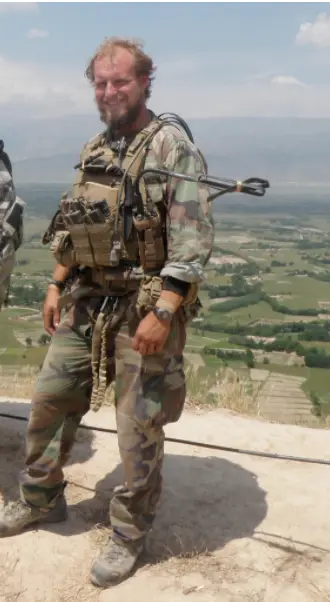
He's gone through the pain, he's gone through the suffering, and he's been through the healing process. So Andrew, for those of you who may be listening to us for the first time, was a Special Forces Green Beret who served as a breacher, did multiple tours in Afghanistan, and was exposed to blasts almost every day. And that had an effect on it. Andrew, can you tell us a little bit about that effect? And can you tell us about where you were at prior to meeting Doctor.
Gordon?
Andrew Marr (link to this point)
Yeah, I can. So I was at a point and it was end of twenty fourteen, early twenty fifteen, when Mark essentially reached out to me and said, you know what, I think that we can help and here's my credentials and here's what we've done and here's how we're treating traumatic brain injury. But prior to that, you know, I've gone from being an elite performer in situations of life and death, being on that end of the spectrum. And then after my last deployment, the complete opposite, you know, on tons of medication, alcoholic, problems with behavior, problems with cognition, problems with balance, migraine headaches, fatigue, double vision, blurry vision, that was migraines, that was the daily regular for me. And I was basically told that this is the new you.
And through several different circumstances that happened in my life, I came to a decision where I just said I'm not going to accept that anymore. And we went out and started looking for different answers, essentially for different ways to treat what we told was untreatable or fix what we were told was unfixable. And that led to looking at all different kinds of alternative therapies are deemed by modern medicine alternative. We've got some
Chris Albert (link to this point)
Real quick, Andrew. Were you still working at this point when you were going through all this?
Andrew Marr (link to this point)
I was still in the army, but at that time, you know, I was already, I was going through a, what they call a medical retirement because they said I couldn't take any more blows to the head. And then I'd also had blood clots both in the leg and the lungs that required at that time what I was told was blood thinning medication that I would need for the rest of my life. So because of those factors I was going through the medical retirement process. So I was just basically at my wit's end, know, nobody could give us a real understanding of why things were going wrong or why I could no longer perform or reach levels that I had, you know, became quite normal to me prior to the injury. And then enter Mark Gordon.
And, again, he reached out to me via email, then we talked on the phone. And then he said, hey. Here's my credentials. Checked out his credentials, and they're stacked. Check out some media.
So I listened to a Joe Rogan podcast with him and a navy guy named Matt Gosney. And for the first time listening to Matt Gosney speak, he was on 16 or 17 medications and had come off all of them. And everything that was going on with this guy was the same thing that was going on with me. And that's the first time I'd really hear heard anybody articulate it in the same fashion that I knew it to be. And then I heard Mark go on and talk about why everything he was dealing with was associated with two things inflammation of the brain and then the dysregulation of neurosteroids or hormones that are produced in the brain.
These two areas that lead to all of the downstream effects from a traumatic brain injury and then what some would call post traumatic stress or a subset TBI. So that's where I was at when I met Mark about at my wits end. And since then it's been a complete turnaround and we started an organization to help others. We've done that to about the tune of 200, coming up on 200 individuals that we've helped turn their lives back around. And me and Mark have lectured and talked in front of millions of people now all over the country on some of the biggest platforms and in front of some of the highest levels of government that there is.
So, together now, I'm honored to work with them to try to make a difference. And so, that's why, again, we're so honored to have them on the show today.
Chris Albert (link to this point)
Absolutely. And just before we get into, your meeting up with Doctor. Gordon, I definitely want to ask Doctor. Gordon what kind of stuff he saw in you and in your case and in others. For the person at home who might be going through something similar, but it's either not getting diagnosed or not getting identified, what did it feel like?
What was a typical day like for you at that point?
Andrew Marr (link to this point)
A typical day for me was waking up from a from a blackout, drunkness from the night before, and immediately started drinking, and then, you know, taking the various medications. And and then that cycle just kind of continued. I I don't remember a whole lot of it from from those certain periods where I was definitely heavily medicated and and and drinking heavily, but completely incapacitated. And then you can only imagine the effect that that will have on a wife who's nine months pregnant and four children, know, all young children. And oftentimes I can remember coming to a situation where I had apparently lost it either on a child or a wife and couldn't really recognize, you know, why was that happening or what would make me run off the hinges like that or being in public and getting myself into altercations in public for reasons that should not have produced a reaction like that.
And so I started to realize, man, not only is my health in jeopardy, but I'm jeopardizing everybody that I seem to be coming in contact with and not as a conscious decision, kind of as a byproduct of what I only thought was I was going crazy. And again, not being able to really get answers from that and focusing all your time and energy on what you don't want and what you don't like as opposed to what you do want and you do like totally exhaust you. And that's the point where I was at. That's kind of a typical day without going into much more detail than that.
Chris Albert (link to this point)
And for those of you, know Andrew very well. He is one of the most, not I don't want to say easygoing, but definitely not the kind of guy who would ever even scream at his wife or anything like that. And definitely not. I mean, I might have seen you with a glass of wine once the whole time I've known you, I definitely not somebody I know would do that. So definitely not the person that we know today.
Doctor. Gordon, first off, I want to really thank you for coming on here again. And I want to thank you for everything that you're doing. When you reached out to Andrew, how did you first start working with veterans and how did this situation with what veterans are going through first come into wheelhouse?
Mark Gordon (link to this point)
First, Chris, thank you very much for allowing me to come on to the show to share with you my experience, as well as the interaction, the wonderful phenomenal interaction I've had with Andrew for the past few years. What happened in terms of my involvement with soldiers, veterans, active military, was because I was invited to work with the NFL retirees, and something didn't sit right. These are guys that, you know, played phenomenal ball, were traumatized, were paid phenomenal amounts of money, and they were in this situation. And they had plenty of money to to go and, you know, pay for services. And at a point in introspection, I realized that there was a greater, more important group of people for me, to me, which were the veterans that were coming back.
We were seeing back in 2009 the beginnings of some of the information about blast trauma and PTSD and suicides and so forth, which really culminated in 2012. But in 2009, I started giving more widespread lectures on traumatic brain injury and hormone deficiency syndrome. And one doc who was married to, in fact, Green Beret, JR, out of, I believe it was Bragg, contacted me to find out how she can assess her husband to find out why he was getting ready to be less than honorably discharged because of change in personality and insubordination and just being somewhat of a rogue. So at that point, I said, let me send you a kit. We'll send it in.
We'll pay for it. Get it done. And we got the results. And it was very clear that this gentleman who had been in five plus tours of duty had suffered the consequences of battle, combat trauma syndrome is what we're calling it. And we put him on treatment.
He ends up staying in the Army, ends up being there, I think, two extra tours of duty, and training other Green Berets in his expertise. And that was my inception, my beginning to start working with this very elite group of people, as well as these very special heroes, as I call each and every one of you. And what happened was I sent out in 2009 a news release basically offering anyone who was a veteran or active military to come in to the practice will pay for it and start the process of healing. And from 2009 until, I think it was 2014, I had a little bit of flow of military and the results were great. And then I was in the process of doing a five zero one(three) which is a charitable organization.
I realized it was not the money, but it was the issue of, the time it would take me. So I turned around and started looking for, charitable organizations that were owned and operated by, veterans. And that's how I ended up contacting Andrew. And it was at the same time he was reaching out to find out of the box medicine. So it was destiny, if you will, that we were to meet and to start this program that he is leading.
Wow.
Chris Albert (link to this point)
And, you know, I've listened to you on the Joe Rogan podcast. I've listened to a number of your lectures. Tell us what we were getting wrong about PTS and traumatic brain injury.
Mark Gordon (link to this point)
Okay, it wasn't a matter of getting anything wrong. It's just the dogma that's in medicine. If you are depressed, put them on an antidepressant. If you're anxious, put them on an antianxiety medication. If you're bipolar, put you on lithium carbonate.
But no one asked the very simplistic basic question, why? Why was this happening? Why was this person that was a high performer like Andrew and all the other special ops people that we see, why were these people now on multitude of medication, anger issues, cognitive issues, focus, all the things that Andrew just shared with us, why was that happening? So I started looking at the biochemistry of what happens in trauma. And it was very clear in the literature, thousands, tens of thousands, hundreds of thousands of articles talking about that the trauma creates this inflammation, which is a chemical reaction.
It's like pouring acid onto your skin. It will burn the skin. Well, what happens with trauma is leakage of chemistry that should be in the cell or in the blood vessels leaks out or weeps out and comes in direct contact with neurons, the tissue of the brain, the cells of the brain. And it alters their chemistry. The inflammation stops chemical processes in the brain.
And one of the most important processes that is inhibited or diminished is the conversion of cholesterol to all the very important hormones that regulate brain function. We now know that we have an entire group of hormones that we refer to as neurosteroids that help the brain to communicate with different lobes and the rate at which they communicate. And it's the rate of communication that gives us our ability to recall things, gives us our ability to learn new things, stabilization of electrical impulses. You see something happening in front of you and you have a decision to make of whether or not you're going to pounce on the person or you're going say, hello, how are you doing? And that is the frontal lobes of the brain with judgment, executive functioning, word use between the back of the brain, the occipital lobe, and the side of the brain, which is the temporal lobe.
And you see something, and you pick it up, and in real time, it's a hammer, and you say, oh, that's a nice dog. Because there's an interruption of communication between the visual observation, the actual visualization of an object, and the brain's interpretation through its memory banks, its data coil, of what it is. So this inflammation leading to hormonal deficiency was the focus. Now, I'm going to be honest with you and tell you, when I started, I thought it was all the neuroactive steroids. And the neuroactive steroids, or the hormones in the brain, were the key.
But in the past almost thirteen years that I've been doing this, the science has supported a little bit of a reorientation, that it's the inflammation that begets the hormonal deficiency. And once you address the inflammation concurrent with the transient use of neurosteroids replenishment and you allow the brain to reestablish what I've been calling a neuro permissive environment, an environment that allows the brain to heal. Now throughout my earlier education, you know, once you lose brain cells, that's it. But that's not the truth. A lot has been coming out over the past ten years.
A doctor in Montreal and McGill University, Arturo Aguro, phenomenal studies showing that we can help nerves to regenerate by things like pregnenolone, allopregnenolone, testosterone, dihydrotestosterone, growth hormone. And all the hormones that are in essence villainized or demonized or because of all the problems that happen in sports. Horrible to take growth hormone. It's horrible to take testosterone. But these are the curing healing hormones of the brain.
So that's basically how it went from A to Z right now.
Andrew Marr (link to this point)
Mark, with with inflammation, is there a difference in inflammation in in how it acts and reacts in the body as opposed to the brain? Is there a difference there? And if so, can you expand on it?
Mark Gordon (link to this point)
Well, the inflammatory process in the body is based upon a lot of chemicals. And when you have leakage of chemistry from within a blood vessel or within a neuron, it stimulates a defensive mechanism. The body doesn't know that this is a normal reaction to trauma, but looks at it as an invasion, an attack. So in the brain, happens don't forget the brain sits in a fluid. So all the chemistry circulates around the entire brain.
When you're talking about arthritis of, you know, functional arthritis, osteoarthritis of the knee joint, you've got a localized inflammation of the knee, and a lot of the same chemicals occur in the knee as they do in the brain. I believe the brain has a lot more going on because it is the key organ in our body. So if there's a level of protection to the brain, which is probably a few notches higher than in our periphery, So what happens is the chemistry, the chemicals, you know, the tumor necrosis factor alpha, interleukin 1a, 1b, chemicals called caspases, All these chemicals seem to be more preferential in the brain tissue, the level of inflammation seems more caustic and harder to treat because you a lot of the medications we take don't get into the brain. So it has to be a very select group of products that are specifically keyed for getting into the brain. In the knee joint or in the shoulder joint of the elbow, it gets in there.
Peripherally, it gets in there, but the brain is a protected organ.
Andrew Marr (link to this point)
Right. And then in regards to acute inflammation and chronic inflammation, what's that process where something goes from in the acute phase and then remains as a chronic condition? What are some of the processes of that, Mark, and how can we better mitigate?
Mark Gordon (link to this point)
Well, acute inflammation, you know, inflammation leading into chronic inflammation, it's basically the same thing, the same chemistry. But what happens with chronicity is that you start losing more rapidly, neurons in a process called cavitation, where areas of a nitis or little itty bitty pinprick of an area of damage over time, if left unchecked, this acute inflammation going into a chronic phase can lead to a more expansive destruction of brain tissue. So how best to treat that is by addressing the inflammatory cascades. There's a group of natural products which have science, hard science, proving that they can shut off things like something called NF kappa, K A P P A B, which Wikipedia has a really good dissertation on. It's a genetic switch for increasing inflammation throughout the brain.
And the more the inflammation, the longer it lasts. So our focus is on diminishing the acute inflammation, shortening its duration so you don't get into a chronic phase.
Chris Albert (link to this point)
Mark, when we think about inflammation, and I've heard your lectures before and you speaking about PTS as something that probably also emanates from this. And when we think about inflammation for the person out there, what are of the sources of this inflammation? I know that some of it could come from food choice, it could come from being exposed to low level blasts. What are some of the common sources?
Mark Gordon (link to this point)
Some of the precipitators of inflammation, anything that causes interruption or damage to closed systems, like a cell is a closed system, like a blood vessel, an artery, a vein is a closed system. Lymphatic is a closed system. So anything that leads to opening up of these systems, which could be blast trauma, which could be x rays from CT scans, from dental x rays, certain medications, chemotherapy can do that, motor vehicle accidents, slip and falls, just anything that causes the jarring of the brain, because there's a density difference between an area of the brain called the white matter and the gray matter. The gray matter is denser. So what happens with any kind of sudden movement of the brain is that the denser area, the gray matter, moves more rapidly than the white area or the white matter, and it causes what's called shearing, where neurons' blood vessels can be sheared.
And that opens up to the leakage of content into the surrounding tissue and the body says, Wait a second, it should have this chemistry touching the nerves, so let's go after it. So it activates a cell called the microglia. And these microglia, once they get stimulated and turned on, they become overactive and aggressive. And in and of themselves, they start releasing these immune factors that help to ward off infection, help clean up junk that's being released, and it's a spiraling effect. It's a catch 22.
It's producing more damage. So activation of microglia is which is really the key from this chemistry that's, leaked into the brain where it shouldn't be.
Chris Albert (link to this point)
So say we have a, like, a machine gunner who's handling a 50 caliber machine gun. And, I don't know if you've ever seen it, but it's a fairly large weapon. And it shakes the person back and forth. Correct. Vibrations that go throughout your body.
Somebody who's doing that on a daily basis for a year, would that relate to them?
Mark Gordon (link to this point)
Absolutely. We see it in people who are in construction using pneumatic jackhammers that, bang, bang, bang, bang, it occurs. We've seen police officers from LAPD who have never had, quote unquote, never had any acute head trauma or identifiable head trauma, but developed the biochemistry, the testing that suggests they've had head trauma. When you inquire as to activities, they're out at Hogan's Run, which is their practicing range and their testing range in Elysian Park in Downtown Los Angeles, where they're shooting shotguns. And they're shooting, you know, full buck where the blast, you know, can kick you back.
Also looking at people who do as a sport, skeet. They're more prone to having problems with traumatic brain, that sudden jerking effect of the brain. I've had a patient who was rear ended at four to seven miles an hour. The lawyer didn't know if it was four or five or six, but it was someplace between four to seven based on skids or the lack of skid marks. Doing their testing, they had a hormonal or they had a biomarker which indicated that they had had a head trauma that interrupted or disrupted the production of a specific hormone in the brain.
So we think that, you know, having fallen from a three story building, or being 20 feet or 10 feet from an IED, or, you know, being run into by a car and knocked down and passing out is the only way you can get this type of symptoms, or these symptoms. But what we're actually finding, eighty five percent of the people who have traumatic brain injury have a mild traumatic brain injury where they never were knocked unconscious. They might have been knocked to the ground, but they never were unconscious. They never developed nausea or vomiting or disorientation or amnesia. But they go on over time to develop this process of traumatic brain leading to a continuum of what's called PTS.
Now, I personally believe that there's no such thing as PTS or PTSD. I do believe there's missed assessment and treatment of TBI that goes on to present once there's disassociation of different lobes of the brain, leads to depression, anxiety, anger, mood swings, irritability, libido problems, fatigue. And fatigue is number one in studies that were done called meta analysis, they looked at twenty, thirty, 40 independent research articles, and the consistency was fatigue. So
Andrew Marr (link to this point)
Mark, what have you seen in the clinical application as far as fatigue after you've been able to treat somebody with the protocols?
Mark Gordon (link to this point)
Well, that disappears. It disappears for a few reasons. Number one is they start sleeping better. The majority of the people that I see, whether or not it's the vets or the active military or civilians, sleep or insomnia is a very common occurrence because if they lose one of the key neurosteroids called pregnenolone, it diminishes the development or production of GABA, which is the natural volume of the brain. So when you impede or diminish the amount of GABA, you don't sleep as well, so you develop what's called sleep deprivation syndrome, which increases depression, increases cognitive fogginess, increases anger, mood swings, and is frequently missed. And by giving certain medications, the common sleeping medications, they say, Oh, it doesn't interrupt REM sleep, but it doesn't give them that full deep sleep. And, you know, I have a machine, which, Andrew, you're well aware of, the Zeo machine, which monitors brain waves, and then the MUSE machine to help with relaxation. One of them detects the, abnormality in sleep pattern, the other one helps us to reestablish it. And once we reestablish the sleeping patterns based on correcting the hormones, they sleep, they recover, fatigue disappears. And when fatigue disappears, depression improves, cognition improves, interpersonal relationships improve, libido improves.
Andrew Marr (link to this point)
Mark, is that, you think, one of the contributing factors why somebody doesn't have to make a bunch of changes in lifestyle starting out on the protocols because these address a lot of the areas, I. E. Why they can't sleep or why they're not being able to make appropriate social decisions, know, why they're not able to think correctly. By just addressing the inflammatory process and reintroducing neurosteroids to act correctly, that kind of alleviates a lot of these poor lifestyle decisions. Do you think that's a factor in the success of the overall healing process?
Mark Gordon (link to this point)
Yes. I think it's multifaceted, meaning that lifestyle changes. You know, if you were drinking alcohol, stop drinking alcohol. If you have high carbohydrate meals, you go to lower carbohydrate meals. You're drinking adequate water.
You're taking the nutrients that your body is deficient in based upon, you know, testing for them. So it's lifestyle, it's the supplements, it's, if indicated, the neurosteroids replenishment, and neuroactive steroids, which are the hormones that are produced on the periphery, like thyroid. What we know is that growth hormone deficiency, testosterone deficiency, DHEA deficiency, and vitamin D deficiency are all associated with depression. So in looking at these hormones, in conjunction with lifestyle changes, maybe taking supplements as part of the lifestyle change, we see a rapid improvement. I mean, you know, you've told your story about how rapidly you improved.
And Matthew Gosney, you know, off of 14 of his 16 medications in six weeks, an improvement in sleep, improvement in libido, you know, it just goes on and
Andrew Marr (link to this point)
Let's get into that. I wanted to go in that direction. Matt, for instance, was on, I mean, massive doses of opiates. I mean, massive and multiple, multiple, like enough to kill a hippopotamus. Got But he was able to come off without having any withdrawal symptoms. And you've now produced that more times than I could even register right now. So why is it that you're able to produce or help somebody to come off opiates without withdrawals and it be sustainable? I mean, two, three years later, we still have the same results. So can you speak to that?
Right.
Mark Gordon (link to this point)
Right. Well, the addiction to opioids, I have a very narrow view of that. And that view is, I think it's more the person. The addiction is not the drug causing the person to be addicted. I think it's the person becoming, wanting to be addicted.
It's just an easier state of mind to be. So with that said, what we're finding on a biochemical basis is that there are receptors in the brain for opioids called the mu receptor, and then there's some minor ones called the alpha and beta, or A and B, receptors. And what I'm seeing is that certain of the neurosteroids, or the neuroactive steroids, actually help to diminish the rebound effect from when you start getting off of the opioids. Now in Matthew's situation, he was on eight ten milligram OxyContins. He was on four sixty milligram, morphine sulfates.
He was on two fentanyl patches. He was on Adderall to counteract the side effects of that. He was on antidepressants. And because of the Adderall, he had to take Treston at night to help him sleep with Ambien. And he was taking muscle relaxers and, not Vioxx, Bextra, Celebrex to help him with the inflammation.
And in six weeks, he's off of 14 of the 16 medications he was taking instead of eight OxyContin a day, was taking maybe one or two as need be. And that's because I think with correcting his inflammation and putting the neurosteroids back in there, he was more in control of his feelings. Now we know a process in psychiatry which is called somatization. Somatization is where you focus in on body parts and you create your own pain. Now, what happened to Matthew is he had six pins in his jaw from IED blast.
He was pretty messed up from it. Six pins in his jaw, shrapnel out of the left side of his head, and his right leg was shot out. And he had obvious physical causation for his pain. But what controls the pain is the brain. So as you correct the chemistry of the brain, you become more tolerant of pain.
And we know with vitamin D, it raises the pain threshold. We know with testosterone that it decreases inflammation, as well as estrogen, estradiol, pregnenolone, and so forth. They all lower the signaling from the area of damage to the brain, and then how the brain interprets it. And that's why I'm saying that, you know, I think it's the person that is the addict and not addicting factor and not the opioids. So as his brain improved, he was now it was easier for him to make the decision, Hey, I don't want to be on these narcotics anymore.
And in six weeks of the eight, of the, eight ten milligrams, he was on maybe one to two a day, which over the year, he was off all his medication. And in that six week period that he got off most of his meds, he had no withdrawals. And as you said, we've seen this again and again and again. And after about two years of seeing this pattern, I started looking at the literature to understand why this was happening or how this is happening. And pregnenolone is in the literature.
Pregnenolone is called the mother of all hormones, which comes right off of cholesterol. So if we do anything to diminish cholesterol, what happens is we lose a whole array of very important brain hormones. So pregnenolone has been found to help function like benzodiazepines, the Valiums and so forth. And there are actually articles talking about helping people who are addicted to benzodiazepines to get off of it, as well as early on if you're taking these benzodiazepines, if you go on pregnenolone, it counters that fatigue feeling that you feel from these drugs. So what we're starting to see is there are a whole bunch of receptors in the brain, these, circuits that are turned on to help us not want, narcotics or benzodiazepines or these quote unquote addictive drugs.
Chris Albert (link to this point)
Wow. That's, I mean, we're talking, we're in an age right now where somebody dying every nineteen minutes from an opioid overdose. Yep. And, you know, it's insane the impact that that's had. And a number of those people are veterans.
So there's huge impact there when we talk about what these treatments can potentially do. One of the things I got from the Joe Rogan podcast that really flicked a switch in my mind was mentioned that had Andrew been taking a compound called N acetylcysteine, had he been taking that during the time when he was operating, he would have been fine and would have never gone through what he went through. Is that something that people who are currently out there serving should be taking? Are there other things that people should take to protect themselves if they're in danger of sustaining this type of inflammation?
Mark Gordon (link to this point)
Absolutely. And you know, the beauty of N acetylcysteine, which is a natural diamino acid, there's two amino acids together to form N acetylcysteine, which increases glutathione. It was a study done by the army in an active theater of war, where they took a group of soldiers, army soldiers, that had been exposed to blast trauma within twenty four to forty eight hours, and they took them into a study, and they put them onto NAC and then the control group, which were other soldiers who were out in the active theater of war with blast trauma between twenty four and forty eight hours, were not put on it. They were put on a placebo. In one week, the group that was not on NAC developed insomnia, mood swings, anger and depression.
The group that was on it did not. So what is it all about? Well, NAC increased glutathione in the brain, which is the key area for glutathione, it's also the heart and in the liver for detoxification in the liver. In the brain, its responsibility is to remove these inflammatory free radicals that are produced in inflammation. And the more these free radicals accumulate, the greater the degree of potential damage that can happen to brain tissue.
So the first system that goes down, shuts down, after blast is this glutathione system, so reactive oxygen species, free radicals start accumulating. So if we can put someone onto a product that maintains or to ramps up the production of the glutathione, we can give a better parameter or perimeter of protection against blast trauma. You know, one of the things that has changed in battlefield is that the protective armor, the body armor that's being worn, is great for the body, protecting the heart, lungs, the organs, but there's we don't have a very good protection other than a helmet for, you know, blast trauma to the above the neck, from the neck and above. So using something like NAC would be great. Now, there's an add on to NAC.
They're not doing it, but in the reading that I've done, I came across this incredible wealth of information showing a combination of N acetylcysteine with tocopherols, which are the vitamin E group, helps to shut off another level of inflammation even above glutathione while maintaining glutathione. And that's that NF kappa B, which is the We don't have medication, specific medication for NF kappa B. We have medication for the COX-two inhibitors, like the Bextra, the old Vioxx, and the Celebrex. And then we have a very long array of products to treat the prostaglandins, which are the lower level of inflammation, like the ibuprofen, the Naprosyns, and the aspirins. But we have nothing on the upper tier to address these NF kappa B, and NAC and vitamin E together are the key.
Chris Albert (link to this point)
And these things aren't expensive, right?
Mark Gordon (link to this point)
No. No. No. They're actually No. They're not very expensive. You know, I'll just say they're not expensive. Relative to the expense of an antidepressant For six months of NAC and vitamin E combination, it's one month or two months of a standard single antidepressant. That's how expensive they are.
As well as the quality of the NAC and tocopherols, the vitamin E's are pharmaceutical grade, but they're maybe $25 a month.
Andrew Marr (link to this point)
Mark, with the NSAIDs, the non steroidal anti inflammatory drugs, I mean, potentially, if I understand right, could have long term health effects. Does NAC and the mixed tocopherols also carry that level of potential harm? Doctor.
Mark Gordon (link to this point)
Great question. The NSAIDs, the ibuprofens, the Naprosyns have a potential of damage to the kidneys called interstitial nephritis that can lead to kidney failure. NAC does not, and the added benefit of mixed tocopherols or mixed vitamin E is that they are incredible at anti cancer, anti inflammation. So there are benefits, and there's no OD, no overdose, from vitamin E or from the NAC. So I'll say they're relatively safe taking all things being equal.
Someone might have an to something.
Andrew Marr (link to this point)
Mean, can drink too much water called hyponatremia die from that. So everything in its right place. Our good friend, Doctor. Michael Lewis, as you all know, with the Omega Protocols and the book When Brains Collide, loves omegas. Well, how does that fit in to your protocol, if at all?
And would you recommend that as well?
Mark Gordon (link to this point)
Oh, yeah. Michael's book, When Brains Collide, is a phenomenal compendium consolidation of a lot of information on eicosanoids, the omegas. And omegas have a great, great part in treating traumatic brain injury and treating the inflammation. They are very good. I'm looking for the literature to show that the combination of NAC and omegas, or yeah, omegas work the same as NAC and the mixed tocopherols, the vitamin Es. I haven't found it yet.
So what I've done is I've sort of moved into this NAC and vitamin E regiment. We had a vitamin NAC vitamin E, NAC omega-three, and NAC alpha lipoic acid protocol, because I think you went through most of them. And what I found was the NAC and the mixed vitamin E seemed to work very well. But if I was to have my optimal therapeutic regimen, I'd throw in alpha lipoic acid, mixed tocopherols, and omegas together because they all function to do the same thing, to improve upon the inflammatory condition of the brain. And we'd like to go and approach it from a multitude of angles instead of relying on just one pathway.
The more pathways of reduction of inflammation, the more robust the treatment will be to achieve the goal of diminishing inflammation. So I think Michael's on the right path. I know Barry Sears had Omega-three project and presented to us a couple years back a non veteran, a civilian who had a nasty coma. And when they woke up, they were almost, you know, back to normal.
Andrew Marr (link to this point)
Are there any products out there that you know of or could recommend that have all of those components in a single product, that being the NAC, the mixed tocopherol, ALA, omegas, or something similar? Is there anything out there?
Mark Gordon (link to this point)
Well, there's nothing out there, but I think you know that we're coming out with a product called TBI Defense probably by the end of the year. TBI Defense is all that plus. What spurred on the production or the research on this TBI Defense I was having a lot of parents and colleagues and some of the media people I've worked with calling me up and saying, you know, their grandson or their granddaughter or their child had a head trauma and was in a coma coming out. What can we do to help them? And that's what started me looking at the first rendition of TBI Defense for children because there's something like five hundred and sixty two thousand adolescents between zero and 19 years of age who have had a hospitalization for a traumatic brain injury.
It was about five thousand who died. But because they're under the 18 years of age for my population, you know, what can you do for them? And that was the question. So what we can do is address the inflammation aggressively. And so from the TBI defense, there became an acute form of it, and then there's a chronic form of it to help with people that are above 19 for adults.
And then a product that came out recently, is the Clear Mind and Energy, which address the fatigue part of the brain, the fact that the biochemistry of the brain during recovery is slow. And clear mind and energy has 100% of their composition are natural products, and then there's a component in it which is called EGCG, which is an extract from green tea along with theanine, which is a nootropic, which is a brain smart product that helps with cognition and it helps improve communication of different lobes of the brain. So we just came out with that in March. So these two together will probably be very efficacious in helping to protect as well as to accelerate improvement in conditions that are precipitated by trauma.
Chris Albert (link to this point)
Mark, what kind of resistance have you faced in bringing this information out? And have you faced any resistance? And if so, what's it been about?
Mark Gordon (link to this point)
Well, the resistance is really about trying to get an established protocol that has already been proven not to work to change. I mean, you have, you know, you're diagnosed as PTSD without any biochemistry done to look at the hormonal disruption or the neurosteroid disruption or to look at inflammation that, you know, we have markers to check. And it's so much easier to hand someone as they handed Andrew 13 different medications or Matthew 16 medications or this individual five medications, six, three, nine, whatever the number of medications. It's so much easier to keep on doing the same old same old thing without really reassessing, you know, are is the treatment that I'm providing to these individuals working and obviously with the statistics of one suicide every nine point five minutes in The United States along with the one death from opioid addiction every nineteen minutes, you've got to think that maybe we're not really addressing the issue, and maybe we're treating ourselves and not the patients. Maybe there's a secondary gain that's being achieved by handing out all these drugs.
So the resistance has been quite intense, but we're starting to see chinks the wall because, you know, Andrew and I were invited to one base, one active military base. We've got a few extra, a few more invitations. I just received one this morning with another group of special ops. And they're starting to say, hey, traditional medicine or the protocols that we've been receiving are really not doing anything to get me back or get my brother and sister sisters back to functioning as they were prior to the injury. But here's this unknown crazy, kooky doctor and his partner, who's ex Green Beret, who are consistently showing improvement in, these guys that were on guys and gals that were on a multitude of medications and were dysfunctional.
They were non functioning in life. They were just existing. They weren't living. And here they're showing again and again to the tune of almost 200 military, whether veteran or active military, and over 1,400 civilians who have gotten their life back with a, what is it, we're at seventy three percent improvement overall, with ninety one percent of the individuals who come into our program have a fifty percent improvement at three months, which when you look and talk to them about the medication that they were on, what was your rate of improvement? None.
They went backwards. They were worse off on the medication because it did nothing to help improve their quality of life. They just existed.
Chris Albert (link to this point)
And question for Andrew. What products are you taking currently? Types of things are you including in your regimen right now?
Andrew Marr (link to this point)
Right now with Mark's guidance, I am on the the anti inflammatory protocol that consists of NAC and the mixed tocopherols. And then, pregnenolone, DHEA, Secrotropin, product that Mark just released called Dynatropin, is the exact same thing in the evening, as well as vitamin D if I'm not amply outside exposed to the sun. So that is a lot less than when we started. I was on testosterone and then I was on Clomid to help us produce testosterone. And now I don't need any of those things that I once needed before or probably I just I thought or I told myself I needed before.
So once I got rid of or reduced the inflammation and were able to improve the neurosteroid functioning, like we've said, things continue to get better and my mindset just continued to change. I thought, you know what man, If thoughts can make you sick, can they make you better? And I started focusing on, you know, what I wanted to happen and what could I take that I needed and could the body produce the other things I didn't on its own. If just being in the right mindset and the right neuro permissive environment as Mark calls it, know, could those things come back in alignment without any external use? And the answer has been yes.
We had my labs done last December and while some of those markers were low, they were turned back on and functioning. Whereas prior to any stimulation, that wasn't the case. I think Mark probably would generally like to see higher numbers. But I'm at such a place now where it's like, I feel great. I'm doing great.
I don't need the numbers to validate anything. And so that being said, let's take what I see as the bare minimum, is the anti inflammatory protocols, DHEA, pregnenolone, Dynatropin, and vitamin D. And I'm telling you, I have not felt better, even pre injury status. And then you throw in the new product, the Clear Mind and Energy, which I don't know if it's hit out for release yet. Mark, an update this year, but that product is is amazing.
And and so, know, that those have been game changers for me. So that's my protocol right now, Chris.
Chris Albert (link to this point)
So these protocols are dynamic. They go based off of what you see with the brain chemistry, what types of improvement you see?
Mark Gordon (link to this point)
Correct. What happens is the patient fills out a monthly questionnaire, and that's how we monitor outside of the laboratory subjective improvement. And you see it's broken into three parts: psychological, physiological, and emotional. And you see improvement in cognition, improvement in sleep, exercise tolerance, physical activities go up, anger goes down, you know, all these parameters. And as an aside, we see a lot of people who have an improvement in their immune system such that they're not getting sick like they used to.
Or they have diminution decrease in their allergy symptoms, which is, you know, these are all part of the inflammatory composition of the body. So we're focusing in on the brain, but the effect of our therapeutic, of our protocols, is that it affects the entire body and the quality of functioning. I will answer questions. The Clear Mind and Energy has just been released. I was in Orlando, Florida, where I was able to expose a couple of 100 doctors to the product and getting responses now, getting responses and requests for the product, as well as the fact that we tested it out for about three years prior to getting it to the point of releasing it.
And one of the testers was my oldest daughter, who's just finished up her residency in Pennsylvania Internal Medicine, who'll be coming to the practice. She has been living on it for, during her residency, where she's on call, sleeps three hours, takes a teaspoon of the product, and is able to go without, with pure clarity of mind for another eight to twelve hours. So, we know it was on the right path. We went up against, you know, the five hour energy drinks, and the large cans of liquids, and the little red can of liquid, and tweaked our chemistry such that it would be equivalent to or better than those products. And, we have no caffeine added.
We have no artificial chemistry in it. It's all GMO, non GMO, and gluten free with stevia and no artificial coloring. So that's because of my second daughter, Alison, who's a naturopathic physician, who made sure that I kept the product as perfectly hygienically clean as I could in terms of nutritional composition.
Andrew Marr (link to this point)
Because otherwise you would have loaded it with garbage. Right, Mark?
Mark Gordon (link to this point)
No. No. I learned. I learned. But it's also the delivery technology. What makes Dynatropin so dynamic and being able to raise the production of growth hormone within ninety minutes is the fact that it uses a liposomal delivery technology, and that's what every one of our products that you'll be seeing coming out use this delivery technology, which helps to get it into the bloodstream. A smaller dose taken in is a higher dose in the body instead of it all being destroyed.
I tell you the story about if you take one thousand milligrams of vitamin C by mouth, you only absorb about a hundred and ninety milligrams, 19%. But if you mix it with our liposomal product or with liposome product, you get a 97 absorption or nine seventy milligrams. So you can either get a higher dose of vitamin C absorbed or you can lower the amount of composition that you give and that's what we decided to do to get a high uptake or to get the uptake that we need. So the technology is Yeah, I'm
Andrew Marr (link to this point)
Go ahead.
Mark Gordon (link to this point)
I'm sorry, go ahead. No, that was it. Technology is cutting edge.
Chris Albert (link to this point)
I've read a lot of the stuff on Dynatropin and a lot of the studies, and I've been taking it, so has my girlfriend. And I feel absolutely amazing. I sprayed it in my mouth before I go to sleep. And then, I feel absolutely great get to jiu-jitsu every day. And when I wake up in the morning, I I honestly feel like it not to get vulgar, but I feel like an 18 year old kid again.
Makes me feel great.
Mark Gordon (link to this point)
Yeah. You know, the beauty is the composition of Dynatropin has been tested for about sixteen years. And in the past eleven years, it's been only in physicians' hands. And the physicians have substantiated or validated the product, and that's through laboratory testing. You take the product in, you take a blood test, you see the elevation in the growth factors.
And as we, you know, a very important component in our brain health is good levels of growth hormone. In the lecture that I gave in Orlando a couple weeks ago, talked about growth hormone has now been found to affect our brain energy, brain repair, anti depression effect, sleep improvement, and then another aspect which is called social anxiety. It helps to diminish social anxiety. My feeling about growth hormone for the past twenty five years is that growth hormone is the key hormone to bodily function. It regulates every one of the other hormones.
So if we're deficient in growth hormone, or not optimal in growth hormone, we'll have diminished benefits throughout our body, through every system in our body.
Andrew Marr (link to this point)
And for anybody out there who hasn't heard it, we have a great podcast specifically talking about growth hormone with Mark. We did that about six or seven months ago in 2016. So there's a wealth of information there on growth hormone. Mark, want to shift over to cholesterol and metabolic syndrome and kind of what you've seen with that in the practice or any improvements you've been able to help make? But before that, can kind of frame cholesterol in the Framingham study, no pun intended, and speak of the importance of that study and what we really know about cholesterol as opposed to what's being sold in mass media?
Mark Gordon (link to this point)
Well, cholesterol has been called the cause for cardiovascular disease. And it's been told that cholesterol is the predicine for the development of atherosclerotic disease of the blood vessels throughout the body. So because of cholesterol, it causes calcium to layer down on the arteries to cause closure of the arteries, which we now know is not true, just like we now know that the nutrition, our diets, have a small, very small role to play in terms of cholesterol. So the Framingham study has been going on for sixty plus years, and what they've been looking at is the effect of cholesterol on lifestyles. So they look at cholesterol in terms of high blood pressure, in terms of diabetes, and smoking, and high nutritional intake of trans fatty acids.
So cholesterol appeared, past tense, to be associated with these lifestyles, in conjunction with lifestyles, to increase the potential risk for heart disease. The fallacy in that is when you look at that fifty percent of all heart attacks happen in people with normal or low levels of cholesterol. So then the question is, so they have normal or low levels of cholesterol. How is it that they had a heart attack? Well, blah, blah, blah, blah, blah.
How about this? How about cholesterol really doesn't have a role to play in atherosclerotic heart disease, but inflammation does? And what we found is that there's a whole grouping of inflammatory chemistry that creates the damage to the lining of the arteries, and the natural response of the body is to repair it. So it first sends out cholesterol to go and try and fix the lining of the wall. And if it can't fix the lining of the wall, what happens is calcium is laid down to act as a band aid.
And it's that calcium that's being laminated or layered down that leads to the narrowing of the arteries. And with the inflammation, it causes swelling of the arteries, so the walls swell towards the center and narrowed what they call the lumen, which is the tube. And that's what leads to the heart attack. Now, my cholesterol is three fifty. One of my close friends who you all know, Keith.
Keith's cholesterol was 140, 150. He was ex fighter pilot, test pilot. And we had an ultra fast CT scan that scanned our hearts, our whole body really. And with my cholesterol at three fifty, my score was zero. Less than 100 is good.
Greater than 400, not good. Keith, with a cholesterol of 140, 150, has his done, and his score is greater than 2,000. Five weeks later, he has open heart surgery because he's got 95% occlusion of the left anterior descending, which is also called the widowmaker. Some months later, we go and have this panel done that we helped develop with our laboratory called the LP6, Lipid Profile six, fourteen markers for inflammation. My cholesterol is high, but all the inflammatory markers are low.
In Keith's case, his cholesterol is low, but all his inflammatory markers are high, predisposing him to an accelerated form of atherosclerotic heart disease. Cholesterol was not the issue. The issue was inflammation. So a side effect of our inflammatory protocol is improvement of this state of inflammation of the arteries, which could be caused by smoking, can be caused by uric acid and gout, It can be caused by a whole litany of things that we're doing in the lifestyle sense that increases our risk. So, cholesterol is also the precedent of the all the hormones in our body, except for thyroid and growth hormone.
It's the precursor to pregnenolone, progesterone, allopregnenolone, cortisol, DHEA, testosterone, estrone, estradiol, estriol, adenosine, not adenosine, testosterone, DHT, and I missed one, which is AD, androstenedione. So, if we do anything to interrupt the production or the availability of cholesterol to be there in our body, we diminish the production of all our hormones. And I believe that's some of the reasons or a reason that we see some people coming in with what we think is blast trauma, but you talk to them, they've been on a statin drug that lowers cholesterol for twenty years, and they're wondering why their testosterone levels are bottomed out. Their cortisol is low. They're fatigued all the time.
So cholesterol is, I call it, the father of all hormones. Now they call pregnenolone the mother. So the mother and father get together and we have all the other hormones that regulate brain function and physical functionality.
Chris Albert (link to this point)
So including dietary fat in your diet is probably pretty important in making sure that you remain hormonally balanced and reducing inflammation. Is that correct?
Mark Gordon (link to this point)
Right. Yeah. We need good fats in our body. We need the beta hydroxybutyrates. We need the fish oils.
We need the avocado. We need the flaxseed. We need all these variety of oils for our body. Linoleic acid, peanut butter, three essential fatty acids that we need: linoleic, arachidonic, and linoleic, linoleic and arachidonic acids for our body. So, in not taking in fats, we can actually lead to problems with our vision, with our brain, with our skin.
So we need fats.
Chris Albert (link to this point)
And I've also heard it said that, that we have two brains, one in our heads and one in our gut, because the brain is connected to the digestive system. Important is the gut microbiome?
Mark Gordon (link to this point)
Yeah, that's the, you you'll have to have my daughter Alison on your show. That's her whole thing. You know, she's a consultant to Warrior Angel Foundation also. And her focus is on gut and brain. If the gut's biome, which is the bacteria that are in the gut, or the inflammation that happens in the gut because you're eating breads, or you have a lactose intolerance creating inflammation of the lining of the gut, you lose the ability to absorb key amino acids that regulate brain function.
We know that things like L lysine, alpha ketoglutarate, arginine, these all affect growth hormone and another hormone called ghrelin that works with growth hormone and fats with leptin. And these are regulated by the gut. And also inflammation of the gut increases a chemical called interleukin six, IL-six. You can also see that on Wikipedia, which is the same hormone that's increased when you get a cold. So when you get a cold, do you feel smarter or less smart?
Most people say less smart. I don't like saying do you feel smarter or dumber? But it's less smart. So it's this interleukin six that actually interrupts the area of the brain called the hippocampus that deals with our intellectual quotient, and it can influence that. And something like DHEA S, which is released by one of the glial cells, one of the specialized cells in the brain, helps to diminish that.
So having really good levels of DHEA S helps to diminish the reaction from gut inflammation and also in the brain itself for getting viral infections. So the gut has to be addressed in order for the brain to get better. So Alison's job now is to start reviewing with the patients their nutrition and looking at their inflammatory markers. We just worked with a guy that had metabolic syndrome. Metabolic syndrome is where, for whatever reason, the pancreas starts producing insulin, but the body doesn't recognize it.
So what happens is you get high levels of insulin, and when insulin levels get too high, you start accumulating fat. Also, that occurs, can have very low blood sugar, and you can have all the symptoms of low blood sugar. Well, turns out an article came out about five years ago which stated people with blast trauma or inflammation of an area of the brain called the hypothalamus, they were the ones who had an increased production of insulin. And that's called the metabolic syndrome. So what we've been able to do is to help with the inflammation, put an essential mineral back into the body which helps to maximize the wall, the cell membrane recognition of insulin, and then testosterone.
In 2000, the Mayo Massachusetts study published an article, which says the Mayo Massachusetts study has been going on for a long time, thirty plus years, if not forty plus. And what they found is males 50 who had low free testosterone had a greater occurrence of this thing called metabolic syndrome. Two years after that, in 2002, they came out with the same thing for women. So how we're treating people with metabolic syndrome is putting them on anti diabetic medication. Now, right now, to date, we have twenty six people who came into us with metabolic syndrome who are no longer diabetic, who have normal insulin levels.
Alison just worked on this last guy whose insulin level, fasting insulin level, was three seventeen. Normal should be about three to 10, but his three seventeen and his blood sugar was 124, which it should be less than 100. And fifty four days after starting the protocol, his insulin level was 13.2 and his blood sugar was 89, and he lost 36 pounds, fifty four days, by correcting the biochemistry. And he felt phenomenal, had an incredible amount of energy. So the metabolic syndrome, I mean, I didn't anticipate this, to be perfectly honest.
We just started noticing this pattern of people, because we do insulin on every patient, started noticing, recognizing the pattern where testosterone deficiency, mineral deficiency, and high insulin, either low or high levels of blood sugar, and obesity, that it reversed when you corrected with the hormones and the minerals. So unbeknownst to us, the same thing with the opioid withdrawal without withdrawal symptoms and now the metabolic syndrome. Two spin offs that were unanticipated when we started this project. Hello?
Chris Albert (link to this point)
Sorry. Go ahead, Andrew. You wanted to talk there?
Andrew Marr (link to this point)
Go ahead, Chris.
Chris Albert (link to this point)
It's okay.
Yeah, I think that's absolutely fascinating. You know, I myself, I was a sufferer of ulcerative colitis and, know, gut health was so important to me. Remember back when I was a bodybuilder, I was doing these really low fat diets, not taking care of my gut microbiome, not eating fermented foods. My brain literally felt like mush. Sit down anytime I'd sit down, I'd fall asleep.
So that was that that's been something that's been really, really enlightening. When a veteran comes to you, tell us a little bit about the process. How do they get involved with the Warrior Angels Foundation? You know, do they receive treatments, things like that?
Mark Gordon (link to this point)
That's directed to Andrew?
Chris Albert (link to this point)
Either one of you. Either one.
Mark Gordon (link to this point)
Go ahead, Andrew.
Andrew Marr (link to this point)
Yeah. Everything can be found on our website, waftbi.org. But the beauty of the program is this, that it's one, decentralized, and two, it's personalized, and then three, it's integrative into your life. So really that could fall under the personalization category. But decentralized meaning that once you've come into the program, you've filled out all your paperwork, you've been approved and funded, we send the lab kit to you wherever you're at.
So if you're like in Chris and you're in the Redlands, California, the lab kit will be sent from our laboratory facility, Access Medical Labs in Jupiter, Florida, to Chris in Redlands, California. The lab will make coordinations for you to go to a sister lab that's close to your geographical location. And everything will be completely planned out for you where all you do is you bring the blood kit to the coordinated lab. The lab then takes it. They run through the process, draw the blood.
They then send it back to Jupiter, Florida. The lab analyzes the blood work, sends those results to Doctor. Gordon's office, and the office will write up a detailed report based, on the findings of those results. The preliminary four page email will be emailed to you, And then Doctor. Gordon's office will set up a video conference for you to have with Doctor.
Gordon if you're not in the LA area. So you can converse with one of the leading experts. I know Doctor. Gordon likes to refer to himself as experts, but one of the more knowledgeable people in the world in this area. Have one on one consultation without having to leave your house, so to speak.
And then from there, Doctor. Gordon will go over everything with you in what I like to call excruciating detail, where everything will become crystal clear. And then together, you guys will agree on treatment protocols. At this time 80 to 85% of the protocols I think throughout and including the foundation has been non pharmaceutical, so no prescriptions required. If there is, if you are one of those cases where ten to fifteen percent of the people do require some type or level of prescription, then we're going to have to work with your local physician, your local healthcare director to then work on that together just for state reasons and certain laws about prescribing medicine across state lines.
That's when we'll have to recruit your physician to be a part of this teamwork that's working on your overall fitness regime. That being said, from there, all supplements and products are handled through doctor Gordon's office directly after it's been funded. And then every three to four months, you'll do a follow-up lab and a follow-up consultation. And then resupplies will go through doctor Gordon's office, like I said, and and they'll get those out to you. So without having to go to the VA, without having to go to a doctor's office, or wait in a long line, or worried about impersonalized care that's cookie cutter and just masking or treating symptoms, we've come up with a revolutionary way using technology and outside the box thinking to say, I don't like any of that.
How can we fix it? How can we get world class care without leaving our house and without having to go to the doctor's office? And that's what the foundation has been able to provide through Doctor. Gordon's help and resources. That being said, the amount of media attention that we have received has been outstanding.
And I know today, whereas in 2014, where this information was not accessible to anyone, now we just have loads of information talking about the things we discussed today, either on our website or Doctor. Gordon's website, tbimedlegal.com is Doctor. Gordon's TBI website. But that being said, like I said earlier, from the different media forums that we've been on, we've literally been in millions of homes through these forums. We've run through our budget rather quickly.
So for 2017, I don't have a budget to take on any new applicants or participants at this time. But if you can pay for yourself, you can certainly go through us to get to Doctor. Or go through him directly. But we are gearing up for 2018. And at that time, we will be self sustaining or financially self sustaining through a number of these products that Doctor.
Gordon has created. They're going to directly benefit the Warrior Angels Foundation. So what that means is when someone buys that product, a good portion of that sale directly goes to Warrior Angels Foundation, then we'll be able to treat more people. In addition to that, my brother Adam and myself wrote a book called Tales From The Blast Factory. That'll be coming out later this year.
Proceeds from that will go to directly benefiting the Warrior Angels Foundation. So that's the process. That's where we're at. I strongly encourage anybody who wants more information or to see more media on either doctor Gordon or the Warrior Angels Foundation. You can go through waftbi.org, or like I said, doctor Gordon's website, which you can maneuver to from our website.
And then again, if you all of this is readily available on our warriorsoulagoge.com website as well.
Chris Albert (link to this point)
Yeah. No. I'll I'll be including all the links in the show notes as well.
Andrew Marr (link to this point)
Well, great. I just wanted to reiterate some things that Doctor. Gordon has hit on, Mark's hit on, it's kind of mind blowing, and we're talking about it kind of nonchalantly, but he's come up with a protocol that can identify and treat the underlying condition, not just for traumatic brain injury, not just for post traumatic stress, not just for metabolic syndrome, or being addicted to opioids, or having behavioral health issues. We're talking about all of those because they address what's going on with the individual because it's personalized. And when you look at these numbers, just in America alone today, they're outstanding.
Outstanding in the negative sense. Like we said, one in every nineteen minutes, somebody dies from an opioid overdose that was prescribed by a physician. We're not talking about scoring heroin off the streets. But then you look at people who are dying from heroin overdoses, seventy five percent of those individuals, according to the CDC, first got addicted to opioid pain prescription medication that was prescribed from a physician. Okay?
And so we're talking about a dramatic change or a positive alteration in society as we know it, if we can just as on a whole, able to implement these things that Doctor. Gordon is showing through science and the empirical evidence to be true. So if we know if we can help in these factors, what does that do to homelessness? What does that do to the current incarceration rate or the propensity to go and be incarcerated again after being released? What happens to opioid addictions when we can truly identify the underlying condition and treat it?
I'm going to go out on a limb here and say the world as we know it would be a different place, a better place. And that's where I think we're heading to. That is the future of medicine, a medicine that doesn't look for a polypharmacological way to treat something. It's saying it's individualized, it's personalized. Where is the underlying condition?
How do we enable the body's innate ability to heal itself or help heal itself, which Doctor. Gordon calls the neuro permissive environment. And I think what he's doing is so cutting edge that twenty years from now, it's going to everybody's going to look back and say, how do we ever do anything differently? But it takes pioneers to say, I'm not going to follow. I'm going to swim upstream as opposed to just getting in line and going where everybody else is going because what I'm finding is just not making sense.
And I think, again, that's what we're going to be able to say twenty years from now. Oh yeah, how do we not know this? But you know what? It takes a pioneer to do that. And that's what we're doing.
Chris Albert (link to this point)
Wow. Doctor. Do you have anything to end on or follow-up to what Andrew just said?
Mark Gordon (link to this point)
Woah. That was great. No, I think he said everything that needed to be said. And I think people out there listening in reviewing what we've said over this period of hour and twenty five minutes will hit home. I think there are a lot of key points that were addressed that will make one stop and say, am I feeling better?
Do I am on six different antidepressants? Am I still depressed? And the majority will say yes. And the reason is because you're not being treated for you're being treated for depression by masking and not by treating the root cause. And that's really where we're at, is treating the root cause, alleviating the process of traumatic brain inflammation on the continuum that creates the neurobehavioral alterations that we call or label depression, anxiety, panic, and bipolar.
So with that said and done, you
Andrew Marr (link to this point)
Mark, very one last thing I wanted to talk real quick. We've had several private conversations on the ketogenic diet, some of the pros and cons, and some of the times you feel it should be used and it should not be used. So with its growing popularity, can you speak on the ketogenic diet and when you think that should be applied specifically to a patient who has had a TBI as opposed to when it should not be applied? And then maybe some more generic recommendations from there.
Mark Gordon (link to this point)
Well, the ketogenic diet is all about diminishing the development of free radicals. When we take in carbohydrates, it generates throughout the body and the brain specifically these free radicals. If you already have inflammation in the brain that in ninety nine percent of the cases are not having the inflammatory component addressed, so they're just using nutrition as the focus, By removing the carbohydrates, it'll remove the production of free radicals. But the negative of that is, is the brain runs on carbohydrates. And what we've seen in the literature is that if you starve the brain of carbohydrates, it increases free radical production and accelerates death of cells.
So you've got a good bad. It's good to have a ketogenic, but it's bad when you have a friable or sensitive brain. So acutely in a patient, I would first get them treated as intensely as can be anti on inflammatory regimen before I would initiate or start settling into a ketogenic diet. The benefit of the ketogenic diet, just talking about brain, is to diminish the free radicals, but you accelerate destruction of nerves through starvation.
Chris Albert (link to this point)
So the main thing is to stop the bleeding first. Let's stop the inflammation. Correct. Stop the destruction, and then focus on rebuilding.
Mark Gordon (link to this point)
Correct. You need to first alleviate the inflammation so that the brain is not so reactive to the starvation. So that's in essence what ketogenic diets do relative to brain functioning. You try to shift it from carbohydrate to fats, to using fats as a fuel source.
Chris Albert (link to this point)
Well, Doctor. I really want to thank you for coming on here today. Been an amazing conversation. And I just want to say something to everybody out there listening. The information we've covered today, it's out there.
And Andrew and Doctor. Gordon have had an immense amount of success in helping veterans and helping others to heal their brains and to live better lives. But the onus really isn't just on the information or on the treatments. It's really up to you. It's up to you to decide that you are going to not take the standard view as an answer.
It's up for you to decide that you don't wanna be on medications for the rest of your life that aren't working for you. And so, my big message to everybody out there today is that we've given you the information. We put it out there for you. It's accessible. It's not only accessible here, it's accessible on Doctor.
Gordon's website. It's accessible on the Warrior Angels Foundation website. But it's up to you to take action. And whether that be securing treatment for yourself, or whether that be contacting your congressperson, letting the powers that be know that we can do better. I think we all need to do something.
We all need to start doing something rather than just talking about it and raising awareness. And awareness is great, but action is better. And I want to commend both you Doctor. Gordon and Andrew taking action on this issue, and creating something that could potentially help all veterans and all people in this dire situation. And with that, ladies and gentlemen, this is Chris, Andrew, and Doctor. Gordon on the Warrior Soul podcast. And we are out. Alright, guys.
I wanna thank you all for listening to this episode of the Warrior Soul Podcast. Just a reminder here that we have this episode and every other episode we ever done of the Warrior Soul podcast up at warriorsoulagoge.com. That's warriorsoulagoge.com. And if you can get on iTunes to leave us a review, let us know how we're doing. You know, we're trying to bring you some amazing life changing content here, and we want to know what you think of it.
We want to know if it's actually having an impact. So please, if you can write us a review, get up there on iTunes. It really helps the show out and it helps us to bring things to you that are going to be more relevant. In addition to that, all the products talked about today are going to be listed on the show notes at warriorsoulagoge.com under the podcast under episode 40. And so if you're interested in any of those at all, you can take a look there.
Thank you all again, my friends, brothers, and sisters. And we will come back at you next week with another amazing episode. So with that, I want you to get out there and live your best life while you can.
Host of the Warrior Soul Podcast and founder of Warrior Soul. Worldwide trainer and nutrition coach, contributing author at Testosterone Nation and Muscle and Strength.