Podcast episode
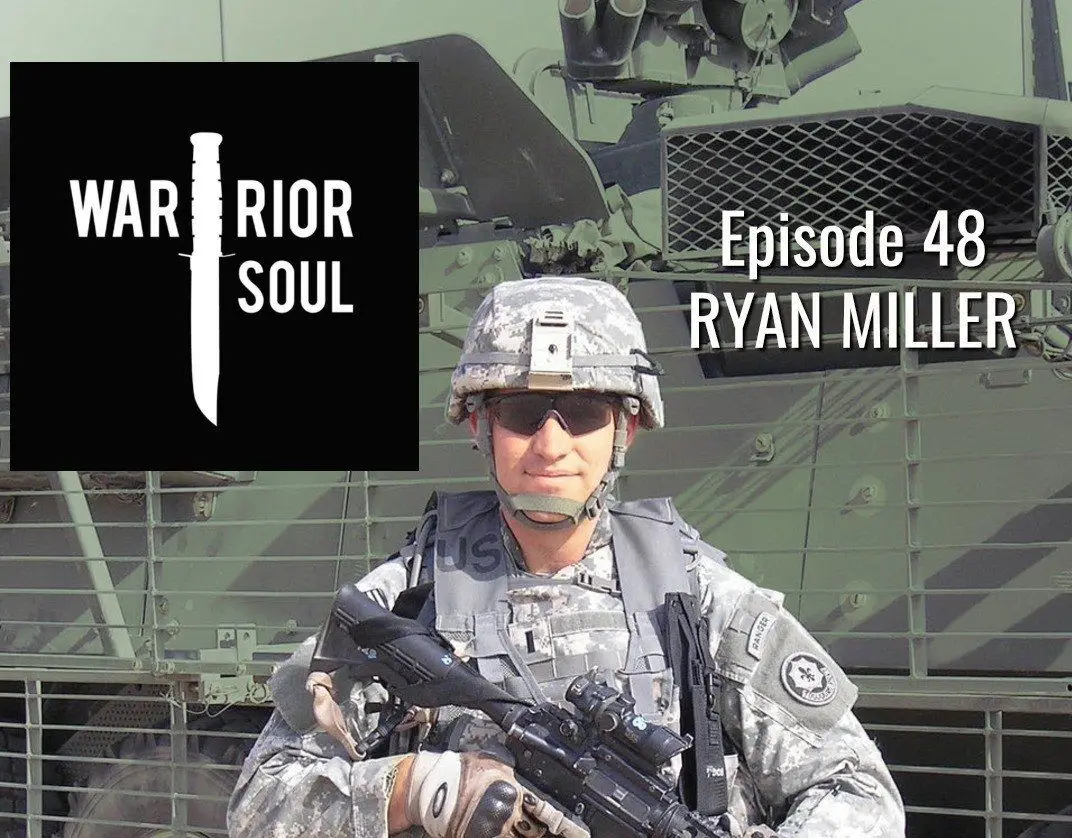
Episode 48: Ryan Miller – From Wounded Veteran to Cannabis Entrepreneur
Hosted by Chris Albert
The Warrior Soul Podcast
To listen on itunes: https://itunes.apple.com/us/podcast/episode-48-ryan-miller-from-wounded-veteran-to-cannabis/id1096901382?i=1000389423678&mt=2
Ryan Miller is a medically retired US Army Officer who lost his leg after serving in Iraq. He’s also a graduate of the United States Military Academy at West Point, the Harvard Business School and the Harvard Kennedy School of Government. Ryan is the founder of Field, a company that puts cannabis growers in touch with reliable labor sources and is a spokesman for CAMO, a non profit that advocates for the availability of medicinal cannabis for veterans to treat service related injuries and illnesses.


Transcript
Machine-generated from the episode audio and lightly edited — may contain errors.
Andrew Marr (link to this point)
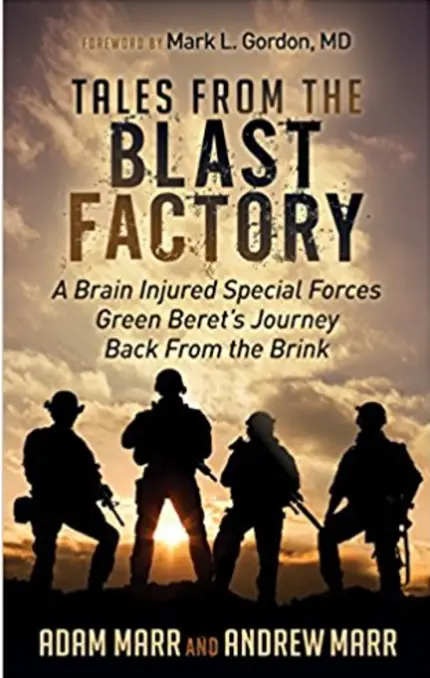
Warriors, this is Andrew Marr. And today, I wanted to talk to you guys about the book that we have coming out later this fall called Tales From The Blast Factory. And it's about my trial, my family's trial and experiences with the symptoms of traumatic brain injury and then what it takes to pull yourself out of that and live a life of purpose and fulfillment. And why do TBIs matter? Well, they matter because close to four hundred thousand individuals have been diagnosed with a traumatic brain injury in the military since two thousand to twenty fifteen.
Of that, up to fifty percent of those will develop a major mental disorder after diagnosis. And the conventional model has been psychotherapy and medication, which in most cases further exacerbates the problem. And it does that because it doesn't treat the underlying condition. And that's the basis of the book. We wanted to show what that life looks like, the life of an operator, what happens when disaster strikes and you step into the unknown and everything that you once knew is not the way it is anymore.
And then we wanted to talk about and show the process of that healing process and talk about the Warrior Angels Foundation. And since then, we've brought that same level of healing that I've received to hundreds of others while delivering our message of hope and a viable solution to millions. And it was thinking, visualizing, and believing it in our minds first brought it into existence. And we wrote this book, my brother and I, Adam, so others could do the same thing. The name of the book is Tales From The Blast Factory.
You can sign up to get on the prelaunch list. They'll get you all kinds of cool Warrior Soul venues at www.talesfromtheblastfactory.com, and you can also preorder on amazon.com. That's Tales From The Blast Factory. You can preorder on amazon.com and talesfromtheblastfactory.com.
Chris Albert (link to this point)
This podcast is brought to you by Dinotropin. Dinotropin is a 100% natural human growth hormone secretagogue. What is a human growth hormone secretagogue? Well, this is a mixture of nutrients that stimulates your own natural growth hormone production. Why is this important?
Well, there's a lot of people out there who are not secreting growth hormone efficiently. And when you don't secrete growth hormone efficiently, what happens is a negative hormonal cascade that can disrupt almost every other hormonal process in your body. It can also really mess with your sleep. It can mess with your overall health. Your ability to burn fat and your mental clarity.
So Dinotropin was developed by one of the top interventional endocrinologists in the world as a method of stimulating growth hormone without injecting all that other crazy stuff that you see people putting into their bodies. With Dinotropin, you do not have to worry about any of the negative side effects that you would get with recombinant human growth hormone and you can get all the benefits of optimizing your growth hormone. So if you're interested in optimizing your own natural growth hormone production, head over to www.warriorsoulagoge.com Under fitness products and then supplements, you will find Dinotropin, the most effective human growth hormone secretagogue in the world.
What's going on, guys? Today, we're bringing you a very interesting gentleman. Ryan Miller is a graduate of the United States Military Academy at West Point. He is a wounded veteran who lost his leg in Iraq. And today is a graduate of the Harvard Business School and the Kennedy School of Government who works in the cannabis industry, who actively advocates for and works to make the cannabis industry a bit more efficient.
He's a really interesting guy and we wanted to cover all aspects of his life. So this podcast is a bit long. And the reason why we wanted to do that is because we realized that there's a lot of you out there who are thinking about going into the military. Those of you who are about to get out of the military, and those of you who have been out of the military for a while. And so we wanted to carry you through this story.
And there's gonna be particular aspects of this story that appeal to some of you. And then 's gonna be other aspects of the story that, you know, many of you would be more interested in listening to. So if you're really interested in learning about West Point, in learning about being a United States military officer or a soldier operating in theater, then definitely check out the first hour. If you're interested in learning about cannabis and its value for veterans and its... And the industry aspect of cannabis, definitely listen to the second hour.
But in all, this is an absolutely amazing story about a veteran who was wounded, who lost a leg, and who persevered to find his purpose in life. And regardless of whether we come back with all of our limbs and not a scratch on our body or if we come back injured, we all have to do that. We all have to find our purpose and transform into what we need to become in order to live our best lives. And Ryan's done that. So he's a huge inspiration and I hope that regardless of what part of this episode you listen to or if you listen to the whole thing that you catch a lot of the different lessons that are in here.
So with that, no longer will delay you from getting into episode number 48 of the Warrior Soul podcast with Ryan Miller. This is Chris Albert, and I'm here to remind you of one thing. Someday, you're going to die. Now that's not some morbid statement or scary idea. It's solid fact.
Your time here on this earth is limited. You need to be reminded of this as much as possible for one simple reason, to live your best life while you can.
This is the Warrior Soul Podcast. One.
Good afternoon or morning or evening or wherever you are, whatever time it is. Welcome to the Warrior Soul podcast. We are here today with Ryan Miller. Ryan, how are you doing, buddy?
Ryan Miller (link to this point)
I'm doing great. How are you guys doing?
Chris Albert (link to this point)
Outstanding. Outstanding. Andrew, how are doing over there?
Andrew Marr (link to this point)
Oh, doing wonderful. We were chatting here with Ryan about some of his dealings with the the VA and how it works if you can be a full time patient, but maybe not so much if you actually run a life in a business and and other things. But I thought it was some interesting conversation, so we'll see where that goes.
Chris Albert (link to this point)
Yeah. Ryan Ryan has a... An extremely interesting background, US military veteran and, you know, survivor. Ryan, can you give us a give everybody out there in the audience a little bit about your history and your background?
Ryan Miller (link to this point)
Yeah, no, I appreciate that. So first of all, thank you guys so much for having me on. This is a great podcast. I just discovered it recently through Kevin Flike, who you interviewed. Great interview.
He's a buddy of mine. So again, I just want to thank you for allowing me to get out there and tell my story. And hopefully, we'll get into some my cannabis advocacy. So any opportunity I get to advocate for that, especially on behalf of veterans, is an incredible opportunity. So again, I really appreciate it.
Yeah, a little bit about me. I was born and raised in New York City. I actually went to high school about five minutes from the trade center. Interestingly enough, I played football in high school. And again, you can imagine a urban high school in Downtown Manhattan.
We used any basically open field at times to practice. So there were times during summer training, we were literally practicing in the shadows of the Twin Towers. So I graduated in 2001 from there shortly before those towers fell and started West Point. Yeah. It was September 11, obviously.
Plebe year at West Point, already a crazy enough time. And to add to that, my hometown's attacked. Not just my hometown, mean my my neighborhood almost where I where I went to high school in Downtown Manhattan. So, obviously
Andrew Marr (link to this point)
That's gotta be a completely different feeling and experience than most of us that we we had, you know, no geographical alignment, you know, other than belonging to to the country and feeling connected that way. But, I mean, that's where you grew up. That... That's what you knew. That was your that was your neighborhood, man.
What was that like in September at West Point getting that news and then reliving it remotely?
Ryan Miller (link to this point)
Yeah. This is really interesting. And I'm from Staten Island. So Staten Island is is where most of or a large proportion of the first responders, cops and firemen, Port Authority cops that... You know, a lot of whom lost their lives are from.
So, I mean, I know folks that died. My mother knew a a lot of people. She's in the running community there. She's a lot of firemen in the running community. So it was pretty tough.
But ironically, I think being at West Point, considering it is more than any other academic institution, probably on par, of course, with Navy and some of other service academies. The students at that school were more affected by nineeleven than any other school out there. And if you came to that campus other than a slightly increased security presence, you would thought nothing happened that day. You would have had no idea that every individual at that institution's lives had changed dramatically that day. And that's a big credit to West Point and this kind of culture or this military culture of understanding that, hey, we have to be able to compartmentalize these really horrific events and we have to be able to continue the mission.
And I'll never forget that the morning of September 11, I actually had chemistry at a chemistry lab that morning. I had the hour before off. And I remember it was one of those we had to once a week, we'd have to take apart our bed just to force us to make it as part of an inspection. And making the bed was kind of a pain in the butt. Eventually, could get it it literally took about twenty minutes if you were doing it right.
And that's when you kind of had it down. So by this point, would take you forever. So I remember I'm sitting there making my bed. And then I kind of did this. It was something we would do, especially as freshmen in the AM inspection period.
So basically, I think until noon, weren't allowed to sleep in your room. You had to have your door open, ready for inspection anytime. Kind of a thing we did was we'd make our bed and then kind of lay on it while finished making it. And we might drift off for a couple of minutes. That's how we catch a few minutes of sleep.
So I remember drifting off and waking up. And you just hope nobody comes in and then bust your chops for doing it. I remember someone running down the hall screaming, turn the TV on, turn the TV on. Just like a central kind of desk area in the company area. West Point's divided out.
And I overheard something about a plane hitting the trade center. And I'm thinking I knew, I think, a small plane had hit the Empire State Building many years ago, did some damage, but it wasn't a big deal. And that's what I assumed had happened. So I'm assuming lives have been lost and this is some kind of small tragedy, but it honestly didn't even if it wasn't for the fact that it was from New York, frankly, I probably wouldn't have even really thought too much about it. I get my gear ready.
I walk over to chemistry, the Chemistry Building. And again, it's weird. People are talking in pairs as they're walking. I'm a freshman, so I'm not talking to anybody. Have been heading straight forward just getting to the chemistry.
But I keep hearing stuff about playing. And then I heard some say terrorist. And there's just a short five minute walk to the building. And then I got into the classroom, and we saw the reality of the situation. Our teacher, who was old school, he's a lieutenant colonel at the time.
So I think... I don't think he had... I think he was post Vietnam, but I think he had actually been involved in some of... In in Just Cause. I think he was in the Rangers at some point.
So, you know, he had been involved in some actual, you know, combat in the nineties and certainly golf or Desert Storm. And, you know, we sat there for the first five minutes watching. You know, I'm watching these Billy. It's surreal. I think it was so powerful that I really just didn't really feel any emotions, to be quite honest.
I mean, guess technically a shock or something. And I remember telling a kid and I barely knew this guy because it was pretty early on the school year next to me. There's my there's my high school. You couldn't see the school, but there's a bridge. It's pretty famous in a lot of the in a lot of the depictions of 09/11.
There's like a a steel arch, a white steel arch bridge. It goes over West Side Highway. So that's what actually connected my school to, you know, kind of the other side of that that pretty busy road. And again, I'm in shock. And I'll never forget, though, our teacher saying, all right, everybody, your lives have been changed dramatically today.
But we have a chemistry lab we have to execute. So we need to get downstairs and do that. And I remember my biggest concern suddenly was, oh, shit. I forgot my lab goggles. I have to go run back to my room.
I hope no one busts my balls on the way out there and back. I mean, that's kind of West Point where you're just so focused. You're able to compartmentalize and focus on the mission. And essentially, that's what they were teaching us was one day and this held very true. One day, five, six, seven, eight years later, you're going be in war zone.
And you're going to lose that key member of your platoon, that guy that kind of everyone rallied around, a funny guy. What happens when you lose that soldier? You're going to have to go out there and perform and execute the next day. So you have to be able to kind of focus on the mission, compartmentalize things, find ways to ultimately deal with the tragedy of what happened.
Chris Albert (link to this point)
That was such an interesting time to be in the military as far as things go. And I can imagine a really interesting time to be at West Point, as you said.
Mhmm.
You know, I... I'm from Fairfield County, Connecticut myself, and and we lost a lot of people in towers. And I remember at the time I had enlisted in the Marine Corps in 1999. And that was the Clinton years. And we hadn't had a major combat operation or anything like that in those years prior.
There was a few blowups and things like that, but that institutional knowledge or feeling of what it's like to be attacked is largely gone, lost in history. When you guys for the rest of the time you were at West Point, was there this feeling of preparation from that day on or did it take some time to ramp up?
Ryan Miller (link to this point)
Absolutely. No. I I think as soon as that happened... And again, it it goes to the irony of of of how that night, like I said, I mean, I remember getting my ball... My balls busted by a senior who wanted me and some other freshmen to throw.
We call them birthday parties. So it's like, in theory, it's the one chance you get to get back an upperclassman on their birthday. You go, you know, mess with them in the middle of the night, you know, throw some stuff in their room, you know, quick vibe, trying to think of some weird stuff we did. Drag them out, throw them in the shower if they're too drunk, stuff like that. And this guy was yelling at us like, you better have a birthday party for my roommate tonight or, you know, or else.
And and to be honest, we didn't do the birthday party. You know, things were things were trying to normalize things. We didn't wanna normalize them that much. Unfortunately, I... You know, I guess, wisely, the kid realized it wasn't gonna look good if he, you know, started started jamming us up for for not throwing his roommate a birthday party in the night of September 11.
But, yeah, I think it was subconsciously... I mean, we all... Like, an extra switch was hit. And I actually know people... Because what's interesting, I know people who were on the fence. And I've talked to them subsequently about West Point early on in their freshman year, even their sophomore year that wound up staying and graduating because of nine eleven. So, yeah, I think it had effect that there was definitely a slightly more serious tone. And again, it's really hard to compare because I was only there for a couple of months before nine eleven. But, you know, maybe the serious tone always existed.
But I I I could tell. I think think there was... Even with my little bit of experience pre nine eleven at West Point, there was a different atmosphere there. And then very quickly, I mean, that... I think by January, I had Jason Amerine and...
Goodness. I can't remember the other the other Green Beret team leader's name came to us from basically, you know, right from the field to... They were Jason Amerine is pretty well known. He led... He was...
What's his name? Karzai's bodyguard slash confidant slash, again, military adviser, strategic adviser, connection to the West, all these different things as... And this is pretty cool as a, you know, like a... I think not even 30 year old special forces captain. And they were able to bring these guys...
I mean, they were they were bringing these folks back to talk to us when it was still fresh. And I was actually really, really, really lucky to have Jason Amerine as my international relations teacher a couple of years later. So I got to lot... Know a lot more of his story and of the again, I think it's one of the greatest successes in modern warfare that unfortunately is gonna get forgotten in history because of what happened after it. But, you know, how how a small detachment of of marine braves.
And I think, you know, submarines and some other support folks were out there too, but basically overthrew the Taliban in a couple of months. And, again, unfortunately, after that, great success. Things change a little bit after that.
Andrew Marr (link to this point)
Yeah. We definitely have the blueprint on on how to execute that and and overthrow. It's setting up stability across the land afterward. It seems to be the issue. But, Ryan, speak about what that was like to be early on in your career at West Point and having the most experienced and battle hardened, you know, people coming off of the front lines, coming back, getting shaved, cleaned up to West Point, and you getting delivered firsthand information.
How did that impact you as a leader and your your fruit... Your future career?
Ryan Miller (link to this point)
I mean, obviously, it's it's gonna do a couple of things. I mean, it's gonna inspire the hell out of you. You know, I would I would try, and I think most most cadets, you know, would would obviously take any opportunity to to see these individuals when they came back. And, again, West Point was really good about bringing these folks back. So a, you know, it was it was inspirational.
So whether it was... And and, again, West Point's a tough place. I actually, in retrospect, really... I actually enjoyed West Point, as sick as that sounds for for any of my classmates or anyone at West Point is listening.
Andrew Marr (link to this point)
Be one of the few people I've ever heard to say that, sir.
Ryan Miller (link to this point)
And I think I think it goes to the fact that, yes, it's very superficially... It's tough. Yeah. You you know, there's the the... And not just for military standards, the academic standards.
The academics are very challenging at West Point. Now I will say I I did avoid getting in trouble. So if if, you know, the people out there walked hundreds of hours, that's kind of our little internal punishment. That's a whole other story to talk about what those are. If people got in trouble, then, yeah, West Point could really, really suck.
But for me, again, I kept my head on the radar. And what I really just appreciated it in retrospect is that, again, just close tribal nation or, excuse me, close close tribal kind of culture that exists there. And that obviously exists in the military as well. And that's why I think folks in environments like that, I actually think it's one of the most mentally healthy environments and one of the most highest degrees of mental health of any school out there. Because, yes, on the surface, it sucks.
But then you have 4,000 other people going through this suck with you. And again, deep down inside, you actually feel really good because you feel like part of a group and a team. And you feel supported. Again, you might be sitting there on a... I remember Saturday nights, freshman year, sitting there with, you know, four other dudes.
You get watching movies on a little 15 inch monitor complaining about how our friends were getting drunk and, you know, getting laid and doing all kinds of crazy partying at at school or even get to just sleep in little things like that. And we'd sit there and complain about and cry about it. But, honestly, I I would trade those because I did things like that in business school. I tried to make up for it years later, and I didn't find it particularly rewarding. And those conversations because, yeah, there'd be a lot of bitching.
But eventually, you get some really, really great deep insights. And you learn a lot about your fellow cadets and your fellow brothers and sisters there through these very intimate small group, essentially, meetings. And I value that infinitely more than any kind of typical social college experience. And that's, again, one of the reasons that I actually if I heard myself saying this at the time, because, again, it is it is superficial to suck, but it's a pretty strong superficial. I thought you'd be crazy.
But, yeah, in retrospect, I I really enjoyed my time there. And I
Chris Albert (link to this point)
I drank my ass off throughout my twenties. And so definitely weren't missing anything there.
Ryan Miller (link to this point)
Yeah, yeah. Like I said, I tried to make up for it in grad school and I did go to a business school, which in general, a large component. There's an academic component and there's a heavy social networking and drinking component. And I wish now I had kind of treated it more again like West Point than
Andrew Marr (link to this point)
Well, I I wanna get into to grad school, but a couple of more things I wanna talk about West Point. One, what what led you to... As a as a young man, a teenager, to say I wanna go that route and and what what did you have to do to get accepted? And then the second part, Ryan, is what would you recommend to somebody else who today is trying to get in the West Point? What what did they...
What did... Should they be crafting, you know, their life like to to achieve that goal?
Ryan Miller (link to this point)
Okay. Great question. Hopefully, can answer this decently because it's it's been a while, but at least the second part there. But for me personally, I was pretty fortunate. I was more on the good head on my shoulders.
I got into a very good high school. Again, the one we were talking about earlier that was in Downtown Manhattan there, just five minutes from the Trade Center. And I kind of enjoyed it. But I was a football player. I really defined myself at that time as a football player.
And I always tried I think I always kind of just wanted to be slightly different than everybody else. So this was an academic school. I never really took I get as competitive as some other folks in academics. So I actually technically graduated in the bottom half of my class. But this is a school where I have 600 kids, 200 are going to Ivy Leagues and Stanford and MITs out there.
And yeah, that's the thing is you had all these kids going to these great schools. Mean, a, couldn't get into any of those great schools because I didn't take academics as seriously, and I was focused more on football in high school. But West Point by doing that, West Point was actually perfect. Because again, I had the head on my shoulders. I had leadership experience.
I had physical toughness and physical fitness. So I'd say about sophomore year when I started looking around me, that's when it kind of got into my head. And my father actually passed away my sophomore year of high school. And my uncle, who I went to West Point, I saw some strength in him. And I think really, actually, it's probably my father's passing that initially set that idea in my head that this is something you need to seriously look into and consider.
And then over the rest of sophomore year, I started exploring, hey, what does this process look like? Because it is a more involved process than a typical college application, personally, to me, thought it was a lot more enjoyable because it was a lot of variety of little things. It wasn't the essays were actually they limited you to a handwritten essay of five lines or a response for these three questions. It was perfect because I'm not a great writer. So yeah, was my father passing, seeing the strength of my uncle was a 72 grad.
And then when I realized too, I had a sister, so we had... For money from my father's passing, she can now go wherever she wanted to for free because she gets all the money for school. And then the the real kind of... I think the main driver, the kind of personal, almost selfish reason is I just wanted to be different than everybody else in my high school. And this is...
And this is two thousand, two thousand one. This is like we were talking, you know, the end of the Clinton years there. The the the the concept of some kind of foreign conflict of being involved in war, it was it was bizarre. I remember too the process of of educating myself on West Point in the military, and my uncle was very good about, propagandizing me in a sense. And he's just given me book after book.
So I'm reading Once an Eagle. I'm reading Killer Angels. I'm reading all these books throughout history that involve great military leaders and mostly a lot of times great West Pointers. And, you know, it really steeled my resolve that this is the path I wanna take my life. But what was interesting is while I'm reading this, especially I remember reading about the class of 66 in Vietnam, along great lines of the book, and and saying wow this is crazy.
I'll never... I'm sorry I let that know. I'll never experience anything like this.
Chris Albert (link to this point)
I read that book. That book was absolutely amazing. Yeah. Really really great book.
Ryan Miller (link to this point)
Yeah. And I'll tell you the classes of like o four and o five and and I mean actually any of the class of the past twenty years at West Point, you know, we've got we've got stories that... And and an overall class story, I think that can certainly hold a candle even the class of 66 in Vietnam.
Chris Albert (link to this point)
Yeah, that's a... You know, that book was... You think about the classes who involved conflict. And, you know, like I said, I came up in those years myself as an enlisted person. War was like almost this, we trained for war, we talked about war a lot, but the idea of The United States getting into an actual ground conflict was was almost foreign to most people outside of the military.
Nobody could deal with it, and nobody thought it would ever happen.
Ryan Miller (link to this point)
Exactly. You know, it's funny. We we train... We we still are training for a conflict, but it was a big ground conflict. But it was still the Fulda Gap or jungle warfare.
You know?
Chris Albert (link to this point)
Yep. I remember doing a call for fire exercises on this computer image of the Fulda Gap, and it was...
The Russians are coming through.
Ryan Miller (link to this point)
Well, they might have to dust some of that off, but that's another story. Yeah.
Andrew Marr (link to this point)
They're probably dusting that off right now.
Chris Albert (link to this point)
You're coming through, you get through West Point, and then you're heading into your army career. And graduated, what was it, probably 2004, 2005?
Ryan Miller (link to this point)
Graduated 2005.
Chris Albert (link to this point)
- On that day, what what was your feeling like as as you were heading off into your military career?
Ryan Miller (link to this point)
It's funny because I think... I always I always say grad week. Grad week's a very busy week at West Point for all the classes. And I remember saying the first three years, oh, grad week, my senior year is gonna be great. And it was the worst one.
It's just that much better. So if you wanna ask specifically how I was feeling the day of graduation, just wanted to get things over with. But in all seriousness, yeah, think actually what I and some of my friends did is we recognize that this was just a very... I mean, was a huge, huge accomplishment, but it really was a start. But we really needed to take that time in the next week or two and just focus on enjoying accomplishment, that great accomplishment, even though there was much, much more growth and learning and challenges and things like that to come.
So yeah, I'd say around the time of graduation, everybody just you just focus on the present. So that was a very, very good time, enjoyable time. I would say, yeah, it was probably as we start... As I started to get ready and and I went to... I was an infantry officer, so I went down to Fort Benning.
I started in, I think, July or August. The great thing about that was it was like a class reunion. So, you know, you're going for... But by the time I'm starting to find, you know, my little... My leave, you have about up to sixty days before you start your first unit of leave to take.
Yeah. I was really looking forward to getting back and a, not just getting back into my profession and my job and and learning a lot. IOBC is a lot of fun with infantry officer basic horse. I mean, I think kind of changed things around. It But was a lot of fun and you were there.
Was like, not only was it a reunion, it was most of the kids that you enjoyed hanging out with the most that you are now spending all day with. And it was different than West Point that you know, you're still in kind of a training environment. But you were given a little bit... You know, you were treated like an adult a little bit more. So it was really nice to kind of have that that that great experience of training together, going through hardship together.
And but but at the same time, like, West Point, at the end of the day, you know, you're still in the army at the end the day, but you're also now an adult, which was which was nice. I know that kinda sounds weird.
Andrew Marr (link to this point)
Ryan, I know infantry officer is a, you know, highly sought after position in field. So why do you think you were picked to go infantry? What was the... What... Is there a story behind that?
Ryan Miller (link to this point)
Oh, I I mean, I just picked it. No. So at West Point, the way it works is you there's two big decisions you make your senior year. Your first is your branch. And then after everyone's branch is determined, you kind of break down a few months later and then you pick your post.
And it's all based on class rank. So to be totally honest, I did really well at West Point. I knew as far as branch, I was going to get whatever I wanted. And I just told someone recently is peer pressure. I don't like the way though, like, I think people...
The the connotation that implies. Yeah. Most of my friends were just... I mean, most... The the the largest branch that...
When the military as far as officers go or military officer... Well, actually, correction. I'm not exactly sure what the largest, I'm sure there's like acquisitions or something issues. But as far as West Pointers going into the military, the number one branch as far as number of personnel is infantry. They have the most slots.
So it wasn't like super competitive. But yeah, I figured most of my this is what my good friends, my core peer group is doing. I actually really enjoy this. When I started coming from New York City, being a kid from New York City that you know, thought the great outdoors was the, you know, half acre lot of of of, you know, swampland that just hadn't been developed yet down the street. You know, it was it was a little different.
It was a little adjustment. But, yeah, I mean, I I loved just running around the woods, loved fighting, loved all those kind of aspects. And, the the camaraderie that you get when your main focus is leading individuals as opposed to kind of figuring out... I mean, and you're using technology, but, you know, you're not managing technology. You're managing people at the end of the day.
And I think it's just a lot more rewarding and enjoyable. So that's essentially how I pick my branch. Honestly would say probably from the beginning of junior year on, I knew I was gonna go infantry. So it wasn't really a big... To be honest, it wasn't like a big decision or anything.
I mean, literally, I just sat there. And, you know, the the day or... Your day you have to pick, you go on to the... You know, it's like an internal little internal website. And you just you have to rank all 16 branches that are available from one to 16.
So it's infantry. And then after that, I knew I was going get infantry. I can't remember what I put. So yeah, that's not a big surprise. And then branch, what did surprise me was, at the time, slightly, I guess, disappointing.
I thought I had planned on going to Hawaii. I knew I was gonna go infantry in Hawaii. That's actually what my uncle did. And I... Any of the past...
I think any of the past since Hawaii had bases out there, my rank was high enough to have gotten me Hawaii. Because what you do on post night is everyone who's in that branch, you get all like it's about two twenty future infantry officers. So again, 20 out of like 900 just shows you how big infantry was as a branch within the school. And from the top ranked kid all the way to the bottom, you go up one, your name's called, you go up there and you take your name tape and you put it, if there's an open slot, they basically put all the slots at the different posts out there and you just put your name on a slot. And then obviously once the slots are done, post is closed out.
Yeah, any of the past... Historically, I would have gotten Hawaii and we did a mock draft, not draft for lack of bread, about a couple of days before. And I was like, oh crap, I didn't get Hawaii. This is not good. So I had to figure out pretty quickly where I was going to wind up and what I was going to do.
I did not get Hawaii. I was still hopeful I didn't get Hawaii, but I wound up picking Fort Lewis. And interestingly enough, my choice was between Fort Lewis, Washington and Germany. And I picked Fort Lewis and wound up in Germany anyway because my unit moved over there. And I'm super, super fortunate and grateful I got to experience both locations.
Tacoma and Fort Lewis, great great units up there, great post, just a great place to live. And then living in Germany, having the opportunity to live out there was phenomenal for a year. And they were really good even though we were training. It did two things. It actually reset my unit's training cycle, so we got an extra, like, eight or nine months of training.
I mean, we lost a couple of that in the move. But that's huge to come off a year on year off and actually be able to build the team out a little bit more, having a little bit extra time to build your team out, bring new people on, train them up, go through, again, two full training cycles. That was huge. But also, were really good in Germany about giving soldiers time for both their families or to travel. So we had one three day and one four day a month basically that USAR, the US Army Europe would give us.
So we were working hard, but we were playing pretty hard too. And that was a tremendous opportunity and a great year.
Chris Albert (link to this point)
Ryan, real quick, there's so much stuff here I want to get into, but this idea of being a second lieutenant fresh out of West Point, coming into command, I'm sure some of your soldiers had some interior experience. What was that like?
Ryan Miller (link to this point)
I'm sorry.
Chris Albert (link to this point)
Walking in that first day and and and being like, hey. I'm I'm I'm, you know, second lieutenant Miller, straight out of West Point. You know, what was that like, and how was your reception from, you know, your nonconflict? Officer?
Ryan Miller (link to this point)
I... So I'm one of those cases where I had to fire my first platoon sergeant, and it's always funny when the lieutenant who doesn't know what the hell they're doing, you know, is... And it's it's really like you and the first sergeant commander are are kinda doing it. So yeah, I showed up to my unit. Think...
I mean, I was pretty nervous. I think most of us are. You want to make a good impression. You really... Think...
Know, my main fear, and I think it's all our main fear, just letting these folks down. So kind of nervous about that. Also nervous about perceptions, West Point thing. I think most soldiers in the military and again, you get phenomenal offers from West Point, ARCTC, everywhere. I think most though understand the value of the fact that an individual went to West Point.
Mean, we do actually... I mean, compared to ROTC guys, we just happen to be fortunate enough to have a lot more opportunities to train. I mean, this is a military academy. So not only train, but live in a kind of very highly kind of sport and disciplined lifestyle. So that, I think, sometimes shows.
And I think even though they bust our chops, soldiers are going to give you or whatever you're from, officers, period, coming in. Soldiers are going to give you the benefit of doubt. It might not seem that way, but they are going to give you the benefit of the doubt. So again, I showed up. I think we go through the mock talk you give to your platoon.
We do that a whole bunch of times in officer basic course and kind of how you approach that first day. So actually, in the beginning, you get to the unit. And so I think for about a week, you're kind of put on staff. Some people go straight down to the unit. With ours, they wanted to at least get situated a little bit.
So these folks kind of saw me around for a week, week and a half. And then I individually met with some of the squad leaders. Actually, I think that's a really good way to do it is first, yeah, meet one on one of your platoon sergeant and then try to go around and meet one on one of your squad leaders before you. And very informal. The formal talk, the formal counseling, and all that stuff, that can come later.
But if you just approach and say, hey, let's sit down or let's grab lunch or something like that, I think that's pretty helpful to at least when you're standing up there in front of you the first time, your subordinate leaders aren't also hearing you for the first time with their soldiers. So if they have and you already even built that relationship, it's almost like they're gonna pay attention a little bit more. And they're gonna have... Like, look at you differently while you're standing there in front of formation. And it's...
Whether it's it's other soldiers seeing us or just feeling an energy, I think they'll take it a little bit more seriously. So that's that's a little random little technique I recommend out there. But, yeah, I I honestly, I can't even remember what the heck I said. I, you know, said it was my honor to lead these guys, and I... To be quite honest, it was nothing particularly enlightened or anything like that.
It was pretty standard. But, yeah, it's it's it's... You do that, and then you just have to really rely on those... On your squad leaders and your platoon sergeant. And and some people wanna, like, get out there and charge from the front.
Now I'm not saying that's a... That's not the, you know, that's the wrong way to do it, but you have to be the type. There's very few people that can just get out there and just start leading a brand new unit that they have no relationship with and and be really successful. I mean, are the greatest leaders in the world are able to do that, but the average person isn't. So really, just slowly kind of build credibility.
Listen a lot. Was it two to one, two years, one mouth? Well, pretend you have about fifty years and half a mouth in the in the beginning. The only time you really should be calling anything out those first few months while you're figuring things is if you see a a outright moral ethical issue. Then, you know, it's your responsibility, of course, to stomp that out immediately.
But even if you see some things kinda going the wrong way, as long as there's not a safety issue, you know, don't immediately kinda jump in there and try to be the hero and fix everything. Understand why why... Even if it's the wrong way, understand why did they think to use this technique. Is it just something that everybody's been doing forever? Or was it a solution to a problem that might have changed right now and these folks don't realize that the problem has slightly changed, so there could be a better solution?
Yeah. So really the point is, and I kind of knew this and I did an okay job of value. I wasn't the greatest PL out there. But my advice is just listen, listen, listen and and try to build build, you know, one on one relationships and then and then a team relationship with your subordinate leaders.
Andrew Marr (link to this point)
But you said you had to fire the platoon sergeant. So I'm interested to hear that that story and what what led to that.
Ryan Miller (link to this point)
So, again, he was a nice guy. The army... You know, weird weird stuff would happen, the army and personnel. This was a guy who had never actually been a a combat infantry. He was...
Yeah. So, yeah, he was an infantry man. You know, he had started off as a cook and then somehow found his way in infantry and then went to... Had a basic training detail, and I guess he was a half decent DI on the surface even though his wife was one of his former students there. But, yeah.
He just was... He was weak. He was physically weak. And I don't know how the hell he had... He made e seven or e a...
Excuse me. Yeah. E seven. I don't know how he slipped through the cracks having never actually... I don't think he was ever even a squad leader other than basic training.
Basically, kind of slipped through the cracks, probably gave him a chance, was in the right place, right time. Truthfully, didn't want to do it. He can't admit that though. Couldn't really do it. Nobody took him very seriously.
In retrospect, that really is so important for the young PL. I mean, the most the most important... So that we talked about what you can do, but the most important thing that should be happening is your platoon sergeant should be, I mean, really your primary instructor in in, like, life for the first few months when you get to your platoon. You should just defer that. You know, most of it, again, moral ethical or or gross incompetencies.
You know, they're they're supposed to be the one that you're you're going to really lean on while you're learning that job and building credibility within the unit. So when you don't have that, that's pretty tough. And it became quickly apparent that this was not just affecting, I mean, forget my development, but my platoons. And we were able to make a transition and brought in somebody else and, you know, sent him out in the army. Don't actually get fired.
You just move somewhere else into a job on staff that I think he actually performed fairly well at. So he was happy there. Ended his career, but to be honest, I mean, really, I I I don't I I don't want this guy to be an e eight. You know? He's already an e seven somehow.
So, yeah, I I remember talking to my first sergeant and and my company commander, and and we, you know, collectively... And and it's awkward for me because I... I'm still in this... Again, I'm trying to be in this listen mode and trying to give him the benefit of that. And I find myself oddly defending this guy, maybe this weird sense of, like, platoon loyalty.
Not I knew he had to transition out, but trying to, you know, at least minimize the the the blow to this guy when it happens. But, yeah, transitioned him out, got in a new platoon sergeant. It was really weird then because now me who didn't know what they were doing and honestly probably hadn't really developed the focus, this is just about two months in, developed the trust and detail, the relationship as I eventually did or wanted to see it with my platoon as a general... In general. But now, you know, this new platoon sergeant comes in, and I'm I'm I'm like the old guard.
So people are kind of like trying to play dad off mom now coming to me and trying to go around. It was it was a real weird situation. It was it was a challenge, but I think in the end, I I learned a lot even though the specifics now, it's it's, I don't know, fifteen or ten, twelve, whatever years ago. I don't remember the details anymore. But...
Yeah.
Andrew Marr (link to this point)
Sure. So transitioning into your combat time kinda set the stage for us there. What was it like in Iraq? What was it like training forward? And then talk about getting on the ground and the the, you know, the experiences that happened shortly after.
Ryan Miller (link to this point)
Yeah. So I... We deployed to Iraq from Germany. Again, we were fortunate enough. We had two full... And a training cycle, for those who know, is in the military when you're when you're training for... Especially when you're training for war now, so you actually have an that's not a real event, tangible event to train for.
Typically, you start with individual skills. So you're qualifying in your weapons, learning how to use them. And then you're moving into small teams, so you start with SQUA. And then you just keep adding more elements on until you eventually, as a full big fighting unit, a battalion or regiment or brigade, whatever what have you. You go out to a training center off-site somewhere, big area, and do mock, basically mock two weeks of battle.
So we get to do that twice. So that was incredible. And what was lucky for us too is where we were based in Germany, we essentially were at the training center. So we would go into our backyard, go out to our training. And there were some nights where we would get done and we were supposed to bivouac or crash out in the training area.
And this was another lesson. I'm saying, oh, heck yeah. We're gonna stay out here all night. You know, we're tough. We're infantry soldiers.
And, you know, you don't... Common sense... Again, this is the second time pulled me aside and said, no. This is not gonna actually have any effect on if we're tough or not. These people are going to go to Iraq, they're going be away from their families for fifteen months, we give them every opportunity. It's not going to soften them up. So that was great when we...
When I kind of realized that you can be tough but you know you also have to understand that they are making sacrifice huge sacrifices already. So anytime you're able to give somebody a little bit back, one of your soldiers a little bit back is great. So yeah, phenomenal training up. I mean, thought we were super well trained. We had the team that went to fight in Iraq had again trained together for a while.
So yeah, we went over the July 2007. It was a interesting time. It was during the beginning of the surge. So we deployed to Baghdad, Iraq. And we were a Stryker unit.
And Strykers for, I don't know how the listeners are familiar they are. But it's a primarily designed to carry a bunch of people, an infantry carrier vehicle. There's a whole bunch of different variants. It's a really cool platform. I mean, there's one with a, you know, basically a tank cannon on it.
There's one that shoots tow missiles and stuff. There's one that's for medical evacuations. But the main one is a... It's an eight wheel, the big eight wheeled vehicle. If you've seen news, the news in war zones, particularly Iraq and urban environments, you'll see this giant eight wheeled vehicle with this metal cage around it and usually like this tent looking thing on the top of it.
So that's a Stryker. And they're just an amazing, amazing asset because you can really, I mean, you can pack that thing full personnel. It has a remote weapon system on top, so you can actually sit inside and the gunner can fire from the protection of inside the vehicle. And lastly, it is an incredibly survivable vehicle. I saw one of these take a massive, massive deep buried IED, something that would have literally just just disintegrated a Humvee.
And this Stryker was able to self recover back to base even though have, like, two axles dragging and, you know, four wheels completely blown off. I mean, that's how survival... And and and everybody walked away from that without a scratch. Although, long term, who knows with the concussive damage. So yeah, we got over there and very quickly were sent to all four corners of Baghdad, basically.
My company was detached from our battalion and attached to some unit in Cork, which is just north of the green zone there. And we did civil civilian and reconstruction operations, so non kinetic operations for a little bit, which was cool. We had other units at that time in solder fighting. We had other units down in in buyout just kinda sitting around. But by October 2007, again, surges in peak were actually turning the tide.
I think three things really turned the tide in Iraq. I mean, was just the fact that the surge you had just shits on the bodies over there. Prior to that, we play a lot of whack a mole where we go find the bad guys, whack them out, and they would just kind of skirt and and and go somewhere else. Well, now we're able to whack and actually hold that terrain. So we're we're we're finally digging out, flushing out all those all those moles.
You had that, and then you had the sons of sons of Iraq, I think they're called. Yeah. It was basically the Sunni awakening. These Sunni groups that previously had allied to Al Qaeda and had been fighting us and realized that we were actually the lesser of two evils in that country. And the most reliable allies, for lack of a word, or any kind of fighting force that we use, indigenous or local fighting force, wasn't the Iraq...
Definitely wasn't the Iraqi police. Wasn't the Iraqi army. Even though I I I was actually impressed by some of the folks in in those units, and that really depended on where you're at if you had a good unit or bad one. But these Shia militias, I mean, the most reliable dudes out there. Absolutely. And the same guys that have been shooting at us. Because they knew, again, that that that this Al Qaeda problem, you know, had to go. And that we'd eventually, in theory, eventually leave. Yeah. So those two things were were...
Andrew Marr (link to this point)
Okay. I dropped you there, Ryan, but we got you back now.
Ryan Miller (link to this point)
Okay. So sorry about sorry about
Andrew Marr (link to this point)
Nothing to worry about. You're talking about working with the different Iraqi forces and then the Sunni Shia. Can you clarify? Because you said Sunni and Shia.
Ryan Miller (link to this point)
Oh, yeah. So so I'm sorry. So, yeah, you know, there's the two... I'm gonna... I don't wanna...
I I wanna over... Sound like I'm oversimplifying this, but, you know, or the... You know, we know there's two main groups within Islam, Sunni and Shia. And for for lack of better word, each had their associated bad guys in Iraq. Generally, the bad guys...
Sunni guys were Al Qaeda affiliates, and the bad Shia guys were Jayshal Mahdi affiliates. That's the Mahdi army. And they're kind of backed by Iran. And the Sunni militias are backed by maybe Saudi Arabia. I don't know.
But we... Yeah. So we were in a high profile battle. It was actually pretty cool. They reconsolidated the unit in Southern Baghdad.
And we were tasked with basically taking out the last bastion of Al Qaeda in Baghdad. It was in a store... Neighbor Dori East Rashid, depending on who you talk to. Again, Southern Baghdad. It actually was a Sunni neighborhood.
So it was, I mean, for Baghdad, like kind of semi suburban there is very different than semi suburban here. But the houses were bigger and nicer and everything. And it was just this neighborhood that, you know, we had left a vacuum in, and Al Qaeda just moved in there. And and what would happen? They would move in.
These were nice big houses. 90% of the population left, the civilian population. And And the the 10% that was left was almost exclusively women and children who just hunkered down because they had nowhere else to go. So they would take these houses though now that they're abandoned and I mean literally just mix chemicals on these concrete floor and let it dry. And that's how they were making these massive amounts of HME.
And every major intersection, they would just bury sometimes water buffalo sized hundreds and hundreds of pounds of HME in the middle of the intersection. And same thing with houses, the homemade explosives HME. They had a lot of booby trap houses. So we essentially started on one end of this large neighborhood. And over the course of three weeks, kept a kind of continuous presence, cordoning off the neighborhood, kind of controlling who went in and out.
And just did a clearing operation over the course of three weeks and started in the Eastern side of it and worked our way to the West. And what was crazy is by the end, and this is when I got hurt was towards the end. We can talk about that in a second. But where we had started three weeks earlier, the people started coming back. Mean, information flowed to these folks that were just hunkering down in the countryside or at relatives.
I mean, people were back, markets were open, and we had those those sons of Iraq. Again, those Sunni militias that we've been previously fighting against that were the most reliable and best fighters that we allied ourselves with were working with us to keep the peace. And, you know, yeah, there's one more thing that I think did a tremendous job in in in the success of that period during the surge in addition to just having a lot of bodies out there and the Sunni militias. And that was the CERP funds. I would...
We would go out there as a platoon leader, like a thousand dollars of US cash in your pocket with the goal to try to give as much of it away as possible. And we would just give money to people. Oh, you have a broken window? Very easy kind of seamless paperwork. And I think the US military granted some of this money probably got diverted and and stolen and, unfortunately.
But I think compared to any other organization out there, the US military is one of the few in the world that you can actually just give junior leaders there $1,000 or more to go spend with very little accountability at the end of the day around it. And actually be confident and know that it was spent wisely and justly and all those things. So those SERP funds, yes, command. I can't remember the the acronyms on top of my head. But hey, your door got blown off.
We had nothing to do with it. Know what? Here, we'll give you $50 anyway, dollars 50 US cash. Oh, your car got blown up. You know, I've been sitting out there for a couple of months.
It was a... You know, the car could have been blown up way before we were involved. Here, here's a $150. You know? And that that...
Those, you know, thousand dollars in CERT funds did did I... Were more effective, I think, in quote, unquote, winning the war than $100,000 Hellfire missile was. So yeah, so we moved through. And it was that when I got hurt, we had, I think a couple of days earlier, actually finished this clearing operation. And we're just assessing now are, you know, the last area we cleared, are people moving back in?
What are their needs? Whose houses? Because there's a shitload of houses there that were still rigged to blow up. Whose houses do we have to send EOD in for and everything.
Chris Albert (link to this point)
Tell us about the day you got hurt. Tell us about that that... What were you doing? Where did it happen? What happened to you?
Ryan Miller (link to this point)
So, yeah, again, it was October 18. We're out on patrol, and we actually came out. We were based out of the airport. And I wish I could like put a map of of Baghdad in people's heads. So we're based out of the airport, which was on about a fifteen, twenty minute drive to the actual area we were operating in.
And there was a closer base, which is maybe about ten minute drive, which is about half that distance, which we would kind of often stage from. So we'd either go to the smaller base first and and supply or or take on some kind of mission or something there. Or we go out into the sector from the airport and, you know, conduct our missions and then stop by that smaller base on the way back. And sometimes people would just stay out there for the night if if you were supposed to be back in sector pretty early the next day. That was Falcon, Bob Falcon.
So we were at a buy op, and this is Falcon in Southern Baghdad. So we actually... We were in the westernmost half of of this this mahala. Mahala is the word for for neighborhood there. And meeting with the people who are just, you know, slowly trickling back into the neighborhood.
And we had to run to Falcon to to pick up something. We were gonna be there for about two two hours. So this is the afternoon. We run out to Falcon. Everybody's able to get some food.
We we picked up some stuff, did some resupply, moved some things around, and then we're coming back into into the sector. And it's funny because we were on a route. Yeah. You you guys know that all all, you know, roads in in these war zones, especially Iraq and about Afghanistan, but definitely Iraq, everything has a name, like a nickname or route. What's...
It becomes an official name for the militaries. Route Irish is is very well known because that was the the road between the airport and the and the green Zone, Jackson Senator. So it's named after locations, sports teams, sometimes females, all kinds of things. Well, there was one route that didn't... Wasn't renamed, and it was Yohamama Road.
And I think it was because of, well, I'm pretty sure, because of the Yo Mama jokes. Because even my battalion commander, a pretty serious stoic dude, is dropping Yo Mama jokes on the radio going down Yo Mama.
Andrew Marr (link to this point)
You can't let the Yo Mama jokes go. He's served that up on a silver platter. Thank you, Iraq.
Ryan Miller (link to this point)
Like, I remember you. It's like, VC is like, I'm currently, you know, down Yohamama Road break. Yeah. She's full of she's full of trash. She's really dirty.
I see some some bugs crawling. You know, stuff like that. You're like, woah. Couldn't help it. But...
So we're coming back in Yohamama Road. And this freaking road, we had never had a SIG act on it, period. Even though it was kind of in the middle of this intense neighborhood where this fighting was going You know, we hadn't had any IDs. There was a couple of Iraqi during the day, police checkpoints on it. And ironically, I found out later the route clearance teams, something ironclaw, we used call Ironclaw, some Castle Ironclaw.
They had all these names. They're called Ironclaws and they would, you know, just drive down and take out IDs. Would maybe hit that once a week, that route, as part of their schedule. And it was completely random how, you know, of course, how they drove. And that day it got hit twice by the route clearance team.
So I don't if that actually motivated these people or not or if it's just a coincidence. But we're coming back into the sector on Yohamama. And I'll never forget, I'm looking at it's dust now. It's a little bit... It's dark.
So it's actually beyond us. So it's dark out. And I'm looking through my MVGs at a neighborhood called the Saha Apartments. And the Saha Apartments were one the few... It was basically housing projects.
In fact, were kinda remind me of like Iraqi version of like housing projects and brick housing projects you'd see in New York, but made with some kind of like, you know, like tan stone instead. And that's where that's where there's a whole bunch of Shia's. It was like the only Shia neighborhood in Southern Baghdad. Again, Shia's were like second class kind of citizens and putting... Essentially, Sadr City was a giant project.
So he put these folks in projects. And before we got out there, they used to lob mortars back and forth between Saha and this this area we had just cleared out because they used to fight with the Al Qaeda guys too. So to thank us for clearing out, you know, our our our mutual enemy, I'm pretty sure this this device is an EFP, an explosively formed penetrator, probably the most deadliest type of of IED out there. I think this thing had been sitting in there for for a while, and I honestly think I've never gotten a full story. I've heard some...
I think stories meant to make me feel good, but I'm pretty sure. Think it was just some shitheads. Saw this thing. Was like, oh, we have one of these out there. Here comes some Americans.
Let's just set it off. And what these EFPs do is they're actually a... They're kind of a a cylinder of metal, anywhere from, you know, six, eight inches generally in diameter. And they're thick steel on the sides and on one end. And the other end is capped in a soft metal concave cap, usually copper.
And what happens when that explosion occurs, all the energy goes into that piece of copper and just being kind of buffered or blanketed by the actual heavy steel shell around the rest of it. And it actually turns that disc, that concave disc of copper into a slug of molten copper that travels about six miles a second. And it'll generally puncture half of its diameter, its original diameter in steel. So, I mean, Abrams tank. I mean, those Abrams tanks have been hit by this, and it'll go right through even their reactive armor.
You know, that's how that's how powerful these things are. But they're almost a direct fire weapon in that you can't... You know, you have one, it blows up, that that slug misses you, you know, you just got lucky. So what they did was make a raise. They would take three, five, 10 sometimes and just put them at slightly different kind of angles from one another and bury them on the side of the road.
And they'd be set off. They would have a switch that would turn the whole system on generally, but then would actually set off the device was passive infrared. So the same thing that turns, you know, your your exterior garage door light on when you walk past it at night. So that's what what hit us. And I I mean, I was fortunately in, I mean, insane shape.
I was about 02:30. I was running sub twelve minute, two mile. I I only say this because it's only thing that kept me alive. Because we got hit. I'll never forget it sounded like someone, I was standing up out of the hatch looking to the north of the Saa Apartments.
There's another guy who was looking out the south and kind of standing on the same area I was outside of the other hatch. And it, I'll never forget, it sounded like someone literally yelled the word boom in my head really loud. You know, I was wearing the Bose headsets, they're like noise canceling, they allow, they're really cool because they allow conversations to come through, but they're also will offer protection from loud noises and and connect to the radio. So it sounds like someone yells boom. And then the the...
I realized, okay, that wasn't normal. Oh, shit. We just got hit by an IED. That was a really small explosion, and we're in front of the Sa'a apartments. We just got hit by an EFP.
You've got to be fucking kidding me. Like, in in Southern Baghdad... So we... Again, this was not a weapon we were supposed to see down there. And then pretty quickly, I'm thinking to myself, something's up.
Sounds like someone yelled the word boom in my ear, which was just... I mean, it's amazing how like your body reacts and just floods it with crazy chemicals as soon as a massive trauma happens. And I suddenly realized, oh, shit. I think I got hit by an EFP. And at that moment, I realized all my weight was on my arms.
And between my arms, my elbows, and my my body or my kit, I was being held up in the hatch. Like, I wasn't able to to kind of fall through. And at that moment, I couldn't feel my entire lower body. I I realized this. And obviously, it's a little disconcerting.
So I looked down, you know, thinking... I honestly thought I thought I was gonna see, like, the guy from Black Hawk down. I was like, well, fuck. That's it for me, I guess. I like, at least it's not that painful.
But I looked down, and I see my right leg, and it looks fine, you know, in the ACUs. And I... As soon as I look at it, I can feel it, and I plant it on the the bench below me. And I look over my left leg, And as as guys know, like, when you get hurt, your ACUSBUs, like, these uniforms are pretty good actually sometimes, almost too good at hiding the severity of an injury. It just gets kinda soaked with blood and it just turns dark.
I'll tell you, it was so bad. I mean, I'm looking at my tibia kind of like a tree branch sticking out. I'm watching my patella kind of like slide in this hole that's like now in my knee. And I was like, yep, this is... At least at least my lower body's there.
And it was around that time I also I also passed out in shock or whatever. And I went down. I went to my happy place. And I don't remember any of the details now, but it... I imagine it was something like, you know, in a happy gil...
Yeah. When happy Gilmore goes to his happy place, except it was on the beach and it was so warm and comfortable. The one thing I do remember is having a thought in this dream state of, oh my god. That was a horrible dream. I was just in Iraq and got blown up.
And then things just started kind of shaking and, like, it's almost like reality started kind of peeling away. And next thing I know, I'm lying at the bottom of the Stryker in a a pool of blood. The guy behind me, staff sergeant Darren Smith, a squad leader, his He's he's... I'm on his leg. He...
His... I have injuries to my left side. He has injuries to his right, kind of mirrors each other. Fortunately for me, had so much nerve damage that I didn't... I was very uncomfortable, but I actually wasn't in pain per se.
And this guy down was in massive pain. So I'm on his leg. I'm feeling guilty. When we got hit, every single person in the back of the vehicle got tagged with shrapnel and one guy died. Wayne Geiger is a California native, was killed instantly.
Again, just one of the pieces. This thing what it would do is the slug would punch through. And as it lost its kinetic energy, it would break up like a shotgun blast. And that's why it was so particularly effective. And once it penetrated, shotgun blasted out.
So the guy that died waiting just just took, you know, unfortunately took a piece in in the face and and, you know, killed him instantly. And it was weird because you couldn't see that from from the other side of him. You just thought he was kinda slumped over. So everybody gets hit. The only person that wasn't hit was the driver.
He guns it, gets about 400 meters down the road, and the the truck just stops or the Stryker just stops because the fuel lines got hit. So it turns out the radios got hit, the fuel lines got cut, the ramp that opens up in the, you know, the hydro or the pneumatic ramp was broken. So it's it's funny. There's a funny story because we ended up in a place that during the day is an Iraqi checkpoint, and I'll get into what happened after that... After the next day in a second.
But, yeah, we get out there. And because we just had such a huge presence in the neighborhood, within a minute or two, the company commander's there. The situation now is kind of out of our hands. And now it's just time for me to just focus on staying alive, trying to focus on... I mean, I'm trying to crack jokes and and...
I mean, for me, it was just really distracting me about my situation. I was pretty confident at this point if if... And I only thought my leg. It was my leg. We got a tourniquet on it, and then there was like a hole above the tourniquet that started, like, shooting at blood.
We just stuffed it, and everything was looking okay. I was gonna get to the hospital. Every single person we had got... We got to the hospital that was alive when they got there lived. And there was a couple of guys, I think, I...
Have been dead actually, and they brought them back. So I figure I I just gotta get... Be alive when I when I get to the hospital. So I'm trying to crack jokes, and I make some jokes about Ripits, which is this cheap energy drink we had out there. And it got back to Really?
It got back to the Ripit people. They came there. They they visited me in the hospital, like, weeks later, brought me all kinds of RIPETs and RIPET gear and and kind of exploited me. And I don't really care, but that totally exploited me because then I'm getting calls, you know, a month or two after that from Iraq and emails about how my poster... I'm on this poster with a freaking RIPET hat on and a RIPET shirt draped over me because I couldn't wear it, a RIPET gloves, RIPET foozy, RIPET, RIPET, RIPET, RIPET everything in Walter Reed.
But, yeah, we we got me to the hospital. I mean, the the the best place in the world in 2007, probably a couple years before and after that, to get hurt, to have a severe traumatic injury was actually Baghdad, Iraq. The the staff there is incredible. Mean, I had kids x-ray techs, and they're doing this seven, eight times a day. Just jumping over me, taking X rays, not give...
No. Not shielding themselves, anything, exposing themselves, you know, left and right because, you know, they wanted... They they they were gonna fight just as hard as we were fighting to stay alive to keep us alive. It was incredible. I was able actually even to call home.
I didn't get through with my mother. I was able to get through with my aunt who was unable to get through to her because I... Again, real quick tangent just because it's a funny story. My XO, our unit XO took a, like a week earlier, took a ricochet in the nose. So this guy legitimately got shot in the face.
I mean, you can technically say this guy got shot in the face. And it split his nose, opened one of the nostrils, and it was in the middle of a, of a, you know, one of the battle or something. So he's just all day, he's not getting it checked out. He's just stuffing his face with MRE napkins and gauze and any shit he can grab. He's like this.
So at the end of the day, the battalion commander tells him, get your ass to the CSH and just get that stitched up. And he did not want to go, even though having a purple heart actually makes a big difference in life. It turns out, I'm finding out after with VA and stuff like that. So it's, I mean, it's something you don't want. And it's certainly something that some people probably don't, maybe there's some cases of folks not deserving it. But TJ did not, don't even know the guy's name, he didn't wanna get a Purple Heart because he didn't feel he earned it compared to some other people. I mean the guy still got shot in the face. So he goes into the CSH. He's like, don't take any of my information. Don't do anything.
Just stitch this up. They stitch it up. He leaves. What happens? A week...
You know, a couple days before I get hurt, he's calling home, and his mother... His wife is freaking out like, oh my god. You're alive. You're okay. It's like, what are you talking about?
They had called even though he said, do not report this or anything. There's this kind of standard system where, I mean, if you get killed, obviously, you have to have people personally visit you. But if you get hurt, you just get a call and it's very kind of nebulous as to what the situation is. Like my mother got and was on the answering machine because she wasn't home, but a call saying, hey, you know, your son has been severely wounded in support of Operation Iraqi Freedom. You know, please contact at this at your earliest convenience, more details to follow.
You know, thank you for being a parent of a service, you know, something like that. And I'm like, my mother hears that, she's gonna... It's bad. So my mother's like a crazy, like very, very intense New York type. So yeah, I made sure I was able to call home and because I did not want that same thing happening.
It's happening to me.
Andrew Marr (link to this point)
So
Chris Albert (link to this point)
that's really insane story. I mean, far as everything from getting wounded to having your military career kind of instantly being over to you're operating with a team and you're the leader of that team. And all of a sudden, the burden of command is kind of lifted from you involuntarily. Was it hard to make that transition from combat leader to patient? Was it hard to...
You able to let it go mentally quickly or not?
Ryan Miller (link to this point)
You know, I think... Here's it. I think superficially, yeah. I was able to kind of be grateful. I mean, I...
Yeah. Grateful the fact that I was alive. I think that carries you in the beginning. And then, you know, they start doing kind of nice things for you. And this is also when, if you're at least at that time, the opiates really kind of take their grip and you kind of start losing I don't know, you start kind of losing a sense of maybe I'll think that through exactly how to kinda...
How to phrase that. But, yeah, I I, of course, missed... I mean, the struggle is missing your unit, missing your friends over there, not being part of the fight. I'll... I mean, I'll remember, I 100% believe when I was lying there in in Baghdad.
And I'll never forget actually. This... Sounds kinda cliche, but it was one the most important moments of my, you know, impactful moments of my life is when I went into surgery. I still didn't know if I was gonna live or not, you know, going into surgery because now we've discovered that, oh my god, all this shrapnel that hit me in the butt is in my stomach and my liver got hit, my stomach got hit, my bladder got hit, my large small small bowel. Every...
I mean, I had to get my gallbladder removed a couple years ago, that doesn't make any sense unless there was some damage to that too. So that was when I was like, oh, shit. You know, that I might not actually survive here. I remember telling the anesthesiologist, like, please please do your best to make sure I wake up from this. And he said what I guess you have to say is, alright.
Sure. We got you. But when I came to, I thought it was the next morning. It turns out it was the next night. They just kinda kicked me out for a while.
My... I literally woke up to my battalion commander standing over me with with some other staff members, a couple of my friends, you know, awarded me the Purple Heart, said some pretty impactful things. And and I remember tell... And he said, don't don't worry about coming back. We got the fight now.
It's fine. You've got your own fight. Yada yada yada. You're still part of the team. You know, all the all the things you kinda have to say.
And I'm like, oh, sir. Don't worry. So listen. As soon as I can, I'm not gonna be... I might be out of the fight, but I'm gonna be back in that talk.
I'm gonna be part of the effort, yada yada yada, as soon as they let me. And, you know, retrospect now, he's like, yeah. Okay. Good. Good.
But just don't don't don't rush it and don't don't get too upset, you know, if things take a little bit more time and don't get upset if you actually aren't able to get back. But if you are, of course, you know, we're gonna be here to welcome you. There... Mean, there was there was no way I was... I mean, I was I was really in in pretty bad shape.
So so, yeah, going to... I mean, that... So honestly, I think that was part of the reason that that actually took a lot of... Actually, I think I wound up taking a lot of pressure off me, to be quite honest. So I'm I'm super grateful for many reasons, but that was one of them for my battalion commander.
You almost, yeah, gave me permission to kind of relax and be... You know, and focus on myself. Then you're just, like I said, I'm just happy that I'm alive. You start taking the medicine, then you're just on opiates all the time. So that that...
I hate to say it. Unfortunately, you know, it's it's bad, and it's kind of what ultimately led me to where I'm at, you know, my industry now. But that makes it a lot easier to deal with too. In fact, I I wouldn't be surprised. You know, a lot of the veterans who have opiate addiction issues, even if they were wounded, you know, sometimes it's it's not even the physical wounds that are doing it.
It's just that sense loss of tribal identity that that, you know, opiates, frankly, they just... They keep you from caring about it. So I think that that was a factor. But, yeah, it made it it it made it easier on the surface superficially. But the hardest thing you deal with, any any person in the military coming back, is transitioning into a society that is so, so, so much now.
And even though we we we recognize and keep saying, hey, there's this huge civil... Civilian military divide and we try to address it. At the end of the day, it just keeps widening. You know, there's... And it's for a whole bunch of reasons.
So you come back to a very, very foreign environment that's frankly not oftentimes aligned. And I'm not talking like specific, you know, like values here. I'm talking like very generally, you know, self... Selfishness. I mean, selflessness is is...
Selflessness is is exceptionally rare in the civilian world. And even when people do selfless acts, I mean, if you really look at second or third order causes or effects of it, you realize oftentimes it's tied back to them. They're gonna get some kind of value out of it somehow beyond pure altruism.
Chris Albert (link to this point)
It's You know, though, I think that when you come back from something like that, and one of the big duties that we all have as veterans is, in my mind, those values back to the civilian. Many ways, looking at what you've done since that point, you were able to do that. You were able to to bring kind of a sense of selflessness into what you're doing now, which we haven't gotten into or we have to totally,
Ryan Miller (link to this point)
like again, I'm sorry, I'm taking it.
Chris Albert (link to this point)
Which we will in a second. When did you realize that you had that opportunity to do that? When did you realize that, you know, I've been wounded, my military career might be over, but I'm still... I still have a chance. I still have a chance to get out there and and to do something that can meet this society better.
Ryan Miller (link to this point)
Well, actually, you know, a a good point. And and one thing when when you're talking about how did I feel coming back, how did I make that transition? Well, one of the things I tried to do was to get involved. And Wounded Warrior Project, obviously had a troubled history recently. I'll tell you this, in o seven, o six, o seven, o eight, that time frame, I mean, they were still doing...
They're still doing incredible things, but they were doing some really... I mean, they were it at the time. They were doing great things, and they really helped me tremendously. Not just by doing nice things and providing some opportunities for me, but actually allowing me the opportunity to then go out there and advocate for them and advocate for other wounded veterans through the Wounded Warrior Project and some other activities. So I did a lot of...
I worked with them pretty closely and some great help fundraising for them and also helped them kind of craft and tailor some programs. And I also started doing a lot of just peer mentorship. I went through one of their peer mentorship programs. And I would say... I'll be honest, the three years...
So I got hurt October 2007. I was in the hospital for one hundred days. I went actually to West Point to recover because it was close to home and they had an administrative unit there to recover me. And it was... When I started...
When I got out of the hospital and I was at West Point, I was all by myself, I started... That was when the struggle for me began because I had no kind of peer group around me. So believe it or not, those three years, I was doing a lot of stuff with the Wounded Warrior Project. But between the medications, between this and my unit, and and frankly, this schedule of surgeries, I was having a surgery every three months, and they kept failing. And what was really taking its toll on me was keeping this...
I felt I had to always show the most positive face externally, you know, especially since I was doing all this advocacy and everything. And that that that actually took its toll on me, you know, constantly being disappointed and having to pretend like it just didn't disappoint me. So those three years, I probably, other than doing some fundraising for Wounded Warrior Project, were kind of a lost three years. That was the three years before I had my amputation. So I actually had my leg for three years before I had amputated below the knee.
After the amputation is when I was really able to start doing these things, I think, full force. And peer mentorship was one of them down at Fort Sam Houston, being able to both informally and formally. I mean, I would just hang out. There's nothing else to do. Just hang out at the recovery center, work out all day, and just see the other see the other guys.
A new guy comes in. What was particularly in 2010 was happening. If you came back from Afghanistan and you weren't a triple amputee, you were lucky. I mean, that's how bad things got. So good we gotta keep people alive and how the fight had kind of changed over there.
That people would have you step on you step on a you know, a dismounted IED. That leg's gone usually above the knee. The other leg's gone above or below the knee, and whatever arm you were leading with is also gone. And usually, the fourth limb is damaged. So that was...
I mean, that was actually challenging, but also rewarding, you know, considering me now and help put my injury perspective. I mean, I'm I'm a single below the knee amputee. I mean, on my left leg too, this is like the paper cut of... Don't wanna minimize it at all, but this is like the paper cut of these traumatic injuries. So being able to mentor is a way it's it's...
Because you're not just you're not just helping them. You don't realize you're you're doing a lot of help for yourself, especially when you, you know, come from an environment of selflessness and of of camaraderie and and of a tribal nature. So, yeah, just to to kind of sum it up, I mean, when when I when I eventually, especially when my... When I started finally having a lot of success medically and physically was when I was really able then to... Especially based on those three years of of of kind of feeling in purgatory and seeing a lot of guys, you know, in that position was able to to talk to them and I think affect some positive change in some folks' lives.
Andrew Marr (link to this point)
How long until you were actually out of the army? And then what was that transition like, and what did you transition to?
Ryan Miller (link to this point)
So I I got hurt in o seven. I spent three years with the leg, Trinity Limb Salvage, had the amputation in 2010. And then during I mean, one thing I was able to do during that kind of three year limbo period was I was able I got into grad school. So I got into Harvard, a dual program there for both the business schools. So I got an MBA and a master of public policy at the Kennedy School, all paid for by the government.
So again, can't complain too much there. So I had that to look forward to. So I had my amputation again fall of twenty ten. Over the next year had incredible recovery experience down in Fort Sam Houston San Antonio. Again the best place in the world.
Just like Baghdad was the best place to get hurt, that was the best place in the world it might still be for traumatic injury recovery, longer term recovery. Because I got at the amputation of September. I got my first leg right around Thanksgiving. And I did a Tough Mudder in January. I mean, that's how quickly they are progressing us and how strong the program was down there.
So I I spent the next year... In retrospect, I think... You know, I've I've done a lot of thinking over the past few years. So I I kinda, you know, see things a little bit differently. I think what I really needed to do is after, you know, three or four years of just being so limited in life, I just was...
I was just out there enjoying life. I wasn't I wasn't preparing at all to, like, start grad school or even thinking about it. I was just working out every day. I was traveling a lot. I was doing a lot of veteran advocacy.
I was doing a lot physical. I was doing, like, triage... Getting... You know, I was getting... Their people were covering it.
So I was going doing triathlons all over the place, doing these multiday, you know, a lot of physical things. And what was good about that too is, you know, that was advocacy in itself. When you see a guy, you know, with one leg who, again, now, you know, back to, like, a a very physically fit, you know, specimen now, or at least at that time, not now anymore. But, know, it it it actually just visually, that kind of image is inspiring to a lot of people. Both both people going through struggles, you know, like fellow warriors and and people who are supporting us.
So that was great and all, but, you know, I wasn't really... I started school. I went up to start grad school in in that that fall. And there was a little bit of overlap while still in the army, and they pretty much effectively let me kinda do my own thing while I I was just waiting on the the disability process and their timing process to finish out. So I started school in...
At the Kennedy School in 2011 in the fall. And in retrospect, I had a lot of... I mean, I struggled. I really struggled in grad school. Had a lot of cognitive challenges.
Realized I wasn't as interested in learning, think, as... I don't know. Just, like, socially re... I think I I almost tried to force myself to reintegrate society by just partying all the time. And in grad school, at Harvard, believe it or not.
I mean I mean, the business school is... I wanna say it's a big part of your end. We're we're the smartest people in the world there and in the classroom. I mean, it... You're...
It's incredible. But there also is a very, very large intense social component to it.
Andrew Marr (link to this point)
Now are you still medicated heavily at this point?
Ryan Miller (link to this point)
No. Okay. Yeah. So I should I should I should correct... Should kinda fill you in.
So one of the things... One of the reasons I wanna get the amputation was I was I was taking massive dose of painkillers every day, and I didn't think there was any way to get off the painkillers until I had the amputation. And when I went down to Fort Sam Houston, I went down there in April 2010 to to get an amputation. I figured, hey. Can we get me on the schedule next week?
I met up with the team, all these doctors, and they said, hey. I'm here to get my leg cut off. Let's get this on the schedule. I'm ready. I'm good.
And they said, you know, we've got this with one last thing. It's amazing orthotic brace we want you to try. I told them I wasn't interested. I already tried one last thing like two or three times. I'm I'm done.
They said, you really should try this out. We're having amazing success. We have some CAG dude running around some Delta Force guy literally, I mean, running around, you know, Afghanistan and one of these things. This is the real deal. I said, hey.
That's great and all. I'm ready to get the amputation. When can we go? And they told me nobody's... We're sorry to tell you, nobody's gonna do the amputation.
If you try this and it fails, then we'll do the amputation. And... Okay. So I think there was some altruistic motive there. I mean, in all in all honesty, they just got a ton of money to study limb salvage and to study this thing.
So they needed participants. So it was a convenient way to kind of force participation in that. And and for a while, I did kind of hold that against folks. But I will say, whereas that brace, you know, didn't and was never going to save my leg for a whole bunch of reasons. In fact, it got...
Structurally got worse in a sense while I was wearing it because as I got stronger and my leg got stronger, because I was finally able to run, squat, jump, lift, you know, on this mangled leg because I was effectively wearing effectively wearing a prosthetic, you know, over my leg. And I had this guy, Johnny Owens. I mean, this guy literally wrote the book on limb salvage physical therapy. And we're doing three hours of professional sports level physical therapy every day with this guy. And over time, what that did is with nerves and with pain especially, and most of my pain was neuropathic, so nerve based.
Those nerves, once they start feeling pain, they just... And there's no other stimulation because I'm not walking on it. And it's constantly getting... Because it was so vascularly messed up, It was constant swelling, unswelling. This nerve just doesn't know what else to do but to feel pain.
And then when you start piling the opiates on top of it, it's really it's really kind of sinister in a way that the way these things work. It's because, I need these now for this pain. And because it also feels good, my body, I'm pretty sure it would amp up the pain and make it feel even worse and require me to take more. It wasn't just I was getting tolerant of it. I think my body actually started feeling pain on purpose because it knew it got then my brain got its dose of dopamine from the drugs.
So again, as I was able to start kind of running, jumping and doing this physical therapy, I started noticing that, oh my goodness, the pain is going away. And I was shocked at how quickly I was able to get off. I mean, I went from like eighty milligrams of methadone a day, which is huge. They were putting us all on methadone at the time because it was cheap and easy. And then I was taking other stuff too on top of that.
And I'll never forget one of the most memorable moments of my life surprisingly is when I never thought I'd able to do this. I had like half a bottle of painkillers. And I went to the pharmacy and threw them in the rectification, whatever the hell the box is called. I never thought I'd be able to actually physically give up and throw out pain medication. I just think I was doing...
I either thought I was gonna get too much pain or the dependence addiction, whatever you wanna call it, would be too powerful. So I went into my surgery completely off painkillers and off any... Done with withdrawals and everything. I had short withdrawal period thankfully too because they did a really good job of kind of mitigating that. The problem was though, I wasn't in immediate pain anymore, but there were still a lot of effects.
I mean, I still had a lot of physical challenges from time to time. And I still would have general pain. And I had a lot of issues with restless leg. So again, but I'm off the painkillers. I'm off all medications.
I have a very successful, you know, year of just working out and traveling and stuff. I start grad school. I'm... And I'm cognitively struggling. And I think a lot of it has to do with, again, the medication, years and years of medication.
A lot of it has to do with I just wasn't, in retrospect, ready. I was I was I was so... I just so wanted to get on with my life that even though I think if I would have actually sat there and I was, am I ready to go back to school? I I would have outright said no. I went anyway.
And I... Listen, I graduated. I did fine. One of the things unfortunately unfortunately unfortunately about these schools is if you get in as long as you show you... At least show you wanna be there, you'll get there and graduate.
But I it's... I love school. And I... It's weird. I didn't love school and grad school.
And now I'm finally loving learning again. So now I'm like, darn. I think we are... We do just have these periods in life where we're just more open, I guess, for information and learning and things like that excites us. And it just kind of goes up and down.
Then you have a period where you just want to go execute on that knowledge. So I'm actually... My long term goal now is to go back to school for something completely different than business, for physics, believe it or not, and kind of get myself out of the game after, hopefully, I have to make a few bucks, a. And then b, also have created some, whether it's a business or something that's gonna actually give back both in jobs and then in just positive externalities to society and especially veterans.
Chris Albert (link to this point)
That's amazing that you were able to get through graduate school like that. As far as the opiates go, I've had my problems with opiates in the past. And a lot of people might know I suffer from a disease called ulcerative colitis, which I also know that you have as And of the only things there were two things that ever gained relief from the pain. One was opiates. And the opiates a problem for me because they started intervening into my life significantly.
I like to say that I was prescribed them, but no, I actively searched them out on the streets and eventually was buying pills at like $5 to $6 a pill. And found myself on my front lawn searching for one that I thought I'd lost and all kinds of crazy things going on. And I've been through the withdrawals, I've been through everything, but there's nothing that really in my mind that I've ever taken that actively embeds itself in your DNA to the point where you crave them. The other thing that has really helped me has had very little negative side effects, which I was very resistant to trying for a very long time until I educated myself was cannabis. And I recently this year got my California cannabis card.
And we haven't gotten into this at all yet, but you are in the cannabis industry. And I want to hear a little bit about how you first came in touch with cannabis because I know a good US Army officer West Point graduate from been kind of straight It's in middle of the kind of a regular thing for you to be involved with. And I want to know how you got in contact with it. How how you learned about it, how did you change your perceptions about it, and and what's it doing for you now?
Ryan Miller (link to this point)
Mhmm. So... Yeah. No. I appreciate it.
I'm glad. And thanks for thanks for sharing, you know, that that that little bit about yourself. I I mean, that's that's one of the first things I know. I actually lied to myself a lot early on about, hey, do I really need to take and yeah, granted for me it was prescribed. But still, I would do things like and it was really out of boredom.
And not having a peer group or anything, I would just sit there and take three days worth of drugs in one dose and then try to ride it out. Again, the stuff you do is crazy. But yeah, for cannabis, I'll be honest, I tried it a couple of times in high school. I mean, the first couple of times, you know, I I I think I quote, unquote tried it. Nothing happened, which, you know, probably good.
I wasn't, you know, with inhaling or whatever. You know, what... Whatever we do when we first try, it doesn't happen. And I thought it was, like, tough. Like, yeah.
I could smoke this stuff all day, and nothing happens. And then I had a... And then something happened. It was, one of worst experiences of my life. And I realized that, I guess, when I actually got it into my system...
I mean, I think I checked, one puff that finally got in there in high school, and I spent the next eight hours afraid for my life. I couldn't feel my entire midsection. I was... It was like one second would go by and then three seconds of blank. It was it was super scary.
So that plus, I think my my... At that time, kind of, like, my, like, political views. I went to extremely... I went to the most liberal high schools in America. And and instead of rebelling...
Well, my my mother's pretty liberal too. But so so I guess I was rebelling against her too, but I I was, like, a super conservative. So... And and this was just great, you know, more ammunition for me to say, this this stuff is clearly bad. I remember on the football team...
This is amazing now. Years later, I remember guys were going out and, like, I was hearing about dudes smoking weed, you know, either night... Not even, like, before game, like, the night after game. So it wasn't even, like, beforehand. And I went and I was saying, this is, like, you know, what, like, wimps do and, like, you know, I used all, like, the the typical colorful, like, hippie weed language and...
Chris Albert (link to this point)
You should rain on drugs.
Ryan Miller (link to this point)
Yeah. And meanwhile, the guy's like, about drinking? I was like, well, drinking's fine, of course. Drinking's fine. But drinking's fine.
Even if the night before a game, drinking's acceptable. But but yeah, and I was a captain, it's pretty pretty pathetic. But yeah, smoking weed, absolutely not. No one on this team, I'll crush you. I'll personally kick your ass.
Things like that. So I got away from it, didn't really think much of it throughout West Point. And I think my views have certainly changed. I'm much more moderate and more progressive now, in general. But yeah, I get to the military, go off, do all this stuff.
Even when I was recovering, didn't really think about this as a therapy. And I remember seeing things like a cure. And I wasn't at this point, too, I wasn't against it or anything. I kind of shifted out of that. But I just still didn't really even think of it because I'm living in New York and because I was still in the army, of course.
And even when was up in Boston, I was in the army for a little bit. And I don't know. It just... There was no access. So I didn't realize what it could potentially do for me.
And I was, again, I was struggling with all the things, not as much physically. I mean, had some nice restless leg would keep me open, keep me up. And I'd have... Actually, in retrospect, I was probably taking two or three Advil a day, ibuprofen's a day. And I didn't even realize it, how I was eating these things like candy.
So I was taking a lot of ibuprofen over those years and now I think I've taken like six in the past like year or two. But but yeah, the the thing that was getting me most I think was was mood issues and and you know certain feelings of... Yeah, just in general this mood bounced back and forth feeling like a lot of times too self esteem was kind of shot. And and it was really sometimes from an overactive mind to... There's a whole bunch of things going on up in there.
And I wasn't taking any kind of, you know, like, you know, psychoactive or anything like medications or anything like that. And I guess it wasn't and it wasn't really that bad. So I I guess I kinda just dealt with it. But when I got out to... And I I think at, you know, at a detriment at times.
When I finally moved out to California after graduating in 2014, it would still... It was about four or five months. I kept seeing the dispensaries, and I kept saying, you know, I should probably get my card and, like, investigate this, you know, and see if there's anything that can help me out, you know, therapeutically, medically, or anything. And finally, after about six months, I went and got my card. I remember I told him I was a veteran.
There was, like, you know, other veterans in there, and we started talking, like, waiting out their card, they're telling me, come to this dispensary. We got the best veterans discount. And if you're gonna open my eyes too in California, I mean, it... It's it's it's basically de facto legal here because, I mean, nowadays, you can go on to a a website, have a a video teleconference with a doctor who will give you a recommendation. They'll port you over delivery service and you can have legal cannabis in an hour and a half from first moving into the state.
So it was kind of a big surprise. But yeah, I went and I went to a dispensary and I was surprised too about how even though a guy kind of looked like a typical stoner, like how informative and how knowledgeable he was about. And it wasn't like, dude, this will get you feeling good. And dude, this will get you feeling sleepy. It was, you know, what are your...
You know, if you don't mind, what are your issues or in general? Can you share them to me? I prefer this. This has this effect. You know, have you thought about edible?
I mean, very... And the same thing actually the doctor too kind of touches on as well. I was like, wow, this is actually a lot more professional than I realized. So I started using, and to be quite honest, was most like the main, actually, I think the main reason I got it, yeah, hey, it'll be nice to be able maybe have some therapeutic benefit. But I just frankly, I mean, main reason to get it was recreational.
I just want to try it again and see what it was all about. Yeah. And I tried it and I realized that, holy crap, like for a lot of what ails veterans, this is incredible. I mean, again, it just... It...
The the the any kind of... Whenever, you know, hypervigilance hits, it just it just centers you really well. And especially as you learn the different strains and and how to use it appropriately. I mean, that the swelling issue, I don't realize how much inflammation I have in my body. What else?
Chris Albert (link to this point)
I think that as far as everything goes, education is really a big deal when it comes to cannabis because you have to know that if you were going to take a certain dose and if you consume it in an edible, so to speak, you are going to be faced with certain you know, thoughts like you experienced in high school. And I've had experiences where I took a little bit too much. And I was like, I am never doing this again. Because then, you know, those thoughts come into your mind, Like, oh my god. I'm, I'm gonna die someday. And I haven't done anything with my life yet.
Ryan Miller (link to this point)
Oh, and spirals. Yeah. You can get those spy... And it just spirals out of control. Yeah.
Chris Albert (link to this point)
But but if you take the right dose and if you use it responsibly, I think I've had so many benefits as far as reducing inflammation, and actually even feeling cognitively sharper at times on certain doses. And I think that that's the real deal. And that's the benefit of what we have here in California, as far as dispensaries and the knowledge base available. But, you know, as far as everything goes in your dealings with trying to advocate for cannabis and for veterans, what types of things do you try to relate to them as far as how they can benefit from it? What types of strains they should be using and what the best route for them is?
Ryan Miller (link to this point)
Well, first, let me give a public service announcement here from... It's funny when you talk about education, it really is the biggest thing because... And it's hard. It's an uphill battle because that stigma, we don't realize how deeply ingrained the war on drug stigma and the anti pop stigma or cannabis stigma is in our head. I mean, I I still wake up sometimes like, what the hell am I doing with my life?
Am I in the right business? And it's this irrational fear and I have to temper it down and see like all these great things that some veterans. I'm gonna tell you about one program in particular that's phenomenal. But yeah, I... With the first PSA is, believe it or not, if you ever get into that situation where you have this paranoia attack or anxiety attack on cannabis, do you know what the cure is?
Where the best the best fastest cure?
Chris Albert (link to this point)
Cup of coffee. Right?
Ryan Miller (link to this point)
No. Believe it or not, it's another form of cannabis. So Really? Yeah. So THC, you know, and again, this is the education piece.
Cannabis is an incredibly complex incredibly complex plan. What's amazing about it is it's complex and it's all these different. Again, it's not just cannabinoids that have direct effects on a certain endocannabinoid system, which is basically a messaging system within your body. But there's terpenes, which are scent molecules. There's flavonoids, which are flavor molecules that actually...
When people talk about strains, it's not even so much the proportions of the different cannabinoids. A lot of times, it's these terpenoids and and and flavonoids that interact, you know, with your body and interact... And and really tailor how your body is using those cannabinoids. It's really crazy. In fact, you can get a different experience from eating, smoking, vaporizing the same strain.
And actually, you can get it at different vaporization temperatures. You're converting different things at different proportions. So you can get a different experience from that. So it's it's... It can be a little intimidating.
Chris Albert (link to this point)
It's pretty complicated.
Ryan Miller (link to this point)
But one of the big efforts in in cannabis right now is to kinda simplify a lot of that and say, hey, this isn't too scary. So the the the thing... The the the substance I was talking about that actually mitigates a high is called CBD. And folks are gonna start hearing a lot about CBD.
Chris Albert (link to this point)
I have some on my desk right now.
Ryan Miller (link to this point)
It's absolutely incredible. And I'll tell you what, I think ten years from now, and this goes to the education and and actually replacing stigma with knowledge piece. I think ten years from now, you know, tens of millions of Americans are gonna be taking CBD and other cannabis derived supplements every day of their life. Because in addition to all the therapeutic benefits, anti, mood stabilization, anti inflammation, just in general pain control, things like that. CBD and THC too is responsible for this.
You know, it has antidiabetic effects. It actually helps your body better utilize blood sugar, which is why, you know, consequently, even with quote unquote bunches, you don't really see heavy... Head... Like heavy cannabis users are never fat. And they're also too because they're...
It... It's generally that lifestyle, you actually are a lot more physically active. Most most of the hardcore cannabis consumers I know are in great shape. And then there's the anti tumor effects too, which I didn't believe until I actually saw the studies in the animal in vitro and even in vivo models now. They're showing and they know the mechanism of action, how these certain of these cannabinoids basically are able to kill certain types of tumor cells at an early stage.
So going back though to the CBD, what it does is it actually reverts... It's an antipsychotic. So if you are having... And I've anecdotally seen this and I finally tried it myself And I have a pretty high tolerance now just because I... You know, I'm in the industry and I I use it almost every day in in different forms.
I... It took a lot, but I finally was able to manufacture that like anxiety feeling and that spiral again. And I took a... I have a... And I think every responsible cannabis consumer, even if you just do it rarely, if there's any chance like a kid or you can have a friend that would take this and freak out, is to have a vape cartridge and a vape pen with CBD in it, pure CBD or or, you know, twenty to one, ten to one high strength CBD.
Because if you are freaking out, you'll take two puffs off that thing. It's like a rescue inhaler for an asthmatic. It just knocks it. It just knocks that stupa right out of you. And you still...
It kinda like dulls the high... You know, high a little bit, but all the medical therapeutic effects are still gonna be there. And you're not gonna be freaking out anymore. So CBD, highly recommend if anybody. And a lot of people, honestly, that CBD vape is really all you need for most of your medical, know, most of your medical issues anyway.
Andrew Marr (link to this point)
Yeah. And you hit it. Anti inflammatory properties, but what it also adds is neuroprotective properties. You know it again? So that's why people are being able to take it right now with traumatic brain injury or even post traumatic stress and see a tremendous benefit from those anti inflammatory and neuroprotective properties but I'm kinda like you, Ryan.
I was jumping in head first. I wanted to understand, you know, the research. What was the new science? You know, why did the, you know, reefer madness propaganda? What what was that deal with that in the thirties and, you know, what is the real risks to health?
But the biggest eye opener to me was learning about the endogenous cannabinoid system, and they have cell receptors in your body, and your body actually has more cell receptor sites for cannabinoids than any other compound in your body. So they have what they call CB1, which is cell receptors in your brain, and then CB2, cell receptors for cannabinoids in the body. And the reason that you cannot overdose on cannabis is there is essentially no cell receptors having to do with the respiratory system. And so that's where people overdose on opioids is they take too many and it floods the system. It gets into those cell receptors in the respiratory system and shuts it off.
Well, that mechanism is not even something that can get into with cannabis. And so that's another incredible, you know, knowledge key point there, Ted. I was just like, this is amazing. You're telling me that we have all these cell receptors in our body. It's the most prevalent in the human body.
It's in the brain and the body and the system or the signal that could make it potentially lethal is not active. Man, that sounds like it's almost too good to be true.
Ryan Miller (link to this point)
It it it... It's insane. It really doesn't seem how... I mean, water will kill you faster than than cannabis. I mean, there's effectively no way it will directly kill you.
You're right. The brain stem, again, no CB1 receptors in there. It's opiate receptors or tons of opiate receptors in the brain stem, which is why they get something like five to one, the lethal dose over the medium effective dose. Yeah, I mean, so many substances, so many everyday nutmeg will kill you way, way, way, way faster than cannabis. Now cannabis, again, if used, I don't wanna say improperly, but I guess if used unknowingly can make you feel like you're dying and wanna die, there is absolutely no way that it can kill you.
Chris Albert (link to this point)
Yeah, it's amazing to me that we are so okay with prescribing pills and chemicals and all of these things that are super addictive that have a side effect or that can kill you in every which way. Even Advil, we think of Advil and NSAIDs as being kind of relatively harmless, but they can wreak havoc on your digestive system. And if you have ulcerative colitis or something like that, they can kill you. And they can give you all sorts of different problems that will Very last for
Andrew Marr (link to this point)
toxic on the liver.
Chris Albert (link to this point)
But with plants, you know, in in cannabis, I I can't imagine why there's so much resistance to making it widely available and to making it fully labeled.
Andrew Marr (link to this point)
It's a misinformation campaign that goes back to the thirties and then just has gone forth through culture and society unchecked. At least that's how I think I see it. How do you see it, Ryan?
Ryan Miller (link to this point)
I mean, I just see it as in the whole war on drugs. It's just a mechanism... Another mechanism of control. I mean, again, I don't wanna... We can go off on a really long tangent here about social justice stuff, But, you know, it was a convenient way to, you know, find another reason, you know, in my opinion to...
And if you look throughout history to overwhelmingly... Well, there is the the hippie movement too that it was able to shut down and potential communist movements. But then, especially, like, black and brown, you know, communities, it's just an easy way of of of, you know, kind of implementing a new system of control over them, helping to bolster the the prison industrial complex. I mean, there's stuff with these capitation costs that... I mean, with with with your private prison, I mean, you get paid every every body you put in there.
Andrew Marr (link to this point)
Oh, all you gotta do is follow the numbers. Follow the numbers, look at the evidence, and assess, is this where the... Is this where we'd wanna be as a culture and society? No one would say yes. You know what I mean?
It's utter and complete failure.
Ryan Miller (link to this point)
Yeah. Yeah. And now I think, you know, obvious... And I see it on on Twitter. I mean, I see people from all the spectrum, everything from the hippies to I see Pepe the frogs.
You know? Because I have a I have a pretty... You know, for for cannabis, it's actually pretty active on Twitter in general. And they're all... I mean, no matter who they are, all like, come on, guys.
Like, this this is bullshit now. This is I
Chris Albert (link to this point)
Yeah. It's gone beyond politics, man. It's gone way beyond politics. And and, you know, we we think of the Democratic Party as being super progressive toward toward toward cannabis, but, Hillary Clinton was basically telling stockbrokers or not stockbrokers, but people from the financial industry behind closed doors that she was going to do everything she could to keep it illegal. You know, so what I think is going on now is that we've seen the bullshit behind it.
We've seen the fact that there is this kind of mechanism of control and interest. And it's... We've got people from all political spectrums who are utilizing cannabis and who are benefiting from it and who are starting to question, well, why the hell do I even need to to to have this prescribed? Why the hell is it illegal? Yeah.
You know, that's that's crazy.
Ryan Miller (link to this point)
Well, now I honestly think that... I mean, everybody knows a ship is sailed. This is gonna be illegal. And now I I honestly think it's just, again, big money interest, big pharma realize who real... You know, who realizes this is...
I don't wanna sound like a little anti this and that. But you know, I really think, I mean, just put yourself in in the shoes of a pharmaceutical company. I mean, it's not it's not like they're, you know, you're you're even being sinister or anything. Just put yourself in their shoes. All of a sudden, there's a substance out there that can, you know, crush my bottom line.
I've got stakeholders and shareholders that I'm responsible to. You know, I've got all these pressures. Of course, I'm gonna have to defend. I mean I mean, most... The average person...
And this is, you know, like, you see this a lot even in, like, in coal country and things like that. The average person is gonna, you know, not sit there and say, hey. I don't wanna have to change my whole, you know, model or sacrifice. And the pharmaceutical, I mean, it could collect... Some companies can get crushed.
I mean, it's nature of any kind of organism to include a business to fight for its survival. So that's why I think what what you're seeing now is is pharma and maybe even some other... Know, like even the beer companies, all these big, big businesses that, again, have ties with folks in power are gonna do what they would naturally do, which is, you know, self preservation. And they're just all trying to figure out right now how they're gonna be able to capitalize and take advantage of the market. But I don't think...
I think just structurally and culturally, the the cannabis... I think just just by the nature of of business and people and stuff, there will be a big cannabis one day. I think that there's enough culture and impetus within cannabis to at least maintain a very, very, very strong, almost like a craft beer or like a wine appellation type kind of model where you have your your cheap, you know, but mass produced whatever type weed. And then you have your kind of higher quality stuff out there. But but, yeah, I don't think they're gonna have their...
That any of these outside companies are gonna come in and and and and be an external player that comes and makes big cannabis. I mean, corporate sabotage is pretty easy in cannabis. All you do all you need is a male plant, and you shake a male plant around a a farm because all cannabis plants are female. And basically, they're they're... The way that you get really good cannabis is by sexually frustrating that female by not allowing it, you know, all it wants to do is is make seeds.
It needs pollen to make seeds. So when you prevent it from getting pollen, it just tries to like capture pollen more so it's making more resin and and all its energy is going towards improving its chances of catching a seed. And all that is creating more and more of the good stuff that that we want. So it's it's gonna be interesting to see to see how it plays out from an intellectual curiosity standpoint. I mean, it's a pretty fun business to be in because of how many different kind of levers there are to kinda pull and push.
Obviously, a double edged sword, that could also be pretty stressful.
Chris Albert (link to this point)
Tell us a little bit about what you do in the industry. What what exactly is your role and and how how do you go about your business?
Ryan Miller (link to this point)
So I I was coming off... I was working in health care, I... Labor, you know, and staffing was one of my biggest issues. So that, you know, that was kind of in the back of my head. And, yeah, I was I was at this job.
I wasn't I wasn't particularly happy with it. On a whim, speaking of education, I, you know, I had been using kind of a little bit here and there cannabis and started educating myself. And I was... I mean, I was married to someone from Humboldt County who's... That's like where most of the weed's grown up in in Northern California there.
So her her family, you know, kinda grew up. Everybody up there has some connection in the industry, so I learned more about the industry through her. And I went to Oksutdan University on a whim, which sounds kinda kitschy, but it's, you know, Amsterdam and Oakland combined. But it really is one of most important institutions in cannabis because of the education they're doing. They're educating not just potential entrepreneurs, but they're educating the grandmas who hear about this and say, maybe this is something I wanna try.
They're educating policymakers from around, you know, both state and federal level, lawmakers at both the state and federal level. And again, sending this information and and debunking a lot of the myths and misinformation out there. And I did that for four days and was and realized, wow, there's so much opportunity in this industry, and it's something I believe in. Maybe this is where I should look. And an incubator, I found this incubator gateway that had their application due in a couple of days.
And I realized, well, shit, it'll be a lot easier to transition to a new job if I'm getting paid. So I, yeah, I applied. I went. I spent a whole day just brainstorming what is the biggest pain point in this industry that can be addressed. And I realized it's a labor issue.
You know, it's a staffing issue. And the biggest cost in the production of cannabis is called trimming, and it's finishing the product from when it's grown to before it's wholesale, whether that's as flowers to dispensaries or, as intermediates to manufacturers to make edibles or extracts or something like that. Again, it's biggest cost, it's highly manual, it's been very difficult to automate. And it's very hard to find these laborers because of the even in legal regulated marketplaces, people aren't just there's no ladders or indeed. I mean, are some staffing agencies for high, high end, higher end cannabis jobs as the industry develops.
But for this kind of job like this gig type contingent labor job, which you only need these folks for like a week at a time, there is no good system in place. So my company Field is approaching this, approaching the staffing problem, not so much from a top down staffing agency approach, but from a bottoms up social networking approach. So growers, we get growers to put their trimmers on there that they've been using already. So the first thing we do is we automate their calling lists, which is something that saves them a lot of time and offers immediate value. And then the second thing we're doing is then expanding the network of trimmers they have access to, which ultimately allows what we're trying to get to is almost an on demand system.
Where I'm a grower, I have some plants coming up that need to be trimmed next week. Instead of going six weeks out, then calling a week again to confirm, and then the day of still nobody's showing up. I mean, I can ultimately, the day of, find, you know, confidently hire five or six people for the next three days if I needed to.
Chris Albert (link to this point)
That's pretty cool. The... I heard it said once about the gold rush that the best business person to be during the gold rush was a pick and shovel salesman.
Ryan Miller (link to this point)
Yeah. Yeah. So that's that's definitely the the, you know, the the thought behind this and a lot of the ancillary products that are out there. And what's really cool is it's still really early on. And because it's unique enough, the cannabis industry, that you can't just use off the shelf products, that you see a lot of innovation actually happening within the industry.
I know one of the first things we plan on doing with this beyond cannabis is applying it to agriculture in general. There's a lot of agricultural jobs too that are very similar and there's a lot of often done by migrant labor type jobs where having a, producing the friction and finding these folks and getting them on the site is very valuable.
Chris Albert (link to this point)
A couple of things, man. So say there's somebody out there right now, you know, veterans, whether they're college students, somebody who wants to get into the cannabis industry at this point. Like you said, it's still pretty early on. What types of steps should they be taking?
Ryan Miller (link to this point)
So it really... Because of the nature of the market, it really... A lot of it depends on where they live and what the legal status in their state is. I mean, if you live in a state like Texas, which is going to be one of last to have grant acts. Well, I mean, you never know.
Utah is actually coming around surprisingly. But let's say Texas, let's say they're going to be a holdout. That's going to limit you from anything that touches the plant. But you can, of course, I know there's a lot of companies in Austin that are doing, again, ancillary tech projects or tech plays, whether it's for managing inventory or tracking, seed to sale tracking, is compliance, which is very big within our industry. So it's identifying A, what you're legally able to do where you live or B, where you're open to moving to.
Denver, Boulder, and the Bay Area, and to less... And Santa Cruz and LA actually too. LA is just kinda so big and it's it's it's spread out, I think, the industry down there, whereas it's a little bit more it's easier to like like find folks up here because it's a little bit more concentrated. You know, one of are the places to go if you're interested in cannabis. But actually, actually correction, know, new states coming online.
So Pennsylvania, for instance, part of an organization that's seeking licensure out there. We just... You know, we kinda missed on our first opportunity. But there'll be more. So if you're in a state which is, you know, if if if you're interested in the industry and you want to touch the plant and honestly, I think growing any kind of farming, historically, profession that called for the combat weary soldier has always been farming.
Going out and actually creating life from the land after you've taken it super peaceful. And when you're farming cannabis, I mean, then you get to actually smoke this great medicine at the end of the day. I mean, really can't be more perfect. And hemp, I also wanna plug hemp right now. Hemp is another industry that has suffered indirect...
Well, yeah, indirectly essentially because of the drug war, because it's essentially the cannabis plant, but without most of the cannabinoids. It too, we haven't been able to build an industry, and that's an incredible, incredible substance. And that's gonna open up tons and tons of new jobs and and, you know, and from construction to health foods to all different applications that you get from hemp.
Chris Albert (link to this point)
That's a source of CBD as well, is it
Ryan Miller (link to this point)
Yes. Yes. So hemp is primarily... It is it is the cannabis tea plant. So it's the same plant. It's just almost like a breed.
Has has it it puts most of its energy into building its fibers and very little of its energies into actually perpetuating this... Perpetuating like the female cannabis plants typically do. So they build really, really strong stocks. The one cannabinoid they primarily put out is CBD. There's mixed things right now as to whether CBD from hemp is as good as CBD from, know, cannabis.
I think at the end of the day, you know, cannabis, you have more of a whole plant entourage effect, but you can take the CBD and you still get a lot of value and it's still a great substance you're getting from hemp. So, yeah, I would say if if... Follow your state. First of all, you can reach out to me. I I will talk to any veteran, and I have a pretty good network of veterans in cannabis that I can direct you towards too.
So ryanfieldapp.co. Please feel free. And I don't if there's a way to... Yeah. We can put that also
Chris Albert (link to this point)
in touch. Yeah. Just gonna text that over to me. I'll make sure it goes into the show notes.
Ryan Miller (link to this point)
So yeah. And and just just... I mean, that's probably the the easiest thing to do is just reach out to me because I love to talk. I'll talk to any veteran and and help them one on one. I think it's more of a one on one thing to kinda figure out what makes most sense.
But yeah, if if you're in a place where you can't touch the plant, ancillary products. If you're living in a state like some states are still looking for license or still approving licenses, that's kind of a lot of work. But if you can get with some people who are in the know and you're a veteran, gives you an advantage for most places to get a license. And then, of course, like Pennsylvania, they're going to need folks to work the dispensaries, folks to work the farms. And one of the big things we're going to do is prioritize hiring veterans.
And I'm to make sorry. Have to make one more plug. I'm to a new nose forever for the the... For why cannabis is so effective or some of the programs I've seen that have worked with veterans. One in particular is my buddy who's also named Ryan Miller.
He's the other Marine veteran in cannabis in the Bay Area.
Chris Albert (link to this point)
I read about Yeah.
Ryan Miller (link to this point)
Honestly, thanks. So he... He's a guy, like like, it puts a lot of pressure on me because he is such an incredible, like, good positive person. You know, in the past, if I screwed up, it's only my own name. I'm, like, you know, tarnishing. Well, now I gotta now I gotta worry about this guy. So it's it's good and bad because it's gonna keep me in line.
But he's a great guy. We're great friends. And he has this program, Operation EVAC, educating veterans about cannabis, nonprofit that he actually barely... I mean, he still is. I mean, this guy loves and and supports veterans so much.
I mean, he's a veteran too. That, you know, he's still living at home. He's fine with it because he gets so much from from this organization. I'm gonna give you an example of why why it's so why it's so special. I wanna see why I wanna see this model.
And this is something else veterans can do if you have access to cannabis to start a program like this. Is he has a bunch of dispensaries that lend him some space. And dispensaries and producers will donate medicine as well. And does this almost every day of the week now, different dispensaries, an hour long group therapy session and then twenty minutes of guided meditation. And at the end, you get a little bag of free medicine, which is actually a pretty decent bag for for...
Pretty decent amount, you know, for free. And what's so powerful about this is the story of this this one guy who I met there pretty pretty early on. And I got to talking to him, and he's like, dude, I was in the street. And I'd wake up. I would scrounge some money together.
And I put a needle in my arm. And either I got really high or I died. And both of those were equally acceptable outcomes. Because I'm a veteran, but I'm so far gone. The VA and I guess the VA can be a challenge.
The VA wasn't helping him, so he gave up on the VA. And then on top of that, he didn't even want to see other veterans because he was so ashamed of his situation. And he was basically waiting for that one shot to kill him. And he came in. I asked him, well, is it the free medicine that brought you in?
He's like, that was a help. But he's like, I wouldn't have come in if it was just free medicine. Or I would have gone. There's some other organizations that will give out free medicine. You can kinda grab it and then sneak off.
He said, I came in because this was cannabis. You know, it was a group therapy, and it was it was a bunch of people that use cannabis. So I just felt I wasn't gonna be as judged as heavy for having, you know, in my eyes, gone down this kind of downward spiral to... And hit rock bottom. So be...
You know, that... The shame that I felt around normal veterans groups, for whatever reason, he said, I just... It just didn't affect... I just thought it wasn't as bad. I just didn't feel as shameful around, you know, people who aren't gonna be as judgmental and, you know, who might have had similar issues too. And that's the only... He's like, is the only reason I'm alive today.
He's like, I reunite with my daughter. I've I've got housing. I've got a job now. You know, haven't touched anything, you know, or any kind of opiates in, two years. He's...
And he was honest. He said, you know, you know, I've gone through periods of, you know, sobriety. This has been a lot easier with the cannabis Because if I ever suddenly get just this overwhelming urge to take an opiate and just get zonked out, I can just go grab this really, really strong indica and take a few puffs of that. And that mitigates that feeling completely. So I see a place down there like high sobriety, which sounds kind of silly.
And as this harm reduction model where it allows their it's a residential treatment facility, allows folks to utilize cannabis while there. And again, it's still pretty early, but I guarantee you the data that's gonna come out of that, well, I'm I'm excited to see the data because I really believe that it's gonna show very high or very low rates of relapse and precipitate, whatever the term is for falling back under the spell of opiates.
Chris Albert (link to this point)
That's definitely interesting. It'll be interesting to see how that plays a role as far as recovery goes, because there's so many if you're in an AA or if you're in a program, a lot of times, if you take cannabis, you're out of the program. We've got to end in a little bit, but I want to ask you a couple more questions. The first is this, and this is kind of switching gears, but as an amputee, what are you doing right now to stay in shape? What...
I know fitness is extremely important. Yeah. What are you doing right now to to to stay in top shape and to to exercise?
Ryan Miller (link to this point)
So again, plus be... Being a, you know, startup sort of founder, it's pretty it's pretty busy. And I I oftentimes have to be very flexible with my schedule. I'm fortunate enough to live by a Coast Guard base and I love the Coast Guard because they have bases all in major cities and they all have amazing gyms and amazing and usually pretty good PXs and they're completely underutilized. So I go to my local gym now and unfortunately they have a CrossFit room.
So I'll do my own kind of CrossFit programming. I wish and look forward to the time when I can hit both the forward and have the time and better structure to join a gym again. Because you can never beat training with other people and getting the competitiveness in there. But yeah, keep pretty active. I do it, well, it's probably like half CrossFit, half traditional, like focusing on one body part a day, things like that.
And I have to be honest, 2016 was a low fitness year for me because I had a bunch of... The problem with my leg is every once in a while, even if I take really good care of it, shit happens. And a wound will develop or I have some weird stuff now where I'm just... I'm actually being a lot better about staying on top of it than in the past with certain potential wounds on my leg. But I've got like a scar that's starting just trying to get funky that...
It's it's weird. It's like converting into like a belly button looking thing. So I am from like a almost flat scar. So, you know, I'm gonna have to get that removed. So I'll be out of the leg for a few weeks, which is gonna kinda stink.
But, yeah, in general, I try to do CrossFit just because I I personally love throwing weights around, and and I have legs. Right now, my legs are are not ideal going back to the conversation we had before we got on air. In order to kind of to get really, really good care from the VA, but you got to be a professional patient. That's the same thing with my prosthetics. Like I'm looking at my running leg right now, and you want to know the truth, I haven't worn it in about a year and I would I don't think I could actually wear it.
I think it doesn't fit. I mean, if it fits, I'd probably go for a run and then regret it afterwards for the next day or two. So these are things once my kind of schedule and it's something I haven't been good about is self care in a sense. And self care, a lot of times, it's not what you think. It's not just taking a day off for me or doing things like that.
It's actually just sometimes actually having to work harder or do more because of your health. So what I have to start doing is instead of saying, oh, know, my leg's bothering me. I'm just gonna kind of take it easy today. It's to say, instead of taking it easy, I'm gonna go to the doctor. And yeah, it kind of sucks.
We're all, you know, go through fill all this paperwork or make all these appointments to go see folks at the VA. But I know that, you know, in the long run, it's a lot more valuable than just kind of sitting back and passively hoping things fix themselves.
Chris Albert (link to this point)
And then, like I said, everybody has those types of issues. I think, I'm running our business. I run into that all the time. Find that at the end of the day, sometimes it really, really helps with with my mental wellness.
Ryan Miller (link to this point)
Oh, working out. Yeah, working out. Are you saying that you're saying working out?
Chris Albert (link to this point)
Yeah, getting outside or getting in the gym and getting your heart rate up just, it allows everything to kind of just shed.
Ryan Miller (link to this point)
Again, pumping your body full of all these other, you're pumping your body full of endocannabinoid, you're pumping it full of all kinds of other positives. And that's why I like CrossFit because I like to do something where I get kind of rebound where you get the whatever it hurts, the workout hurts. But then you get that kind of rebound kind of like positive, what is it, the good feeling, one of the good feeling chemicals that's running through your body. And the fact too that as you're just to be able to get a really, really good sweat. A, it's good for everybody, just sweating out toxins.
For me, especially for my leg, believe it or not, one of the problems when not working out is it compounds itself. Because the less I work out, the less I'm actually, a, stressing the skin minorly, but more importantly, the less I'm actually sweating through my leg because it sweats a lot, being that it's completely kind of colluded and covered with heavy silicone kind of sleeve that you wear around it. And that actually is really good for the skin. Helps keep the toxins out. It helps keep the skin supple and and and things like that.
So, yeah, I I actually have to work out to to maintain decent physical condition. I mean, not just maintain physical fitness, but just to maintain my health. Like I really need to put a focus on working out. So again, just like the self care, I'll do that. I've noticed as I get a bit older, I'm not as excited to...
If I haven't worked out in a couple in like a couple of days or a week or so, it's always hard to get back there that first day. But as soon as I get back there that first day, then the next day is easier and a day after that's even easier.
Chris Albert (link to this point)
And then the other thing I wanted to just touch on is, you've gone through these different stages in life, from West Point to US Army officer to wounded veteran to now entrepreneur. What types of advice do you have for for those guys who might be out there listening to this, who are kinda wondering where they're gonna go? What... What's the next step for...
Ryan Miller (link to this point)
Oh, man. That's always a... You know, it's always a good question even though I kind of kind of, I'm sure the answer's kind of there in that long meandering background of, or the life story I gave you. I think, okay, I think right off the bat, you have, you absolutely have to find some kind of some kind of close peer group. And a healthy one too, not an unhealthy one.
But people that are in general positive people and people that are ideally it's something that is, it's social, not just within that group, but you're doing kind of bigger social activities. Because what we really need first and foremost, think as veterans is some kind of tribal identity with very, with with... Even if it's not in in society, but even if it's just a small group with well... Very well defined norms. So people find this at CrossFit.
People find this in churches. People find this in many different places out there. Is to find some kind of group that, again, has shared values and norms that you appreciate. And that is a positive and socially external to them, just their own little group, externally social group, if that makes sense. I mean, I'm trying to figure out a better way to kind of say that.
Chris Albert (link to this point)
No, it makes sense.
The tribe thing is so important. That's a theme that's continually come up here on this podcast. We were talking to Keith Norris, the founder of PaleoFX yesterday, and he was talking about the importance of tribes. And, you know, we have Sebastian Junger's book that that came out, I think it was a couple years ago it came out. It...
Ryan Miller (link to this point)
Yeah. That was a powerful book. I read that book. And I mean, the great thing about the book is read in one sitting, and it's very powerful. And it really opened my eyes to a lot.
I think most veterans got I think a lot of the things that I was feeling, that book really helped me understand. So I recommend that to every single transitioning veteran, actually. Another thing. So another thing too is, yeah, educate yourself. Take a broad education.
Challenge your existing viewpoints on stuff. I mean, that's gonna be huge in order to spread cannabis is folks being able to step back and somehow remove all those years of, again, misinformation, frankly, that's been crammed into their head, into their ego, into their id. And just being in general, if you're able to, it's very... I have not been able to do this without, you know, help from other substances. But to actually be able to pull out of your ego and stop seeing yourself as you know, I'm a I'm a male.
I'm a a white guy. I'm a army veteran. I play football. And just try to see or, you know, feel... Look at an issue as just a pure being of rational thought.
Because that's gonna give you the most kind of on... You know, most objective view of something. And I think that is an issue that a lot of people in general have, is that they're not able to get outside their own head, outside their own ego, and outside their own id, and actually examine and question their existing beliefs on something and challenge themselves. And don't be afraid. The the the biggest thing...
It's one of the scariest things. And, again, this is why I see a lot of veterans coming around on a lot of issues is because the average person, you know, is oftentimes afraid. I mean, it's... People aren't honest with themselves, not just because of complacency or because they're lazy even though that's the reason. It's because they're just really afraid of of what they're gonna see if they are truly honor...
Honest with themselves. But the great thing about being a veteran and being somebody who has, kind of moral and personal courage ingrained through your service is I think we're exceptionally qualified to actually be able to, if we give ourselves a chance to be afraid, is to look at kind of our worldview and and the existing issues and objectively say, okay, does this actually make sense or not? And I think, I mean, if people did that with cannabis, think very quickly. I mean, you know, we talked about how safe it is. We talked about all its benefits.
I mean, there's there's there's very little... All these positive externalities, opiates going down, car crash. So my theory, and people in cannabis aren't gonna like that, is I think car accidents might actually go up in states with access slightly, and there's some data that said like a 3% raise. But the the the rate of fatal car accidents goes down by twenty, twenty five percent. And that just from anecdotally, you know, seeing how cannabis affects people kind of makes sense.
But yeah, really just being not afraid to just working up the courage to actually question your beliefs and allow yourself to fully think through why you believe that and why that should be the way it is. And sometimes you're going to get to the end of this exercise and be like, Okay, you know what? I was right. I feel I'm confident. I am 100% right in thinking that way.
And then what's going happen too is when you do defend that position, I think it's going to come out a lot more legitimate. Then you have a better chance of actually influencing others when you really, really at your core believe what you're saying.
Chris Albert (link to this point)
Absolutely. Absolutely.
Well, Ryan, I want to thank you for coming on today and taking us through your journey from being a cadet all the way through being awarded veteran and on into what you're doing now. For those of you at home who listen to this, I think that's some good advice right there. Look at your beliefs. Question things. Get out there into the world and form your opinions. At least try to form your opinions off of objective observation of what's going on. And the more we can do that, the better off we're all going to be. So for everybody out there and Ryan, stay on after I click this off. But for everybody out there, thank you for listening to this and get out there and leave your best life.
I want to thank you for listening to episode number 48 with Ryan Miller. I think it was a great episode and particularly helpful for those of you who may be going through your own stages of life or who may be looking to seek alternative medicines out side of the VA system that are now rapidly becoming legal and very very helpful for reducing total body chronic inflammation and increasing health. Another thing that's really helpful for increasing health is fitness. And Warrior Soul has its own line of fitness courses. One of which is Warrior Soul Keto Camp.
And we're offering a special right now that includes both Warrior Soul Keto Camp and membership in the Warrior Soul Agoge. And if you sign up for these, you also get into our foundational course Warrior Soul Fitness. Now most training programs just give you a nutrition plan and a training plan and they tell you, hey, you know what, go at it yourself and, that's that. With this, we teach you how to optimize your hormones, how to optimize your digestion, we teach you mental hacks to increase your productivity. We teach you how to integrate this whole program into your lifestyle, which I think is the real key to success.
So if you're interested in increasing your fitness or increasing your knowledge about fitness, head over to www.warriorsoulketocamp.com and you will gain access to one of the best fitness courses on the planet right now. That's Warrior Soul Keto Camps foundational package. So with that, I hope you enjoyed this episode and we will talk to you very soon. This is Chris out.
Host of the Warrior Soul Podcast and founder of Warrior Soul. Worldwide trainer and nutrition coach, contributing author at Testosterone Nation and Muscle and Strength.