Podcast episode
Defeating Self Imposed Tyranny: Overcoming Limiting Beliefs
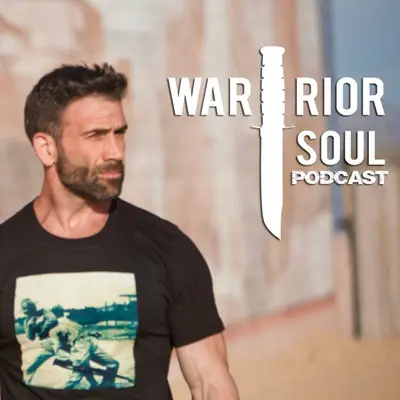
Hosted by Chris Albert
The Warrior Soul Podcast
Defeating Self Imposed Tyranny: Overcoming Limiting Beliefs
Thomas Jefferson once said that “resistance to tyranny is obedience to God.” This is something that most Americans would believe on it’s face. Yet, I also believe that we need to refine what we think of as tyranny in this modern day and age. In a time where personal liberty is probably greater than it ever has been in history, the most common form of tyranny is self imposed through limiting beliefs.
Limiting beliefs are those thoughts and ideas that keep you from doing what you truly want to do in this life. Many people want to improve their life, their fitness, their relationships, and their happiness, but they simply believe that they can’t.
In this podcast, I discuss what you can do to free yourself from those self imposed chains and deliver yourself from tyranny.
Transcript
Machine-generated from the episode audio and lightly edited — may contain errors.
Chris Albert (link to this point)
This is Chris Albert, and I'm here to remind you of one thing. Someday, you're going to die. Now that's not some morbid statement or scary idea. It's solid fact. Your time here on this earth is limited.
We need to be reminded of this as much as possible for one simple reason, to live your best life while you can. This is the Warrior Soul Podcast.
Thomas Jefferson once said that resistance to tyranny is obedience to God. And as an American, that's something that I believe in, and I think that most Americans believe that. It's part of our our cultural DNA. We're supposed to resist tyranny at every turn. But I also think that in this modern day and age, we also have to refine our definition of tyranny, particularly when it comes to our discussions of individual freedom. That's because, in my opinion, the biggest form of tyranny, the most common form of tyranny is that which is self imposed. I think that in the grand scheme of things, we have more people imposing limitations on themselves today than we ever had before, which is a funny thing to think about considering the fact that we have things better today than we ever have in all of human history. Right? We have more options, more things we can do. Right?
More things we can do with our lives, more ways to spend our times, more decisions to make. And in so many ways, we're also limiting ourselves because, well, making those decisions is pretty scary. My name is Chris Albert, and this is the Warrior Soul podcast. And the idea of this podcast is to deliver tools, tactics, ideas, talk about issues, and introduce you to experts who can help you to live your best lives. And we focus here on The US military veteran community.
And the reason we do that is because over the past decade and a half, our veteran community has faced really high rates of suicide, depression, homelessness, and other issues. And while a lot of people are trying to raise awareness about these issues, what we try to do here is to deliver solutions so that you can immediately implement these things into your life so that you can make your life worth living. Now, before we get into our discussion on tyranny and self imposed tyranny, what I wanna do is just give you a quick announcement from our sponsors, F Bomb Nutrition. They make this show possible. They make delicious packets of fats.
I'm a big fan of their macadamia nut butters. They mix them up with chocolate, with sea salt, with pecan butter, and with coconut butter. They're awesome. And, if you wanna get 20% off of your first order of f bombs, you can head over to www.dropanfbomb.com and use the code Warrior Soul at checkout. Let's talk about this.
What is self imposed tyranny? Well, self imposed tyranny, in in my opinion, are those limitations we place upon ourselves. Right? Or there are thoughts, there are ideas that come into our heads that aren't really our own. Right?
We all have our own ambitions, things that we want to do in this life, things that we want to make happen. But there's this little thing in our head that tells us that we can't do them. Right? So a good example of this is when people are trying to lose weight, and they're trying to follow a diet, a lot of people fall off their diets because of emotional eating. Another thing is, you know, if you look at modern marketing, right, advertisements, the goal on the part of the advertiser is to get the potential buyer to have some sort of emotional response to the advertisement.
That's because marketers know that people are more likely to buy based off of emotion rather than rational calculus. That's a big reason why we also have brands. Right? Brands like Harley Davidson, they create a certain emotion around them. Right?
And and that's why people are probably more likely to buy a Harley Davidson than maybe even a generic motorcycle that that might run a little bit better. And we could break it down even further if you were to look at the the most recent situation with Nike and their sneakers. What they were trying to do with their advertisement was to create an emotional response on the part of people who would be most likely to buy their sneakers. And they did so, even though they knew many other people would have a negative emotional response to the ad. Right?
Emotions are everywhere. Right? They're trying they're a method of getting you to think a certain way about certain things. Now, how do emotions or why do emotions play so much into our self imposed tyranny? That's because, well, evolutionary psychologists believe that emotions, or we were evolved to have emotions, so that we could make decisions at a much quicker pace.
Right? So back in the day when we were primitive men and women, and we had to decide on whether we go in one direction to to find food or we go in another direction, rather than pulling out a calculator and drawing out the situation, a lot of times we would go based off of our gut. And that allow us to to make a quicker decision while our children were waiting to be fed. So how does this happen and and why is this such a negative thing when it comes to individual freedom? Well, I also think that we should mention here the fact that many people, while they acknowledge the fact that they have emotions over a particular situation, they also like to run away from their emotions.
They like to get get as far away from anything that makes them emotional as they can. And that's because a lot of people know that their emotions can trigger them. And so we're hearing a lot of debate now about things like freedom of speech, and that's why we are also seeing limitations upon free speech. And that's why certain universities are issuing trigger warnings prior to lectures that include statements that might be offensive to someone in the audience. I think that, you know, when it comes down to it, what we're really doing there is is we're basically running away from emotion.
We're running away from that that ability to be triggered because we know that it can elicit a response in us that can't be controlled. Now the value in doing something like that is is highly questionable. And the reason why it's questionable is because we have two aspects of our mind as human beings. We have our animal instinct, and we have our human reason. And the more we allow ourselves to be controlled by emotion, the less we are allowed to express our reason, our ability to, express controlled decisions and make controlled decisions that that are within our interests.
And so the more we run away from things that make us emotional, the more that we allow ourselves to be controlled by things that make us emotional, the less we're acting within our own accordance and and according to our own will, and the more we're acting according to what other people want us to do. And so I think that one of the worst things we can do is to continue to run away from emotions. Rather, I think that the biggest thing that we can do for ourselves and for our ability to act according to our own interests is to acknowledge the fact that we have these emotions. Acknowledge the things that make us emotional, to decide how we're gonna allow them to make us feel, and to assess its place in our value structure, and then carry on in our lives in a way that is congruent with our own values. Right?
So if you're immediately acting based off of your emotion over a particular situation, that just makes you predictable. It allows you to be influenced, and it allows others to influence you to go down certain paths. But if, however, you develop the ability to acknowledge the fact that this thing is making you emotional, and you allow yourselves to delineate your emotions out of the situation versus what road you should go down and and your decision in that situation and how you're gonna allow that to make you feel, then at the end of the day, you're still gonna be able to go according to your own free will. The problem is that for so many of us, when we're trying to think about the paths we want to take in our lives, it's very difficult to separate those thoughts that are actually our own from those emotions that have been imposed upon us by external situations. In my conversation with Mike Ergo from Transitions From War this past week, he mentioned the fact that every morning, he starts his day with a meditation.
Now if you got a chance to listen to Mike's interview, Mike is a US Marine Corps combat veteran who after his service fell into alcoholism and drug use. And one of the things that that he'd mentioned there was the fact that he had to really bring up those demons. He had to bring them to the forefront, so that he could deal with them. Right? Because they were just kind of locked up in his mind.
He wasn't able to to really bring them out, so that he could face them on an open field. And the drugs, the alcohol, they're all helping him to mask those emotions, those things that he was feeling. They were they were all trying to help him bury it. But he had to bring them out to the forefront so that they were right there in front of his face so he could deal with them. And that's something I think we all have to do if we're gonna move forward.
You need to take those things that are deep inside of you, and you need to bring them out in the open. So here's a few different tools that I've used to try to bring them out. The first one is something that you might be resistant to and that's meditation. Right? That's something that Mike mentioned he does every single morning.
And we've talked about this in past past podcasts, but meditation doesn't necessarily have to be something that's spiritual. It doesn't have to be you dressed up like a monk sitting in the lotus position or anything like that. What it's really is you actually sitting there and allowing yourself to be alone with your thoughts without a lot of noise, and trying to really focus just on your breathing, living in the moment, and then acknowledging the thoughts that come into your head, and then putting them outside of yourself. Right? So you'd be sitting there, you have your eyes closed, and then if emotion an emotion or a thought comes up, you tell yourself that's a thought.
That's an emotion. And then you envision yourself putting that thought or that emotion outside of yourself. Right? And doing this, you know, even ten to twenty minutes a day has been scientifically shown to be helpful in allowing people to make better decisions, to have clearer minds, and even to live longer. Another really good tool that I've been able to use to my advantage is journaling.
One thing I'll do every single morning is I'll open up my journal, I have a Moleskine journal that I keep on my desk, and in addition to writing what I'm grateful for, I'll also write down all my complaints. I'll write down everything that I'm having a problem with at the moment. And what I'm trying to do there is I'm trying to lock them up there on the page. And if you go and you you read your writing after you've written down a bunch of your complaints, what you start to realize is that, well, most of the complaints you have aren't really a big deal. And once you've written them down and you go back after a bit of time when your emotion in the situation isn't that strong and you're able to objectively assess the situation, then you realize that these are problems, but they're problems that a lot of people experience.
They're problems that you could potentially find a solution for. And that brings me to the next thing I do. For every complaint I've written down, I also try to find a solution. Something. Whether it's gonna be a right solution or a wrong solution, doesn't really matter.
Just try to put some effort into solving that complaint. So for example, if somebody's annoying me on social media with their, their views or something, then I could block that person, or I can unfollow that person, or I can just not pay attention to my phone for the rest of the day. And in that case, I'll be able to have more time for doing the things that I want to do, rather than allow myself to be controlled and to, to constantly obsess over what other people are doing with their lives. Right? These are simple things you can do.
Right? Sitting there with your thoughts, and then writing down things in a notebook in a journal and the best thing of all is that they're free. The final thing is this, make sure that somewhere, someplace that you're going to be able to find them, that you've written down your values, what you stand for. Right? And this is an exercise that it's probably going to take a little bit of time.
Right? You might need a couple of hours to do it. But what you should do is to write down everything that you believe in as a person. This is your code. This is what you stand for, and what you stand against.
And you should have those values, like I said, in a place where you can find them. Because in those times and in those places where you feel your emotions creeping up, and you feel them starting to guide you in a particular situation, you should always go back and read over those values. Is what you're about to do congruent with those values? Is it congruent with what you believe is right and wrong based off of your own reason? And if it's not, well then that's something you probably don't wanna be doing.
In this way, you can allow yourself to be guided by your values and your reason rather than the influence of your emotions and the external influence of others. And that's what I got for this week, guys. Again, we ventured out into the weeds a little bit. I I hope that I didn't get too philosophical on you. But I think that at the end of the day, the ability to allow ourselves to be free from the influence of emotional responses is something that can really change our lives and change them for the better.
I think that if more people were guided by reason rather than their feelings about a particular situation, we'd live in a much better society. And I know that if you implement these things into your life, they're gonna help you to live your best life. Until next week, guys. Thank you for listening.
Host of the Warrior Soul Podcast and founder of Warrior Soul. Worldwide trainer and nutrition coach, contributing author at Testosterone Nation and Muscle and Strength.