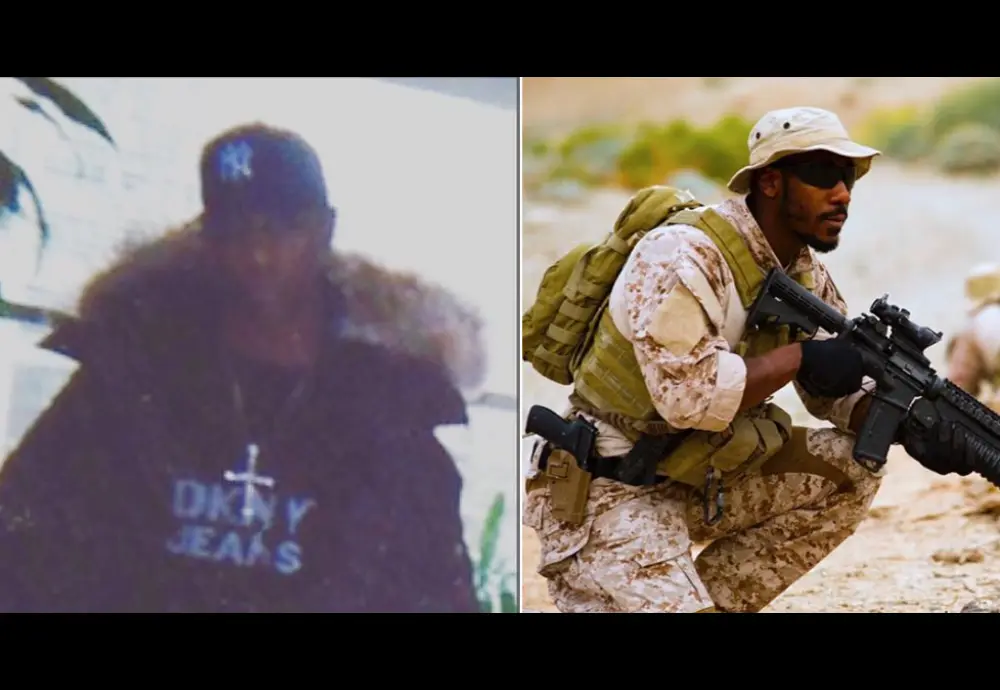
Remi Adeleke is a US Navy Seal, Actor, Minister, and author of the book Transformed…
In this episode, we bring Remi Adeleke back onto the show to talk about his new book Transformed.

This book is the best book I’ve read in 2019, and I literally could not put it down once I started reading it. Remi was born of Nigerian royalty.
His father was a successful engineer who wanted to help to make Nigeria prosperous, but corruption stood in his way. Remi’s father died when Remi was only 5, and the government seized his assets, leaving his family penniless.
Remi’s American mother was forced to move Remi and his brother back to the United States to the Bronx. The streets became Remi’s father and he found himself running scams, dealing drugs, and barely graduating high school.
His life took a massive turn when he met a US Navy recruiter who helped him get his record wiped clean. Remi joined the Navy and eventually went on to become a Navy Seal. Since leaving the Navy, Remi has become an actor and recently appeared in Transformers: The Last Knight.
Remi’s book isn’t just a self-help book nor is it a military biography. It is a testament to the power of God in peoples’ lives and of faith’s ability to completely transform those who accept it.
You can find Remi’s book on Amazon at https://amzn.to/2SVOZkz.
To view Remi’s previous episode click here.
To follow Remi on Instagram, click here.
Transcript
Machine-generated from the episode audio and lightly edited — may contain errors.
Chris Albert (link to this point)
This is Chris Albert, and I'm here to remind you of one thing. Someday, you're going to die. Now that's not some morbid statement or scary idea. It's solid fact. Your time here on this earth is limited.
And we need to be reminded of this as much as possible for one simple reason, to live your best life while you can. This is the Warrior Soul Podcast. You know, there's a tale as old as time about a man named Siddhartha Gautama. Siddhartha was born of wealth, and he one day decided to come down from his palace to see how people actually lived. And he was horrified.
He saw the poverty. He saw people starving. And he decided, right then and there, to give up his wealth, live an ascetic life, and seek enlightenment. And that man's name was also... Well, maybe I phrased that the wrong way, but Siddhartha is also known as the Buddha and is considered the founder of the Buddhist religion.
And I bring that up because his story finds many parallels with the story of today's guest. Remi Adeleke was born of Nigerian royalty. His father was a chief, a very educated man who wanted to do everything he could for his country, Nigeria, to make it prosperous. And unfortunately, Remi's father passed away at a very young age, leaving Remi at five years old, his brother, and his mother in a place where they were penniless. His mother had to move Remi and his brother back to The United States where she came from, and Remi grew up on the streets of the Bronx.
He barely graduated from high school, ended up becoming a scam artist and a drug dealer, and found himself on the wrong side of the law. But through a twist of fate, Remi ran into a United States Navy recruiter who changed his life. Remi joined the Navy, ended up eventually becoming a Navy SEAL, and served his country proudly as an operator for that elite group. I brought Remi back onto the show. He's been on the Warrior Soul podcast before, to talk about his new book, Transformed.
And I have to say it's the best book I've read this year, an absolutely enthralling piece of writing. I literally could not put it down once I started picking it up. And what you learn from this episode and and also from the book, I highly encourage you to get this book because there's so many lessons in it, is that even though Remi had transformed on the surface, there was a deeper, more meaningful transformation that still had to take place. And according to Remi, that transformation is still going on. Remi is also an actor.
He's appeared in the movie Transformers: The Last Knight and just an all around awesome guy. You definitely need to check him out. You definitely need to get the book. It is an absolute must read, and I will have a link to it up on the show notes. Just a couple of quick announcements, before we get into the interview.
This is the Warrior Soul podcast. My name is Chris Albert, and this podcast is meant to motivate and inspire US military veterans and anybody else willing to listen to live their absolute best lives. We deliver tools, tactics, ideas, and strategies from some absolutely amazing people to push you forward, to help you to become the person you were always meant to become. And it's an absolute pleasure for me to do this show. We don't ask for anything in return.
All we ask is that you head over to iTunes if you like the show and write us a rating and review. It really helps us to spread word about the show. And if you can, the highest compliment you could give us is sharing this episode out with somebody who needs to hear it. Beyond that, I want to give a quick thanks over to the good people over at F Bomb Nutrition. They make awesome packets of macadamia nut butters, and they mix them up with chocolate, with pecan butter, with sea salt.
So delicious. It's a quick snack that you could bring with you anywhere, and they're sending boxes of this stuff out to the troops on the front lines, to help them augment their MREs while they're on deployment. Great people. Great product. Head over to www.dropanfbomb.com.
Use the code warrior soul at checkout, and you'll get yourself 20% off your first order. And with that, let's get into this conversation with mister Remi Adeleke about his book, Transformed. Remi Adeleke. How you doing, man?
Remi Adeleke (link to this point)
Doing good, brother. How about yourself?
Chris Albert (link to this point)
I'm doing outstanding. Remi was a previous guest here on the Warrior Soul podcast. He came on a bit earlier prior to his book being published. And if you don't know his story, we're gonna get into it a bit today. But basically, you know, his story goes back to some of the oldest stories known to man.
I mean, if you look at the story of the Buddha, a prince who who came down and and saw the suffering that people were going through and then went through this whole process to reach enlightenment, that's kind of what Remi went through. I was born of Nigerian royalty. Father died at an early age, came to The States, was living on the streets of the Bronx, and then decided to become a Navy SEAL. Went out there, served this country. And that's a transformation in and of itself.
But as we'll get into, there was the much larger transformation in Remi as time went on. And and as Remi told me just before we hit record here, that transformation is still very much going on in in a constant process. The book is called Transformed. You guys can find it on Amazon. We're gonna get you links for this, but I'm really looking forward to, to to talking about this because this is one of the few books I've read from cover to cover almost in one sitting.
I I really couldn't put it down when I started picking up. So, Remi, number one, thank you for coming on. And number two, thank you for writing this book.
Remi Adeleke (link to this point)
No, thank you. And it's cool you say it's so, so crazy, man. Maybe about five times a day, I get people who have read the book who say, I read it from cover to cover. I read it in a day. I read it in a week.
Couldn't put it down. I finished it. Read it. It's the fastest book I've ever read. And so it's super encouraging to hear that.
And in my mind, I'm always wondering, Okay, what's the lesson behind that? And still trying to find a lesson. Should I be learning through this? But thank you for the encouragement on that. Because I put everything into writing that book.
Chris Albert (link to this point)
Absolutely. I mean, you know, the whole idea of... And and kinda like I said, this this this story itself kinda harkens back to some of the the ancient stories of people who have to go on this quest. Yeah. You know?
And and, you know, thinking back to your own life, you know, from the time when you were a kid, from a very young age in Nigeria to to growing up on on... In the Bronx. Yeah. You know, what's it like for you looking back at that? What's it like for you looking back that...
Looking back at that, but also, what was it like for you to actually sit down and try to put words to paper?
Remi Adeleke (link to this point)
I'll answer the the first question, part of the question. Man, it was... I'm grateful. I'm grateful for the story that I've been allowed to live. It wasn't always good, as you know, but it all made me the man I am today.
You know, I have siblings, have siblings, and I don't get into much detail about it in the book. I just touch on John, who's one of my older half siblings, because my mom was married before she married my dad. Excuse me, my dad was married years before he had married my mom. And my siblings had my oldest siblings are about 20 years, 15 to 20 years old than me. They had a completely different life than I did.
Because my dad was very rich and so they went to boarding school in London. They had the chauffeur life. I mean, they was set up. I mean, they went to great colleges and then got out and they were had great careers. I mean, they had that right foundation.
And my dad died when I was five. And we went from rich to poor. And I went down a completely different life and path than they did. But, and so we are two completely different people. And I'm so grateful that I didn't have the life they had.
When I was younger, I wouldn't say that. But now looking back, I'm just so grateful because it made me who I am today. Your second part of your question, it was easy, man. It was easy. It was therapeutic to sit at the computer and get my life out there.
For years, I had told my story orally in different ways. I mean, it started, I would say, when I was in BUD/S and SEAL training. I talk about it a little bit in the book where guys were always fascinated, man, how'd you get here from Africa and you grew up in The Bronx, man, that's a cool story. Like, I wanna hear why I never met a... Because a lot of guys don't meet...
There's not a lot of black guys that go to SEAL training period. So I'm in this class and I'm like one of the few, maybe three black guys in the class that's starting with two fifty to two seventy. And they're just fascinated about, you know, and curious as to how I ended up there. And so I just started sharing my story with them, you know, at that point, and then it just continued on in my life. Would just share my story really.
So when I sat down to write, there were so many stories that were fresh in my mind. And I also did a lot of research, interviewing people that I grew up with, guys I sold drugs with, guys I did all kinds of crazy things with, girls that I dated, all that stuff to make sure it was fresh. So it all flowed. It was easy for me.
Chris Albert (link to this point)
Definitely, definitely. And, you know, I see that your life was happening for you as it went. All the bad things, all of the the the the crazy stuff you went through was happening for you to eventually prepare you for the man you were to become. Yeah. That's an amazing part of this.
Let's go back a little bit to the beginning here with your father. Your father was a great man.
Remi Adeleke (link to this point)
Yeah.
Chris Albert (link to this point)
He he wanted to do whatever he could to help Nigeria to become prosperous. Yeah. And you talk a bit about that in the book. He he died, but he was also under duress when he died. Right?
Yeah, yeah, yeah.
Remi Adeleke (link to this point)
He, you know, country was more important than a lot of other things in life than 95% of the other things in his life. Yeah, he was fighting the Nigerian government. I mean, he was fighting in the midst of that battle. All of a sudden, he gets bit by a dog. He contracts rabies.
He goes to a hospital, gets bad medication administered to him. I don't think it's a coincidence. And then next thing you know, he's in a bathtub and he dies. So it was a very mysterious situation. But he knew, as you said, was under...
He was under duress, under He a lot of
Chris Albert (link to this point)
was literally... He had literally engineered an island that was going to be an industry center in Lagos, right? And then all of a sudden, the government decided it was gonna seize that property. It Yeah. Today is worth, what, like 8,000,000,000 Billions.
Remi Adeleke (link to this point)
Billions. And my dad invested millions and millions of dollars of his own money into it. He put everything into it financially. And yet, it still exists to this day. I mean, they're putting up multimillion dollar homes on the island.
There are homes that I'm sure there's at least one home on the island that's worth more than my dad initially invested to build the island. And now, that island's worth billions. My dad's guards, he's like they call him the abbot. So he works on the island now. You know?
So it's a lot of controversy behind it.
Chris Albert (link to this point)
And and when I think of that situation, think of your mother. Yeah. Because she literally had to go from from that situation to doing whatever she could for you and your brother Yeah. To survive. And that meant coming to The United States, coming back to to her home city, and literally putting work in just to make sure you guys were okay.
Yeah.
Remi Adeleke (link to this point)
And there's a story I didn't share in the book, but, you know, I'll share it here. When my dad died, one of the one of the first things she did, because she had no money, she had she had nothing. She called up her cousin, my uncle, and she said, hey, listen, I have not a nickel to my name. I have no way to pay the bills. Can you loan me some money?
And this guy wasn't a poor guy. He was a very successful businessman, very financially successful. He lived in Upstate New York, big house, nice car. I mean, he could spare the money. And my uncle said to her, let me call you right back in about five minutes.
Five minutes later, my mom the phone rings. My mom answers the phone. It's my uncle's wife. And she says, how dare you call up my husband and ask him for money? Who the hell do you think you are to contact my husband?
If you want something, you go through me. Don't you ever do this again. She hung up the phone on my mom. And my mom has told me many times that was the lowest point in her life, but that was also a point where she learned a key lesson that stuck with her. She was like, I will never be put in a situation where I have to depend on another person ever again.
And she put the pedal to the metal. And as you said, she wore multiple jobs to put food on the table. Mean, she would take jobs to just expose us to education. She's a trooper. People ask me all the time, Remi, where did you get it from?
How did you get through suicide? How did you get through writing your book? How did you get through all these things you're doing now? And I say, I had a living example of perseverance every day of my life. I had a woman that didn't just talk about it, but she lived it.
And through osmosis, you know, I just kinda, you know, acquired it. You know? It's just part of my nature.
Chris Albert (link to this point)
Yeah. There's that kind of... There's that tension in the book there, especially at the beginning because you you basically... You did have two parents. Yeah.
One was your mother, and the other one was was the Bronx in the neighborhood you grew up in. Yeah. And you see that tension there because... And and and here's the thing. I mean, I wouldn't I wouldn't talk bad about the Bronx because it gave you street smarts to educate you in another way.
But at the same time, it brought you down some paths that that probably weren't the righteous paths, right?
Remi Adeleke (link to this point)
Yeah. Not at all. I mean, you know, being a young kid from the inner city, you when you don't have a father in your life, you just naturally look for a father. I mean, you you you're... I think every boy is is looking for his father, you know, to guide him, to be there for him, to affirm him.
Same thing with a girl. I think every young girl is looking for her daddy to guide her, to affirm her, to show her what love is, and, you know, so that when she grows up, she's looking for the right thing. And, I was looking for a father. And I found my father, as you said, in the streets. And the streets taught me about hustling.
The streets taught me about women and how to deal with women. The streets taught me about fighting. The streets taught me all of these things that I thought I needed to do and be in order to be a man, right? And it did lead me down a lot of dark paths, you know, from stealing, selling drugs, to running scams, to sleeping around with all kinds of girls, to partying, to being vulgar, just being prideful and and, you know, and that that was the man I was, I had become.
Chris Albert (link to this point)
Absolutely. And and, obviously, people can can look at the book to see some of the different types of business ventures you got into and big for that. Yeah. Yeah. But there there were also some points there where where you came close to the edge and Yeah.
And very dangerous. Yeah. And what do you think it was that that clicked in your mind and it said, alright. I can't run this scam anymore. I can't do this anymore.
You know, there's that scene where the guy comes to your door and and mom's sleeping in the next room. What what was going through your mind then that made the change right there?
Remi Adeleke (link to this point)
For me, it was, you know, my mom was a big advocate for consequences to actions. Actions. And when we were young, she would discipline us in her form of discipline. Her discipline of choice was spanking. And so from a young age, I always knew that if I do something wrong, something bad is going to eventually happen to me.
I am going to deal with the consequences of my actions. And yes, I still did wrong things, but in the back of my mind, I was always looking over my shoulder, where's the consequence? It's coming. I know it's coming. When is it gonna come?
And so when I had got to that point where I've gotten that situation with the drug dealer and he came to my house, that was the consequence. That was a light form of the consequence for all of the dirty things that I was doing. You know, I don't want to give away too much of what happened, but after that situation was settled for the most part, I knew that the consequences would get greater if I did not stop, and I didn't want to risk enduring whatever consequence would come my way if I didn't stop. Like, I made that decision. I was like, this is it.
I'm done. And it all came from the way my mom raised me. And there are other kids you know, who are, and I'm not saying spanky kids, I'm not saying that, but I'm gonna say there are other kids who I grew up with, who I went to school with, and they didn't get discipline. They didn't. And some of them are in prison, some of them are dead, you know, because they never grasped that concept of there is a consequence for what I am doing.
And so they just kept on doing what we were doing. There's a buddy of mine, mean, know, Roderick from the book, he's sitting in prison right now. He just got released from one prison in Philadelphia and he's in jail in New Jersey getting ready to get sentenced to another prison. And he never really had discipline. He would come to stay at my house with my mom, because we were hustling together.
And he never really had that discipline. And so he never grasped that concept of consequences of actions, now he is what he is, which so many other kids. So that's what... Sorry for the wrong answer, but that's essentially what got me to stop doing what I was doing.
Chris Albert (link to this point)
And that's important to understand, I think, because, you know, we also have a lot of young parents who who listen to this listen to this podcast too. And, you know, you think for for for your story, there... There's, you know, a few thousand stories of people who didn't... Just didn't get it. Yeah.
And who kept falling through the system and and who kept, you know, down that path. And and today, their lives, I mean, they might have some redemption at the end. Yeah. As as far as when they get out of prison, but but they're giving up a large part of life. Yeah.
Yeah. Because they never learned that. Yeah.
Remi Adeleke (link to this point)
And I tell parents all the time, you have to discipline your children. I'm not telling you how to discipline your children, but you have to discipline your children. You have to follow through because it's better for you to discipline your children at the age they are now than for the police to discipline your children or for a judge to discipline your children or for prosecutors to discipline your children, right? Exactly. So if you do it now while you can, so that they can get those principles and so they can understand respect.
Keep your word, obey what I'm telling you to do now so that they do it later. You know, me and my wife, we discipline our kids, you know? This is because I don't want my kids to end up going down. I know my kids have so much potential, and I don't want that potential to be squandered because I just chose to be their friend. And tell them everything you do is okay.
Daddy's gonna let you do whatever you wanna do because I'm setting them up for failure.
Chris Albert (link to this point)
How much do your do your own children know about that part of your life? Have you have you talked to them about it?
Remi Adeleke (link to this point)
Or I try to. I mean, my oldest is five. My middle is four. My youngest is is four months. They see pictures in the house as funny.
They see pictures of me when I was young, they're like, Daddy, what are you doing? Daddy. I I think they grasp more of the concept of me being in the military than anything else. I have so many pictures of me in my uniform and stuff around the house.
Chris Albert (link to this point)
And as far as going back to... Do you go back to The Bronx often?
Remi Adeleke (link to this point)
Or... Yeah. I'm there about twice, three times a year. I'm actually going to be back in The Bronx. I'm flying to New York on Sunday.
So I'll be there. I'll be there next week for bit. And then I'm going back to Rikers Island. I was in Rikers Island last month speaking to the inmates, and I'll be back there speaking to the inmates again.
Chris Albert (link to this point)
So, yeah. Wow. Yeah, it's hot there right now. Crazy. I was there last week.
Remi Adeleke (link to this point)
Oh, is it? Well, I'm like, hey, good. That's good news because I'm doing a swim. I'm doing this Hudson River swim from New Jersey to the Statue Of Liberty, Statue Of Liberty to Ellis Island, Ellis Island to the number of 9/11 Warrior Beam, which is called the SEAL Swimming across the Hudson, and it's to raise money for homeless veterans. So I'm glad you said it's hot, because I'd rather be hot. Because for my book, you know, I don't do too well in cold water. The hotter it is, the better it is.
Chris Albert (link to this point)
Let's get into that aspect of it too, because, you know, and again, not to give too much away from the book, but there is a point where you immediately decided that you had to go into the military.
Remi Adeleke (link to this point)
Yeah.
Chris Albert (link to this point)
And and there there was someone there that helped you out big time. Yeah. And and that was one of the most touching aspects of the story because, as we find out later on, she had a massive impact in your life. Yeah. Kinda kinda disappeared after that because, you know, got carried on to other things.
But, you know, when you think about that recruiter Yeah. To me, it sounds like like absolute grace. Mean, an angel came into your life and and saved you.
Remi Adeleke (link to this point)
100%. I mean, 100%. I mean, I had warrants out for my arrest. I should in I should have been in Rikers Island. And instead of turning me in, she took me to the judges to get my record cleared.
And I don't know where I would be that's a pivotal moment in the story. And the rest of the story wouldn't have happened if she And did what she yeah, I'm eternally grateful. And I'm so close with her family now. Her family has become my family. Her daughter's like my daughter.
And I vow to just get back to her and her family as much as I can because of that one act she did for me.
Chris Albert (link to this point)
That was an absolutely amazing part of the story. And just to see how one person can impact the trajectory of another person's life Yeah. Through through through an act. I mean, you know, and these opportunities are always out there. There's there's always an opportunity to positively influence someone else.
Yeah. And, you know, you had some obstacles there too. Get into the Navy, but you didn't get a high enough ASVAB score in order to become a SEAL. So you ended up with with us, the US Marines, for a little bit as as a corpsman. Right?
Doc. Yep.
Remi Adeleke (link to this point)
Yeah.
Chris Albert (link to this point)
The the super doc.
Remi Adeleke (link to this point)
Right? Super doc. Yeah. Super doc. Doc not boots.
I don't know it at all. I've learned it kinds of variations as it related to my nicknames.
Chris Albert (link to this point)
And in that part of the story, I, you know, again, it's like, you know, you see that this transformation starting to take place, you become a more disciplined, you're learning the military lifestyle, you're learning what you have to do, and eventually you get into BUD/S. Yeah. And think you got set back four times, right? Four pullbacks, right?
Remi Adeleke (link to this point)
I got a role for medical, and then I got two roles for swim, and then I got kicked out.
Chris Albert (link to this point)
Yeah, you got three times, you got kicked out, and then you got to go back, right? Yeah, yeah. When I think of that, that is enormous fortitude right there. Yeah, man. Because it's it's one thing to be in the process, but you you almost got to the very end and then and then got kicked out.
Yeah. Yeah. And so what was that time period like?
Remi Adeleke (link to this point)
It's so funny. My aunt, I was at my aunt's house last night, and for dinner, her husband and my uncle, and they read the book, they really talked to mom. Was like, because they live in San Diego, it was just like, Remi, we knew knew you were SEAL training, but we didn't know you were going through all that. She was like, I remember when you came to the house and said you got kicked out of training, and you just spoke about it so nonchalantly, but I was feeling me.
She's like, I wanted to cry when you guys were training. I was just like, she's like, How did you do it? Like, how did you go back and not go through all that again? And I was just, I said, You know what? I don't know.
I said, You know, I just wanted it. I had nothing left. I just wanted it, but I still can't believe I went through all of that, which is crazy. I couldn't do it now.
Chris Albert (link to this point)
Right.
Remi Adeleke (link to this point)
I don't care. Somebody said, Hey, you go through all that again for six months, I'll give you a million dollars. I would say, Hey, keep you a million dollars. I couldn't do it. I just can't, you know?
My body's too broken and it's too painful, but I don't know how I did it, man. I just wanted it. I just wanted it. I pushed. I had nothing left.
I had no plan Bs. And this is a lesson that I try to teach people all the time. When you're journey towards your dream, you're dreaming. You can't have a plan B. You can't.
You have to burn the boats and storm the beach because on your road towards your journey, if you have a plan B and you start facing adversity, that plan B is going to get really, really attractive. It's going to get really, really attractive. But if you don't have a plan B and you face adversity, all you have is plan A. All you have is what's in front of you to keep charging forward. And that's what I had.
I didn't have any. If I don't make it, I'm a be SWCC. If I don't make it, I'm a be EOD. If I don't make it, I'm gonna go back to the Marines and be Force Recon, if I don't make it, I'm gonna get out of Navy, go in the Army and be an Army Ranger. I was like, I'm gonna be a SEAL.
That's it. There is no if, ands, or buts. That's what that looking back in retrospect, that's what it had to happen. No plan, no plan. And I had a deep rooted emotional reason why, you know, this is something else.
I try to teach people all the time, whether it's fitness, whether it's trying to be an actor, whether it's trying to be a doctor, whatever it is that you have aspirations to do, you have to have a deep rooted emotional reason as to why you want to do it. Because again, if you don't have a deep rooted emotional reason why when you face adversity, you're going to fall away. If you have a superficial reason, oh, I just want to be a doctor because I want to be rich, or I just want to be an actor because I want to be famous, or I want to be Navy SEAL because people respect me. That superficial reason is not gonna carry you through the hard times. It's just not.
And as you face the deeper that adversity comes, deeper you fall into adversity, the more that good idea is going to turn into a bad idea. So you have to have a deep rooted emotional reason as to why you want to do whatever it is that you want to do. And for me, again, it was I had nothing left. And that's what anchored me. I didn't want to fail anymore in life.
As you know from my book, I had failed so much up until that point. I had failed as a son. I had failed as a brother. I had failed in training. I had failed as a drug dealer.
Had failed as a hut. I had failed at every aspect of life up to that point. Just didn't I didn't have the capacity to fail anymore. So those were my two deep rooted emotional reasons why. And looking back, that's what carried me through.
Chris Albert (link to this point)
And and that's the thing. You know, there's another way of putting this, and I I tell this to people sometimes, but what I see also is that you had a focus almost more on process than you did on the outcome. Right? And and that meant that you were constantly kind of... When when you finally got into training, you're going after it.
You start to look at your weaknesses and trying to see how you could you you could strengthen those weaknesses, you know, strengthen the swim, you know, the the training aspects and and everything. And and looking at that, I I mean, you had your chances to go with other organizations as as you saw in the book.
Remi Adeleke (link to this point)
Yeah.
Chris Albert (link to this point)
And and you had your mind set on that, and you took the lessons as they came, and you kept applying them to trying to get to that end goal. But but it wasn't the outcome you were focused on. It was It was constantly that process.
Remi Adeleke (link to this point)
Yeah, it's process. It's one thing that they teach us in BUD/S is eat the elephant one bite at a time. In Hell Week, and just using Hell Week as an example, the way instructors get guys to quit is the first hour of Hell Week is miserable. I mean, it's like they throw absolutely everything at you in the first hour. Hell Week starts on Sunday, like around five, seven at night, depending on the class, and it ends on Friday.
And as they're throwing everything at you that first hour, they tell you, You have six, this is the first hour, and you guys have six more days of this. You're not gonna make it. Imagine six more days of this torture, and the guys will immediately think of day six, they quit. Because they're just like, I gotta go through this first hour for six more days. And I had learned early on, I can't even think about this sixth day.
I need to think about making it to the next minute. I need to think about making it to the next evolution. And as I did that, as I made it, let's say, to the next evolution, then my morale, I had a boost in my life. Yes, I made it through that evolution. Now my goal is to get to the next one.
And I just ate the elephant one bite at a time. And as I did that, my motivation grew, guys quit, I stayed, and eventually I got to that sixth day.
Chris Albert (link to this point)
Right?
Remi Adeleke (link to this point)
And again, that's a lesson that as a writer now, you know, I'm working on this project. I've been working on this project since about December, January, writing this film. And it's one of the hardest writing projects. No, it's the hardest writing project I have ever done. I wrote another project before, after I wrote the book, and this is my third.
And it's tough. But I can't look at my last page and say, man, that last page is so hard to get to. I just got to look at, let me just get another page in. Let me just get another scene in. Let me just get another scene of dialogue in.
And as I attack that one bite at a time, instead of think of all of this other work I have to do, I get my morale boost, I get motivation, and I keep charging forward.
Chris Albert (link to this point)
Yeah, absolutely. Just just taking that one chunk at a time and and really just, you know, focusing on it, you know, being present. That's a huge thing too. Yeah. Such a thing.
As you... And and one more question about this, but you know, by the the the fourth time going through, did did you have a better sense of kind of the mental games and and where your head would be at? Was was the shock factor reduced?
Remi Adeleke (link to this point)
Yeah, it was completely reduced. I knew absolutely everything that was going get thrown at me, just knew it was going to suck. I knew how long every evolution was going to be. Knew I had to do my hands tied behind my back, feet tied together to swim. I knew I had to do long breath holds.
I knew everything. So it was just like, all right. It's kind of like when you're to get this spanking by your mom. Okay, I know when spanking is going to be bad, let's go and get it over. It was just like, okay, I know the beat down session for the next six months is going to suck, But let's go ahead and take the beat.
Chris Albert (link to this point)
That's awesome. Yeah. Now, you get through SEAL training. You you know, your life is completely different now. Financially, you got a steady, steady job.
You've you've got a great job.
Remi Adeleke (link to this point)
Yeah.
Chris Albert (link to this point)
But there's something still about you that... That's still not right. Yeah. And and you talked about your history with women before.
Remi Adeleke (link to this point)
Yeah.
Chris Albert (link to this point)
And and the way you carried yourself with them. And I think, you know, in terms of my own life, and and this is where I really kinda empathized with you and and kinda saw what was going through... Going on because for externally, everything could look great. You know? Super fit, successful doing doing the stuff. But but internally, there there... There's a little bit of a rock there. Right? Yeah.
Remi Adeleke (link to this point)
Yeah. Yeah. No. It was... I I was empty.
I was... You know, I had it all on the outside, but on the inside, I was just empty. I was still, again, going back to that affirmation, you know, I never recall receiving affirmation from my dad. One, because I was five when he died, so I don't have a lot of memories of him. But two, after he died, I just didn't have a father who affirmed me.
And I was just I think I just had this hole in my heart that nothing could fill. Women couldn't fill. I mean, I hadn't slept with every type of gorgeous woman on the face of this planet. And I had partied at some of the greatest parties. I had money.
I had a nice car. I was living in San Diego. I had the life on the outside, but on the inside, I was empty. I was broken. I had a lot of guilt from decisions that I had made in the past.
I had shame. I had a lot of regrets, and that hit me. All story short, some point in my life, and I don't want to give it all away, but I just had time to reflect. I was sent off to, I would say, a wilderness where I was just by myself in the middle of this wilderness trying to survive, like literally. And I had time to reflect on my life.
And as I was reflecting, was just I didn't like what I saw. I didn't like who I was. And I knew that I needed to change my ways. I needed to change who I was. And long story short, again, I don't want give it all away.
It's all in the book. That's when I came to faith. I came to faith with Jesus. I was just like you know, my brother had been a Christian for a long period of time. And he had told me, because I was an atheist, I had fluctuated between atheism and agnosticism, depending on the day of the week.
And my brother was been a Christian for a long period of time, would tell me, Remi, when you hit rock bottom not if, but when you hit rock bottom, and after you've tried everything and nothing's worth, just try crying out to Jesus. And that's what I did. And that's when my life transformed spiritually. That's when I went from being an atheist to being a Christian. That's when cold turkey, went from having sex from the age of 16, 16 having sex and watching pornography to just cold turkey, not having sex at all, period.
My language changed. Everything about me transformed, and to the point where there were guys who served with me who couldn't believe that they were just like, Remi, we're going to the club. You're not going to go get drunk. You're not going go chase this grub. Remi, what's going on with you?
What's happening with you? And I was just like, man, like, I'm a different person now, man. Like, I got this love in my heart now that I've never had before, I've never felt before. I don't want to treat women like that. Women are to be honored and lifted up.
I don't want to treat my mom like this anymore. I don't want you know, lie and just be this crazy person anymore. Like, I wanna be a good person. I wanna live the rewarded. Wanna love people.
Just just be enlightened to people. I wish that was one of the transformations in my life.
Chris Albert (link to this point)
You know, what would you say to a lot of these young men who might be in their teens or twenties, who would look at that and say, well, all I want is the women. I want I want the money. I want I wanna have sex as much as possible. I want to, you know, and and we see this a lot. Yeah.
Yeah. With guys in their twenties. I mean, goal is to sleep with as many women as possible. Yeah. What would you say to somebody like that who's going through that?
I'm sure you've worked with a lot of young SEALs who are in that position too.
Remi Adeleke (link to this point)
I mean, one thing I would say is it doesn't fulfill you. You know what I mean? At the end of the day, you're never satisfied. You know what I mean? So that's going to well, I wouldn't wait till I figure it out myself.
Well, just look at the risk of it. You know what I mean? Diseases, you know what I mean? Like have the kid earlier than you want, you know what I mean? Like hurting somebody, like hurting somebody.
And what I mean by that is if you don't have an intent to be committed to a woman, you know what I mean, then you're just going to hurt her. You know what I mean? You're just going to hurt her, especially if she wants to be committed to you. And I can't imagine living that life anymore, especially now being a father. I can't imagine cheating on my wife because now I talk to my kids about integrity.
I talk to my kids about, you know what I mean? Like living by example. I talk to my kids about doing things right. Like, how are they going to look at me if I tell them these things? And then I go ahead and cheat on my wife or treat her horribly or curse her out or beat her or whatever I do to her, that's stagnant.
So I would tell them, one, it's not going to fulfill you. Two, think about your future. Three, ask yourself, if you have a daughter, would you want her to be treated that way?
Chris Albert (link to this point)
Right. Right.
Remi Adeleke (link to this point)
If you have a mother, which every human being on the face of this planet does, would you want her treated that way? If you had a aunt, if you have an aunt, if you have a friend, whatever you have, that's a female, do you want her to be treated that way? And how do you feel that she's treated that way? And that was something that I didn't really grasp until later. You know, after I had done all of the things I did and reflected on, was just like, man, these girls, they have a family.
They have moms, they have dads, they have siblings, they have kids, and I treated them like that. And so that's another thing I would say. Think about your legacy.
Chris Albert (link to this point)
Yeah. And understanding that sleeping around doesn't make you a man.
Remi Adeleke (link to this point)
It doesn't. No, it definitely doesn't. It doesn't make you a man. It makes you a boy. It takes a man to be committed to a woman.
To me, that's true manhood. Being committed to a woman and treating her as she should be treated, it takes more strength and integrity and manhood to do that than it does the latter.
Chris Albert (link to this point)
Absolutely. Absolutely. And you know what, looking at you through your SEAL career, you chose a career path that not a lot of SEALs choose with intelligence and and and, you know, going through that. And again, we get into this concept of of how your life prepared you for what was to come. Right?
So so, you know, those street smarts, they eventually paid off when you got to your deployments and when you got in a combat zone.
Remi Adeleke (link to this point)
Yeah. Yeah, absolutely. I mean, The Bronx had prepared me, not just in intelligence, but also just in operating. You know what I mean? Just being aware of my surroundings, being comfortable in that environment, growing up in The Bronx and working in the countries that I worked in.
I'm not going say they're exactly the same, I felt like I had been prepared to be in those environments my whole life. And again, like you said, I did a lot of what we call human intelligence. HUMINT is a paraphrased version of it. And I got a chance to work with sources, carry money, gather intelligence, do all kinds of cool things. And a lot of how I was able to do it came from my background.
I knew how to read people. Just growing up in the streets, you can learn you just through osmosis, you learn how to read people. You learn when somebody's BS ing you. You learn when somebody's trying to scam you out of the money, you learn when somebody's trying to play you a sweet talk, you learn all these things by just walking the streets of Fordham Road, the street I grew up on, you know? And so when I'm in The Middle East and I'm one of the sources or I'm interrogating people, whatever it is I'm doing, I immediately know off the bat how to connect with this person, how to reach this person, how this person is whether the person is relaying truthful information or not truthful information So it all prepared me.
And that's, again, I know I'm throwing out a lot of lessons, but I just try to throw out lessons when I talk. But nothing is wasted in life. I don't believe that anything is wasted in life. I don't care if you work at McDonald's and your only job at McDonald's is
Chris Albert (link to this point)
to sweep the floor.
Remi Adeleke (link to this point)
There is a lesson in that. I don't care if you're a janitor or whatever it is you do, there are lessons in that that can translate to other aspects of life. And there were so many lessons that I had just learned through osmosis. Living in The Bronx, working different jobs, selling drugs, doing the things that I did, working in the clinic in my first command, Naval Hospital Camp Pendleton, checking in babies and doing vital signs and assisting on pap smears. Like there are lessons that gave me all that that just kept rolling on. And again, the title of my book is
Chris Albert (link to this point)
Transformed.
Remi Adeleke (link to this point)
And I think a key aspect to transformation is applying lessons that you learn through life, those lessons. And those lessons, when you apply them, they lead to greater transformation. And I don't think I would have had the transformations I had if I didn't just take those lessons. Case in point, when I was preparing to go to SEAL training the first time, I didn't have anybody to teach me how to train. I didn't have anybody to teach me how to swim starting out.
I didn't have anybody to teach me how to study the ASVAB. But what I did have was I had the lessons that my mom had just ingrained in me about Remi, repetition, read it again, write it again, do it right, come up with a plan. These are all things my mom had just taught me through life so that when I got to that point of how do I prepare for this program, I was able to figure it out, you know? So, and that led to me transforming into from a skinny guy to a guy who now can swim and who had the muscle to go to SEAL training. So, you know, nothing is wasted in life.
I don't care what it is that you're doing right now. It's not a waste. Take, you know, if you had to get a notepad, get a book, write down at least one lesson a day from what you, you know, lesson that you learned from the job that you're doing, because there's a lesson there.
Chris Albert (link to this point)
Absolutely. And, you know, the the big thing I got from this book, and and I'd mentioned to you to you before is that, you know, transformation as as you're going through it, you know, life is difficult.
Remi Adeleke (link to this point)
Yeah.
Chris Albert (link to this point)
And transformation to anything is is is hard, right? As long as it's a transformation upward. Right? But in life, because it's difficult, a lot of times you have to be able to reach beyond yourself in order to to be able to accomplish anything. Yeah.
And and in your story, that comes from from grace. It comes from God. Yeah. And and I see that constantly throughout your story, and and I have to say it's one of the most inspirational aspects of the book Yeah. Is understanding that.
Yeah. Because we we turn our wheels here. But if we're not transforming ourselves completely, both on on spiritual side and and on the physical side Yeah. Then it's not going to come through completely.
Remi Adeleke (link to this point)
No, you need hope, man. I mean, I'm writing this film now, and it's so interesting. It's a historical Black film. It's about one of the first groups of African Americans to serve in special operations during a time when African Americans were considered nothing. We were treated horribly.
And one of the questions that I had to ask myself as I was writing this film is, man, why? Like why would they serve this country in the midst of the current treatment that they weren't doing? You know what I mean? And the answers that just kept coming to me through my research and through the characters, because I try to write organically in a way where characters speak to me. I don't like to tell them what to say.
I like to allow them to tell me what to say and put on paper is hope. The answers just the answers of hope just kept coming up. And as a person of faith, hope is the foundation of faith. It's one of the key foundations of faith. And when everything around you is going bad, when you've lost your husband or wife, when you've lost your job, when your kids are driving you crazy, when things are just not going your way consistently, if you don't have anything to hope for, you will lose your mind.
And that's what I think was happening to me at that point in my life when I finally came to faith in Christ was I didn't have anything to hope for. I had everything on the outside, but I didn't have anything to hope for. And now I do. Yeah, they've been Navy SEAL right on this and that, but you know what? I have hope in the fact that God is with me.
I have hope in the fact that regardless of how bad things may look, God has a plan. I may not understand that plan. I may not like that plan, but everything has happened to me, God has orchestrated and it's been good. The outcome has eventually been good. And I have hope that the outcome of whatever I'm going through will eventually be good.
It may not be good as I'm going through the process of it, but it will eventually be good. And if it doesn't end up good in this life, you know what, it'll end up good when I close my eyes and end up in heaven, right? And so, hope, hope, that's a big thing for me. That's why that part of that transformation for me was huge because I finally, hope every day I have hope. I have hope.
Chris Albert (link to this point)
That's a really important thing. And I think a lot of people, I think they conflate faith and and and hope with luck. Right? And and it's different because faith takes work, man.
Remi Adeleke (link to this point)
Yeah. Yeah.
Chris Albert (link to this point)
It really does. It takes a lot of
Remi Adeleke (link to this point)
Yeah. Yeah. 100%. 100%.
Chris Albert (link to this point)
And and you have to put the work in in order to to develop more faith. You know? Yeah. And definitely definitely a big, big theme from this book. You know, Remi, number one, I wanna say thank you for writing this, and thank you for coming on.
Honestly, I had been going through some stuff. I recently found some stuff out about my origin story Oh, wow. Where I threw a 23andMe test. Oh, wow. Found out I was a sperm donor baby.
Oh, wow. Wow. And and completely different heritage, completely everything's everything I thought I knew about myself was was was completely done. Reading this helped me so much. Yeah.
And and helped me to come back to to to faith in my life. And, you know, it's... Really appreciate what you're doing here because now through you, thousands of people can be put onto a better path. Amen. Think it's amazing.
Remi Adeleke (link to this point)
Thank you so much, man. Thank you. Thank you. And thanks for sharing that, man. And going back to hope, man, everything happens for a reason, right?
You know who you are, and you know that you've done amazing things, and you're going to continue to do amazing things regardless of who your dad is or isn't or any of that stuff.
Chris Albert (link to this point)
100%. So we know the Transformers movie, you've been acting. What... Where is life taking you now? You you mentioned you have this project you're working on.
Yeah. Yeah. For you.
Remi Adeleke (link to this point)
Well, I just... I had... I I finished working on another movie with Michael Bay called 6 Underground. I was a lead consultant on that film as far as just action, shooting, and all that kind of stuff. And that releases in the winter, December 2019.
And then, yeah, man, I'm writing films now. You know, I've got the confidence to write after writing my book. I was just like, wow. Like, I was able to do that. I'm sure I could write a film.
And so I had this idea. I've had this idea for a film for a long period of time, this espionage thriller. And so I sat down and I wrote it. And it came out great and it opened up a lot of doors for me in the film and TV industry. And then I started writing my second film, which is the project I'm on now.
And so my next steps are taking these out to the market and they get them made. So there's a lot of interest from studios and executives in the industry to turn my book into a film. So that's another reason why I've been trying to jam out as much of these other projects, scripts as I can, so that when I get into these meetings, can say, well, not only do I have my book that we could turn to, but I have these other projects. So I'm just trying to be strategic there, have more irons in the fire.
Chris Albert (link to this point)
Absolutely, create a pipeline for yourself.
Remi Adeleke (link to this point)
Exactly, exactly. And then still traveling and speaking throughout the country, then working in nonprofit space with inner city at risk kids, going to jails, doing a swim for homeless veterans next week. So yeah, I got a lot of things going and being a family man, I got married with three boys. So that's a job in and of itself.
Chris Albert (link to this point)
Absolutely. Absolutely. And I know there's a lot of different channels you can get a book. What's the best way of getting this book? Because I want to see this on the best seller list.
What's the best way for people to get this?
Remi Adeleke (link to this point)
Amazon. I mean, you get Amazon Easy Day. I mean, especially if you got Prime or whatever it is to get that quick delivery, you can do that. Or you go to your local bookstore, Barnes and Noble's, right there, if they sold out, because I keep getting messages from you. Went to three different Barnes and Noble's and they sold out, Then just when you go to Barnes and Noble's and if it's sold out, just ask me what nearest store has it, and they'll point you to the nearest store that has it if you want to get it right away.
But in the meantime, Amazon's probably the best bet. Other bookstores have it, indie books, Books-A-Million, independent bookstores, so you can get them there as well.
Chris Albert (link to this point)
Awesome. And we'll get some links up on the show notes for this. The book is called Transformed by Remi Adeleke. And like I said, it's it's probably the best book I've read this year, and it's definitely had a... An impact on my life, and I know it'll have an impact on yours.
Remi Adeleke (link to this point)
So And you can, if you can do a review on Amazon, because the more five star reviews the book has, the more Amazon just through the analytics that drive traffic to my sales page. So if you could do a review and encourage others who've read the book to do reviews, that would be great.
Chris Albert (link to this point)
100%. 100%. I put a review up the other day, and we'll we'll put a link up to the review the review area as well.
Remi Adeleke (link to this point)
Thank you. Thank you. Thank you.
Chris Albert (link to this point)
Awesome. Well, Remi, again, thank you so much for coming on. Thank you for the work you do. And, you know, like like you said earlier, transformation never stops. Yeah. And I'm constantly transforming. I know a lot of you out there are constantly transforming. I know Remi's still transforming.
So I wish you the best of luck with everything here. And and God bless you, man.
Remi Adeleke (link to this point)
God bless you too, my brother. Thank you so much, man. Thanks for having me on the show.
Chris Albert (link to this point)
Definitely. For everybody out there, get out there, live your best lives while you can. Amen.
Host of the Warrior Soul Podcast and founder of Warrior Soul. Worldwide trainer and nutrition coach, contributing author at Testosterone Nation and Muscle and Strength.