Podcast episode
The Leftist Ideological Perversion of US Politics with Kirk Meighoo
Hosted by Chris Albert
The Warrior Soul Podcast
When many think of the “Left” in the US political-ideological spectrum, they think of things like tolerance, equality, and anti-imperialism.
Yet, that perspective is increasingly being called into question.
In this episode, we bring in the perspective of someone from the Caribbean, a region that’s existed in the shadow of US foreign policy throughout its history.
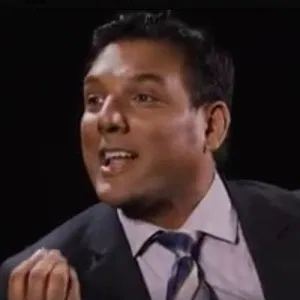
Dr. Kirk Meighoo is a Trinidadian academic, former independent Senator, and political thought leader.
He is also a former “Marxist” who argues that “leftist” and “progressive” thought is actually more aligned with imperialism than the traditional conservative ideological perspective if you look at the facts and the historical record.
In this episode, we dissect the current political discourse in the United States with a discussion of topics ranging from US foreign policy to immigration.
This is surely one of our most controversial episodes, and regardless of what your political views are, it’s aim is to get you to think.
To hear more from Kirk and his ideas, you should subscribe to his podcast; Independent Thought and Freedom, which you can listen to in Itunes, Stitcher, or Spotify.
To support Kirk’s work, visit his Patreon at https://www.patreon.com/independentthoughtandfreedom.
Transcript
Machine-generated from the episode audio and lightly edited — may contain errors.
Chris Albert (link to this point)
This is Chris Albert, and I'm here to remind you of one thing. Someday, you're going to die. Now that's not some morbid statement or scary idea. It's solid fact. Your time here on this earth is limited.
And we need to be reminded of this as much as possible for one simple reason, to live your best life while you can. This is the Warrior Soul podcast.
You know, I've avoided much political talk here on this show, and it comes with a certain degree of irony because for a large part of my life, I was heavily involved in the study of politics. I have a master's degree in political science from the University of Connecticut, and I studied for my PhD in political science with a specialization in international politics and quantitative methodology at the University of California at Santa Barbara. One of the big reasons why I left is because I found the whole study of politics to be it itself a very nihilistic pursuit. I was learning about human beings, their their political minds, at the same time becoming disillusioned with human beings based on what I had found. One of the things that I wanted to do when I did leave was to go into areas where I thought I could have much more impact.
You know, writing an article in that field means that in many cases, what you write is probably not gonna be read more than a few... By more than a few dozen people, even if it does get published in a major academic journal. So today's show came with a little bit of thought. You know, this show's mission is to help The US military veteran community and anybody else willing to listen to live their best lives. And I think that part of living a good life also involves understanding where your belief systems come from.
Because in this country, we tend to see everything as left or right. You're either a Democrat or a Republican. And because of that, we... If we're a Republican, we tend to believe everything that a Republican believes. And if we're a Democrat, we tend to believe everything that a Democrat believes.
Right? There's certain belief systems that go hand in hand with each other. Right? And in recent months, and and I would say also recent years, this itself has actually changed a bit. You know, what we see is that the left side of American politics has has gotten more left.
They've gotten more extremist. And, of course, there are certain elements on the right that have also gotten more extremist. And with that, there's come this this conflation. Right? This almost blatant and dishonest mischaracterization of certain people's political beliefs.
I can promise you that regardless of who you are, this show is going to get you to question some things, and it might also piss you off a bit. What we're doing today is we're doing a little bit of dissection of where American political belief systems come from. And we go a little bit into the history of political thought here in The United States. We talk about some of its philosophical underpinnings, but we also bring a unique perspective to the show, a unique voice, and that's of doctor Kirk Meighoo. Doctor Meighoo is from the country of Trinidad, a country in The Caribbean that's existed in The United States' shadow for much of its history.
And when we think of people who are qualified to bring an outside perspective, I really do think that our neighbors in The Caribbean are very qualified to do so, because a lot of times they have to bear the brunt of America's foreign policy. One of the things that you'll discover in this show is that the classic conception of, let's say, the Democrat party here in The United States is normally one of anti imperialism, one of tolerance, one of peace on earth. But when you consider the perspective of Doctor. Meighoo, what he brings to the table is a perception of that ideology as something very different, something that's actually based more in imperialism. He holds that a lot of the leftist ideologies that we see out there are are not what their proponents would have you to believe.
I myself am going to let you form your own opinions on this as you listen to the discussion. I think it's extremely interesting, and it's one that I think a lot of us need to listen to. So I'm not gonna hold you up much longer. I want you to listen to the episode, and let me know what you think. Before we get into it, like I said, my name is Chris Albert, and this is the Warrior Soul podcast.
Our mission is to empower The US military veteran community and anybody else who's willing to listen to live their best lives, utilizing the tools, tactics, strategies, and ideas that we present here. We very seldom talk about politics. Very, very seldom. Much of what we talk about here is involved with things that are gonna make you stronger, smarter, more resilient, and that are going to help you to push forward in this life. All we really ask in return is that you let us know how we're doing.
You write us a review on iTunes. If you like the show, if you think other people should listen to the show, that really helps. Also, sharing these episodes out with others, that also helps. In addition to that, if you want to support the show, you can head over to www.warriorsoulagoge.com. We have a shop there, and we've got some amazing military gear designed by US Marines, printed by US Marine Corps veterans, and great shirts, and they're pretty awesome.
We've been doing that from the beginning. Besides that, I just wanna give a shout out to our sponsors over at F Bomb Nutrition. They are awesome people who run an amazing company. They make delicious packets of fats, macadamia nut butters that are mixed up with chocolate with sea salt with pecan butter. They also make some other low carbohydrate fat fueled snacks like cheese crisps, meat sticks, and a whole lot more.
You guys need to go check them out. They're over at www.dropanfbomb.com. And if you want 20% off of your first order, just head over to www.dropanfbomb.com. Use the code Warrior Soul at checkout, and you can get yourself 20% off of your first order. And with that, let's get into what is sure to be a very controversial, but also educational episode with doctor Kirk Meighoo.
Alright, guys. I am joined here today by my good friend, doctor Kirk Meighoo. And Kirk is a really awesome person. Number one, he's bringing a really unique perspective, I think, here to this podcast because we talk about politics all the time here in The United States, but we have this very kind of US centric view of things. Kirk is from the country of Trinidad, and he also served as an independent senator in the Trinidadian Senate.
And he brings a unique political perspective to his own country, and I think he's got a unique view of the world from where he is. So, Kirk, welcome to the show today.
Kirk Meighoo (link to this point)
Thanks. I'm really glad to be here. Thanks for having me on.
Chris Albert (link to this point)
Tell us a little bit about yourself before we get started. You've got a PhD in political science. You you run your own show. And, you know, one of the things we're gonna talk about today is that, you know, when it comes to academic freedom and when it comes to putting unique perspectives out there into the world, the social media gods are not so friendly to those of us with unique perspectives. And you've gotten hammered by Facebook and by YouTube and a couple of the other platforms, right?
Kirk Meighoo (link to this point)
Yeah, yeah, definitely. And I suggest a little bit of background. I was I was actually born in The US, although I never lived there. And I grew up in Canada, and I did my first degree at the University of Toronto. But my parents are from Trinidad And Tobago.
My family's been here for six generations, and, you know, we have a long history here. And and I decided to to move back here in 1990, interestingly after... Just after a failed coup happened in the country, which was surprising. You know? I mean, coups happened a lot in the third world, but but not usually in the English speaking Caribbean.
In the Spanish speaking, yes. That's... So... But I... As a young guy, I found that really exciting.
That's not why I'm in... But but it was it was all part of it. And I I was working in a a kind of a poor ghetto community, with an NGO. That was part of my studies. I studied international development studies at University of Toronto along with anthropology.
And then then I went to Jamaica. I did development studies. And when I was in The UK, I was a Wilberforce scholar there, named after William Wilberforce. He's a guy that abolished slavery, passed the... Piloted the bill that abolished slavery in the British Empire.
That was at the University of Hull, which is a very fascinating story. And so... Yeah. And they call it politics there in The UK as opposed to political science. But...
Yeah. So so I've, you know, I've had... I I have a global, you know, history and stuff, I'm kind of all over the place. But I choose to anchor myself in what I would say is my home here on earth where my family's been for six generations and where I think we can best engage the world. I am a critic of the whole mass immigration thing, even though I am a product and child of it.
That gives me, I think, a unique experience and insight into it, and one which that I don't particularly recommend. So I suppose as I start that, I'm sort of revealing some of the unpopular opinions of the social justice warriors and stuff like that. And I mean, know, from... When when I was doing my grad work in the '19... I I I may have been the...
I believe I was the first person to use the Internet as an academic resource in The Caribbean. It was for some paper I was doing in the nineties with my professor at the time, and it was on social development. It was from a United Nations social development summit they had and whatnot. I loved the internet when it came out, like in the Yahoo days when it was just all text and no browsers even and stuff, and you have to do FTP and all that stuff. And then I remember when browsers came out and people like Camille Paglia, she came out with Sexual Personae.
And what was amazing about the internet at that time and what was the promise? It was more of a libertarian sort of idea. You know, a free flow of information and and all these ideas would contend that... And that's how someone like Camille Paglia, who was shut out of, you know, the Ivy League, became an intellectual superstar. And I used to follow her every week on salon and and all this sort of stuff.
I I just thought she was amazing. And the Internet was this amazing place, a marketplace of ideas, as you said. And now it's like it's like... It's it's like the gulag. You know?
It's it's it's like the Soviet Union. It's like the cultural... It's like Maoism, the cultural revolution. It's totally different from the promise that it started out. Yeah.
Chris Albert (link to this point)
Well... And I think in a lot of ways, and I could see this as a former academic myself, academia, I I think what the Internet is doing right now, it's also mirroring what has gone on in academia for quite a while, which is this almost gulag like organizational domination of the left in the social scientific disciplines and the humanities, which is if you step onto a college campus, if you stepped onto a college campus at any point in the last fifteen years, you would have seen that. Right? And and there was a point where, you know, there there were these unique perspectives that, you know, needed to have a place. And I...
I'm not arguing that they don't have a place in our academia, but they shouldn't have the dominant and and, you know, almost oppressive presence that they have today.
Kirk Meighoo (link to this point)
Yeah. Yeah. And, you know, I almost feel a sense of guilt in participating in some of that in the nineties and eighties and so forth. Because, I mean, I was very much... I mean, I I have always been and remain an anti imperialist.
That sort of made me on the left. But actually today, anti imperialism is on the right. I realized later on, I can't remember exactly when, but I realized the kind of anti globalization movement in the right in The US was actually much, much, much closer to my position than anything on the left because because the American left is actually far more into the globalization kind of thing, which I think is is just a form of imperialism. But... Yeah.
So, I mean, I I was initially part of the kinda whole... I I was enamored by postmodernism and stuff like that and Foucault and when it was edgy and and and and and Lyotard and all that kind of stuff. And I feel like, the situationists, I don't know if you know them from the sixties in in in Paris and stuff and all that kind of French theory and anarchism and all the real radical stuff. And I remember I used to walk around, I made these t shirts with all sorts of radical book covers I'd put on. I remember I had this Malcolm X thing, the end of white world supremacy.
And I used to love to wear that and shock people. And so I kind of identify with... Because I was at one of the early anarchist gatherings in Toronto in 1988 and where it kinda burst into into literal anarchy where they were burning flags about... Because there was some attack in some Iranian thing. And so I remember all these guys, but I never thought that they would actually take over.
But these guys, these marginal freaks kind of have taken over everything, and it's dangerous. It's really dangerous.
Chris Albert (link to this point)
Let's set a little bit of the landscape here about things, because I think what's going be important is that we're able to make that connection with the synapses between what's going on in academia, the historical landscape, and what's actually going on in world politics today. You know, at a certain point, Marxism was a dominant area of thought in academia. What happened was the Soviet Union definitely proved that Marxism was actually, in many ways, evil. And and some of the the books that came out of Soviet Russia with Solzhenitsyn's Gulag Archipelago, some of the stories that came out of what happened there, the the fact that, you know, Maoist China had been responsible for more deaths than than any other nation state on the planet. You know, people were having a little bit of issue with marrying that up with what Marxism was supposed to be, this this token ideal.
And so the academic landscape shifted, and feel free to correct me here at all, all, Kirk, you know, shifted a little bit, and people found something called postmodernism.
Kirk Meighoo (link to this point)
Yeah. And this is There was kind of two things that's really interesting because I I did my master's in Jamaica in the 1990. And it was very interesting because that was like... So it was like after the collapse of the Soviet Union. And I'm not sure if your listeners would be aware that, Michael Manley was a really big thing.
And, he he was a a democratic socialist in Jamaica, but it it caused a lot of problems because the CIA was intervening. A lot of the gun violence and gangs, and, could be traced.
Chris Albert (link to this point)
Bob Marley was a big supporter of his, right, for a while.
Kirk Meighoo (link to this point)
Kind of. Bob Marley always tried to stay neutral. There's a very famous, paint... Painting, a picture from a concert he had, a unity concert, where he put the hands of of Seaga, who was JLP and Manley together. He always tried to stay neutral.
He did not want to be drawn in one side or the other. And and, you know, and and this is very interesting because there are all sorts of myths about the right that the left has made, where one would assume that, well, the left would be more in touch with Bob Marley when that is absolutely not true. You know, this whole thing, all these assumptions that the left has always made about the right. If I I can give you a little story. When I went to The UK, I...
The department of politics I was in had the leading British conservative theorist there. His name was Noel O'Sullivan. And my whole academic life before that, I was totally on the left. Academia is basically liberal, and then I wanted to be even the most radical possible, so I just went as extreme left as I could always. And so the debate was between the liberals and the communist, Marxist, anarchist, black nationalist, whatever it might be.
And I know that's what I thought, you know, the debate was, and and conservatives are stupid, you know, they were... You know, that that's just that's just what we were taught. And when I was up in England and I, you know, met Professor Sullivan and I and I started to delve into the world of conservative thought, I was so angry. I was so upset that my whole life, I was purposely not introduced to this whole body of thought that was extremely sophisticated, extremely interesting, extremely thought provoking, and I I I... It was amazing.
So... Yeah. So I I I got that from... Because people assume that, oh, Bob Marley, Rastafarianism on the left. They don't know that on the right, it was Edward Seaga who...
You know, he was an anthropologist. He was a record producer before, a champion of folk music, of reggae, and and he was on the right. You know? And in fact, this is what we see today. Right?
It's the left wing, like these Antifa people, who hate the ordinary working class. They call them racist and fascist and whatever. So it's this kind of university, at least, who somehow think they are connected to the masses, when really it's like, you know, in the seventies, there was Thatcher or Reagan, the blue collar people, the ordinary people were attracted to the right. And then the left have this weird thing that, you know, oh, well, there... It's false consciousness.
Now I know I got off topic.
Chris Albert (link to this point)
Absolutely. No. No. And and and what it comes back to is, I think, intellectual dishonesty. Right?
Because essentially what we're seeing amongst the postmodernists and and which I think Antifa and a lot of these groups actually branch their their their philosophical underpinnings in. I think that that, you know... And and it's been demonstrated that this is simply a masking over of the failed Marxist ideology
Kirk Meighoo (link to this point)
Yeah.
Chris Albert (link to this point)
To to match something that could be explainable.
Kirk Meighoo (link to this point)
Right? That's right. That's right. And I remember why I went off that because I was talking about Jamaica. Because there were a lot a lot of the people who I spoke...
Who who taught me were key advisers in the Michael Manley administration. And again, it's the whole liberal communist debate because then you have this one radical group called the Workers Party of Jamaica. They were very, very dominant on campus, and they had a lot of university professors who are actually part of that party. They were tied to the whole Grenada thing and the murder of Maurice Bishop. There's a lot of rumors about that.
Yeah, some of them were really, really heavy Soviet and everything like that. And then there was a kind of democratic socialists who were like pro Castro, but not pro... So they were like third world nationalist socialists, but not communist, hardcore Eastern bloc, whatever. And then you had independent Marxists and black nationalists and all this kind of stuff. So, yeah.
So after the fall of the Soviet Union, even Michael Manley, he became a neoliberal. A lot of these Marxists became neoliberals, right? And then all of a sudden they became born again capitalists and they became free market people. So that was really interesting the way a lot of these hardcore Marxists, turned around. So you'd see this one
Chris Albert (link to this point)
One one one note I wanna make here just for our American audience, Kirk, is that when when Kirk mentions the word neoliberal, he's not talking about what we would consider a liberal here in The United States. Yeah. This is an academic perspective that believes that free market capitalism can bring peace to the world through increased trade, open borders, essentially what the right here in The United States would call globalism.
Kirk Meighoo (link to this point)
Right?
Chris Albert (link to this point)
Yes.
Kirk Meighoo (link to this point)
Like a capitalist globalism. Right? So it's like the argument was in the development policy circles was that, okay, should you have autarky and countries close their borders and produce things for themselves, develop their industries, protect it so that they could develop their own economies? So that's the kind of autarkic model which often was tied up with socialism or nationalism or something. Trump actually forwards a lot of this stuff.
And then you had what they were promoting at the time, but things have changed now, was the, I guess the market led model, because they were saying Singapore, Thailand, Hong Kong. So these Asian tigers, they were proving that South Korea was part of it. They were proving that, that autarkic model didn't work. You needed foreign investment. You needed to open up.
The the debate was closed. Capitalism worked. So all of a sudden, a lot of people around collapse of the Soviet Union Times said, okay, we have to open ourselves up to foreign investment. We have to float our exchange rates. We have to, let all this speculative capital in and blah, blah.
So it was like total market based. It was very much kind of Reagan, Thatcher, embracing them. So all these people who were Marxists started to embrace Thatcher and Reagan kind of stuff. Then George Bush at the time, first, the new world order coming up and Francis Fukuyama, think a little later maybe. Yeah, it would be later.
He came up with the end of history. Everything was gonna be liberal, democratic and whatnot. So a lot of Marxists kind of went that way. And then the postmodernists, when it came up, what was fascinating about it was that the traditional left hated them because they considered them reactionary. Because people like Foucault and Baudrillard, they came out of the French communist movement, but were critical of it and were critical of the whole working class messianism, if you want to put it that way.
The working class was going to lead to the Marxist revolution and liberation. And they started to... And people like Foucault never believed liberation was possible. Was just a discourse. And if you had a a discourse of liberation, that discourse itself was imprisoning and and blah blah blah.
And so so the... So postmodernism, in fact, was a critique of the traditional left first. It was a critique of Marxism. Mhmm. And somehow, I think it's by really stupid people that did not understand.
They embraced it all.
Chris Albert (link to this point)
What they essentially did was they robbed the basic underpinning, which that all truth is socially constructed. Right? That that everything is socially constructed. And they began applying it to these little niche areas within academia. So we we have what's called ethnic studies, and we have what's called grievance studies here in academia.
Right? And so there are entire academic departments meant to demonstrate the the the, I guess, could call the hegemony of the white man against everybody else.
Kirk Meighoo (link to this point)
Right?
Chris Albert (link to this point)
And that's what these academics do. That's where... What what what they get grants for. That's what taxpayer money pays for.
Kirk Meighoo (link to this point)
And it's and what is... Why I say it's stupid people who are doing this is because they don't understand the contradiction of what they're saying. Because on the one hand, they're saying there's no truth, and then they're saying this is the truth. Right? So, I mean, they don't understand what...
I mean, how radically nihilistic. You know, it's a typical French kind of nihilism, which I think... You know, Camille Paglia made this argument way back in the nineties that I don't think Americans really understand that sort of European nihilism. They they... They're far too shallow.
I'm sorry to say that.
Chris Albert (link to this point)
I don't know that it's shallow. I think the thing is this. When you look at this political landscape, right, in America, everything's based off of a two party system. Left, right.
Kirk Meighoo (link to this point)
Right?
Chris Albert (link to this point)
And so what happens is a lot of cognitive consistency. Right? If you're cognitively consistent about things, that means like, as human beings, we like to think to keep our thoughts consistent. Meaning, if something's bad, everything about it is bad. If something's good, everything about it is good.
Right?
Kirk Meighoo (link to this point)
Yeah.
Chris Albert (link to this point)
And so we have wedge issues here in The United States that they used to divide us. Gun control is one of them. Right? Abortion is another one. Right?
The death penalty used to be one.
Kirk Meighoo (link to this point)
Yeah.
Chris Albert (link to this point)
So that that happens here. And with all of these overlapping Marxism, postmodernism, social constructivism, neoliberalism, neorealism, all these different perspectives that are meshed in here, they get confusing to the average American who doesn't have a PhD or a master's in political thought or political theory. Right?
Kirk Meighoo (link to this point)
Yeah. Yeah. Yeah. Exactly. Exactly.
You know? And and it... It's it's really... It's like a lot of this stuff is is really generally untranslatable in the mass American market. Let's put it that way because it's it's just so alien.
You know? Think one of my favorite books is Allan Bloom's The Closing of the American Mind from the 1980s, I think it was 'eighty eight, during the culture wars then. He had a little sort of vignette he talked about there where once in Paris, heard these waiters arguing or criticizing each other, and one was saying how you're so Cartesian. And he said, Waiters, we're talking about being Cartesian, meaning it was orderly and logical and visual as opposed to right brained and creative and whatever. But but the fact that people use those words every day because, I mean, you know, when they're walking home, they're walking past, you know, you know, historical monuments that are a thousand years old and, you know, churches that are 800 years old and history, you know, and and this great philosopher, there's a statue here, and he was buried over there.
And it's just part of of everyday life over there. And so even if people don't understand it deeply, they... They're aware of it in a way that in a new country like America or in a whole new world, really, you know, we don't have that that depth that surrounds us in the same way. So so it's a totally different thing. And...
Yeah. So... Yeah. So so what... What's happened is that these people have have taken something that they don't fully understand, have used it towards, you know, and and twisted it towards just very basic, you know, it's just a political drive, and it becomes a kind of a Nietzschean will to power.
And it's really just one force trying to dominate another force, and then using a veneer of intellectual justification, which if you actually try to penetrate it, it makes no sense. It's totally inconsistent. There's no such thing as race. However, let's... But Black Lives Matter.
Well, who's black? You know? I mean, you know, there... There's no such thing as gender, but, you know, but we need more women. But it doesn't make sense.
It has no consistency whatsoever.
Chris Albert (link to this point)
Yeah. And I think to bring this up to, you know, modern political times. Right? Because we... In in what we just covered there, I mean, this is just a cursory overview of of these perspectives.
And at the end here, you know, maybe maybe one of the things we can do here is talk about some books that people can get to try to school themselves up on political thought. But to bring this up to modern times and and what's going on here in The United States and I think throughout the world is, I think, a a a cultural a cultural head smashing essentially that's happening, right, where people are just coming to grips with all these different political perspectives. They have invaded some of our cultural outlets here in The United States. I think the news media is one. I think Hollywood is another.
And I think we're finding them starting to creep into Washington. And one of the things that Kirk mentioned, and I wanna take this from, like, the international level down to domestic politics here in The United States. But on the international level, when people think of Trump and the Republican Party these days here in The United States, they get associated with this kind of imperialistic worldview, which I don't think is entirely true. Because if you actually look at what Trump has done versus, let's say, what the Clinton administration had done or the Obama administration or the George W Bush administration. Trump is actually probably one of the most anti imperialist presidents we've ever had.
Right? Ever, ever, ever, ever, ever.
Kirk Meighoo (link to this point)
I've never thought in my whole life I would hear a president talk about, you know, the CIA and the FBI in in those terms, like, to to dismantle them. I I I wish, you know, candidate Trump and president Trump sadly are two different people. I much prefer candidate Trump. I mean, you know, when when Trump on stage told Jeb that his brother lied, not even Hillary would do that. Not even a Democrat would do that.
I mean, when he said that, listen, we're not so innocent. You know? We have blood in our hands. I mean, that is like... That's like Noam Chomsky cheer stuff that no one in the Democratic party would ever ever ever say.
And that and that alludes to what I was talking about, that this is part of a right wing discourse in The United States against globalism, and the nationalism, the survivalism of niche, I guess you can call it the conspiracy niche, which, you know, everyone's talking about all of these conspiracy theories. The biggest conspiracy theory is Russia, right, which is on on... So they have no credibility in trying to denounce other people talking about conspiracy theories. But but... Yeah.
But but but all these people who who... You know, the America firsters, and I'm talking about from the forties and stuff, and, yeah, as I said, the survivalist people, even things like the sovereigntist movement, know, so like people who say the government has no power to tax me. That stuff is is an is an American homegrown anti imperial critique because America itself at its birth is anti imperial. It was it was against the British empire. And and a lot and a lot of that is part of the conservative movement.
In fact, way more part of the conservative movement than part of the democratic movement. And and so much falsehoods have been spread by by the left, both in the democratic party and in the university and school system. Like, for instance, most people think that the civil rights... That the Republicans were the oppressors in the civil rights when they were in fact the ones... Free everybody who you fought against, whether it be Bull Connor or governor Wallace or whoever, they were all Democrats.
All the segregationists were democrats. Right? The KKK was a democrat arm in the South. You know, it it was... The the whole popular understanding of of politics in The United States itself, of The United States political, you know, history is is, I think, very, very, very skewed.
And I think a lot of Americans don't even understand their own, you know, intellectual and political history, which is, you know, quite a shame. But Trump amazingly brought it out in the campaign. And so he brought these things out, which have never been discussed on a presidential stage before. I've never seen anybody left or right talk about this. And so Trump really fought against both the Republicans and the Democrats, and he defeated the whole field of Republicans and the Democrat with this alternative stream.
He didn't make it up. As he said, he was tapping into this whole populist, tradition in The United States. And maybe he was opportunistic, I don't know, maybe he was, but he tapped into it. And it was something real that is way beyond him. And would be quite...
And is not captured by the two party system, and it is suppressed by the two party system in The States. Right. Yeah. Right. Exactly.
Chris Albert (link to this point)
And and you know, if we actually go back and we look at our history, and we look at the field of candidates that that existed in 2016, and you look at the onset of the Iraq War. Right? Now I participated in the Iraq War. Was not a fan of the Iraq War Yeah. Simply because I saw a lot of my friends, my brothers come back in body bags.
And, essentially, you know, at the end of the day, when you look at the body counts as to what's happened and you look at that political field that existed in 2016, Trump was probably, I think, the only one, minus Bernie Sanders maybe, that that actually had not been a participant in in in the entire thing. And if you look at Hillary Clinton, Hillary Clinton was a supporter of the Iraq War. She was a supporter of of of of the policies at that time. Mainly, I think, put for a political political gain, but that that... That's besides the point.
Alright? For people to say that that Trump is... And and don't get me wrong. I think Trump has many flaws as a man. But for people to say that he is a warmonger, just doesn't fit the bill.
Kirk Meighoo (link to this point)
Absolutely. He wanted to get out. I mean, his record as president is is unfortunately, you know, totally against what he stood for as a candidate. As a candidate, he wanted out of all of this stuff. But even in his early days of the presidency, I mean, the way he would slam NATO, to me, that's amazing.
I'm against NATO. I mean, I'm against the G7, against NATO, against the CIA and this destabilization all over the world, the FBI and its killing of the civil rights activists, of Malcolm X probably, of Martin Luther King, of the Black Panthers, that's where I'm coming from. And to see someone on the right, or really he's a populist, right? Which combines things from the right and left. This is why people say that's why he's all into like tariffs and economic nationalism and stuff that is not part of Conservatism Inc.
It's not neoliberal. He is totally not neoliberal. When I was talking about discovering the conservative tradition, when I was in England, in The United States it's really weird what conservatism is, thought of, because conservatism is seen as being capitalist and free market and libertarian, which is I guess in the American tradition that is conservative, but that in the world tradition is liberal. That is what liberalism is. Whereas in Europe, there is an anti capitalist conservatism, because the capitalists were against the monarchy, were against the aristocracy, were against traditional society.
This is what Marx, when Marx talked about the capitalists being a revolutionary force and serving some good in his point of view, that's what he was talking about. Right? That the capitalists made everything turn into relationships of money. Whereas in Europe, the aristocracy, the so called reactionaries, were for God, tradition, hierarchy, conserving
Chris Albert (link to this point)
the fabric of society. When we think of conservative, the root of the word is conserving society, conserving culture.
Kirk Meighoo (link to this point)
That's right. So whatever the ancient traditions were, you know, so it also meant conserving high culture, right? So where everything wasn't brought down to just money and what's in it for me and what's this worth. There are intangibles and this sort of stuff. So...
Yeah. So, so Trump is is bringing in a different type of conservatism that is also American, that is also grassroots American, but it but it can be... You know? I I I don't know if if you're aware of the American folk singer Pete Seeger. And he he...
Like, what... Do you know... What's the guy? Woody Guthrie. Right?
Woody Guthrie and Lead Belly. And I I I really like all all that kind of stuff. And that sort of really roots. See, you know, there... There's a type of socialism in The United States, a rooted socialism that is also very conservative.
Because they are... And it's kinda almost disappeared in America now. But, like, people like Woody Guthrie would go around the country with his, guitar in his back and making up folk songs and, you know, just, know, singing about the the... Not like Bob Dylan in the fake, New York folk scene. This is a real kind of going around the country and singing about, you know, the dust bowl and the depression and people's lives.
He really loved ordinary people. He was really part of their world. And and that is is conservative in a lot of ways. Right? And and so I I remember reading a really, interesting article.
I I don't if it was in in the National Review, but some conservative press, and they talked about Pete Seeger as being a conservative socialist.
Chris Albert (link to this point)
Alright.
Kirk Meighoo (link to this point)
That probably could... That might capture a lot more of of my thinking than anything else, but it's... But... Yeah. I think I think
Chris Albert (link to this point)
in a lot of ways in in what we're seeing here because, you know, when when it does come to capitalism, as you mentioned, capitalism is a revolutionary idea. Right? It... It's widely considered. Capitalism has definitely done some good in the world.
Kirk Meighoo (link to this point)
Yep.
Chris Albert (link to this point)
I think that capitalism over communism has raised many, many people, thousands of people up from the depths of of poverty and and provided a lot. When we talk about globalism, what we're essentially talking about is the idea of basically, you know, ripping resources from different countries in order to to, you know, propagate up what what a lot of people would call a world system. Alright? What a lot of people would refer to as a world system, which which has happened in The Caribbean. I mean
Kirk Meighoo (link to this point)
Yeah. Yeah.
Chris Albert (link to this point)
Jamaica, bauxite. Right? I think it's bauxite that is their main export. And the place has been just ripped to shreds as far as things go. And when you look at the perspectives of of how that's happened, a lot of us like to think, okay.
The Democratic Party is is is this. It's that. It's for the little guy. No. They've they've participated in the raping of these countries as much as anybody and and and through the policies that existed. And and I think that's that's one of the things that Americans are are missing here. Right?
Kirk Meighoo (link to this point)
I mean, liberalism is actually the most genuinely imperial idea. Right? And and I I came to that insight, you know, after years of sort of studying the thing. And, like, for instance, because I suppose in the 1990s with the globalization stuff, was far more open to liberalism, just as a lot of people were questioning socialism. And it was really interesting looking at the history of it.
But I realized, okay, especially coming from a small country like where I am, we have a population of 1,300,000, right, and The Caribbean is... And we're one of the bigger English speaking Caribbean islands. So there are some islands with only like 300,000 people and stuff like that. Grenada right next to us is like 90,000 people. So how do you have a free market in a country of 90,000 people?
You can't. You can't. How could you have a free... Because a free market means you have like a potentially infinite amount of suppliers and an infinite amount of buyers. And when they come into contact, the actions of an individual buyer or seller doesn't affect the overall price.
People can drop out and come in. So you need the capability to provide needs when there are needs that are wanted, right? So like in Grenada, who can produce a self, like what, can people produce their own cell phone companies? You can't have a free market in a small society. You can only have it in a huge society where you have millions of people, right?
So liberalism depends on empires, on huge massive societies, and and and not only economically, but even socially. Like, of the things about liberalism, in the classic sense, which, you know, in America might mean conservatism too, But in the classic sense, it's that you don't have traditional bonds that bind you between master and slave, between husband and wife, between father and children or whatever. Everything is voluntary and contractual. And everyone is equal. They all have the faculty of reason and can enter into voluntary agreements and get out, and everything is purely voluntary.
Right? So libertarianism is very much founded upon that kind of idea. So everything is voluntary. And so everything is anonymous. So you have the freedom to enter into relations and the freedom to move out.
So you can, you know, be part of a family or not part of a family, be part of an ethnic group or not be part of an ethnic group, be part of a community or not be part of a community. You can move from New York and then go to Texas and then go to Seattle and it doesn't matter. Because you are just a free floating individual, you have no connection to anybody else, that is pure freedom. And again, you can only do that in an empire. If you live in a small island of 1,300,000 people, okay, I can move from the North to the island to the South.
Right. But people are gonna
Chris Albert (link to this point)
So let's take this conversation to borders, the subject of borders, which is a huge subject here in The United States right now. As somebody who comes from a Caribbean nation, who is in the shadow of this behemoth called The United States, what do you think of the debate here in The US about borders?
Kirk Meighoo (link to this point)
I think it's insane. I think that it is... I cannot believe that this is... That it's a proposition to be debated that a country should not enforce or have borders. It is absolutely insane.
It is a sort of decadent nihilism that the Democrats are hurtling The United States towards. It's pure self destruction. It is, it makes no logical sense. There's no there's no rational argument one can ever, ever make. It is pure emotion.
It is pure guilt complex and emotion. So it's like saying, oh, well, we've destroyed the whole world because we're so evil, so we should let everybody in. I mean, NumbersUSA has an amazing video where they show that's impossible. You can't allow... I mean, even if you allow as many people in as possible, you're not going to solve the problems of the world in that way.
So it's a stupid idea in terms of its logic. And then, and it's tied into a whole liberal worldview where there's no such thing as culture. I hear white people say this in America. We have no culture. White people have no culture.
I've heard Black people say this. I've heard other people say this to criticize white people. And then I've heard white people internalize it and say we have no culture. But that's totally wrong. Of course, there is a culture.
I mean, there is a white American culture, you know? And whether you like it or you don't like it is another thing. But there is one, You know? And and there's a... But there's a loss
Chris Albert (link to this point)
hatred that is unbelievable
Kirk Meighoo (link to this point)
Exactly.
Chris Albert (link to this point)
Amongst people. I mean, it it it... Like you said, it's it's definitely guilt ridden. I... It's it's very cringing.
Like, I I get a cringe every time I see it, and and and it's, I think one of the worst things going on culturally here in The US.
Kirk Meighoo (link to this point)
Yeah. Absolutely. I mean, it is... It's... You know, and and and now I don't know if we're allowed to swear on your podcast.
Chris Albert (link to this point)
Curse as much as you want, man. This is a lot of people watching this or listening to this are Marine. Okay.
Kirk Meighoo (link to this point)
Right. Well, I'm not going to say anything too bad at all, but this... The idea of the shithole country. Right? So which Trump supposedly said, right, which he never really...
He never said that officially. Right? If he did say it, maybe he may have in private. It was in private. Whereas on CNN and the days they're saying shithole all the time.
Right? But I've always believed, as someone from, you know, the third world, The Caribbean or whatever, That the people who really believe that we live in shithole countries are the liberals, not the conservative. Because, you know, even this whole go back thing. Right? Go back to where you're from.
What's wrong with that? I went back to where I'm from. What... What's what's wrong with going back to Mexico? You must think of the shithole country.
Right? I Right. Mexico is actually a great... The first time I I went to Mexico, I was amazed because... Because the first place I went was actually Tijuana.
And my brother was lecturing in the University of San Diego at the time. He's actually lecturing in Emory now. But... So I... I'd never been to Mexico before, And I said, well, let's see if you want it.
And I expected like a really impoverished place that was both morally and materially impoverished. So I thought it'd be poor. And then I thought it would be ugly. I thought it would just be catering to tourists and college kids who are coming down to get drunk, maybe prostitutes, that kind of stuff. And, but instead I was amazed.
I loved Tijuana. I thought it was an amazing place. Mexico is gorgeous. Mexico is beautiful. My God.
A lot of Americans who live there. Yeah. And they have such an amazing sense of themselves. In the new world, they have an incredible way that they've integrated their pre Columbian, their Spanish colonial, and their independent history into one narrative. That gives them an incredibly strong sense of who they are in the world.
They are the cultural center of Latin America, the books, the movies, the magazines. It comes out of Mexico City. That is a cultural capital of Latin America. It was new Spain. So has its links into Iberian culture.
Chris Albert (link to this point)
And then the other thing to mention here is I think are open borders in The United States good for its neighbors, which I don't think they are.
Kirk Meighoo (link to this point)
I don't think it is either. I brain drain.
Chris Albert (link to this point)
I mean, like, you get you get some of the best, the brightest. They want to move to The United States. They want to to to
Kirk Meighoo (link to this point)
Exactly.
Chris Albert (link to this point)
Set up shop here.
Kirk Meighoo (link to this point)
Exactly. I I I I think the the brain drain is an issue. I I think... In a country like The Caribbean where people's goal is to leave their country, that...
That's terrible because we need people here to develop our society better, you know? And as you say, lot of the best and brightest go. Sometimes they come back. Now especially living in a small country, just like living in a small town. I mean, it does get suffocating, you have to get out, but you get out, you come back and whatever, that's fine.
I mean, you can't just live in this, you need to see the world and come back. So there are things that living in a small country or a small town, it's great that you know everybody, that everybody knows you and all that stuff, but sometimes it's nice to be out there and experience the big world. But then you have all that alienation and all the problems with big cities too. And it's great to come back and be in a finally human society and not a big automaton where you're just a number in a cog in a machine. But yeah, so whole, so the thing about moving abroad, and I think, I really think that the the...
What it does to your mind as an immigrant, because I grew up I grew up in in Canada and thinking... Well, I mean, there's so many identity crisis you have, trying to figure out who you are. You know? You're going to school, you're learning about... I was always learning about Canadian history, and it had absolutely nothing, nothing to do with my own history.
So I mean, I guess... But even... I I guess, I mean, even the white kids didn't care about history too, so whatever. But it really had nothing to say about me. And I mean, eventually I was integrated perfectly.
I thought I was just like everybody else and whatnot, but I did experience an identity.
Chris Albert (link to this point)
And for those who can't see you, what is your ethnic background?
Kirk Meighoo (link to this point)
Because Alright. Sorry.
Chris Albert (link to this point)
In the future.
Kirk Meighoo (link to this point)
Yeah. Yeah. I am.
Chris Albert (link to this point)
White guy or something like that.
Kirk Meighoo (link to this point)
Right?
Chris Albert (link to this point)
Say say again.
Kirk Meighoo (link to this point)
I'm of Indian descent, eight... Like, eight from Hindu. Right? So he Right. Right.
I know in America, you have the native first peoples, whatever. So... But I mean, like, Hindu descent. Right? In in The Caribbean...
And a lot of people don't know this. We have a very large Indian, Hindu community, also Muslim that's been here for one hundred and eighty years now, in massive numbers in Trinidad, Guyana, Suriname in particular, but also up and down the Caribbean, smaller numbers. And, so I come from that community. And so, yeah, so I... So it was Malcolm X that sort of gave me the ethnic consciousness and stuff.
I won't get into that whole story now, but the fact is that it's very, very hard, I think, for people to develop a sense of identity up there. And I don't think you ever really do. I I think even among the native white population, I mean, they too have lost so much of their identity, and I guess it's part of liberal American society or something. I don't know what. Because I always found this strange.
When I was in like England and you'd meet like, immigrants, they're very aware. They're very connected with their with their home countries. Whereas when you're in, like, North America, meaning Canada or or The States. Right? Lots of Canadians like to say North America.
I always think that's so racist because they exclude Mexico. That's a matter of fact.
Chris Albert (link to this point)
We're all Americans. Didn't... Yeah.
Kirk Meighoo (link to this point)
You know? But but anyway, so... But it's like there's, like, this memory hole in the Atlantic Ocean or something. You cross it, and like, because it's like, I knew so many Greek people in Toronto, yet I knew nothing about Greece. I knew so many Italians, yet I didn't know anything really about Italy.
I knew some of their Italian culture and stuff because I went to Catholic school, So I know all about their sandwiches and their briezk and their... And all that kind of stuff. So like... And the card games and all that. But yeah, I knew a lot of Filipinos, but I knew nothing about The Philippines.
Whereas in England, for instance, if you knew Iraqis, you knew all about the politics in Iraq right now. It wasn't the old country, like what people would say in America. So there's this weird thing where there's this, I don't know, this erasure of ancestral identity that goes on in America, even with the white population, I suppose. Right? But, you know, there's this thing that we're witnessing in front of our face right now.
Brown. This thing brown didn't exist when I was growing up. Right? Now all of sudden everyone's talking about brown. Right?
And I'm saying, what is brown? Where is brownistan? What is brown land? What is the history of brown? So is it this kind of liberalization of identity.
So so in other words, you are... You have no history. You have no place in the world. You're just the color of a... You're just a skin color, I suppose.
Chris Albert (link to this point)
And Well, and let's talk to you about that too. Because if you look at what doctor Martin Luther King said. Right? Essentially, that we should not look at at at the color of one's skin, but the content of their character.
Kirk Meighoo (link to this point)
Right?
Chris Albert (link to this point)
And and if you look at what's coming out of the postmodern movement, there... There's a reaction against that very state. That very statement would be considered racist amongst certain characters here in The United States. That's right. They're all on the left.
Right?
Kirk Meighoo (link to this point)
Yeah. Yeah. Yeah. Yeah. It it it's it's amazing. You know? So so... But it it's weird because... So while they're fixated, they're fixated on the color of the skin, yet they erase one's true identity.
So what I mean is that, you know, I I... Something I I I look at this guy, Hasan Minhaj, just be... Because I'm interested because he's also, you know, ethnically Indian. And so I'm just... Because I kinda know the community so much, and I just like to psychoanalyze him.
And What what does he say? What what... What's his perspective? He's brown. He's talking about brown people.
I said, what is brown? There's no... You're Indian, You're a Muslim Indian, which is very interesting because you're a minority, you're a religious minority in India. And that is fascinating as a whole history. It places you in a certain way.
But no, he's brown and brown people do this. You know, sometimes brown means Mexican, sometimes brown means Arab, sometimes... And to me, it's it's also like... It it is part of this, you know, I don't care. All those countries are the same anyways.
You know?
Chris Albert (link to this point)
You know?
Kirk Meighoo (link to this point)
Well, it's...
Chris Albert (link to this point)
It's interesting because my background, I'm I'm Jewish, Italian, and Arab. Alright? Jewish, Italian, and Arab. So... But but if somebody were to look at me, they'd say, okay.
That's a white guy. Right? And and so because I'm a white guy, I'm privileged. Right? Yeah.
Little... You know, negating the fact that, you know, via my Jewish ancestry, had I existed in Germany in the nineteen twenties and nineteen thirties, I would be dead. Right? Yeah. You know?
Or even
Kirk Meighoo (link to this point)
Yeah. Even Italian for most of the twentieth century. I mean, what... What's privilege about being Italian? You know what I mean? Right.
You know? And and Arab, what's privilege? You know? But it... Yeah.
It's it's it's it's totally ahistorical. Right? So so that's what this whole postmodern... It goes back to what I said. They're just stupid people.
They're just stupid people having a veneer of ideology on what really is just a guttural race war, basically. That's kind of what it is. And and they just have this veneer of ideology on top to try to pretend they have an intellectual justification. When you start to look at it, it doesn't stand up to anything. And all it is is just a visceral, guttural...
You know, it's this weird love hate relationship, you know? And this is the thing about the immigrant mentality, which I hate, right? They have no loyalty to anything, right? So they want to go to America, but they want to destroy it, You know? It's...
Okay. I have the great honor of launching my book on politics in the UK House of Commons in 2003. It's something very rare in the world, and as far as I'm as aware in the West Indies, don't think anyone else ever has done so. So it was it was really great. And I had a lot of friends in the, you know, in the academy up in up in The UK.
They were mainly on the left. And, you know, so when I was going up, said, hey. You know, I'm coming up. I'm launching my book, and, you know, if you could be there, that would be great. What...
So talking to some of them, they'd be like... You know, they had to wreck... I I knew it would be robbing them the wrong way because, like, I'm going right into the heart of the empire kind of stuff. But I kind of enjoyed that. They had to recognize that it was a great honor.
But then they said, but don't you think the place is like too British or too English? And I say, no, that's exactly where I want to be. That's exactly what I love. If I want... If I'm going to England or Britain, I want to see Britain and England, you know?
And I wish in Trinidad, we had things that were more Trinidadian instead of American franchises coming down and stuff like that. Know? I I wish we had more of that. You see, and and these immigrants, they have no loyalty to to anywhere because they don't want to go back to their home countries because they think it's a shithole. Right.
But then they ostensibly hate where they are. And it's a terrible mental space to be in. You have no loyalty to them.
Chris Albert (link to this point)
Is I think... Don't think that all immigrants want to to destroy The United States or destroy That's true. And and that's the thing. I I think it's important to make that distinction. What what I would say is this.
You know, I I think that what's happening, at least here in The United States, is that those immigrants are playing roles as pawns, political pawns for for for the left versus the right. And and and because of that, they are dying. Right? The the the the the the people who are are are baking to death in in the in the desert because they they can't find water. That's happening because no funding is going down there because of the fight in Washington.
Alright? Yeah. The the the holding, all of that that's happening because of the lack of funding. And I think it's important for people to understand that. These people are basically political pawns right now.
Kirk Meighoo (link to this point)
That's right.
Chris Albert (link to this point)
And that's disgusting.
Kirk Meighoo (link to this point)
That's right. Because the left doesn't actually care. They they don't actually care about, you know, black people or immigrants. It's like a it's like a fashion thing. I mean, I've I've always said this about us in, you know, in the third world developing countries and so forth because it's like, all right, it's just like a fad.
So one day they want to piss off their daddy or it's just a fad. One day they want to save the whales and save Africa And then the next day, okay, well, we're done with that. Now I'm into veganism or whatever. The main thing they care about is showing off to their other SWPLs. You you know that phrase?
Yeah.
Chris Albert (link to this point)
Yeah. Yeah. No. I... Definitely.
Definitely. And and and here's the thing. Because what I wanna do is I wanna bring this conversation back down to domestic politics here in The United States.
Kirk Meighoo (link to this point)
Yeah.
Chris Albert (link to this point)
Because we don't we don't have a whole heck of a lot more time that I could talk to you for hours about all of this stuff. Yeah. But we have a situation here in The US where, you know, last week, the president had criticized Elijah Cummings from Baltimore.
Kirk Meighoo (link to this point)
Yeah.
Chris Albert (link to this point)
You know, told him to to look at his own district, and and that created a political firestorm. This week, we have two mass shootings that have occurred here in The United States. If you look around the country at where shootings occur, and you look at the number of shootings that have existed in urban areas like Chicago, like Baltimore. Things like this happen almost every week in in first place. Then if you have the...
These mass shootings
Kirk Meighoo (link to this point)
Yeah.
Chris Albert (link to this point)
And and what's happening, I think, here is is is they're creating this new thing, this new character, this new devil that are... That creates these mass shootings. He looks... He's white. He looks like he's in his twenties, and and he's disillusioned.
And then this debate revolves around guns. Right? Around guns. One of the things I put up the other day is that when you tear down the societal fabric that holds us together, you cannot exist without expecting chaos to ensue. You cannot exist without expecting chaos to ensue.
And what I want people at home who are listening to this who might be completely confused, I'm sure we pissed off nearly everybody so far in this conversation. But but but these things that that that doctor Meighoo is talking about as far as identity, right, when you rip that away, disillusionment increases. Things increase. Right? That that that that internal rage that we have as human beings, that becomes more apparent.
And I believe that the more we do this, the more we're gonna see massacres like this, regardless of where... Whether guns are illegal, whether you you you you make the ArmaLite rifle illegal, regardless of of what is in the hands of the citizenry, these things are going to happen.
Kirk Meighoo (link to this point)
Yeah. You see, this is one of things about traditional conservative thought as opposed to American conservative thought, that the individual is always part of a community. And as an anthropologist, I've come up with the idea, folding it inside there, I suppose it comes from like Aristotle and Plato and stuff, which I really love, that to be fully human, you have to be part of a community. Because the highest expressions of humanity are things like bravery, trust, honor, courage, especially of a man. And for you to fulfill these things, for you to show courage and bravery, it's in the context of a community For you to display your trust, that you are a trustworthy man, is because you are in a community.
For you to show, you know, your honesty or your strength or your perseverance. It's because of your position, your story, your struggle, you know, within a social context. And when you rip people out of that context in which their life can have meaning, in which sacrifices and the virtues and all these things have meaning, it's only in a social context these things have meaning. It's only in a social context we can become human. Because when we're not in that context, we are just animals.
And that is what you make people. And this is the insight of the early sociologists like Emile Durkheim and so forth, the whole anomie idea. This is what their... The conservative critique of capitalism was, was that capitalism was taking people apart from their community, from their traditional communities, and just making them into atomized individuals that have no purpose. And when you have no purpose and life has no meaning, other people's lives have no meaning.
And you're playing a video game and you're shooting up a million people and you're angry one day or you have no sense of spirituality of nothing, who cares if you kill a million real life people? You know, it pissed you off anyways. You're just so disconnected from what makes us human. And what makes us human is the community we're part of, is our connection to God, to the spiritual world, to the metaphysical world. You take a human out of that, Hobbesian.
It is chaos, as you say. Absolutely. Absolutely. And you would have seen that firsthand in Iraq.
Chris Albert (link to this point)
Absolutely. I mean, if you look at that in in what happens in war zones, you know, some people become closer to God, some people pull away. Right? And I think we're seeing that on a societal level here. Yeah.
And and, you know, I've had my own wars, internal wars with religion as a young man. And what I would say is that I was a worse man when I pulled away from it. I was a worse man when I pulled away from it. And and, you know, I could I could sit here, and I could question all the reasons and say all the reasons why God God doesn't exist. But at the end of the day, the the moral decision on my part was to believe and and to and to internalize that because I knew that I would be a worse human being without that guidance.
And and that's... Somebody asked me because I pray a lot, and and I I don't I don't wear it on my sleeve or anything like that. I pray the rosary every morning.
Kirk Meighoo (link to this point)
Right.
Chris Albert (link to this point)
And, you know, my girlfriend asked me, why do you why do you do that? Why do you why do you believe? And and I said it was it was a conscious choice to be a better human being.
Kirk Meighoo (link to this point)
Actually, your heritage is like Jewish, Christian, and Muslim or something, is it?
Chris Albert (link to this point)
Yeah.
I I I mean, and that's that's the truth. I I converted to Catholicism at the age of 23.
Kirk Meighoo (link to this point)
Oh, wow. Interesting.
Chris Albert (link to this point)
Yeah. I I I was raised I was raised Italian. Right? And and so Catholicism was a big part. I left the church when I was a when I was a a very young person and, you know, was lost.
And, you know, I find... And and people criticize Catholics left and right, honestly. And I'm not trying to impose my faith on anybody else. But what I would say is that that, you know, for me, the community, the confession, the the the ritual of the Catholic church is something that that has helped me greatly. And that's my story.
You know?
Kirk Meighoo (link to this point)
Yeah. Yeah. Absolutely. I mean, I have total sympathy with that. I mean, I I too was raised Catholic.
I did everything up to confirmation and stuff like that. I was an altar boy and all that stuff. And then I eventually left as well. For a while I was an atheist. I mean, I've embraced my ancestral faith of Hinduism, which my mother my father is Catholic, my mother is Hindu.
Yeah. But but but definitely that that human life without meaning, It's just... You know, and this is the whole existentialist, you know, forget It's
Chris Albert (link to this point)
nasty, brutish, and short. Yeah. Exactly. Yeah.
Kirk Meighoo (link to this point)
And and and this is what existentialism was about. This is what Nietzsche talked about, you know, when God is dead, you know, where are you? I mean, Nietzsche did not advocate that God should die. He he was observing what was happening in Europe and just trying to figure out what to do next. This is what the whole existentialism is, Kierkegaard and Sartre and all this kind of stuff later, trying to make meaning for your own life.
And this is kind of what liberals tell people. You should make meaning, make your own meaning. That's hard. That's hard.
Chris Albert (link to this point)
And the thing is, you have intellectuals like Jordan Peterson who, you know, he highlights Solzhenitsyn all the time. And and that as an example of what actually happens when you tear down that fabric of society, what that world looks like. And it looks a whole lot like the apocalypse. That's right.
Kirk Meighoo (link to this point)
The apocalypse.
Chris Albert (link to this point)
The things like like the holocaust happened because of that. Yeah. Things like the Gulag Archipelago happened because of that. Right?
Kirk Meighoo (link to this point)
And, yeah, and and that's on the organized scale. And then when you get to the disorganized scale, your experiences in Iraq where it's like every man for himself and it's like brutal warlords and, you know, you know
Chris Albert (link to this point)
And what I would say is that that from my perspective, it wasn't every man for itself because, you know, as marines as as as the American servicemen, I think, is is an example of somebody who looks like community is very important. Right?
Kirk Meighoo (link to this point)
Yeah. No. No. What what I mean is I... I'm assuming in those you observed in in Iraq after the destruction of society was
Chris Albert (link to this point)
You get the opportunity for really bad actors to take over in in society.
Kirk Meighoo (link to this point)
I I wasn't saying that you you were every man, but you you would have observed that in Iraq without anything, it was just like Right. And in front of your face.
Chris Albert (link to this point)
Forget about Iraq and and Afghanistan is that both for, like, the Woodstocks of Islamofascism. They... All the bad actors from all the other countries, from those areas, from from Jordan to Syria to to Saudi Arabia to every... They all went to participate in tearing that poor country apart.
Kirk Meighoo (link to this point)
Yeah.
Chris Albert (link to this point)
They did. And and and that's what people... If you look at the actors who who who who The United States hunted down in that process, most of them were not Iraqi.
Kirk Meighoo (link to this point)
Yeah.
Chris Albert (link to this point)
And that that...
Kirk Meighoo (link to this point)
That's We had a lot of people in Trinidad actually going there. A lot of Crazy.
Chris Albert (link to this point)
Yeah. Crazy. Crazy. Well, Kirk, the last thing I just wanna say is this. You have a show, and and you have sought to deliver alternative political perspectives to the world.
And and one of the big things that I believe in and and, you know, I'm sure there are many things we disagree on. There's many things that we agree on. But regardless of whether you agree or disagree with somebody, there's this idea, I think, in academic thought that that view should be delivered and tested, right? And should be heard, right? And and people like you who who want to deliver these alternative perspectives, they're they're constantly being, I guess, could say, I I I mean, there's no other way to put it except for character assassination and and and and absolute suppression of of of those points of view. You recently came off of a thirty day ban on Facebook. You recently... You've been banned off of YouTube before. What's going on with you right now, and what's happening with your show?
Kirk Meighoo (link to this point)
Well, the show is continuing. And, I mean, let's see. The... So the face, the video that was banned on YouTube was an interview with a rabbi David... David Weiss on the Hasidic Jewish, the orthodox, the ultra religious Jews, a Jewish critique of Zionism.
So that was automatically taken off. But thankfully, my appeal worked and it was... It got reinstated. But I have a feeling that I am now shadow banned. I don't think that I'm sure...
Because I used to have... I had a couple of video. It wasn't regular, but I I had, you know, one video that was 30,000 views. You know? Had a couple at ten, fifteen thousand.
Some of them were were small, yes, views, but now it's like they're all just small numbers of views. So I'm probably shadowbanned on YouTube. That's what I'm figuring. Facebook, I might be shadowbanned there too, but because of my connections outside of social media too, at least in Trinidad, I have guest following or my notoriety or whatever that transcends just my presence on Facebook. Suppose that keeps me afloat because sometimes see, some posts do get a small amount of views or shares or views or likes, but then it's when they're shared by other people, then it picks up.
And so maybe the sharing preempts the shadow banning or something. But yeah, I don't know what's going to happen with that, whether how much I will sort of break out or not out of it. I don't know if I'm in a permanent... I... We're all in in really strange waters here.
We don't know if it's permanent or not. I mean, the whole... You know, this whole thing about Facebook being private and so they can do whatever they want. I mean, without even getting into that, when we all signed up for Facebook, that was not the terms when we signed up in 2008 or whenever or '4 or whenever it started. It was total...
It was free expression, and then they they changed the terms in middle. I I suppose we can get off if we don't want. Sure. Whatever. But I mean, but they they are constantly changing terms and manipulating it after they've they've falsely advertised themselves as as a platform for free integrate...
Free interchange of ideas. But, I hope that I, that the US government... Because it it has to be up to The US to regulate... Either regulate it or, you know, declare it a public utility or... But whatever to to allow free speech rules to reign, on Facebook, and on on social media, on the Internet.
I hope that the... I I would love it if the original vision of the Internet came back. You know, you you were probably using it in the nineteen nineties, I'm imagining. I I mean, in the nineteen nineties and early two thousands, it was amazing. I mean, you just were exposed to so many things.
I... I've learned so much from the Internet. Things that I lived through in the seventies, eighties, and nineties that I had no idea about because traditional media suppressed it, but it became available on the Internet that I've learned that... And now it's being suppressed again. And this is what the whole Trump thing was, for me in so many ways.
It it it made alive so many traditions, American traditions Mhmm. That were suppressed by the three networks and the New York Times and the Washington Post and Time Magazine or whatever, who locked down information for so many decades for about twenty years, I guess, maybe it was, or fifteen or something, on the Internet, things were free, and now it's being, like, closed up again. And I'm amazed that Trump has not has not made a move, to intervene because it's his supporters mainly that are being, silenced. You know? And so he has a personal interest.
But
Chris Albert (link to this point)
What what things that I think people should always be aware of because there's this idea that The United States and and its government and and its presidency is a a tyrannical monolith. If Trump were a tyrant, guess what what... Where Facebook would be. You know what mean?
Kirk Meighoo (link to this point)
Exactly.
Chris Albert (link to this point)
Exactly. Where where Twitter would be right now. Know?
Kirk Meighoo (link to this point)
That's where the wall would be.
Chris Albert (link to this point)
Exactly. Exactly. And what I think everybody has to be reminded of is that the system of checks and balances, it works both ways, Right? The the the the... We have here in The United States, when everybody thought Trump was gonna become some crazy dictator and things like that, that didn't happen.
Right? That did not happen. He's done... He he... He's he's definitely been able to accomplish a lot during his presidency.
But has his agenda been entirely fulfilled? Absolutely not. Absolutely not. And it's because of this system, because we have this this this place where... And and these institutions where there needs to be a debate.
And and in in that sense, the system is working.
Kirk Meighoo (link to this point)
Yeah.
Chris Albert (link to this point)
Other ways, when it comes to things like Facebook, what was supposed to be an open platform taking editorial roles in the the production of its main product, which is us. I think that that, you know, that's another system of oppression that's existing sub government.
Kirk Meighoo (link to this point)
Yeah. Yeah. Definitely. Yeah. And I I I really don't know what...
I'm so glad Tulsi... I I love Tulsi Gabbard, by the way. I'm so glad she's suing Google. I didn't know what's gonna come of it, but but that's that's really great. You know?
And it's it's it's really sad. I I I I think it's sad what's happening. I I won't say scary because, I mean, I mean, I lived through... I mean, both of us, we... We've lived through the world before the Internet.
It wasn't scary, but, I mean, it was it was poor in that sense. I mean, the the the world with the Internet, it's just so much more amazing having all this information. You know? But I remember how we used to get, you know, obscure information before. Sometimes he used to subscribe to these pamphlets.
Like, you know, like Ron Paul used to have his newsletters and stuff, used to go to obscure bookstores or whatever. That's how it was before. Who knows? You know, there are some people they've been censored so much that they're kind of going back to a physical publishing model, you know, as to what existed before. I don't know if they're gonna if they're gonna drive that or, you know, they've tried, you know, alternatives like BitChute is now coming up for...
As an alternative to YouTube. People have tried Facebook. I know Jordan Peterson is trying something. I can't remember what it's called. I signed up for it, but it's a waiting list right now or something while while it's being developed.
But... I don't know. I mean, Facebook, you know... I mean, remember Lycos? Remember Netscape?
I mean, they're dead now. I mean, why... You know, remember AOL? I mean... So who so who says Google's gonna be here forever?
Who says Facebook's gonna be here forever?
Chris Albert (link to this point)
Exactly. And and we'll have to see where it all goes. We'll have to see where it all goes. Another important note from this show, like I said before, I'm sure we pissed off just about everybody. We're probably gonna be disabled as as...
I don't know if they label us as alt right. They can't label us as white supremacists because you're apparently quote unquote brown. So so I I don't know what they're gonna label us after this. I don't know what what people are gonna think of the show. But what I would say is this, a lot of the perspectives brought forth here might be confusing to you.
Alright? Because we do live in this this kind of two party society where, you know, one side is evil, the other side is is is is good or or or this to that. What I would say is this, if these perspectives were confusing to you and you want to learn more, you need to start reading. You need to start reading. And I'm not talking about reading the media.
I'm I'm not talking about going to to today's academic journals and trying to read because a lot of that stuff is is just completely garbage too. What I would say is go to the classics. Go to the classics. Right? Read philosophy.
Read the Greeks. Read read read the Federalist Papers. Read read, you know, the underpinnings of of what these... Read Marx. Go out there and read Marx.
See what Marx had to say. Go out there, read the postmodernists. Right? Read Foucault. Right?
Try to understand what they're trying to say. And once you do that, you begin... Able to begin to parse some of these things apart, and you'll be able to see how I think our politicians are are trying to drive a wedge in between us a little bit more easily. Anything you'd add to that, Kirk?
Kirk Meighoo (link to this point)
No. I I I think that that's important. I think that people are are deliberately confused. You know? They they are...
I mean, some of it is unintentional, but I do think that, you know, was a solidity, a bit more of a solidity in intellectual life. You could, you know, there was an agreed upon canon and agreed upon set of things you would read. People would learn Latin or Plato or Aristotle or whatever. They'd read Shakespeare. And you could debate about it whether you liked it or not or whatever, but you had this common fount of knowledge.
And now it's like, it's total anarchy. Right? I mean, I love a variety of perspectives. Yes. But this is actually not a wide variety of perspectives.
It's a variety of perspectives on one side. And it's confusing and it's without a base. And in fact, that is the kind of ideology they push that fundamentally there's no order in the universe. Fundamentally, everything is just out there and it disorients people. And that disorientation is reflected in so many aspects of social life, and it is really important for us as individuals to ground ourselves, to orient ourselves to...
And yes, the classics is a is a great way to do that reading. Just getting in touch with who you are, where you stand, what you believe in, why you believe in, why you believe in it, why, you know, why you're different from this person, you know, why you have different ideas from this person to that person, instead of just kind of taking a tribal identity and going with whatever your tribe believes in today. One day it was fine for a Democrat to not believe in gay marriage. It's like positions Obama held five years ago are now fascist by by the left. When you're...
When you are just... When you let others do thinking for you, it's it's... Your life is gonna be a mess because they don't want your life to be better in any case.
Chris Albert (link to this point)
Awesome. I think that's a good good place to end. Well, Kirk, I wanna thank you so much for coming on to the show. Where where can people find you?
Kirk Meighoo (link to this point)
Yeah. I don't... I haven't put up a personal website, so you can check out my Facebook page. Just check out Kirk Meighoo or Independent Thought and Freedom. Please check out my podcast.
It's either an iTunes or Stitcher or what's the other one? Spotify. So you can find it there. Yeah. And YouTube, of course.
So those are the main places where you'll see me putting out my content internationally.
Chris Albert (link to this point)
What what... What's the title of the podcast for everybody again?
Kirk Meighoo (link to this point)
Independent thought and freedom.
Chris Albert (link to this point)
Independent thought and freedom. Awesome. We'll make sure that all of that is up on the show notes. So everybody out there, what... Number one, thank you for listening.
I know we won a little bit over time, but but thank you coming through this. If you have questions about any of this stuff, feel free to reach out. If you need us to to clarify any of this or to to point you in the right direction, let me know. And then beyond this, you know, if you disagree, let us know. That's fine if you disagree. It's a 100% fine. It's a 100% fine. I don't hate you for it. I know Kirk doesn't hate you.
Kirk Meighoo (link to this point)
No. I hate people that agree with everything I said because I don't think anybody thinks like me. So if you agree with everything, you're not thinking for yourself.
Chris Albert (link to this point)
Absolutely. Absolutely. So so feel free to disagree and, you know, keep up the fight for your own intellectual freedom. Keep up the fight to to to be an independent mind in this world. Alright?
And do that by going out there and learning. Alright? Exposing yourself to everything you can, and, you know, develop your own opinions. And with that, guys, and gals, and I guess everybody else, I I guess it gendered the whole audience there.
Kirk Meighoo (link to this point)
Oh my god. Yeah.
Chris Albert (link to this point)
But but everybody out there, you know, go out there and live your best lives while you can.
Kirk Meighoo (link to this point)
Yeah. Thanks a lot. Bye.
Host of the Warrior Soul Podcast and founder of Warrior Soul. Worldwide trainer and nutrition coach, contributing author at Testosterone Nation and Muscle and Strength.