Podcast episode
The Marine Corps is a University with Nick Velez and Scott Huesing
Hosted by Chris Albert
The Warrior Soul Podcast
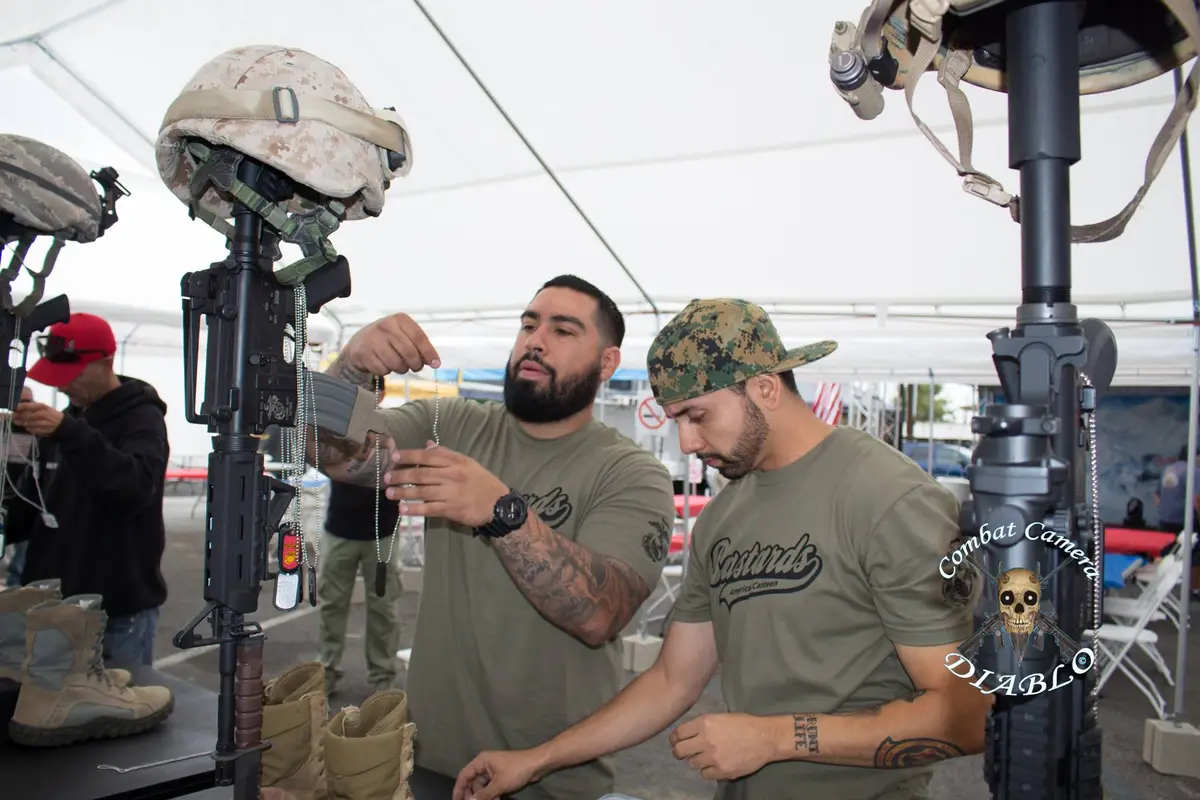
Bastards Canteen in Downey, CA is named for the Magnificent Bastards of 2nd Batallion, Fourth Marines
For Marines and Soldiers who serve in the infantry, many leave the military believing that they have no identifiable skills that they can apply in the civilian world as veterans.
This is the farthest thing from the truth.
In all actuality, serving in the infantry teaches you how to plan towards a goal, how to organize and delegate, and above all how to lead. These are invaluable skills that can be applied across industries and professions, and skills that are priceless for entrepreneurs.
In this episode, we speak to Nick Velez, one of the founders of Bastards Canteen in Downey, California.
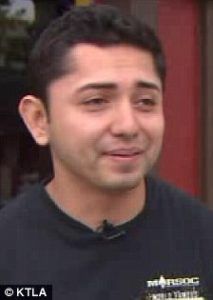
Nick had absolutely no restaurant experience or business experience when he started Bastards. When the opportunity arose to take over a failing restaurant, he called his old friend Calvin Spencer, a Marine who served with him in Co E, 2nd Batallion, 4th Marines while they were deployed to Ramadi, Iraq in 2006.
Calvin was going to culinary school at the time and he took over the menu. Meanwhile, Nick started planning the business. Rather than set up a traditional business plan, he created an Operations Order using the acronym OSMEAC that he learned from operational plans he’d seen in the Marine Corps.
In the eight years that Bastards has been open, the restaurant has obtained rapid success. They’re currently expanding to locations in Temecula, CA and Coachella. The Temecula location will be open 10 November 2019.
In addition to Bastards, Nick has also started the Veterans’ charity Save the Brave. His old commanding officer from Echo 2/4, Scott Huesing serves on the board and they are doing some amazing work in helping the Veteran Community.
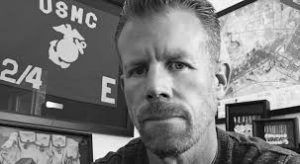
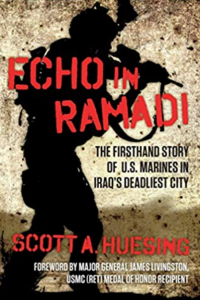
Scott’s been on this show as a guest before. He is the author of the book Echo in Ramadi, which details the stories of his Marines in combat.
In this episode, we brought on both Nick and Scott to discuss the lessons Nick learned in the Marine Corps, and how Veterans can apply what they’ve learned to obtain massive success.
You’ll learn:
- why you shouldn’t try to please everyone
- how to use a technique you already know to create an amazing business plan
- why you need to be flexible
- how to keep going even in the face of massive tragedy
This episode is dedicated to the memory of Calvin Spencer and all of the Marines of 2/4, the Magnificent Bastards who are no longer with us.
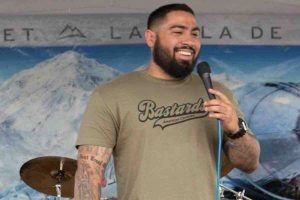
To learn more about Save the Brave and the work they do for veterans: http://www.savethebrave.org.
To learn more about Bastards Canteen, follow them on Instagram at: http://www.instagram.com/bastardscanteen
To get Scott Huesing’s book, Echo in Ramadi:
Transcript
Machine-generated from the episode audio and lightly edited — may contain errors.
Chris Albert (link to this point)
The Warrior Soul podcast is written, produced, and edited by me, Albert. Our mission is to provide tools, tactics, strategies, and ideas to US military veterans and anybody else willing to listen to help them to navigate toward living their absolute best lives. If you find these episodes helpful, please share them out with somebody that you know of that can use them. And if you really like the podcast, please also head over to iTunes and write us a written rating and review. It really helps us to spread word about the show, and it really helps to get these tools in the hands of others who really need them.
This podcast is sponsored by F Bomb Nutrition. They make awesome delicious packets of macadamia nut butters. They mix them up with chocolate, with sea salt, with pecan butter. They're absolutely delicious, and they also have a number of other fat fueled snacks, like their meat sticks and their cheese crisps. They're amazing people who are sending boxes of this stuff out to the troops on the front lines, and they're offering 20% off to our listeners on their first orders.
If you head over to www.dropanfbomb.com and use the code Warrior Soul at checkout, you'll get 20% off of that first order. Okay. This is a story that needed to be told and comes from a question. What are you going to do with your life? What kind of impact are you going to have?
What are you going to create? This is something that a lot of us don't think about while we're serving. Right? And I know a lot of marines who never really planned past the age of 35. But here's the thing.
When you serve, your your service doesn't end when you take off the uniform. Right? That's not the only way to serve this country. You can also serve this country by being a great business leader, by creating something that's gonna create jobs, that's going to improve your community. And today's guests have definitely done so.
As you know, I'm good friends with mister Scott Huesing, who was the commander of Echo Company second battalion fourth marines while they served in Ramadi, Iraq. And he details that period of his life and of his marines lives in his book Echo in Ramadi. But I had a conversation with one of his marines, one of the marines who served under him about a week ago, and that marine's name is mister Nick Velez. Nick, after he got out of the marine corps, took a chance, and he started a business. And it's not just a business.
It's it's become kind of like a rally clot rally cry for marines and veterans in his geographic area. The business is called Bastards Canteen. It's named after the magnificent bastards of two four, and it's become kind of like a community center, a place where veterans travel from all over Southern California to celebrate the Marine Corps Marine Corps birthday and Veterans Day. And he's expanding. And what I want you to get from this story is that Nick took a lot of chances to do this.
He, by no means, was guaranteed success. But he applied what he learned in the Marine Corps to create that awesome restaurant. And today, he's expanding that business. They're they're heading to other locations, and the goal, I believe, is is to end up across the country. And I want you to see how this was done because Nick's a great guy, but there's not nothing particularly special or crazy about him.
Alright? He's just somebody who's put a lot of work into what he does and a lot of work into becoming successful. And Nick is also the founder of a veterans charity called Save the Brave that I believe is doing some great work. And, Scott, his former commanding officer, is serving on the board. And they're a great organization, and they're doing a lot of amazing things.
So what I wanted to do is I wanted to bring not just Nick on, but also Scott to tell this story, to tell the story of this marine who served bravely and then decided to come home and continue to serve by creating and building a community that is having a major impact here in Southern California, and that will soon have a major impact, I believe, across the country. So you're gonna get a lot out of this interview. Pull out your pen and your paper because Nick is going to deliver a whole lot of lessons. And let's get into it. What's going on everybody?
Welcome to the show. And I'm joined here by two awesome, awesome marines. We've got mister Scott Huesing, who we've had on this show several times before. More deployments than most men have had sexual partners. Really, really awesome guy, author of Echo in Ramadi. And we've also got mister Nick Velez, is the founder and owner of Bastards, which is a canteen in Downey, California. They're also coming up with a few more locations. But one of the big things we try to do on the show is to bring you stories of veterans who've gone out there and really fought in the civilian world to to make things happen. And I think that this is one such story. This is the story of a marine and and a group of marines who applied what they learned in the corps to create some success and to to make something beautiful.
And what I wanna do right now is is kind of pass this wand over to Scott for a second.
Scott Huesing (link to this point)
Yeah. Well, hey, Chris. Thanks for having me on as a guest again. It's always my pleasure. I think it's getting I think this is a third or fourth time.
So I'm trying to have you come up with a Warrior Soul t shirt that says, like, the, you know, five episode, like Saturday Night Live, you know, fifth member, maybe it might be a special t shirt out of this. So that's yeah. That's my goal. That's my goal. So but, no, it's it's great being on the show, and you are always sharing great stories.
And and this this one, we're really talking not just about Nick and me. We're we're talking about veteran entrepreneurship and being successful. And coming through not just twenty four years in the Marine Corps or four years in the Marine Corps or whatever branch of service you're in and taking all those lessons despite any hardships and adversity, but also those intangible things we learn in dealing with unknown circumstances and overcoming that. And what's really great is Nick has done that on multiple fronts since he left the Marine Corps. And our journey began way back in 2006 when I checked into Echo Company's second battalion fourth marines, the Magnificent Bastards, which is Nick's restaurant, Bastards American Canteen, affectionately called for our battalion call sign.
And we were soon introduced and then thrust into the city of Ramadi in 2006, which was the height of the fighting of the insurgency called the surge, which was ordered by president George w Bush and general Abizaid back then to flood the battle space with an additional 20,000 troops to really hammer down on all that. And despite all of that and all the fighting and the friction and the loss, we all came through that. And since then, we moved on to separate careers, Nick and I, and then back in 2014 or '15 through Nick's success with the restaurant, which he'll talk about, he also started a nonprofit on his own called Save the Brave, which he started in January 2015. And a couple months after he got all the paperwork done and did all the legwork and the monotonous filing of paperwork, he called me and said, Hey, sir, I would really love if you would be the executive director. And I didn't hesitate because I knew that Nick, through all the success he had, not only in the Marine Corps, but in business, he was gonna do this the right way at the right rate.
And since then, we've helped hundreds of veterans at savethebrave.org. And that's how we've come to this episode on Warrior Soul podcast to really share a little bit more about, you know, not just our meeting and our unique relationship as one young Marines commanding officer, now a friend and partner in this this business, this nonprofit that we have that is 100% nonprofit. None of us take a salary. We do it all for free. We're all volunteer.
And we do it at the beginning and the end of every day to help veterans. That's what we do.
Chris Albert (link to this point)
That's awesome. That's awesome. Yeah. And and just to let everybody know, you know, I I lived down in that area of down in California for a while. And, know, I I had a lot of lot of marine veterans who came to train at him, who who were highly influenced by Nick.
And I feel like absolute shit because I just reached out to Nick last week to try to introduce myself. I took took years to do so. But but Nick, welcome to the show, man.
Nick Velez (link to this point)
Hey. Thanks for having me on board, brother.
Chris Albert (link to this point)
So, you know, tell me a little bit about about your story here. You you you ended up joining the Marine Corps. Did you grow up in Downey?
Nick Velez (link to this point)
I grew up in the LA area, inner city, East Los Angeles area. Joined the Marine Corps in 2005 in a boot camp in San Diego. There, School of Infantry, then second battalion fourth marines. I was a I was an echo company marine from beginning to end.
Chris Albert (link to this point)
You you're coming in. You're you're a private PFC Lance Corporal, and, you know, Scott's a guy who's been in Marine Corps. You know, he started, I believe, in 1988, worked his way through the the first Gulf War and then and then back in as an officer. What was your first impression of Scott?
Nick Velez (link to this point)
You know, like I was I was saying, you know, as the as the Lance Corporal, you know, you're all you wanna do is really stay away from from, you know, the upper echelon, all the, you know, higher command just because, know, you you you don't wanna get in any kind of trouble. But, you know, coming into Echo company, you know, I think major Huesing knew he was coming in just, you know, a company that was very special and was very was more than a company. It was was very much more like a family. And and when he came in, he he he didn't really, you know, come in into you know, to be that intimidating CO, you know, command officer that's just gonna, you know, chew us out on on our uniforms and and boots and and high and tights and all that crap. He was just more so, you know, getting us prepared for for combat.
And, you know, I didn't really, I just viewed him as as our officer that was in charge, and and and he was you know, he he's the guy that that called the shots and and pretty much, you know, trained us and and got us ready for combat. And, yeah, there was no there was to be honest, there was no not much thought to it. I was really just trying to survive, and I was really just trying to survive and and live the Lance Corporal boot life. You know? I think my senior Lance Corporals were a lot tougher than Scott was.
Scott Huesing (link to this point)
Yeah. Yeah.
Chris Albert (link to this point)
Did what was that workup like? Did you guys know what you were getting into when you got in? And how long was it from the time that that you entered the Marine Corps till you went on that first deployment there?
Nick Velez (link to this point)
Alright. So I joined the Marine Corps in 2005, and we deployed in, I believe, September 2006. Correct, sir?
Scott Huesing (link to this point)
Yeah. Correct?
Nick Velez (link to this point)
Yeah. So we deployed, September 2006. So I I got to two four echo company in January 2006. So I was a for a very long time in that company. And, you know, being a boot in in the Marine Corps and, you know, our you know, a lot I'm sure a lot of your audience knows what a boot is.
You know? But it it's and being in the infantry is is and being a boot is not easy. You know? You get to sit into this freaking deal all the time, working parties, fire watch, post, you name it. So it it was a tough workup, you know, with with that, you know, in in regards to that.
But, you know, we trained a lot and constantly constantly, you know, gained going to, you know, 29 Palms, you know, going on ship, at sea periods. It took us about you know, it was a good five month workup before we actually deployed. And then we deployed. That was another nine, ten month deployment. We got extended about three times during that deployment.
You know, we lost some good some good guys on the deployment. You know? But but, yeah, you know, on my time in Echo Company and and and two four was was a really good you know, it was a really, I would say, I would say, the the best time of my life. You know? And I learned a lot.
Some of the best my best friends that I still, you know, hang around with today, came from came from two four echo company. It was to me, it was more than just a workup and a deployment to Iraq in in combat and all that. That was just that just kinda happened. You know? I mean, that's what we did.
You know? Being in the infantry, being grunts, you kinda expect that. But I got a lot more from from from, you know, from that battalion than than combat. And that's that's the family. You know?
That's the brotherhood.
Chris Albert (link to this point)
Now, Scott, I gotta ask this because, you know, as a as a company commander, obviously, you're not going to to know every single one of your marines. It's a it's a a position where where, you know, you're just not gonna get to know everybody. What made Spirit Marine stand out for you like Nick and and like the others?
Scott Huesing (link to this point)
Well, it it was such a fast paced tempo when we checked in, and it was it was notable to the point where I actually wrote about that workup in Echo in Ramadi because I checked in on a on a Wednesday to the battalion, drove across the country, parked my Jeep, checked in on a Wednesday, took command on a Friday, slept in my office. And then that next Tuesday, we were driving to our old stomping grounds in 29 Palms, California in the High Desert. And that training and workup with 200 brand new marines, some Ramadi vets from 2004, senior lance corporals and sergeants and corporals. What was remarkable about that was they knew the importance of the training. And there wasn't any of this heavy handed, you know, boot talk or this training sucks.
It's not reality. They remarked to me, those veterans of the of the first battle of Ramadi, how important this training was. And I think I saw that at so many different levels from those that have been there to emphasize the importance on that. And and that really geared us up for the deployment, which took place just several months after that. So we had a very time compressed training cycle, especially as a helicopter born company.
Then we deploy, we do a training gig in India. We're the first Marine, first US military company ever to set foot on Indian soil and train with the twenty first Punjab. And then we get back on the ship on the Marine Corps birthday, 11/10/2006, the MEU commander stands in front of the entire crew and says, we are going to Iraq. And we all knew it was on the horizon. The war was already boiling over.
And you don't get to know every single Marine, especially at the lower levels because you've got so much to play. And if you're focused on just, you know, everybody. And guys like Nick, he was kind of a ninja. I gotta be honest with you. He was pretty quiet.
There were times when he skylined himself, which I won't go into detail about. But throughout all that, you don't know every intimate detail of every single marine, but Nick was a guy that stood out. I absolutely can say that I knew him. I knew who he was. Everybody has different personalities and and ways they stand out.
But I think the, the thing that Nick mentioned earlier was we weren't, we weren't some elite group of Marines. We weren't the bad ass Marines that you see on the posters. We were a Marine infantry company and there's plenty of guys that fought harder and suffered more. But we had this really remarkable chemistry as a company. And I don't know what that was attributed to specifically.
I have to say it was the leadership at every level from the sergeants and corporals and the young lieutenants and guys like Nick that, that stood up, took charge when things were at its worst, they were at their best. And that's really something that you, you look back on now, as, as Nick was saying, taking what you learned from the Marine Corps. And I, and when he's, I loved how you just said that, Nick, I got so much more out of the Marine Corps than just going to war because when we discuss things with the nonprofit, it saved the brave or his business that is hugely successful for over seven years now at Bastards American Canteen and Downey, he's taken the model of military planning and small unit leadership. And he applies that every single day to the discipline that he does. And that to me, it's not just Nick.
There are hundreds and thousands of other marines, soldiers, sailors, and airmen that are using that model for success and applying it as entrepreneurs and business people in the private sector. And that in and of itself, Chris, you're one of them as well as a fellow Marine and brother that makes me extremely proud to continue to share stories like this because they are important. They are examples for others to follow. And that's really what we're all about. What we do, especially on this show, is sharing the network and sharing the connections and our secrets of success and not hoarding those because others need to hear that.
Chris Albert (link to this point)
You know, that's one of the things, Scott, because I I hear from a lot of veterans, and and I appreciate you including me in that. I I you know, by by so many different veterans I hear about who have achieved success. But for Nick, one of the things I hear from a lot of guys who served in the infantry is is they say, oh, I don't have any transferable skills. All I know how is is is to do this. And and they get out into the world with this kind of attitude. But when I heard when I talked to you a cup a week ago, you're on the phone and you were describing your business planning process for for when you decided to open up Bastards Canteen.
You were able to transfer a lot of those skills to getting this business off the ground and making it happen. Can you talk a little bit about that, Nick, and and how you came up with this idea and and what your planning process was like, and what did you take from the Marine Corps to do it?
Nick Velez (link to this point)
Well, you know, the Marine Corps is a university in its own way. The Marine Corps is structured to be able to to to take individuals, from the civilian world into a a world of of of making this killing machine and training this this killing machine, you know, you know, to to deploy them to a different country and and and win battles. But those battles are not just won, you know, with strength. They're won with with brains. They're they're won with with tactics.
And these tactics are are are not just made up, and they're just not you know, you just don't get up and go. They're well thought out. And a lot of this is is all it all has to do with planning. And, you know, major Huesing can tell you all about it. That's all he did in the Marine Corps was plan, plan, plan.
And one thing that we did learn in the Marine Corps was, you know, especially in infantry, is that planning is very important, especially, you know, a a planning order, you know, and by the name of OSMEAC. Right? Operation situation, mission, execution, that admin command and signal. And now with that, you know, that's something we learned. Right?
Well, in the Marine Corps, that's something that that that's taught and and to us every single time before we go into any single battle, before we go into any single building. Anything we do, there's always an order. Right? Whether it's a frag order or or a warrant order or whatever it might be. But, you know, this order is really a freaking business plan.
That's all it is in the real world. It's a business plan. It's the same thing. It can tell you, you know, how the sun you know, where the sun rises, know, what time it sets, you know, what the what the weather is for that for that neighborhood is, you know, what the community is like, what the community likes to wear, what do they like to eat, where are they most likely gonna walk, you know, walk from or walk through. It's the same concept.
So, you know, we applied that, you know, what we learned in the Marine Corps, which is OSMEAC. And I said, hey. You know what? I don't know how to put together a business plan, but I know how to put together an. And I did that, and I I pretty much laid out, you know, at that time, you know, what I envisioned bastards or what myself and my partner, Calvin Spencer, envision bastards, and we gave ourselves a five year plan with that.
And from there, we know we we we broke it down. You know, we had a you know, our our our execution. And and a lot of it, you know, was was was you know, went out the window as soon as we we opened up doors, but we had a plan. And and and and that's the most most important thing, you know, with any any anyone getting out the Marine Corps is that, especially out of the infantry, is that you already learned a great, great concept that or structure of planning that guides and and, you know, students go to four year universities and don't don't learn this crap. You get out and have an MBA and don't they can't put together a freaking business plan or no, you can because you put it in combat, and you put it where life and death is in is in online.
So now when you apply it to the real world and you apply it to a business, it's just that much easier. You understand? Well, it just feels that much easier for me. So, you know, I I I tell Beth this all the time. I say, hey, man.
You know, it's it's easy. It's real for me, it's really easy to open up a restaurant. It's really open it's really easy to open up a bar. It's real it's it just feels just it just becomes easy because I feel that I've done things in life, especially in the Marine Corps and the infantry where, you know, life and death is is is what we do. So, hey.
You know, if you lose here in the in in the business world, it's okay. You know? You can just get up and and and try it again. You're you know? It's not gonna freaking, you know, you know, ship you home in a casket.
You know? You're gonna be able to, you know, get up and try it again. So, you know, again
Chris Albert (link to this point)
That's definitely the truth right there. That's definitely the truth. And and one of the things you said right there, and and Scott's typing it over here, is that, you know, you can plan till you're blue in the face, but a lot of times that plan is not going to survive first contact, right? It's got to change, you've got to be adaptable. And, you know, one of the things I wanna ask you right now is when you first opened up the doors or or let's say the first day you got your piece of property and you're you're walking in, you're trying to plan this thing out, what were some of the ways that you had to adapt?
What were some of the ways that you had to change? What were some of the some of the things you had to do to think on your feet?
Nick Velez (link to this point)
Well, I mean, we're to be honest, we gotta backtrack a little. You know, we gotta backtrack a little bit here.
Scott Huesing (link to this point)
Mhmm.
Nick Velez (link to this point)
I don't have a restaurant background at all. I have no rest I've never worked in a restaurant. I hate fucking restaurants. I never stopped. I, you know, I never pictured myself working in a restaurant, owning a restaurant.
I was on my way to college. I wanted to go to law school. I wanted I, you know, I did I never pictured myself working in a fucking restaurant, owning a restaurant. I'll tell you that much. Ever in a million years.
But I was living in Seattle at the time going to college, and my dad, you know, he was in the real estate business, and his office is across the street from this restaurant that he knew the owner was kind of, you know, you know, having a hard time paying the bills. So, you know, he said, hey, Nick. You know, there's a there's a there's a place down here that's this guy's having a hard time paying the bills. You know, I I think we can get in here and, you know, and and maybe, you know, you you can come in here and you can run this place, and you can do whatever you gotta do. I said, alright.
Let me drive down there, and I'll take a look at it. I don't you know, mind you, I don't know anything about restaurants. I don't but I never backed down. I love at that point in Seattle, I was actually at I had another start of business. It was it was a it it I mean, not to talk too too much about it, but it was you know, we're doing a little bit of a of a judgment recovery, and it was it was a little it was a niche business.
It was it was cool, but, you know, it was kinda boring. So my dad came up, you know, and said, hey. This idea is pretty cool. I think you can come in here, you can run this. Come check it out.
I came down. I called my buddy, Calvin Spencer, who I served in the Marine Corps with. He was a four marine with me. He was an echo. And Calvin Spencer, I remember that, you know, he lived in Downey.
He was my boy. We used to carpool together on the weekends, and he always say, hey. Well, after the Marine Corps, I'm going to culinary school. I'm going to culinary school. So So after the Marine Corps, he went to culinary school.
He got his degree from Cordon Bleu. He opened up the kitchen for a restaurant in Long Beach area. And, you know, on Facebook, I would see him constantly post all these dishes and all these things he was doing. So I said, fuck. I'm gonna go reach out to Calvin and and see if he wants to come take a look at at the restaurant, you know, to see if we can possibly team up or do something together.
So I call him up and say, hey, Calvin. Come on board. Meet me here at this restaurant. I don't know what the fuck's going on there. I've never been there, but I think we might have an opportunity to do something.
So Calvin meets me there. You know, we walk into this restaurant called, like, Downey Downtown Barbecue Company. I don't know. It's the fucking longest name is in alphabet. Alright?
We walk in. The place is completely empty, or there's a bartender. And, I mean, it's just awkward. It was really awkward place. It's in the corner of 2nd And Downey Avenue.
I remember driving through this street. We lived in Downey at the time. Both Calvin and myself, our families live in Downey. So this corner of 2nd And Downey Avenue was a a vacant street. It was vacant.
It was like, there was hardly any businesses there. It was it was just starting. There was no no there was there was no commerce there, really. So every every business that I that I have ever known that's been there, you know, literally went under within a year. No more than year.
So that barbecue restaurant was probably you know, it it was it was way into freaking, you know, kick the curve and and and and call it quits. So, you know, Calvin said, hey, dude. This is pretty cool. I think I think I wanna jump on board, man. I think we can do something here.
So he liked the barbecue concept that that they had there. So we kinda piggybacked off the barbecue, but, you know, he gave it his twist, and and he revamped the menu. We closed down shop and had about I don't know. I'm not gonna lie to you. Like, I I opened up that place, so that's, like, $50,000 in my bank account.
And that's buying all the equipment. That's it's it's fine. I'm telling you. I had all my boys from the Marine Corps come in, working party up. They were helping me paint.
They I had guys that, you know, worked for freaking you know, I'm not gonna mention names or whatever, but we acquired pain. We acquired what we had to do. But these guys were fucking they made it happen. And and, you know, that's that's what Bastards is. It's not just myself.
It's not you know, it's Calvin, and it's a group of the guys that and all all the vets that that came together and and help us put it together. And and, you know, story, you know, of of of bastards really started with with the name.
Scott Huesing (link to this point)
Right? Mhmm.
Nick Velez (link to this point)
Without the name, we wouldn't be here talking today, really. You know? At the end of the day, that's it's it's it's what started, you know, the controversy. It's what started the conversation about about who we are and what we do. You know?
We, you know, we decided to name the restaurant after our battalion. You know? They called us bastards in battle. They called us bastards in the rear, and we were proud of it. You know?
We're damn proud of of of being the bastard battalion.
Scott Huesing (link to this point)
So So I think that that that whole that whole thing too, Nick, is that's a scary concept for a lot of guys to cough up your life savings, ask friends for favors, to overcome that fear of failure. And, you know, whether you there's but that fear, I think, is important because it surrounds us in combat, in the planning phase. You never know what's gonna happen around each corner. And it's the same thing in business. It's the same thing in any entrepreneurial endeavor.
And and through that, through your dad, Vince Velez Vince, you are awesome, by the way. Vince does just more than set Nick up for success. He's an integral part to save the brave too and does a lot of work behind the scenes. And I love Vince. He's amazing.
Both both Nick's mom and dad are super supportive. And and all the marines like Calvin and you know, let's give Chino a shout out too, because he's like the HMFIC of your working parties in any endeavor. And that type of brotherhood, it just overflowed, Chris, into everything that Nick has done with that business. And and the fact that the also the fear, and I'm gonna hand it back over for Nick is to call your restaurant bastards and throw throw a cuss word in there is there's there was a lot of a little apprehension by the city council. And and, but, Nick, tell everyone how you overcame that and then how the name itself just blew up.
Nick Velez (link to this point)
Yeah. I mean okay. So we were at a bar when we thought about the name. You know? The Marine Corps was established at a bar, so it it it only made sense to to come up with a name at a bar.
Right? Born at a bar. Bastard. Calvin's like, you know, we're gonna get a lot of shit for this. And we knew it was gonna happen, but we just kinda let it happen.
And, you know, we we we we put up a big sign that said, bastards, canteen, coming soon. The next day, I got a call from city council. I knew it was them. I rejected the call. It went to voice mail. It it went to voice mail. They just fucking left me, like, three messages. Mister Velez, please call us back. But at that point, I already applied for the business license. I already I already had they already had said yes.
I had got my business license. So, know, I I I knew that there was nothing they can do. You know? And I knew that that if they tried to, that well, then I was gonna have to call, you know, QRF. Right?
Mhmm. So as soon as that happened, you know, I was like, fuck. You know? They're gonna they're gonna give a shit now. Now they're, you know, they now they wanna have a meeting.
You know, one of the one of the council members called me and said, hey, Nick. Let's just let's just meet. I'm like, alright. Let's get together. Let's talk.
So I get with them They say, hey, Nick, Calvin. We want you guys to change the name to MBs. What do you think about MBs? Like, MBs. Like, yeah.
Magnificent bastards. I'm like, no. That's not it. You know? I'm I'm like, it just has to be bastards.
Right? It just it it just can't be MBs, and it can't be magnificent either. Right? We're not we're not the magnificent.
Scott Huesing (link to this point)
And violating one of the tenants of Marine Corps planning, don't fall in love with your plan, which he was.
Nick Velez (link to this point)
Definitely. So we we named it bastards. The Marine Corps Times decided to, you know, follow-up on a story. They followed up on our story. They, you know, they they put us they put us on blast.
We were in every freaking base, you know, from here to Afghanistan. And from there, it just it just kinda blew up. You know? K you know, ABC picked up the story. Local news picked up the story.
A lot of local press picked up the story. And when we opened, we had so much support from the local community, the American Legions, those guys, the the Patriot Guard, all the Patriot Guards, those guys are are are awesome. You know? And and and back then, you know, in 2012 when we opened bastards, the veterans community was there in 2012, but it I wouldn't I would say it was just it was just starting. You really didn't have what you have today.
You know? All the all these all these nonprofits, all these veterans, celebrity guys, all these guys because everyone is still in everyone was still in the fight. You know? Everyone was still in the fight. So then, you know, back then, we only had we the guys who were really supporting us were the Vietnam vets, the Korean vets, you know, and maybe the World War two vets, so there were any walking around.
But those guys, you know, I gotta give it up to those guys. They were there during our ribbon cutting ceremony. They were there during our our grand opening when they heard the city was was giving us a hard time about the name. They wrote the Downey Patriot. They wrote into the editorial and gave them their their, you know, their their their opinion of why we do deserve to to have an establishment named Bastards in the community and why we need an establishment like Bastards in every community in The United States.
It's important to have that that camaraderie of of of not only community, but the military because, you know, everyone thinks, you know, you have to introduce, you know, or or or, you know, introduce the the military to the community, but it's you know, the community has to be involved with the military and its veterans and as much as as as the vets and the military have to be involved with community. It's we work together. And that's where Downey and that's where bastards met. And that's what we're gonna do in Temecula, and that's what we're gonna do in Coachella. We're your modern day VFW American Legion.
And and we're that we're we're we're here to to to it's not just about, you know, getting guys in here, serving them some some an ice cold beer and, you know, a a good burger. No. It's more than that. You know, it's more than that. We have a nonprofit, savethebrave.org, that that caters to vets, that struggle through post traumatic stress or just simply having a hard time and a hard week and maybe wanna get out into the water and go fishing and just get away from the everyday BS you have to deal with at work, and that's what we do.
We take veterans out fishing. We have equine rides. One of our outreach coordinators, Lalo Lopez, fucking does an outstanding job putting together these outreach programs with the offshore with Save the Brave Offshore, and and it's it's awesome. This year, we we took a
Chris Albert (link to this point)
I wanna I wanna I wanna talk about Save the Brave, and I wanna talk about all the awesome things you do. One thing I wanna mention here is that and and this is something that I tell new entrepreneurs all the time. You can't be afraid of offending anybody. Right? You can't be afraid of offending anybody, and you can't be afraid of being controversial.
And in fact, I think in today's world, where we have so much communication, and there's so many new businesses starting up every all the time, I would see that if you're not somewhat divisive, if you're not hanging a flag out there and showing what you stand for and and what you stand against and and not backing down, then I'd say that that you probably aren't gonna have a successful business. And I think that's that's something that's huge that you guys did there. You stood up for the name. You stood up for what you believed in, and you hung a flag out there saying who you guys were. And I think that's absolutely amazing.
Scott Huesing (link to this point)
Yeah.
Nick Velez (link to this point)
And and but it's it's you know, then then again, it's it's beyond the name now. You know? You know, once we opened, the name was just the name. Right? You know, the decor was just the decor.
It's it's what we did. It's it's it's the the type of of of culture that we we set, and that we gave the community and bastards. You know? Every veteran that walked into to the establishment, every every civilian, any and anyone who walked in, they knew that they were in a special place. They knew that this place meant to us meant meant more to us than just than just the place that that that was gonna pay our bills because they didn't pay any bills to pay that much.
You know? Yes. We sacrificed, and we still sacrifice to do what we want to do, what we wanna do, and to do what we envision to do, and what we plan to do. But the name, you know, was just the first step. You know?
After that was what we what we brought to the table was was the Marine Corps birthdays that that the city of Downey and and and all LA County now travels to every year, and we have over a thousand veterans plus, marines plus that show up to this event. Well, wait. Memorial Day event.
Scott Huesing (link to this point)
To one big you're missing one big part of that, Nick, which we always talk about is you really are transforming the perception despite this abrasive name. And I love that that Chris said mentioned that too, is you took a stand. No one wants these middle of the fucking road people that are so vanilla. They're not willing to do this. They're not willing to do that.
But by by planting that flag and doing what you do, you really did transform the perception of what traditionally these boozy VFW posts and smoky men filled rooms. You've included not just veterans, not just marines, but the community and the family. And you've made this place in Downey for seven over seven years now, this amazing place where every single person is welcome. Everyone in the community is now introduced to what you do. And I think that's the most important thing as you continue to expand to Temecula and Coachella and shit.
It's gonna be across the country here before we know it. But it allows people to come together and not sit around and get plastered drunk off their bar stools and tell the same old tired war stories that our generation, frankly, just doesn't like doing. We like to talk about success and what we're doing now and occasionally drop in. You remember that. But the fact that the families are included and now you walk into bastards at Downey, Chris and when you go in there, it is placarded with military and Marine Corps stuff.
It's just such a cool feel when you walk in that place, but you feel warm, not because of the stuff hanging on the walls. You feel the sense of warmth and family and love because there's families in there. There's kids in high chairs and there's a patio and there's just this great feeling of togetherness that Nick and his entire team at Bastards have really created. And it's it's not really is not your typical restaurant. Nick is so visionary in everything he does, and it just bleeds over into savethebrave.org that helps our veteran community who are struggling.
And that's something I'm so proud of Nick and everyone on the team at savethebrave.org and at Bastards Canteen. I think that is such a cool message to really to really pull the string on, Chris.
Chris Albert (link to this point)
One thing I wanna mention here too, and, you know, life is is crazy. Life is is is an absolutely insane thing. And I know that last year, we lost Calvin Spencer. And I know that that's a massive tragedy. And I also know that you guys, speaking of family, kind of came together here as a family to help Calvin's family, but also to keep him in your memories.
Do you guys want to mention that and kind of talk about a little bit more about who Calvin was? I know you mentioned him just before, but you know, and how this loss has affected everything.
Nick Velez (link to this point)
Yeah. I mean, fuck. Where do I start, man? Calvin. Calvin.
Calvin. Calvin was, you know, Calvin was my best friend. You know? He's he's more than my best more more than my partner. He's you know?
He's just he's just he's just one of my brothers. You know? One of my echo company brothers that I served with in the Marine Corps, and then I got out. I opened up a business. So it was just it was just more than just a marine brother.
It was just it's just it was it was it was blood without being blood. You know? I missed that guy every single day. And, I mean, with Calvin gone, it's just the only thing I can say is is that we miss them dearly, but it's made us stronger. It's made me stronger as an individual to and as a and and as a and as a as a business leader, I had to kind of fill that void that that we lost, and we'll never be able to replace.
So, you know, you really, really get to to really have you know, to really have to I mean, fuck. It's really even difficult to talk about, Calvin. But
Scott Huesing (link to this point)
Yeah. You know, it's it's a thing
Nick Velez (link to this point)
that we You really have to step you really have to take a step back. You really have to take a step back. You gotta ask yourself whether you wanted to keep continue to do I had to ask myself whether I had to continue to you know, if I wanted to continue to do this or if I just wanted to quit. You know? Especially when when, you know, he was really the brains behind the the restaurant part.
I I I I brought in more of the the vision of where we can go and and, you know, I and the the entertainment part and, you know, the events and and the pro the promo and the marketing part. And but, you know, as far as operations and and and all that, he was he was the man. You know? Luckily, one of our other buddies who we served in the Marine Corps with us, went to boot camp, school of infantry with us and was not a two four marine. He went to one five, but Manny Maeda had came on board a year before two years before Calvin had passed.
So he was able to, you know, pick up a lot of that slack with us, and and now he's just killing it. But but, yeah, we had to you know, Manny and myself had to pretty much, you know, understand that Calvin was gonna be gone forever and that now it was it was time for us to to be able to to learn or to to observe as much as we can or absorb as much as we can, in the culinary side of the house, and and that stuff that's the part that that that the restaurant know, can either break you or make you. No one wants a shitty kitchen. Right? And Manny having the bartending side, he could lock that down.
No problem. But, we struggled. We struggled for the you know, for a year of, you know, finding the right kitchen manner manager, finding the right chef to to, you know, to run this. People would say, hey. It doesn't taste you know, the food doesn't taste the same.
You know? And it's hard. It's hard to go into work and hear that because you know it. I know it. I'm like, fuck.
I know. It ain't the same. No one has that taste that Calvin had. But there was people that we had trained. And just like the Marine Corps, we learned that that you have to train every single freaking marine, in your fire team with every single weapon system that there is in a fire team, or in a squad.
So with that said, Calvin trained individuals in the kitchen to you know? And he trained them. You know? He trained, our kitchen manager, Tony Fossio. He was a he started off as a dishwasher.
Brought brought him up as a prep cook, then from a prep cook to a line cook, then a kitchen manager. So, with Calvin, you know, gone now, we we say, hey. We brought we brought our old team back, and and we were able to to, you know, recuperate, you know, by, you know, bringing in pieces that that I would say, you know, help us help us and are gonna help us to continue the mission. But, you know, again, you know, you know, losing Calvin is is is something that that wasn't wasn't planned. It wasn't on the business plan, and it's something that we we never thought we know.
We thought we were gonna be, you know, grow old, you know, and just talk about all the BS. You know? But it didn't work out that way.
Scott Huesing (link to this point)
So It's one thing to lose marines in combat, and you you as a commander and as a marine, you you anticipate that. But when we lost Calvin tragically to a motorcycle accident, he was he was struck by a motorist. You know, no one ever sees that coming. And, you know, that's a gut wrenching feeling because you just never brace for impact. And I'll be honest with you.
When I got that phone call from from Lalo Lopez, I I was in disbelief. And bastards closed down. I think it was a couple days, Nick. The doors were shut. And I'll be honest with you.
We were all a little worried because it it impacted Nick so heavily because of the relationship. We we were concerned, you know, is is this something that he can overcome? And to honor Calvin's spirit and everything he poured into that, within days, Nick rebounded and the doors were back open. Nick modified, he changed, and we we we memorialized Calvin and his family and all the marines gathered together from Echo Company up there in Downey and the family and the the the funeral home next door did the service for free, and they gave of themselves. And just to think back on that that dark time is is something that, you know, you you lose and and that's life and and but you don't ever expect it to understand that.
Calvin understood this even back then, and Nick understands it now. Through through that tragedy, there's never one single point of failure in any organization. If you're doing the right things as a leader, training those under you to do your job, and there's never a single point of failure, That I think has been something I've observed, not just as a commander or as Nick's friend and and partner and save the brave, but he's realized that. And and despite the loss in of Calvin and every everything that he brought into everyone's life, he was such a huge personality and had such a great smile. That's what I loved about that guy.
That's the real lesson learned for anyone is making sure that you don't have those single points of failure in your in your business or your organization so it does sustain. If that's your vision to have bastards or save the brave around for, you know, ten years or a hundred years, you have to develop your team to understand that this thing is gonna go on even in your absence. And and Nick realized that from a a micro perspective, we just took off to Alaska, and we tried our best to stay off our phones and just unplug for a little bit. And when we came back, Nick Nick said something to me as he's over here at my ranch and to make it. He's like, yeah, the business didn't cave in on itself, so I must be doing something right.
Chris Albert (link to this point)
Absolutely. Yeah. I wanna, I wanna head over and start talking a little bit about what you guys are doing there at Save the Brave. And and I guess I'll pre frame this discussion with this. Just as there's been been, I think, a massive boom in businesses, there's also been a boom in veteran service organizations and and five zero one c three charities.
And I think that there's a lot of organizations doing a lot of great work, but there's certain organizations that are doing outstanding work. And you guys seem to be doing outstanding work there. Tell us a little bit about the organization, what you guys do, and and how it came about.
Scott Huesing (link to this point)
Well, Nick, can you talk about how you had the brainstorm for save the brave, and then I'll talk about what we're doing now.
Nick Velez (link to this point)
Yeah. So 2015. I believe it's 2015.
Scott Huesing (link to this point)
Yeah. January.
Nick Velez (link to this point)
I think it was 2015. Yeah. 01/05/2015, we were, we we incorporated, into a nonprofit, a five zero one c three. But before that, it took about a it took about a a good, you know, six six to eight months to to really get that to really get it going. And what really, you know, what really started the the the entire process of of Save the Brave and all that was was, you know, the veteran a veteran suicide.
Right? No one's talking about it. I hate talking about that. But, you know, veteran suicide, you know, at at that time, for some reason, we're losing a lot of guys to suicide. You know?
I I don't know what the fuck was going on then. It kinda not seeing it slow down, but I think, you know, there's guys that are kind of you know? I don't know. They're either they're getting tougher or or they're just kinda realizing just that's not an option, man. But around that time, you know, we we had a lot of guys that were were struggling.
And, you know, I think we had lost three guys in that company. And I was having a hard time myself, with just, you know, drinking, just, you know, not not really happy in life. And was I had the business going and all that, but it was just okay. Life was okay. And I was I was like, whatever about it. And my buddy, he's a vet he's counselor at the vet center.
He invited me to a fishing trip Mammoth was put together by the Pasadena Casting Club. And it was a group of doctors. None of these guys were vets, and these doctors sponsored eight of us veterans to go on a fly fishing trip. And I said, hey. Why the hell are these freaking doctors taking care of us?
Us marines, we you know, all we do is is fucking yell about, oh, we all we do is take care of our own. We love our brothers, but no one's taking care of our own. And, you know, you know, I was kinda I was kinda, like, motivated in a way by these civilians, right, that were doing this. So I thought about a name. I said, hey.
You know what? I was listening to a song, and I I kind of I thought I heard the name save the brave. I don't know. I swear. I I swear I heard it on a country song.
And I'm like, hey. I think that'll be a cool name. Save the brave. So I I contacted a Vietnam vet by the name of Ernie Delgado, who is our vice president, and he had just retired. He is working at a at a at a at a he had retired for, like, the second or third time in his life.
And but this time, he was serious. And he's like, yeah. You know what? I got some time, and I'll help you. And I said, okay.
So at that time, him and it was just Ernie and myself, and we put to we put the the work together, and we contacted an attorney, and we put the 501 c three. We paid the fees, and we got it going. And and then from there, we operated the the nonprofit for a good, maybe, you know, six months before I asked Scott to go on board, and we needed direction. I knew now that we had the 501 c three, you know, we had, you know, we had a ticket. We had the golden ticket to to be able to to help more guys, but, we had to be able to to ask, you know, the right people and be able to fundraise and be able to, you know, have good leadership.
And I was, you know, knee deep in bastards, and I still am. So I needed support there, and I reached out. I reached out to my company commander, and him and I had, you know, had had a pretty cool relationship at that point. He would come to all our events at bastards, come to our Memorial Day events, our Marine Corporate Day events. He'd, you know, be our guest speakers.
So, you know, we were good friends at that time, so I I just asked him. And, you know, and he said, yeah. Let's do it. So it it just kind of it was maybe think it was a no brainer at the time. And, you know, as soon as he came on board, we had a big tragedy, that we'd you know, probably one of the biggest tragedies, one of the hugest tragedies that we that we suffered in in two four, Echo Company, and that's that's the loss of, sergeant Simon Lickey. And, again, we lost him to to to the fight of of of you know, to the battle that that was not in Ramadi, but that was here in stateside, you know, and and that suicide. But that comes with drugs and alcohol and a bunch of shit that that, you know, it's just not you know, and you and I talked about it a little bit. It's it's it's you know, the more people talk about it, the more it becomes an option, and it becomes a seed in in in people's brain. And and and alcohol waters that plant, waters that seed. You know?
More pain, more prescription. You know? All these pills that the VA issues you and whatever, it waters that that that seed, and and it doesn't help. So, you know, our buddy was struggling and going through some tough times, and and he went through a tough time. And and he was a very intelligent intelligent guy, fucking stud, great fucking dude.
Just had a maybe, you know, a rough night, and and then it didn't end well for him. But but with that, you know, it it it I think it, you know, it made Scott and myself, you know, realize that that fuck. You know? Like, we can't lose any more guys. Like, I know I know that they're fucking, you know, spending an entire deployment and work up training us and out you know, and and and deployment, you know, making sure that we're alive, you know, just to come, you know, back to The States and and say that mission is over.
And I think that's that's that's total BS, and that's why I respect, you know, our our, you know, major Huesing a lot, you know, more than a lot of other, you know, officers or any other people in the military, you know, or or all these these these famous, you know, veteran celebs is because as a commanding officer, he still carries that mission that, you know, not only in combat, but now in the rear. He's still making sure that his marines are fucking taken care of. And that's by, you know, take by being the president of, you know, the two four association and making sure that those guys are are taken care in in that regard or, you know, or leading marines, and veterans, not only marines, but veterans in general at savethebrave.org. He's making sure that we're all squared away and taken care of as as as a CO does in combat and in the rear. And and that's something that you don't see a lot.
And, you know, hats off to to Scott, really. Hats off to him and and and and what he does. It means a lot to me, and and and I know it means a lot to the marines that that served under his command.
Chris Albert (link to this point)
Yeah. That's a it's a big, big factor. And and what I appreciate about what you guys are doing is that you're carrying that mantle, helping guys to become better. I think that there was a while there within the veteran community where there were certain people propagating a stereotype, and you can call it like dysfunctional veteran, you can call it whatever, but there was a certain stereotype that I think that that we were almost propagating as a community. And, you know, one of the reasons why I do what I do is because I know that that we're all better than that.
And I know that that there is no fate that's written in stone. Things can go either way. They can go really well, or they can go really bad, and it depends on on what side of your consciousness you're feeding. And I what I appreciate about what you guys are doing is that, you know, not only are you providing this organization, but you giving examples of success, alright? Showing people that it is possible, that this doesn't have to be a nightmare in your post military life, that it could be an absolute dream.
Yeah, there's still gonna be bad shit that happens. Yeah. There's still gonna be tragedy. There's still gonna be pain. And I don't think that there's anybody on Earth that can mask themselves from that.
But at the same time, we've gotta we've gotta do our best to to do our best. And we owe that to everybody who put their lives on the line. We owe that to this country, and, we owe it to ourselves.
Scott Huesing (link to this point)
Well, there's over 450,000 registered five zero one c's in the veteran nonprofit space, and we are just one small part of that. And some of them are doing great things. We we most certainly are. We've helped hundreds of vets over the last five years and our Gold Star families in some of the good times and some of the tragic times. And we're proud of that.
And we do what we do. And I always tell the team that let's be good at what we're good at. And that is connecting veterans because there's no pill or vaccine that the VA is prescribing people that's any better than connecting veterans. Connection really is the cure, and that's what we provide in some small capacity. And maybe fishing's not your thing.
Maybe it's not dogs or backpacking, whatever, but we we're there for them. And we are helping these veterans escape some of the doldrum of life and maybe reconnect to that that brotherhood and sisterhood that we love so much as active duty members. And through that connection, Chris, that is something so powerful that savethebrave.org does. And we do it in so many ways, not just offshore fishing in the Channel Islands with so much of the support we have from Stoked On Fishing and Okuma and all of our sponsors, all of our donors, but we do it through honoring our guys every single day. And just if this show drops before October 4, I just wanna say the third annual Simon R.
Licki Memorial Golf Tournament will be held at Temecula Creek Inn in Temecula, California. You can sign up now. Go to savethebrave.org. We wanna see as many people out here to just bring people together. We're just trying to create opportunities for veterans and the public to come together and see what we do, hear our stories, and just connect.
And again, who think they know what veterans are through one lens, see us through a completely different lens. And that is the lens of success through all of the hardships, all of the separation, all of the combat, all of the training. We want them to see us that we're not broken people. We're successful people doing amazing things, and you're doing amazing things by having us on the show, helping us in every veteran and every guest you have on Warrior Soul podcast, brother. You're a big part of that.
And again, my hat goes off to you and to Nick for everything you guys do because it helps me, as well. And I'm a veteran. A lot of people, I think, don't see me as a veteran, even though I had twenty four years in the Marine Corps and 10 deployments. You know, I'm one of those guys. And I I don't ever say I'm the voice of the veteran community, but I think that sharing stories as a professional storyteller with what I do is important.
And what you do is important. And we can communicate that message on multiple fronts, and we're gonna continue to do it. And to say that we're going to go from 22 to zero and eliminate veteran suicide, that's not realistic, man. We're never going to be zero, but everybody can do something. But I'm telling you, anyone listening to this show, go to savethebrave.org, donate $5 or $50 or $5,000, you're gonna make a difference.
And we value everyone's contribution. We value everyone showing up to events at Bastards Canteen. And I I value everybody that buys a book through Amazon for Echo in Ramadi because a portion of the proceeds go to help save the brave. And that's what we do at the beginning and the end of every day is if we're not helping others, we're just really not helping ourselves. And I just want to say thanks again, brother.
Chris Albert (link to this point)
Oh, man. I appreciate it, and I appreciate you guys coming on here. You know, one thing I spoke about this week is that, like you said, there's there's literally hundreds of thousands of veteran five zero one c threes out there. And one of the things that I see here, that I think that a lot of people should take note of is the fact that Nick, when he was he was doing this, he knew to reach out. He knew to go to Scott.
He knew to go to people who could help him out there. And what I see out there is far too many of these small five zero one c threes operating in isolation. They're they're they're not able they're they're they're trying to do great work, but they're not able to gain traction. To gain traction. Because they're not making the connections they need to make.
They're not reaching out to people that can help. And what they're doing instead is is they're putting up the flag in, and they're just expecting that because they're a veteran service organization that people are gonna be willing to help.
Scott Huesing (link to this point)
No. You have to part you have to partner, Chris. And it's just like any other company. If you're not cross marketing, cross promoting with other great five zero one(three)s in the veteran space, which we do, we're benefactors and we are mutual supporters of other great nonprofits. I speak at other nonprofits. I help them out and we share this love. And I think that's really important for people that say, oh, I want to start another veteran nonprofit. We'll look at the good ones first, model how they do it.
And then if you do want to start your own or just just join one that's already successful to take the burden off so we're not cluttering up the space if your vision is in line with what someone else is doing. And that's why we're always looking for people to come on board with us. And we've had such a great year with corporate donors and sponsors. I mean, we just had Green Hills Memorial Park become a corporate sponsor. I wanna say thank you to, all of the team at Green Hills Memorial Park this year.
We've had so many other people, Wiley X, sunglasses, they're coming on board to to help us out. They donate kit all the time. I mean, there's just a lot of good cross pollination that is really the secret to continuing to grow as a as a business and as a company. And again, man, if people wanna find out where we're at on social media, they can go to savethebrave.org to donate, join the team, send us an email. People can always find me at Echo in Ramadi on on Instagram.
And you can follow Nick at bastards canteen on Instagram and across social media. And we've got a new site for fish fishermen and fishing enthusiasts called at save the brave underscore offshore on Instagram. It shows all the cool fishing stuff we do. So thanks again, man, for having us on. I'm I'm so grateful, brother.
Love you.
Chris Albert (link to this point)
That's that's awesome. That's awesome. And and just before we wrap up here, Nick, I know you got two locations coming up. Two new locations for bastards coming up. One's gonna be in Temecula.
The other one's gonna be in Coachella. What's the time frame on those? And and when can we when can we go get some of those juicy burgers over in Temecula?
Nick Velez (link to this point)
So Temecula, we're projected to open Marine Corps birthday 11/10/2019.
Scott Huesing (link to this point)
Awesome.
Nick Velez (link to this point)
So it'd be a big, big week big weekend. Every year for the Marine Corps birthday, we we we go fucking big. Alright? We, you know, we go huge. The Marine Corps birthday in Downey will will, again, you know, be be happening.
We have live bands, live entertainment, literally from, I think, three to, like, midnight, beer gardens. We do a cake cutting ceremony. We have the oldest and youngest marine. We do it all. And then we'll do that here in Temecula and then Coachella.
Hopefully, we can open by hopefully, by, you know, by next, you know, by next spring. Hopefully, everything works out right, man. It's just, you know, it's just I wish it would be easier than, you know, than than it is to, you know, to plan it out and and build it. But, you know, when you got the city involved and you got a lot of things involved, it's just permitting. It just takes up so much time.
Chris Albert (link to this point)
Absolutely. Absolutely. Well, I'm looking forward to that. I am putting on my calendar. I'm gonna be there in Temecula on November 10.
And hope hope a lot of the audience will be there as well. Again, I just wanna thank you guys for coming on. I wanna mention that all the links for everything ranging from from Scott's book, Echo in Ramadi, all the way out through through Bastards Canteen and Save the Braves is all gonna be up on the show notes for this episode. And, we'll also have links to get in touch with these guys on social media. So to everybody out there, number one, thank you all for listening.
Number two, take these lessons, apply them, and get out there and live your best lives while you can. And we are out. Hey, guys. I wanna thank you guys for listening to this show. I apologize for some of the audio quality on there.
We were getting a rough signal, but I think that the content was extremely useful for anybody who's trying to do anything in this life. I hope that you learned a lot from it, and we're gonna have links up there for Bastards Canteen, for Save the Brave, and for Nick and Scott on their social media accounts. Listen, guys, life is short, and that is a scary thing, but it's also a good thing. It means that we don't have unlimited time to get done what we need to get done. That means that we have no reason to hesitate.
And it also means that a lot of the fears we express to ourselves are actually lies. One thing I am starting is something called the Warrior's Obituary Society, and what this is going to be is an organization that empowers men to live their absolute best lives. Lives worthy of epic obituaries. Why am I doing this for men? Well, if you look at the statistics, men are statistically more likely to commit suicide, more likely to abuse drugs and alcohol, more likely to fall into bad behaviors, and more likely to fall into depression.
I think that in a lot of ways, there are many men who aren't living out their purpose. And what I want this to be is a community, where we are supporting each other, where we are driving each other, where we are holding each other accountable for making things happen in our lives. We're going to be focusing on things like fitness. We're going to be focusing on career and business. We're going to be focusing on relationships.
But above all, we're going to be focusing on mental and spiritual development. As we move forward with this, I hope to grow it into a worldwide organization, a worldwide fraternity, where we are similar to some of the organizations you'll see coming out of the Ivy League, or some of the other major universities where we are helping each other to move ahead in our careers and move ahead in life. There's going to be an eight week development program. And then after that, each brother is going to take his seat as a brother in this society. So if this is something that piques your interest, it is a paid program, but it's not going to be anything crazy.
Let me know. You can DM me on Instagram, or you can email me over at chris@warriorsoulagoge.com. That's chris@warriorsoulagoge.com. Again, I wanna thank you for listening, and we'll be back at you later on this week with some more awesome content. This is Chris out.
Host of the Warrior Soul Podcast and founder of Warrior Soul. Worldwide trainer and nutrition coach, contributing author at Testosterone Nation and Muscle and Strength.